Discover the joy of learning with our "Understanding Patterns" math worksheets, thoughtfully designed for children ages 3 to 8. These engaging resources help young learners identify and create patterns through fun, interactive activities. By exploring colors, shapes, and numbers, children enhance their critical thinking and problem-solving skills. Our worksheets provide a structured approach to pattern recognition, making math both accessible and enjoyable. Perfect for classroom settings or at-home practice, these printable activities align with early learning standards. Encourage your child's mathematical growth and creativity today by exploring the wonderful world of patterns with our comprehensive worksheets!

Check out this FREE Trial Lesson on Math for age 3-8!

What’s the Rule - Part 2

Favorites
With answer key
Interactive
  • 3-8
  • Understanding patterns
  • Math
  • Normal
Multiplication Worksheets Grade 3 PDF

Furniture Shop Worksheet

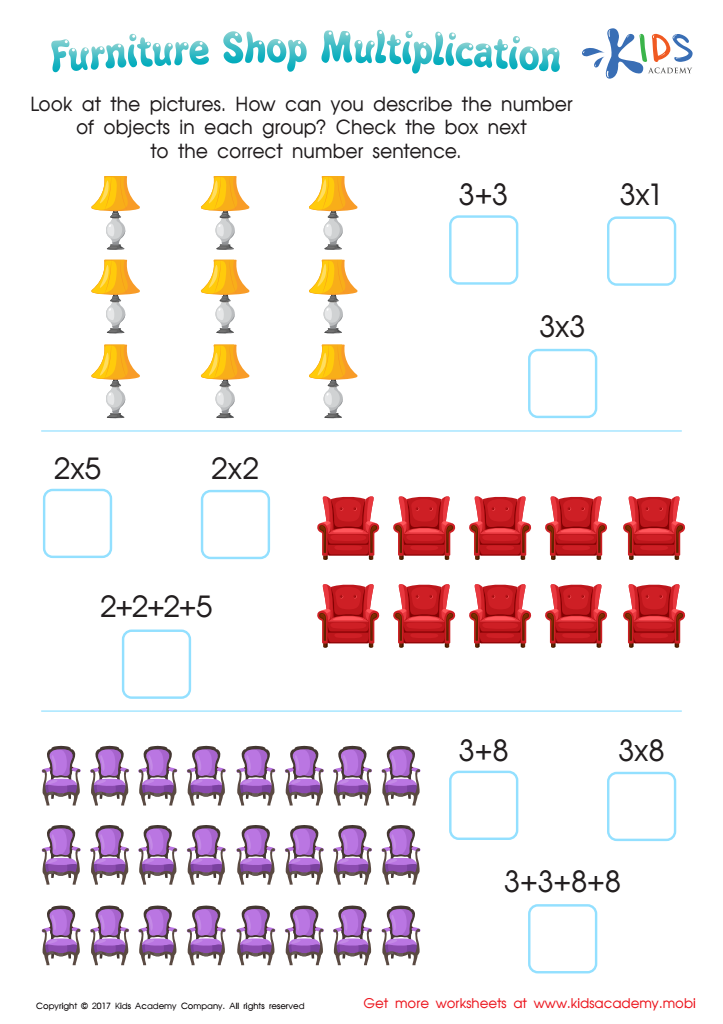
Our multiplication PDF worksheets for 3rd grade use a visual strategy to help kids understand multiplication. Fun and colorful furniture engages kids as they use number sentences to describe each picture, aiding in memorizing multiplication tables.
Furniture Shop Worksheet
Worksheet
Second Grade Math Worksheets

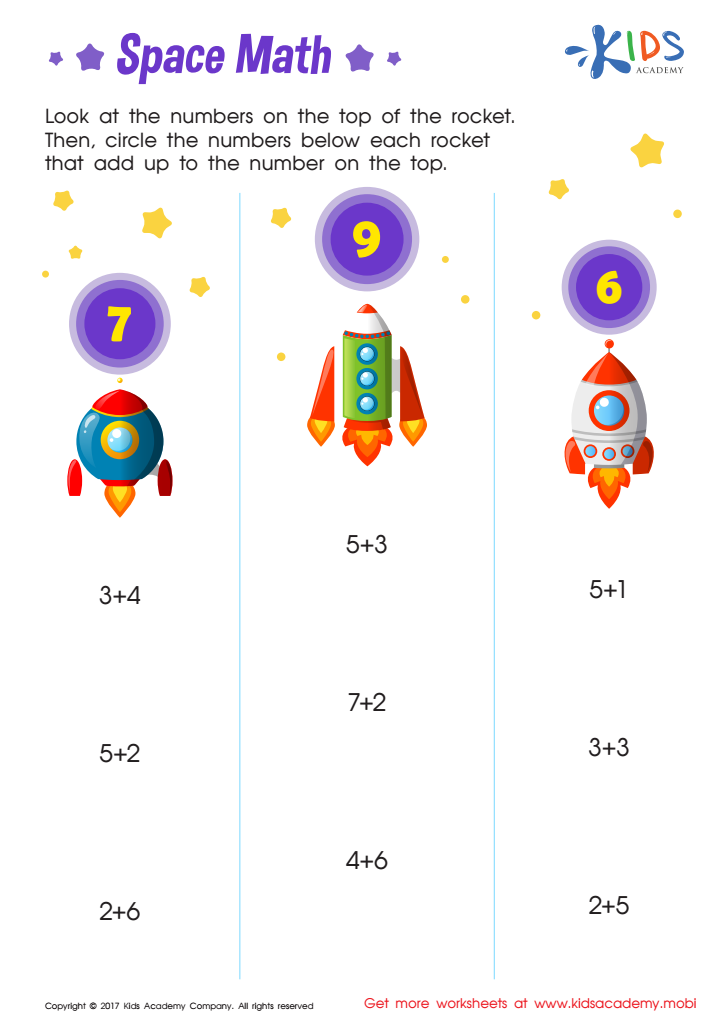
Addition: Space Math Worksheet

Fun and engaging space-themed practice with vivid pictures and matching numbers will make learning more meaningful. Take their math skills out of this galaxy today with Kids Academy!
Addition: Space Math Worksheet
Worksheet
What's the Rule Worksheet

What's the Rule Worksheet

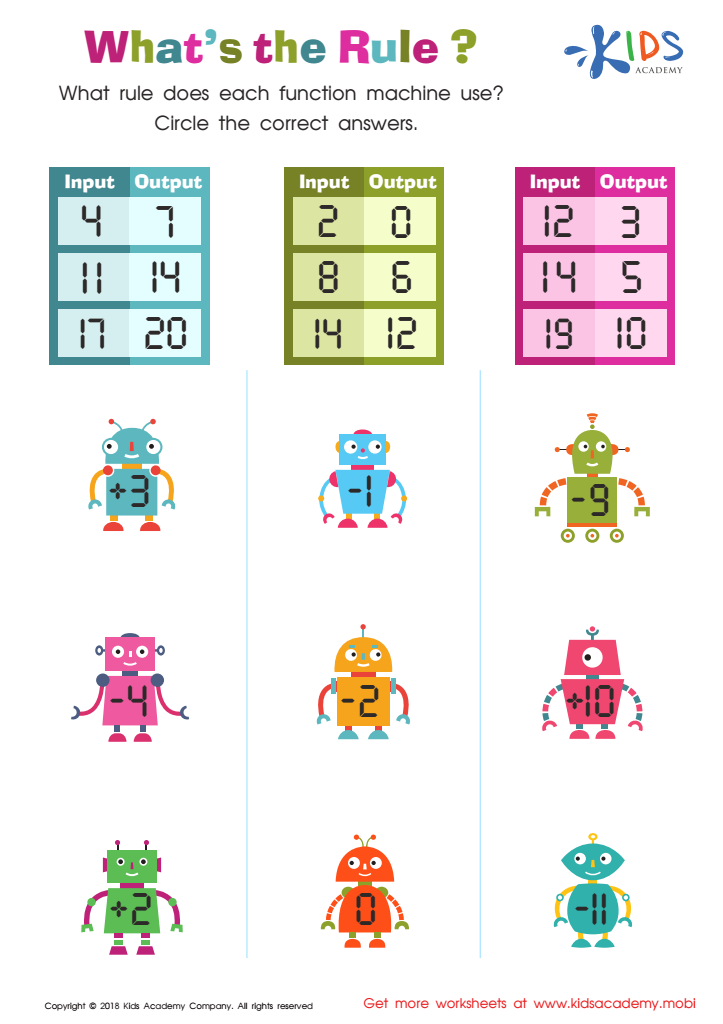
Robots are here to help your child find the relationship between each set of numbers! Adorably illustrated worksheets use vivid pictures that each contain a rule. Look at each function machine and find the pattern or relationship between the input and output. Then, complete the sheet by circling the correct answer!
What's the Rule Worksheet
Worksheet
Find the Last! Worksheet

Find the Last! Worksheet

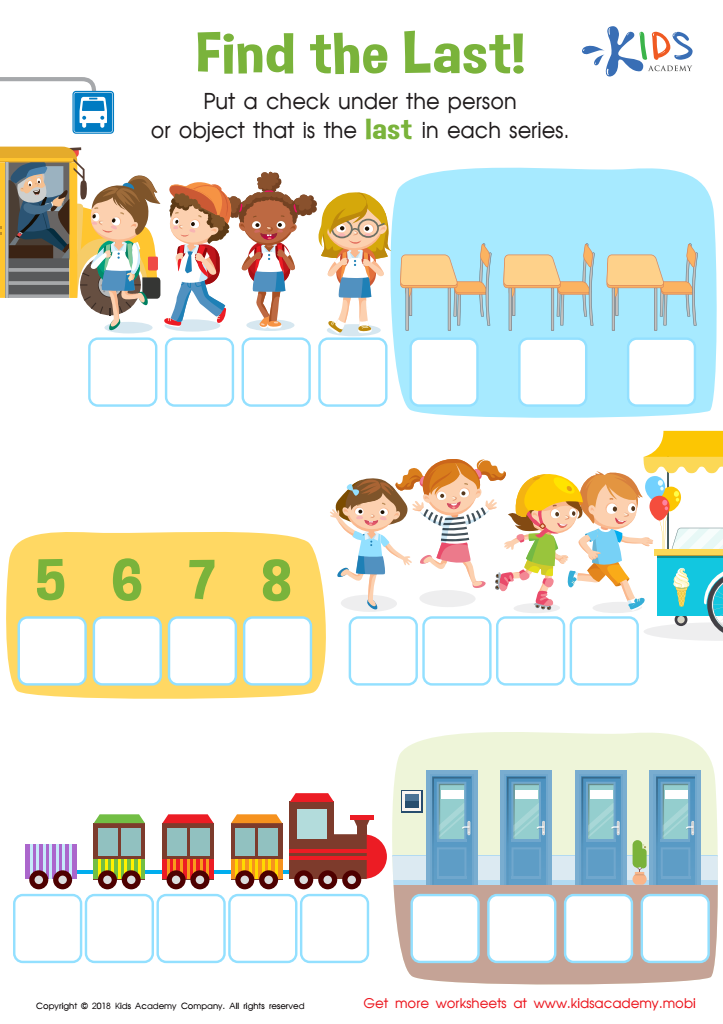
Teach young students about sequence words with this free worksheet. Have them look at sets of people or objects and choose the one that is last. Engage them further by having them describe or act out their day, and what happens last? Enjoy this printout and have fun!
Find the Last! Worksheet
Worksheet
Magic Fives Worksheet

Magic Fives Worksheet

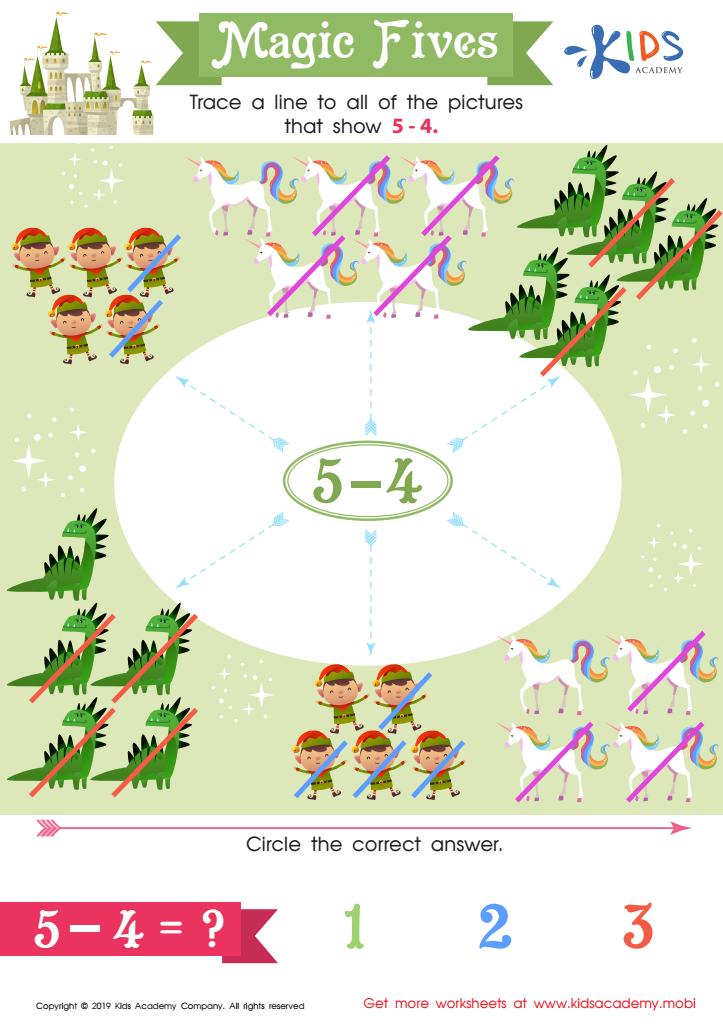
Help your students identify the objects & people in the worksheet. Point to the equation 5 -4 in the center, then get them to count the items and trace a line connecting those that add up to 5 - 4.
Magic Fives Worksheet
Worksheet
Patterns in Temperature Worksheet

Patterns in Temperature Worksheet

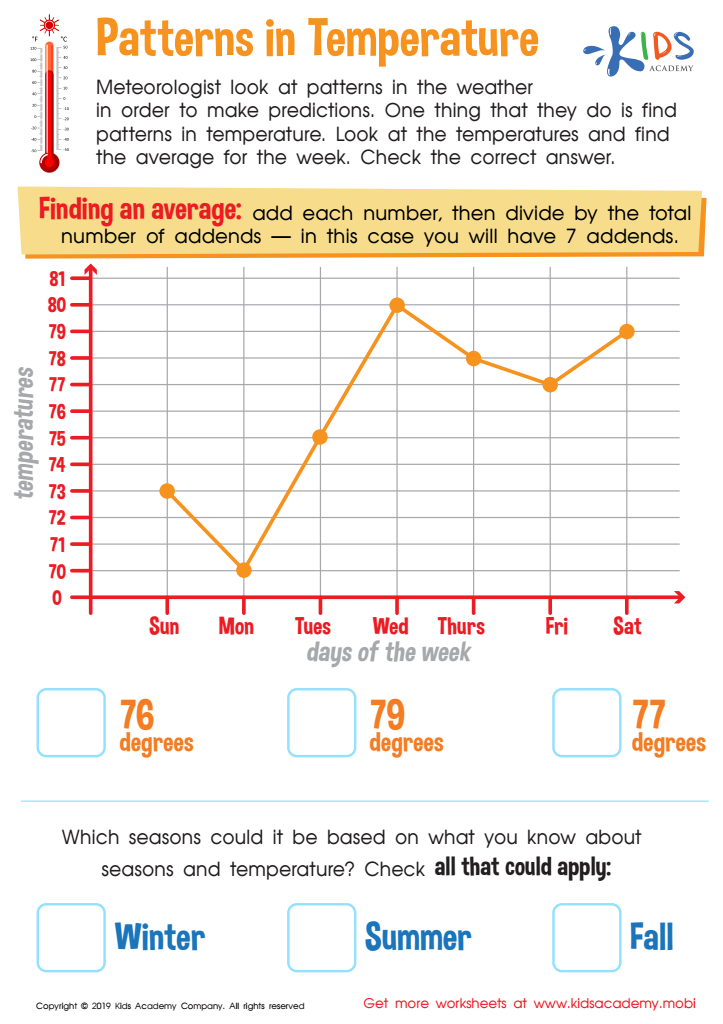
Kids need to learn how to read and interpret data from graphs and charts. This free worksheet on temperature patterns helps them to do just that. They'll practice finding averages and answer questions in multiple-choice format. Plus, it provides a great learning experience!
Patterns in Temperature Worksheet
Worksheet
Boomerang Addition Worksheet

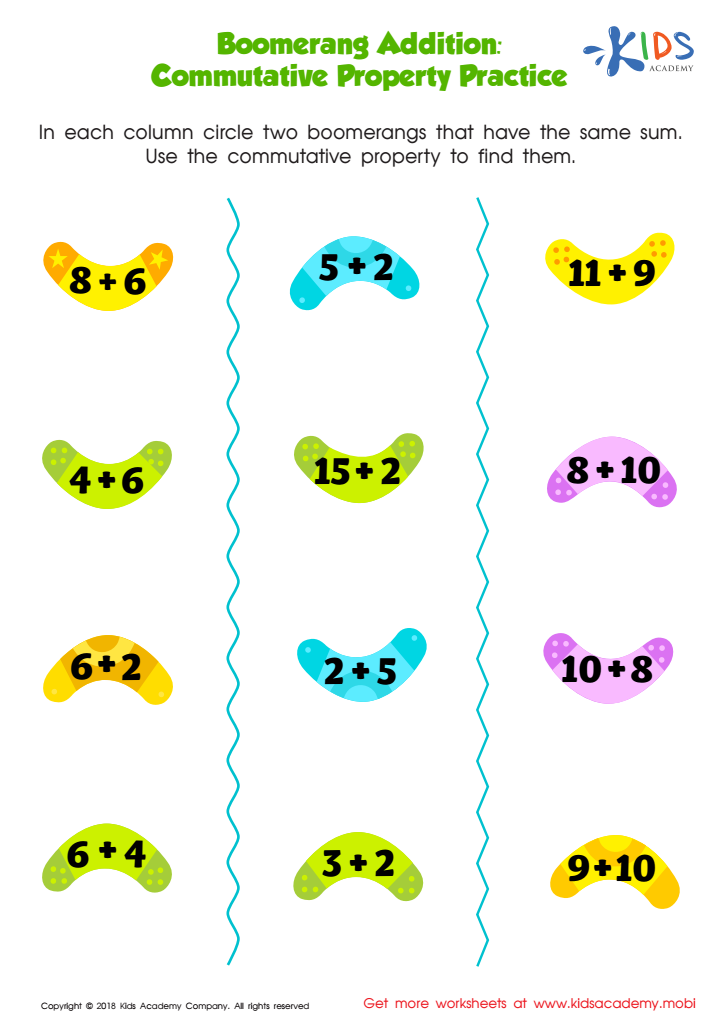
Boomerang Addition Worksheet

Kids know that when a boomerang is thrown, it reverses its path back. The same goes for addition: numbers can be rearranged and the sum will remain the same. Use this worksheet to find matching pairs of colorful boomerangs and equations. Look through each column and use the commutative property to find the pairs with the same sum.
Boomerang Addition Worksheet
Worksheet
Great Wall Math Worksheet

Great Wall Math Worksheet

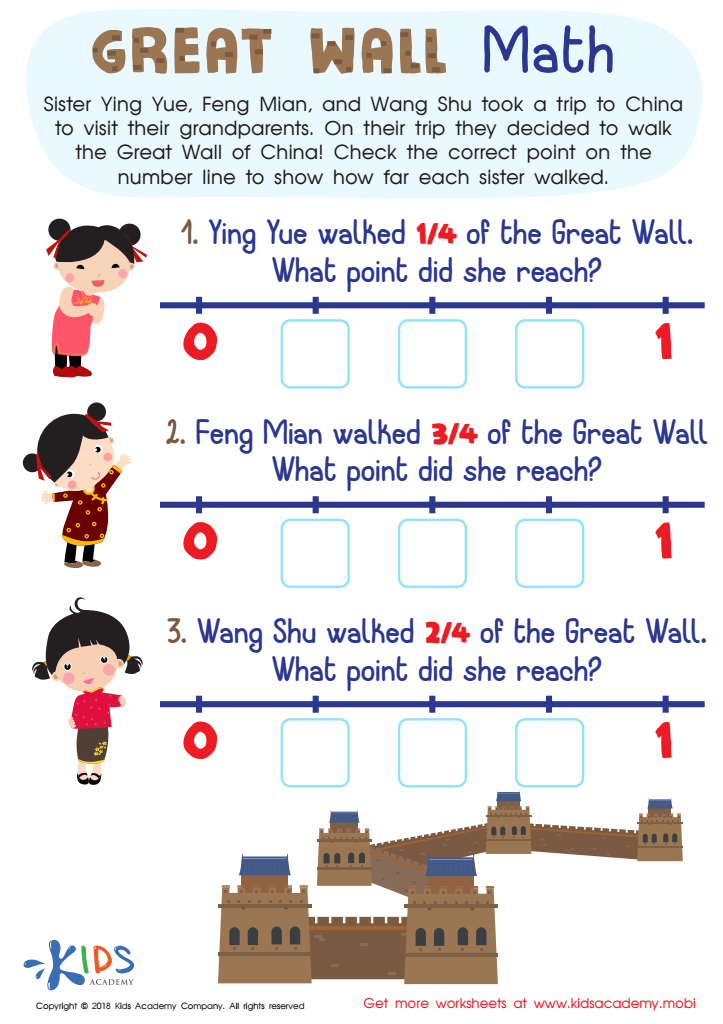
Let your kids learn about fraction and history with this printout about the Great Wall of China. Three sisters take a trip to China to visit their grandparents and decide to walk the Great Wall. Ask them to study the pictures and pick the correct point on the number line to show how far each sister went. How about you: has your child ever been to China?
Great Wall Math Worksheet
Worksheet
Multiplying 5’s: Telling Temperature Part 2 Worksheet

Multiplying 5’s: Telling Temperature Part 2 Worksheet

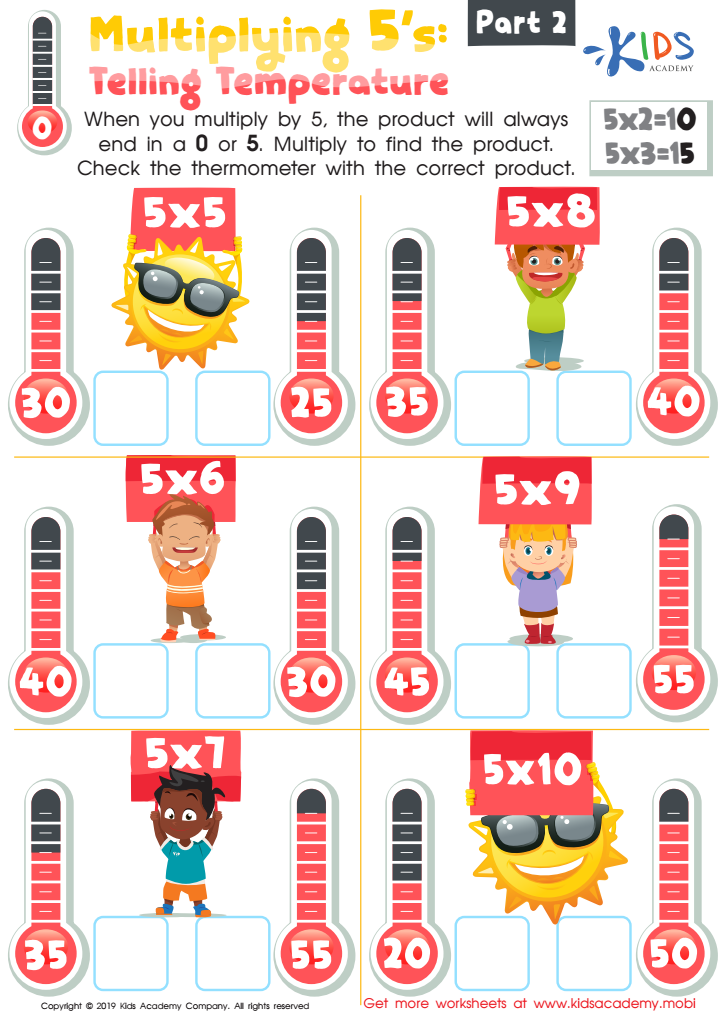
To help your child with multiplication, teach them some simple tricks. For example, when multiplying 10's the product always ends in a 0, and when multiplying by 5, the product will end in 0 or 5. Look at the problems in this worksheet and help your child find the product. Then, check the thermometer with the correct answer.
Multiplying 5’s: Telling Temperature Part 2 Worksheet
Worksheet
Multiplying 9’s Montgomery Bus Boycott Worksheet


Multiplying 9’s Montgomery Bus Boycott Worksheet

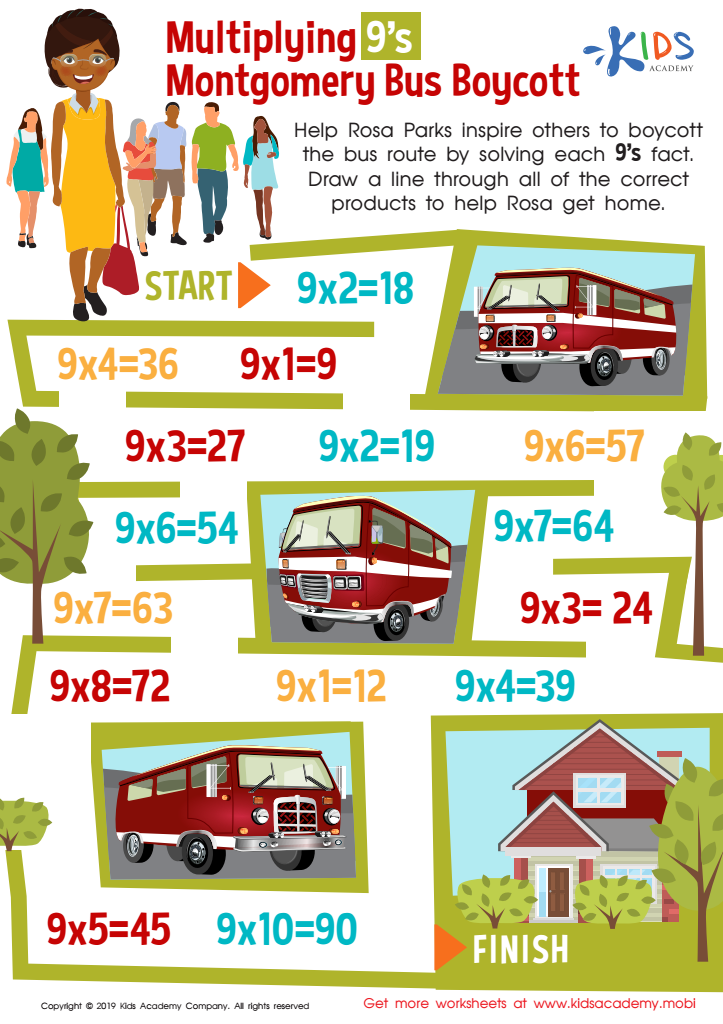
As your students learn math, the numbers get bigger. This worksheet is great for learning the nine times table. Help Rosa Park get home - ask them to solve each multiplication fact, then draw a line through the correct products. Encourage your students to stand up for what's right!
Multiplying 9’s Montgomery Bus Boycott Worksheet
Worksheet


Understanding patterns is a foundational skill in math for children aged 3-8 and is crucial for their cognitive development. When parents and teachers emphasize pattern recognition, they help children develop critical problem-solving abilities and logical thinking. Patterns form the basis of mathematical concepts like addition, subtraction, and even complex operations later on. By recognizing patterns, children learn to predict outcomes, analyze relationships, and develop a sense of order.

Moreover, engaging with patterns fosters creativity and critical thinking. Children explore how to manipulate objects and ideas, promoting inquiry and hands-on learning. For instance, using everyday objects or fun activities like making bead necklaces or drawing shapes supports their engagement with math without it feeling overwhelming.

Understanding patterns also enhances spatial awareness, which is vital not just in math but also in subjects such as science and engineering. Additionally, these skills further lay the groundwork for future learning, helping children build confidence as they progress to more complex mathematical concepts. Overall, parents and teachers should prioritize teaching patterns, as it provides children with essential tools for academic success and critical life skills. Encouraging an early love for patterns and math can profoundly influence their educational journey and future opportunities.