Understanding Quantities Normal Math Worksheets for Ages 3-8
3 filtered results
-
From - To
Introduce young learners to the world of numbers with our "Understanding Quantities Normal Math Worksheets for Ages 3-8." Specifically designed to nurture foundational math skills, these engaging worksheets help children grasp the concept of quantities through fun exercises and interactive activities. Suitable for preschool to early elementary students, our colorful worksheets cover counting, comparing, and understanding numerical values. Each activity enhances cognitive development and lays the groundwork for future math success. Perfect for parents and educators seeking a structured, enjoyable way to boost children’s math confidence and proficiency, visit our webpage to explore these valuable learning tools today.
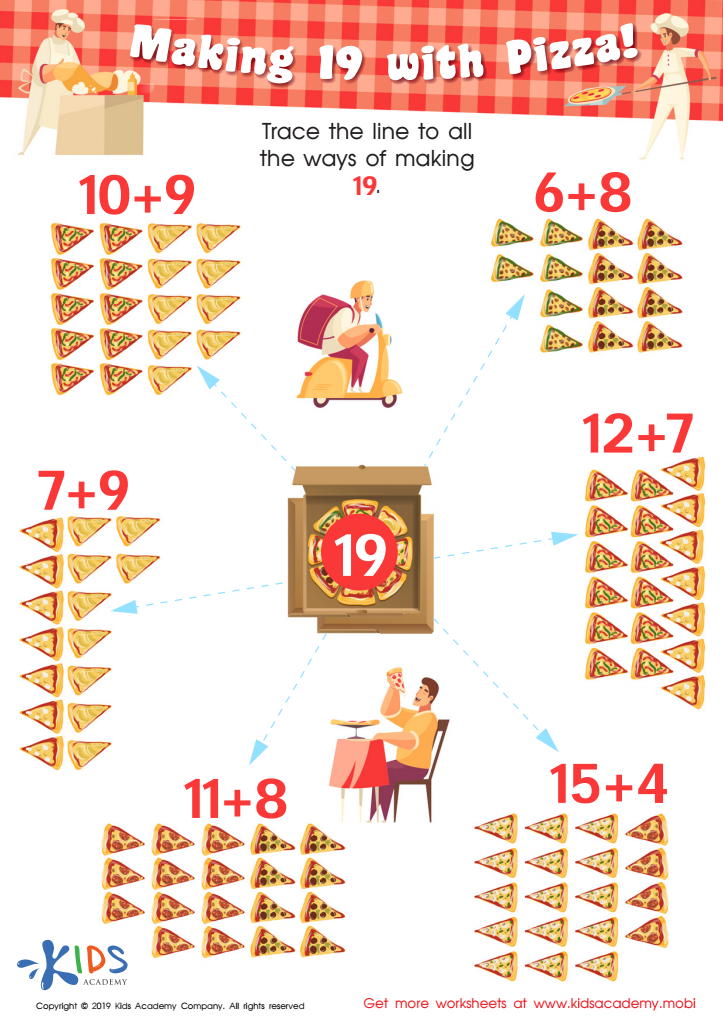
Making 19 with Pizza! Worksheet
 Assign to My Students
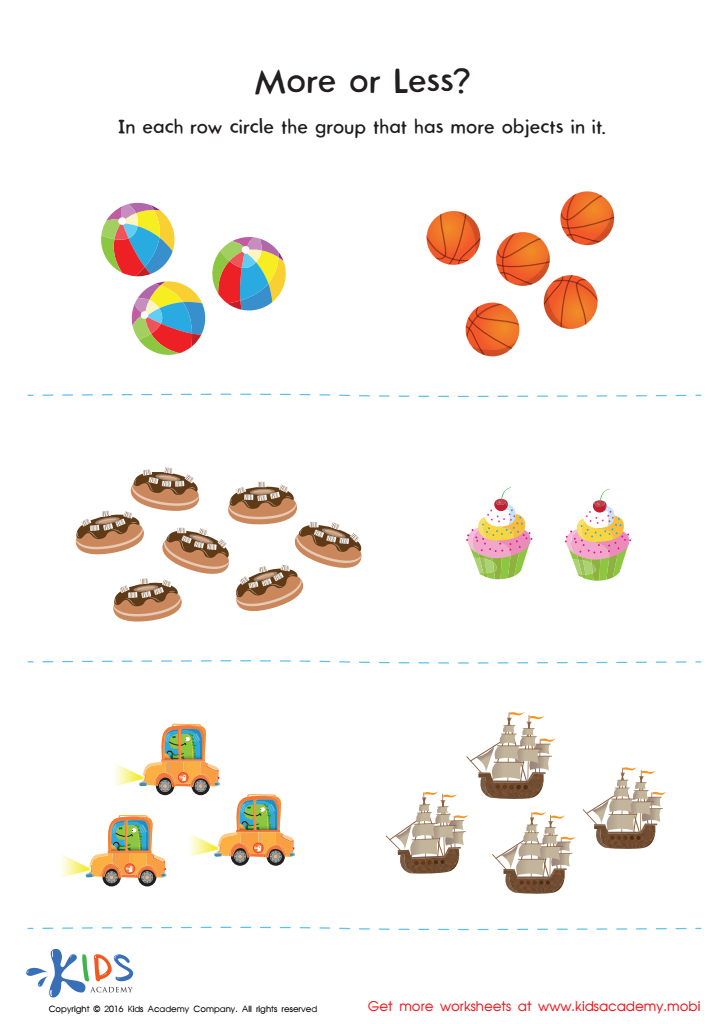
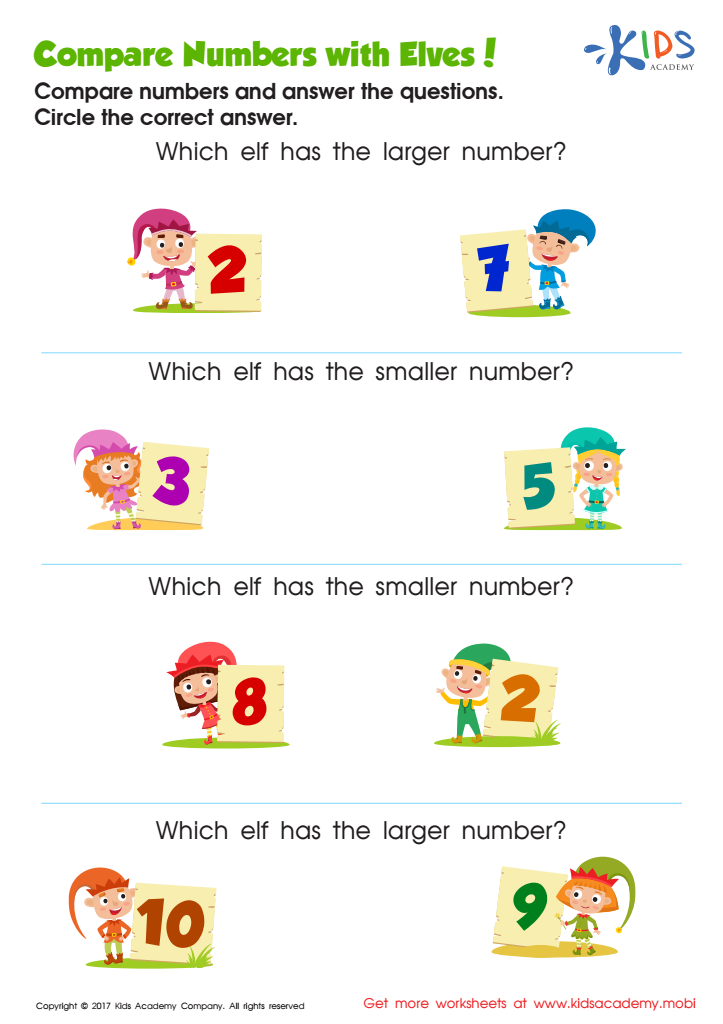
Comparing Numbers Worksheet for Kindergarten


.jpg)





Understanding quantities is fundamental for children aged 3-8, laying the foundation for mathematical proficiency and cognitive development. At this age, children transition from intuitive notions of "more" and "less" to grasping precise numerical concepts, which are essential for advanced math and real-world applications.
For parents and teachers, emphasizing quantities normal math helps children develop number sense, an intuitive understanding of numbers, their magnitude, relationships, and how they are affected by operations. This early mastery minimizes math anxiety, fostering confidence in their abilities.
Quantitative understanding uniquely interlinks with various developmental domains. It enhances problem-solving skills, logical thinking, and cognitive flexibility, crucial for STEM (Science, Technology, Engineering, Math) learning and everyday decision-making. It enriches children's capacity to construct graphs, measure items, or engage in complex games later on.
Moreover, this understanding isn't siloed to mathematics. Recognizing quantities assists in honing language skills as children explain their reasoning, improves attention spans through meticulous counting exercises, and even bolsters socio-emotional learning when participating in group tasks.
Early engagement stimulates intellectual curiosity and sets the stage for a lifetime of positive learning experiences. Parents and teachers who prioritize developing quantitative understandings provide children with invaluable tools for academic success and practical life skills for their future endeavors.








