Visual learning reinforcement Normal Math Worksheets for Ages 3-8
3 filtered results
-
From - To
Enhance your child's mathematical abilities with our Visual Learning Reinforcement Normal Math Worksheets, designed specifically for ages 3-8. These engaging worksheets incorporate vibrant visuals to facilitate comprehension and retention, making math fun and approachable. Our collection covers essential skills such as counting, addition, subtraction, and more, all while catering to different learning styles. Each worksheet is crafted to reinforce visual learning, ensuring that young learners grasp concepts effectively through illustrations and interactive elements. Perfect for home or classroom use, these worksheets promote confidence in math and a love for learning! Explore our resources today and make math enjoyable for your little ones!
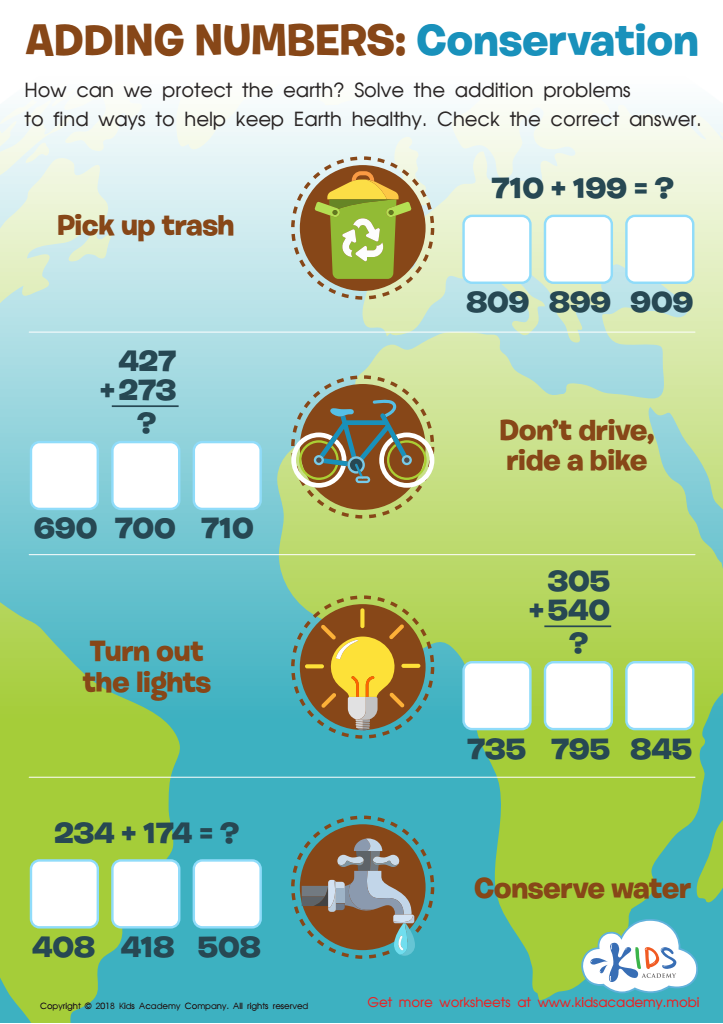
Adding Numbers: Conservation Worksheet
 Assign to My Students
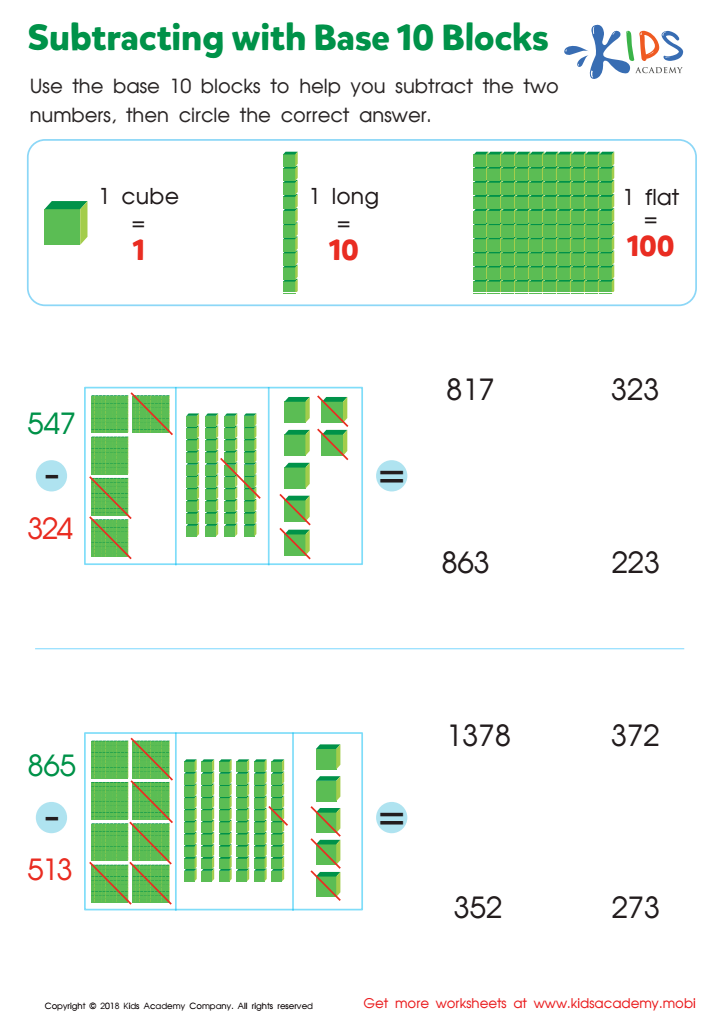
Subtracting with Base 10 Blocks Worksheet
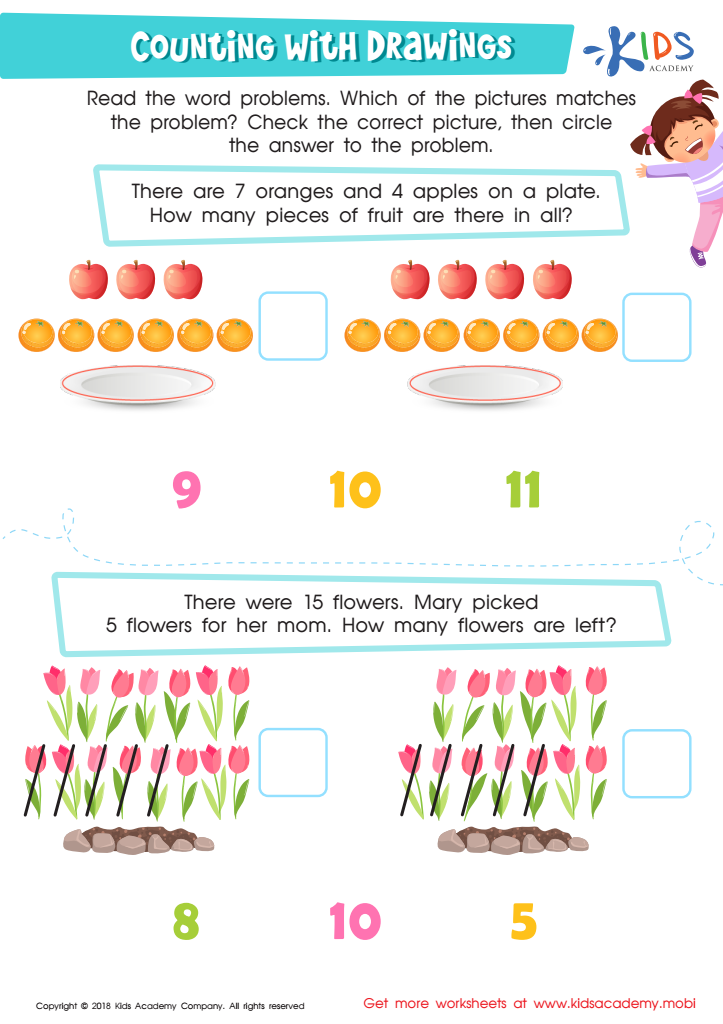
Counting with Drawings: Fruits & Chocolates Worksheet








Visual learning reinforcement in early math education for children aged 3-8 is essential for several reasons. At this developmental stage, children are naturally inclined to learn through visual stimuli. Engaging visuals, such as colorful shapes, diagrams, and interactive tools, can make abstract mathematical concepts more tangible and accessible for young learners. Utilizing visual representations not only captures children's attention but also enhances their understanding and retention of mathematical ideas.
Moreover, visual learning supports diverse learning styles. Some children grasp math concepts more effectively when they can see and manipulate physical objects or visual aids, promoting inclusion and catering to varied educational needs. This approach can lead to improved problem-solving skills as children learn to visually represent math problems, enabling them to find solutions systematically.
Additionally, reinforcing math visually cultivates a positive attitude towards the subject. When children see math through a creative and engaging lens, they are more likely to develop a love for learning and greater confidence in their abilities. Overall, prioritizing visual learning in mathematics lays a strong foundation for critical thinking and fosters essential skills that children will carry into their futures, making it a vital aspect of early education that parents and teachers should wholeheartedly embrace.








