Normal Subtraction Worksheets for Ages 3-8 - Page 2
29 filtered results
-
From - To
 Assign to My Students
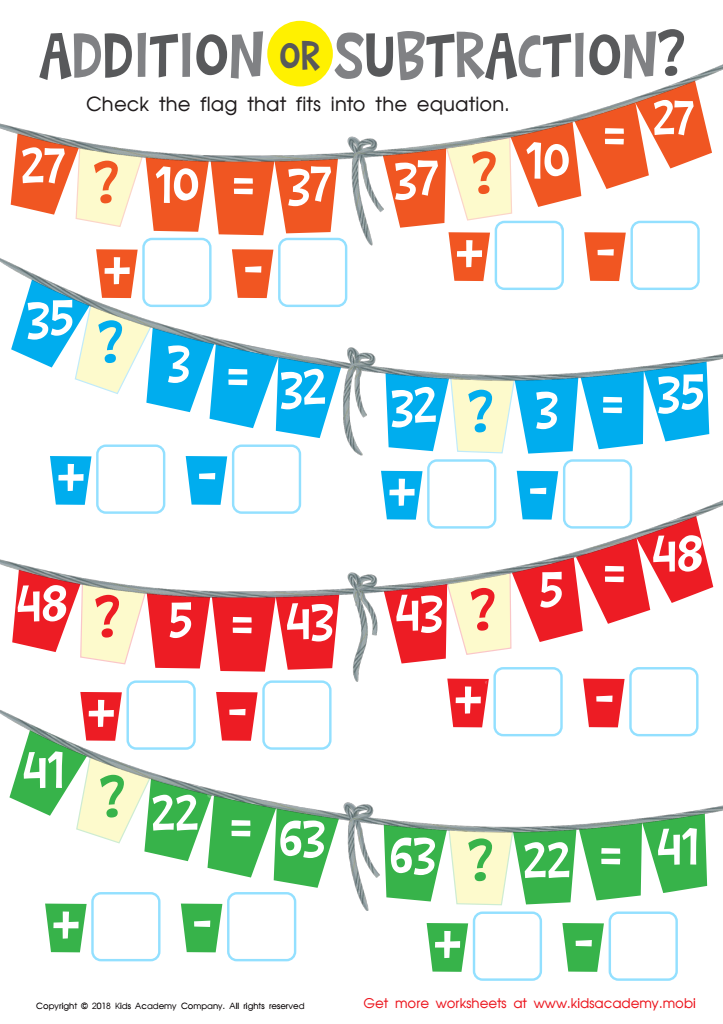
Addition or Subtraction? Worksheet
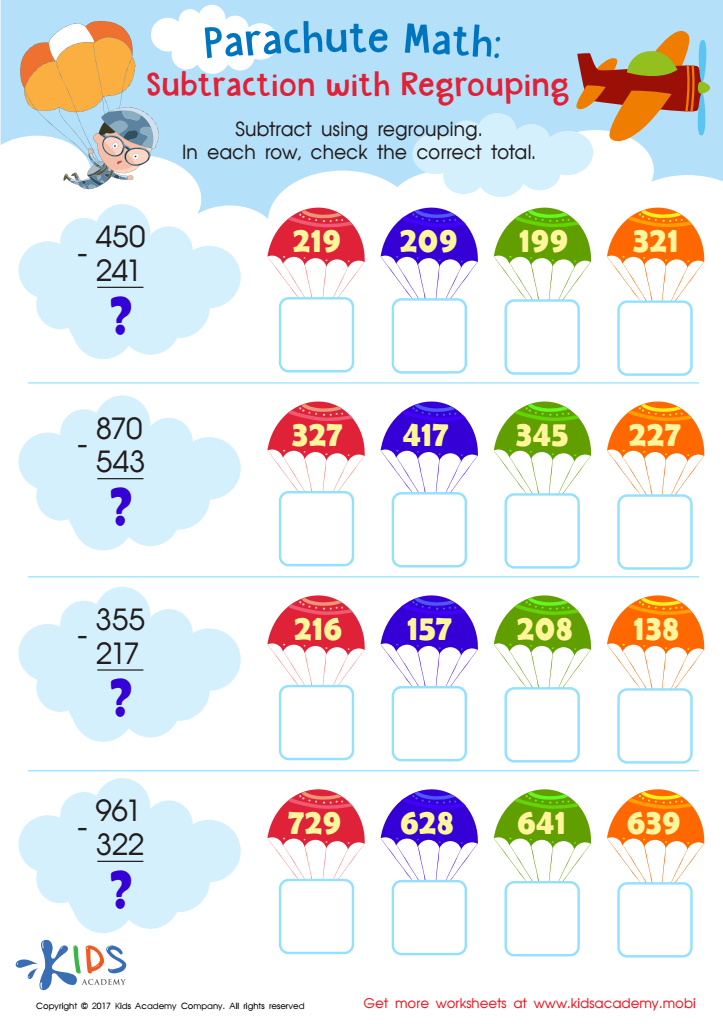
Subtraction with Regrouping for 3rd Grade Worksheet
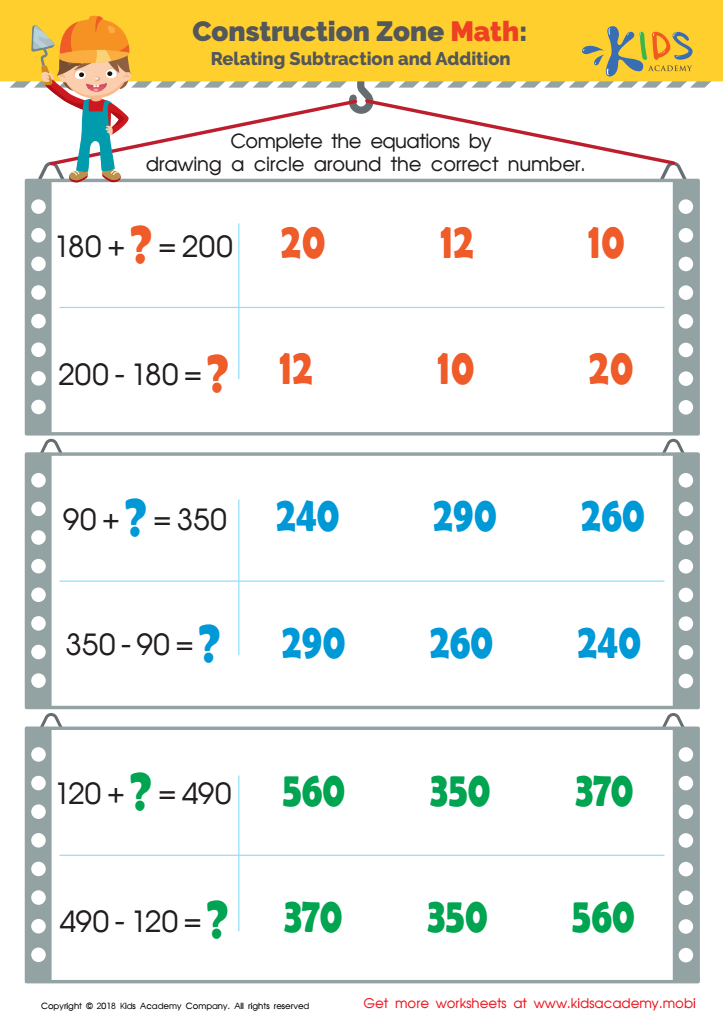
Construction Zone Math: Relating Subtraction and Addition Worksheet
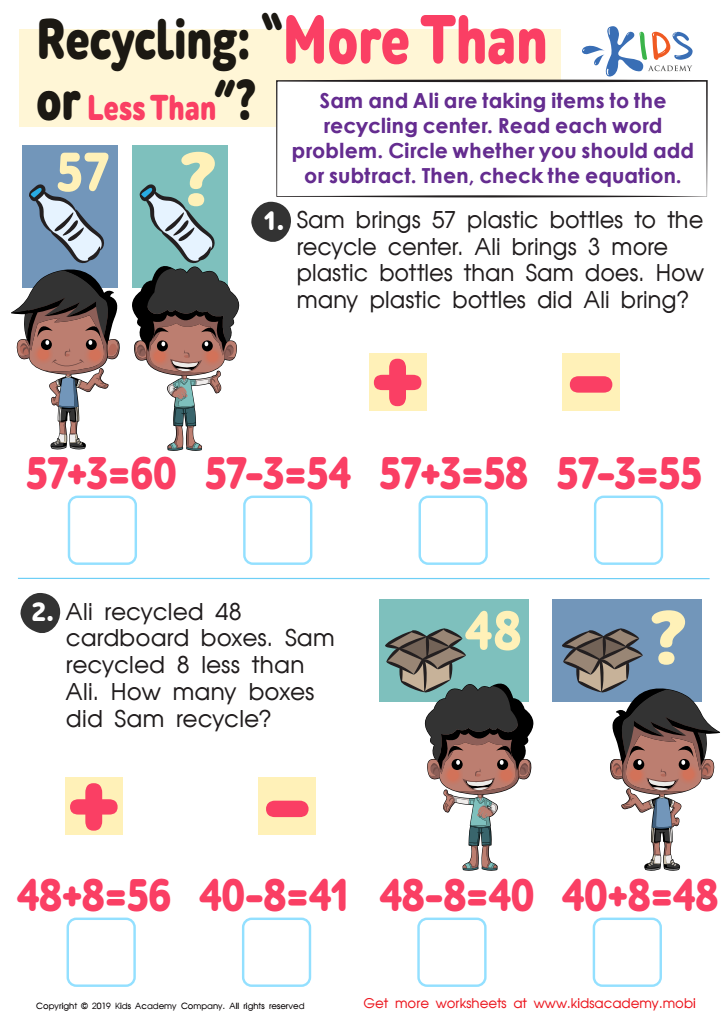
Recycling - More or Less Worksheet







.jpg)
Normal subtraction (basic subtraction skills) is a critical foundational element in early childhood mathematics for ages 3 to 8 because it fosters the development of essential cognitive and problem-solving skills. Subtraction, framed within the context of counting and understanding numbers, introduces children to the concept of taking away, which is fundamental in navigating everyday situations. For example, understanding basic subtraction helps a child grasp situations like distributing snacks or measuring ingredients, fostering both practical and academic applications.
Furthermore, proficiency in subtraction prepares young learners for more complex mathematical concepts and operations. It supports their ability to follow instructions, boosts logical thinking, and nurtures confidence in handling numbers, which is crucial when they progress to more advanced arithmetic. Also, learning subtraction at an early age promotes mental arithmetic and the ability to recognize patterns, which are beneficial for future learning in mathematics and other STEM fields.
Parents' and teachers' involvement in encouraging a child's mastery of subtraction is integral, as these foundational years set the stage for their lifelong relationship with mathematics. By creating engaging, relatable, and playful experiences with subtraction, adults can stimulate a child's curiosity and enthusiasm for learning, ensuring they gain a solid and lasting understanding of basic arithmetic.