Spelling practice Normal Building Vocabulary Worksheets for Ages 3-8 - Page 2
29 filtered results
-
From - To
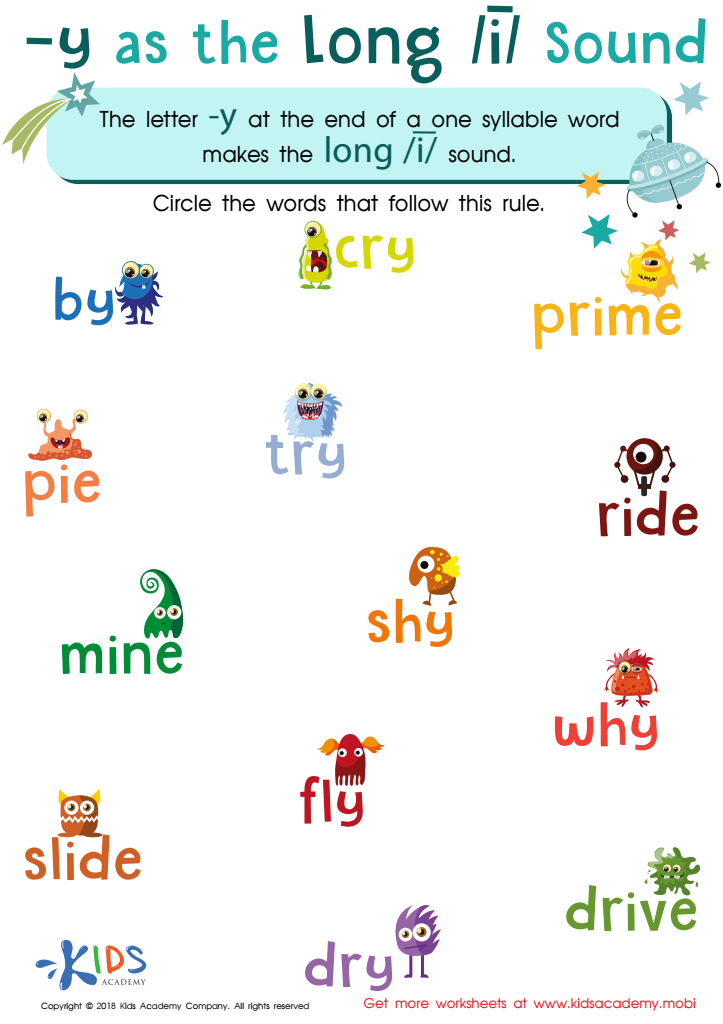
Reading: Y as Long I Worksheet
 Assign to My Students











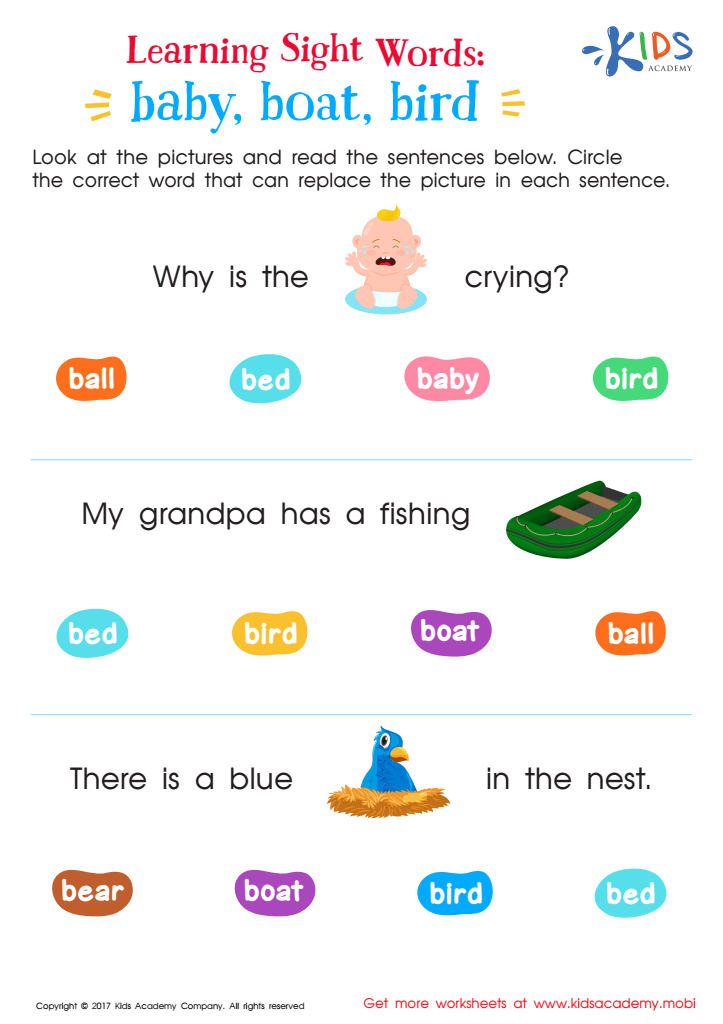
Baby, Boat, Bird Worksheet Sight Words Worksheet
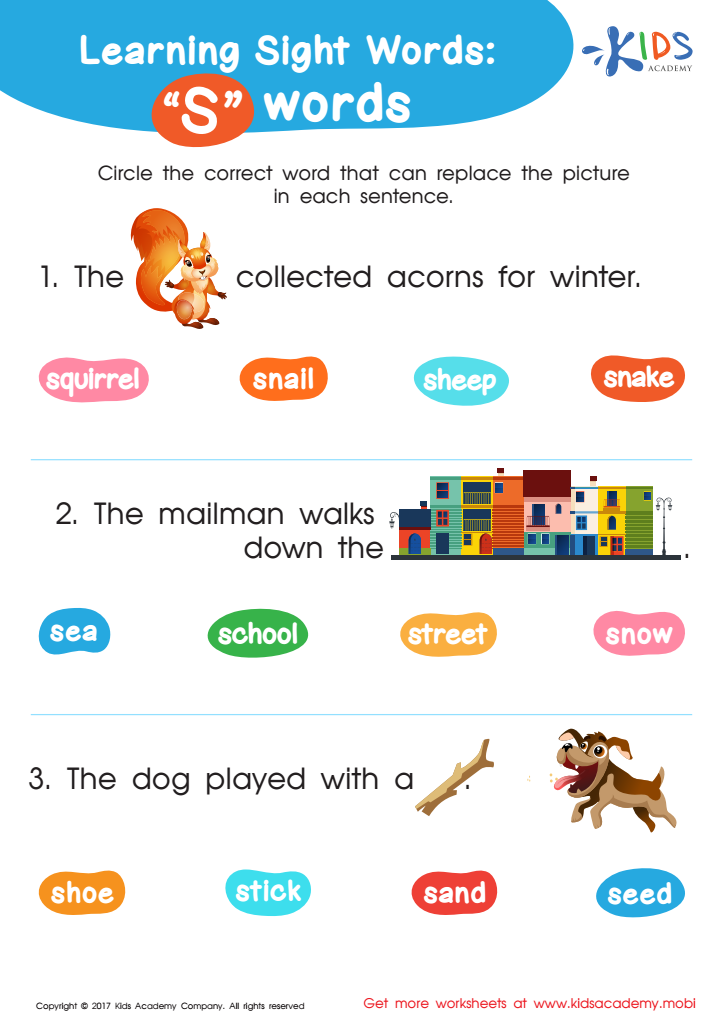
S Words Sight Words Worksheet
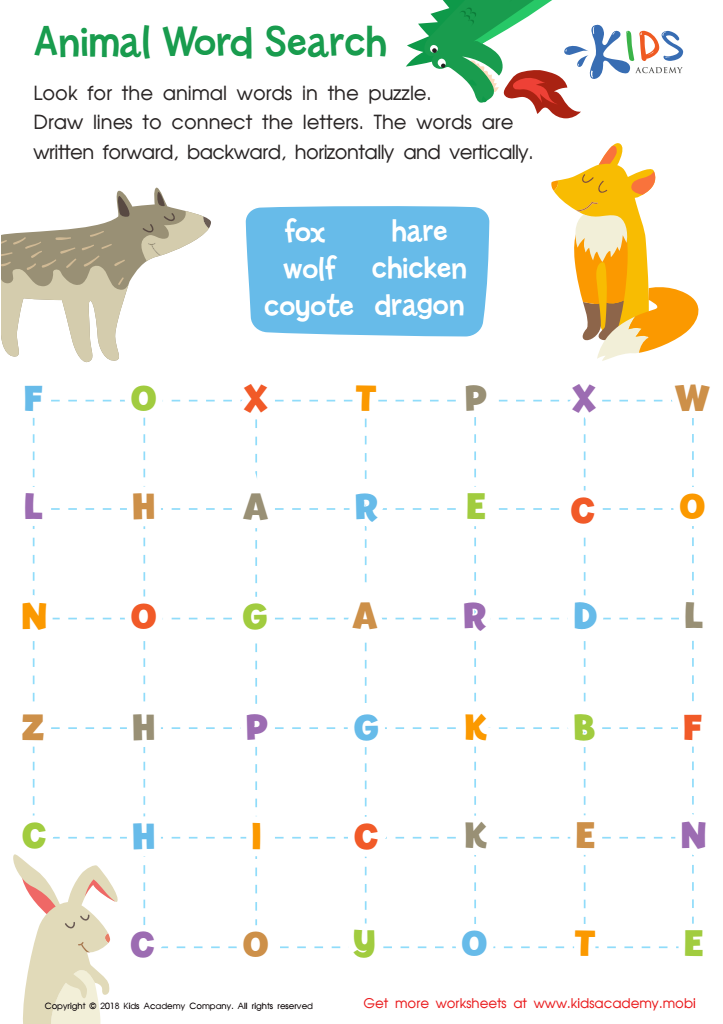
Animal Word Search Worksheet
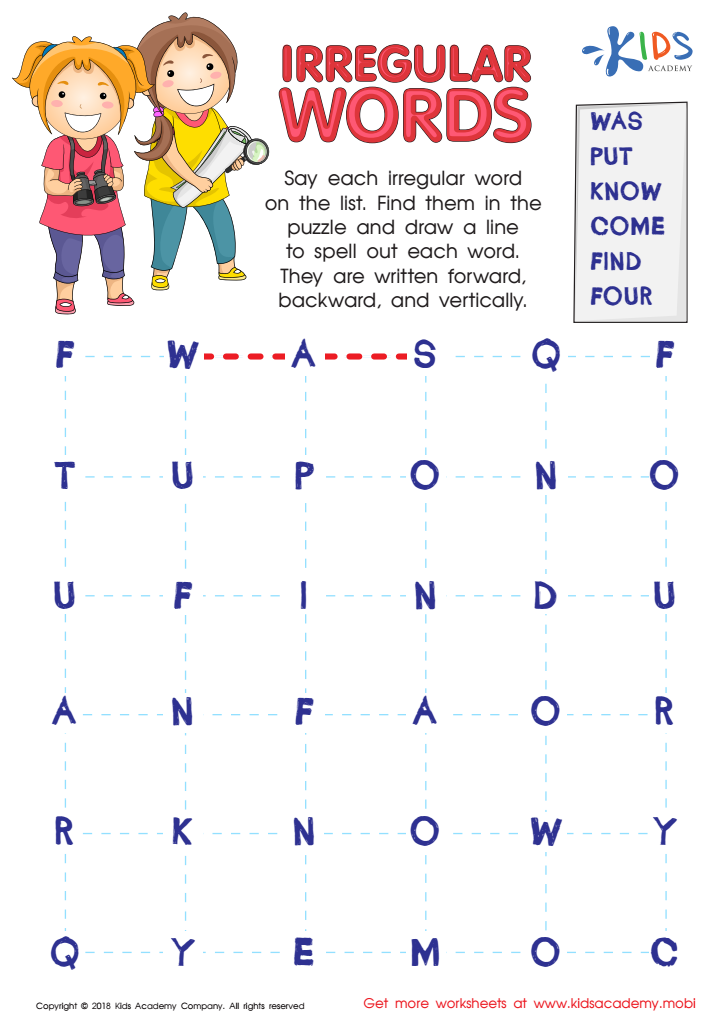
Irregular Words Worksheet







Spelling practice and vocabulary building are foundational elements in early childhood education, crucial for children aged 3-8. During these formative years, children's brains are particularly receptive to language acquisition, making it the optimal time for developing essential literacy skills.
Spelling practice aids in strengthening the relationship between sounds and letter patterns, a fundamental aspect of phonics. When children repeatedly engage in spelling exercises, they are better able to understand how words are constructed, which enhances their decoding skills when reading. This not only boosts their ability to read with accuracy but also with fluency, paving the way for better comprehension and academic performance in later years.
Building a robust vocabulary at an early age is equally important. A strong vocabulary facilitates better communication and effective expression of thoughts and emotions. It also enhances reading comprehension because children with a richer vocabulary can understand text more easily and make sense of new words through contextual clues.
Moreover, engaging in spelling and vocabulary exercises fosters greater cognitive development, improving memory, attention to detail, and problem-solving skills. Activities involving spelling and vocabulary often require children to follow instructions, think critically, and engage in concentrated practice, thereby shaping their overall intellectual growth.
In summary, investing in consistent spelling practice and active vocabulary building for children aged 3-8 establishes a solid foundation for lifelong learning and academic success, making it an imperative focus for both parents and teachers.








