
Grammar practice Normal Reading Worksheets for Ages 3-8
4 filtered results
Difficulty Level
Grade
Age
-
From - To
Subject
Activity
Standards
Enhance your child’s literacy skills with our Grammar Practice Normal Reading Worksheets, designed specifically for ages 3-8. These engaging and educational resources are tailored to help young learners grasp essential grammar concepts through fun exercises and interactive activities. Each worksheet reinforces vocabulary understanding, sentence structure, and punctuation basics while fostering reading comprehension. Perfect for classroom use or at-home learning, these worksheets encourage creativity and critical thinking. Packaged with vivid illustrations, children will delight in exploring language at their own pace. Empower your child's reading journey with our thoughtfully crafted resources that make grammar learning enjoyable and effective!
Favorites
With answer key
Interactive
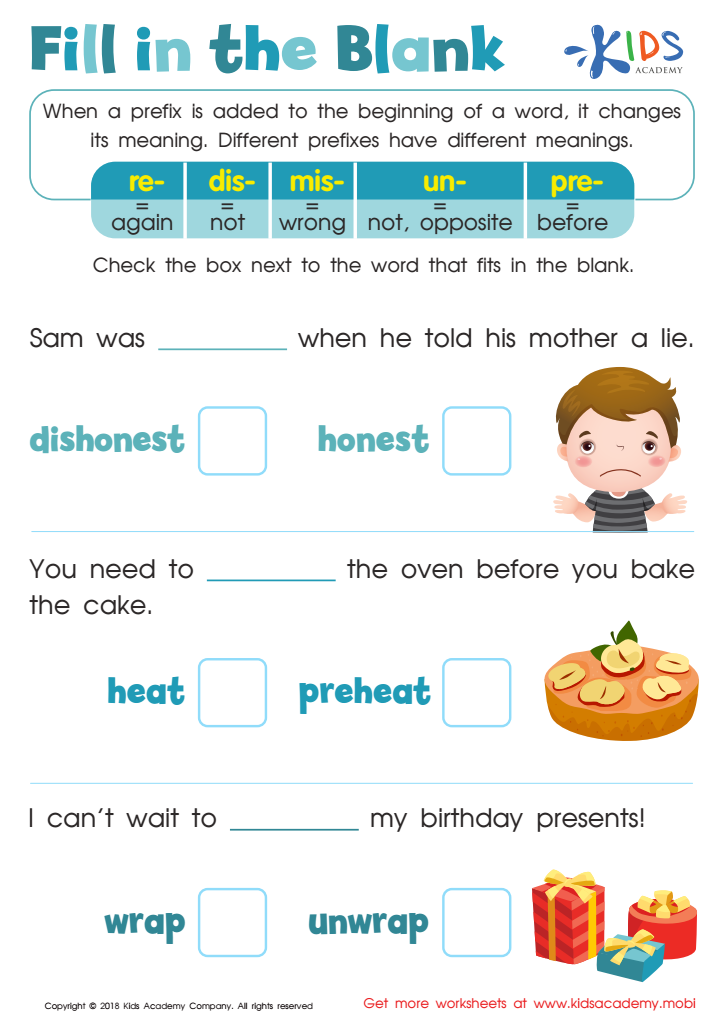
Reading: Fill in the Blank Worksheet
Students can practice understanding the meaning of common prefixes with this worksheet. They read sentences and pick the correct word with the appropriate prefix to complete it. Downloadable and a great addition to reading and vocabulary resources, this helps improve comprehension with mastery of the skill!
 Assign to My Students
Reading: Fill in the Blank Worksheet
Worksheet
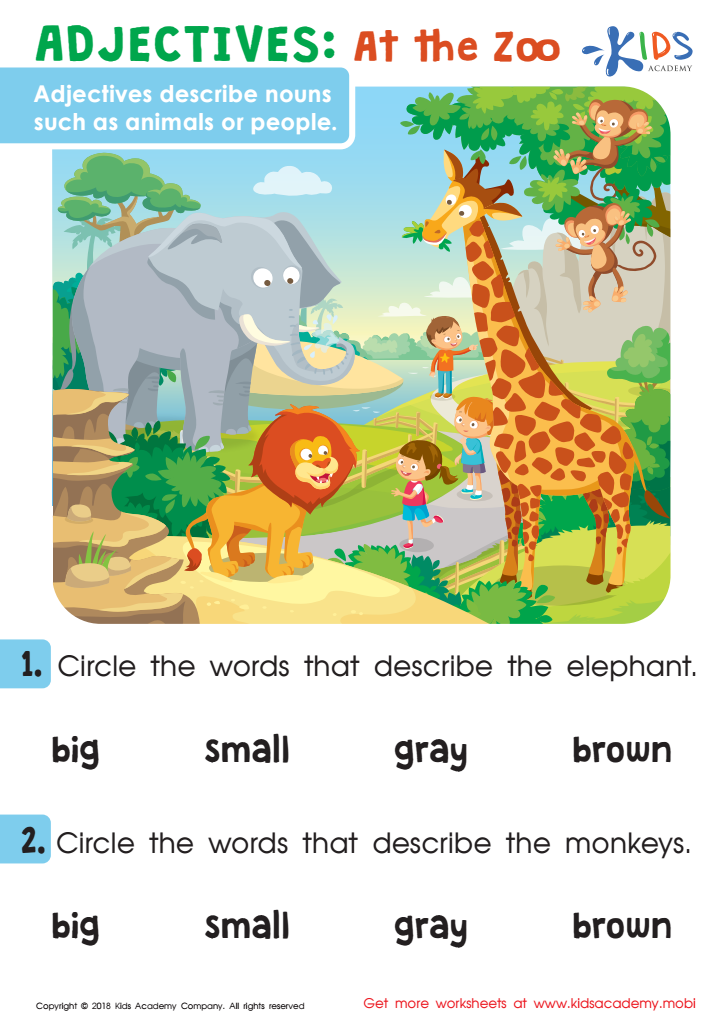
Adjectives: At The Zoo Worksheet
Take your kids to the zoo and ask them about their favorite activities and animals. This worksheet is a great way for kids to learn about adjectives. Explain that adjectives describe nouns like people or animals (e.g. big, tall, dark). Look at the printout with your kids and help them circle words that describe the animals in the picture.
Adjectives: At The Zoo Worksheet
Worksheet
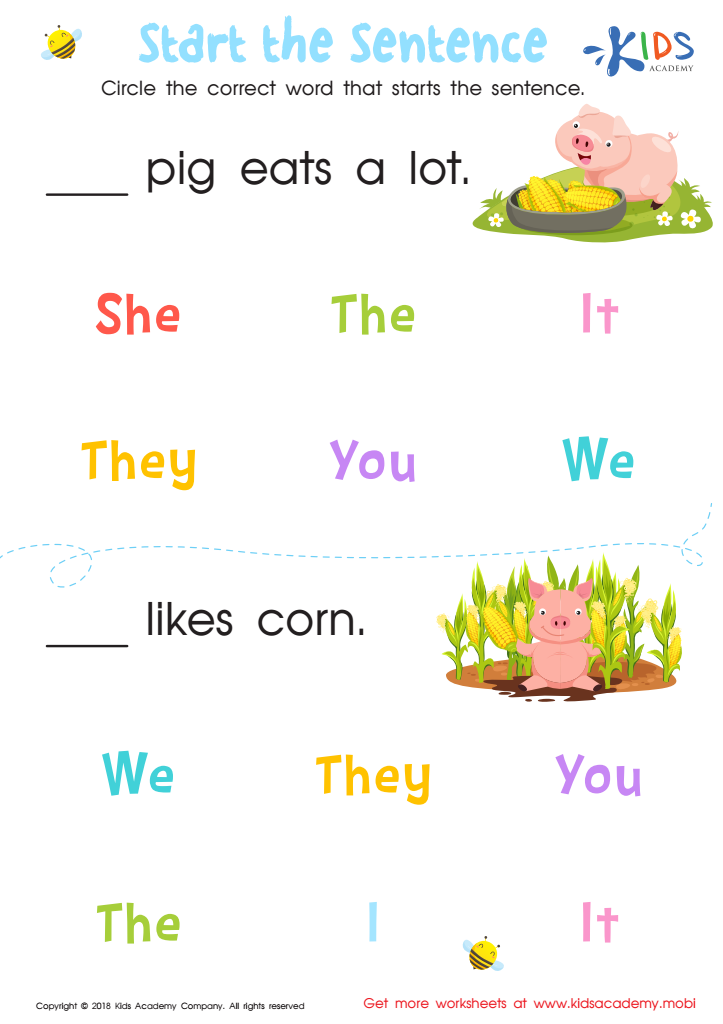
Start the Sentence Worksheet
Test your students' understanding of sentences with this easy worksheet. Ask them to read the sentences and circle the correct word that starts each. This will show how well their lessons have paid off and if they can construct short simple sentences.
Start the Sentence Worksheet
Worksheet
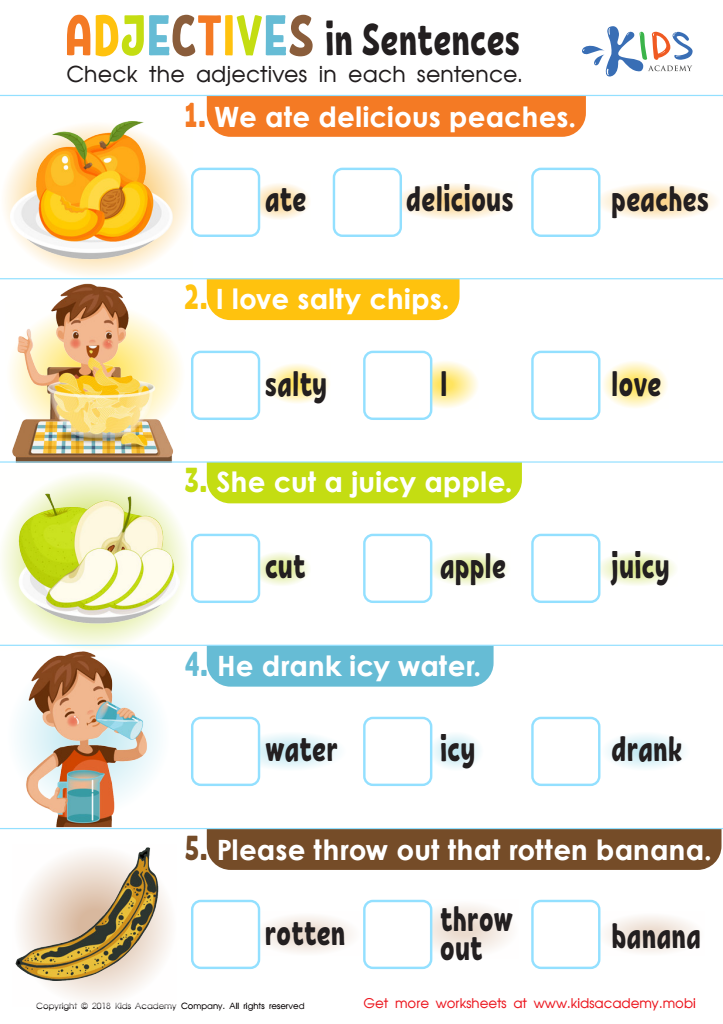
Adjectives in Sentences Worksheet
Our learners can find it hard to use writing to add detail, but adjectives can help. With this fun worksheet, kids can identify adjectives that describe food and drink. Guide them through each sentence, discussing the words and having them choose the one that gives information about the food/drink.
Adjectives in Sentences Worksheet
Worksheet
Join Kids Academy for Free
Who is primarily going to use this learning content?








Grammar practice is essential for children ages 3-8 as it lays the foundation for effective communication skills, which are crucial for their academic and social development. During early childhood, children rapidly acquire language skills, and grammar practice helps them organize thoughts and express themselves clearly.
Teachers and parents should prioritize grammar activities because clear communication enhances literacy skills. Engaging in grammar exercises fosters strong reading and writing skills, enabling children to comprehend more complex texts and ideas as they progress in school. As they learn about sentence structure, verb tenses, and parts of speech, children develop critical thinking skills that help them analyze information and interact with their peers meaningfully.
Moreover, practicing grammar in fun and engaging ways creates a positive learning environment. Activities can involve storytelling, rhymes, or games that make learning enjoyable. This not only enhances retention but also builds confidence in using language.
In essence, a focus on grammar practice not only equips children with vital academic tools but also nurtures their ability to socialize and share ideas effectively, setting them up for future success in both their educational journeys and everyday interactions. Therefore, parents and teachers should consider it a vital component of early childhood education.








