Phonics recognition Normal Reading Worksheets for Ages 3-8
4 filtered results
-
From - To
Enhance your child's reading skills with our Phonics Recognition Normal Reading Worksheets, designed for ages 3-8. These engaging worksheets provide a fun and interactive way to introduce your little ones to phonics, laying a strong foundation for their reading journey. Each worksheet focuses on essential phonics concepts, helping children recognize letters, sounds, and word patterns in an enjoyable learning environment. Our printable resources are perfect for both home and classroom use, fostering independent learning and boosting confidence. Encourage your child's literacy development with these thoughtfully crafted worksheets that make learning phonics exciting and rewarding! Start building literacy skills today!
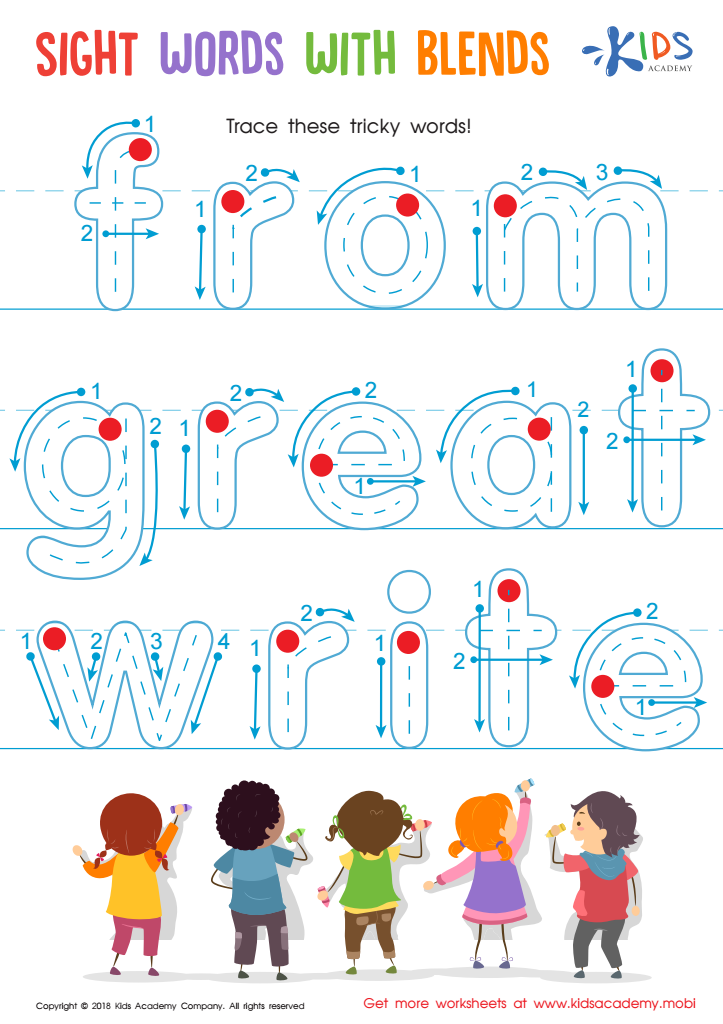
Sight Words with Blends Worksheet
 Assign to My Students
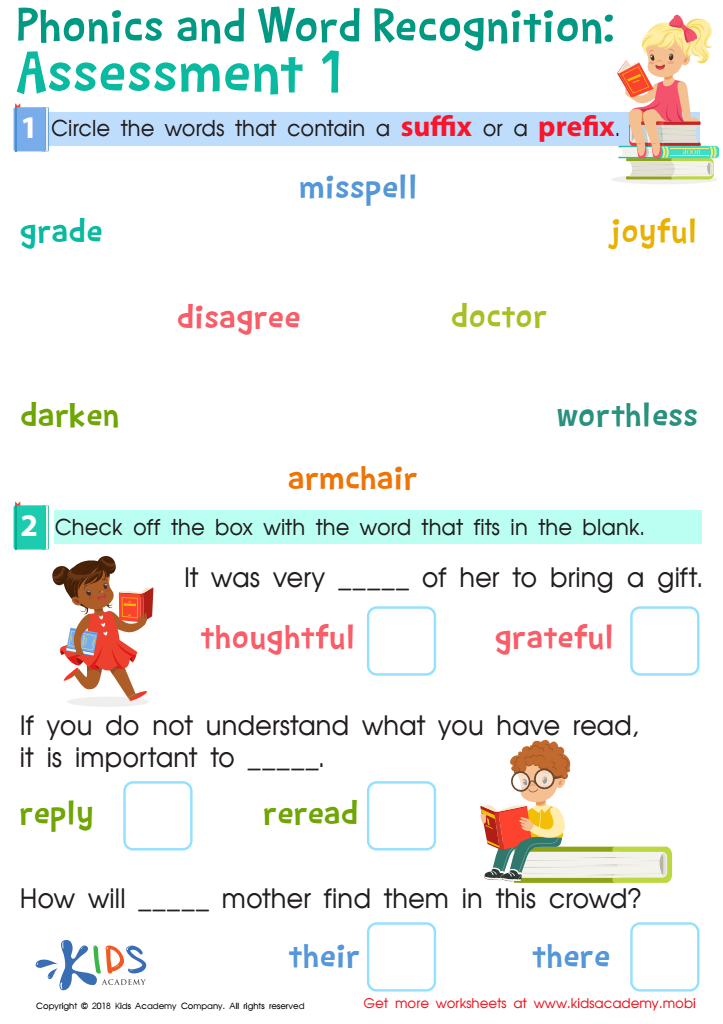
Phonics and Word Recognition: Assessment 1 Worksheet
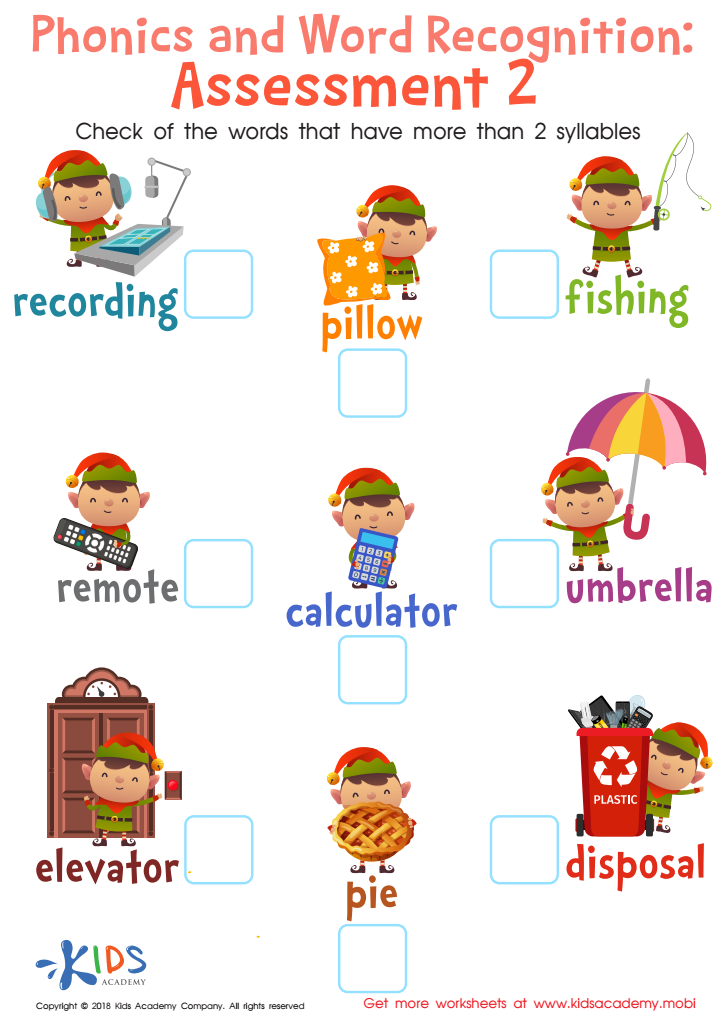
Phonics and Word Recognition: Assessment 2 Worksheet
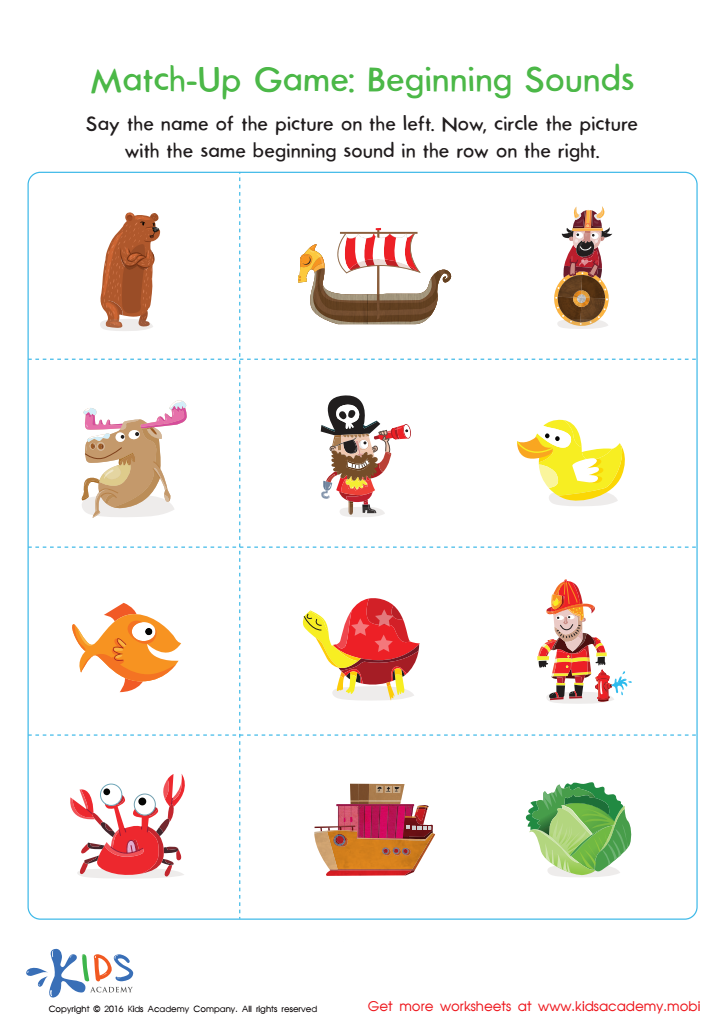
Match–Up Game: Beginning Sounds Worksheet








Phonics recognition is a critical component of early reading skills for children aged 3-8. Understanding phonics—the relationship between sounds and letters—empowers children to decode unfamiliar words, enhancing their reading fluency and comprehension. When parents and teachers emphasize phonics instruction, they lay the foundation for future academic success.
By mastering phonics, children become more confident readers, reducing frustration and fostering a love for learning. Early reading proficiency positively influences vocabulary development and overall literacy, enabling children to engage more fully with stories and educational materials. Furthermore, a solid grasp of phonics makes it easier for children to learn in diverse subjects, as reading plays a crucial role across curricula.
Additionally, phonics recognition helps to identify children who may struggle with reading, allowing for timely intervention. By supporting these students early on, educators and parents can provide the necessary resources to address learning challenges before they escalate.
Ultimately, caring about phonics recognition and reading at this foundational stage cultivates lifelong learners. Through collaborative efforts, parents and teachers can equip children with essential literacy skills, paving the way for academic excellence and a brighter future.








