
Understanding vowel sounds Normal Reading Worksheets for Ages 3-8
3 filtered results
Difficulty Level
Grade
Age
-
From - To
Subject
Activity
Standards
Discover our "Understanding Vowel Sounds Normal Reading Worksheets" designed specifically for children ages 3-8. These interactive and engaging worksheets help young learners master the essential sounds of vowels, laying a strong foundation for reading success. Each sheet offers a variety of activities, including matching, filling in the blanks, and sound recognition exercises. By practicing with these resources, children will improve their phonemic awareness, develop their vocabulary, and boost their confidence in reading. Ideal for parents and educators, our worksheets make learning fun and effective. Explore our collection and empower your child’s reading journey today!
Favorites
With answer key
Interactive
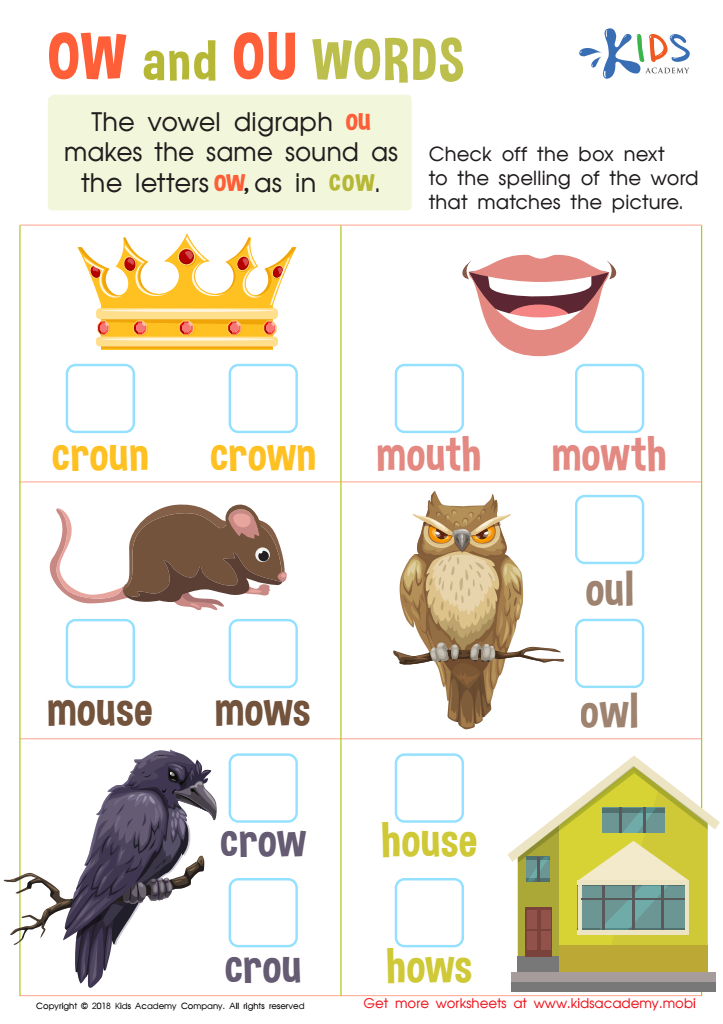
Reading: OW and OU Words Worksheet
Help your kids learn phonetics! Explain the different sounds and long/short variations. Emphasize that some vowel sounds are the same, e.g. ou = ow in cow. For practice, have them read aloud the words in the worksheet and check the box next to the spelling that matches the picture.
Reading: OW and OU Words Worksheet
Worksheet
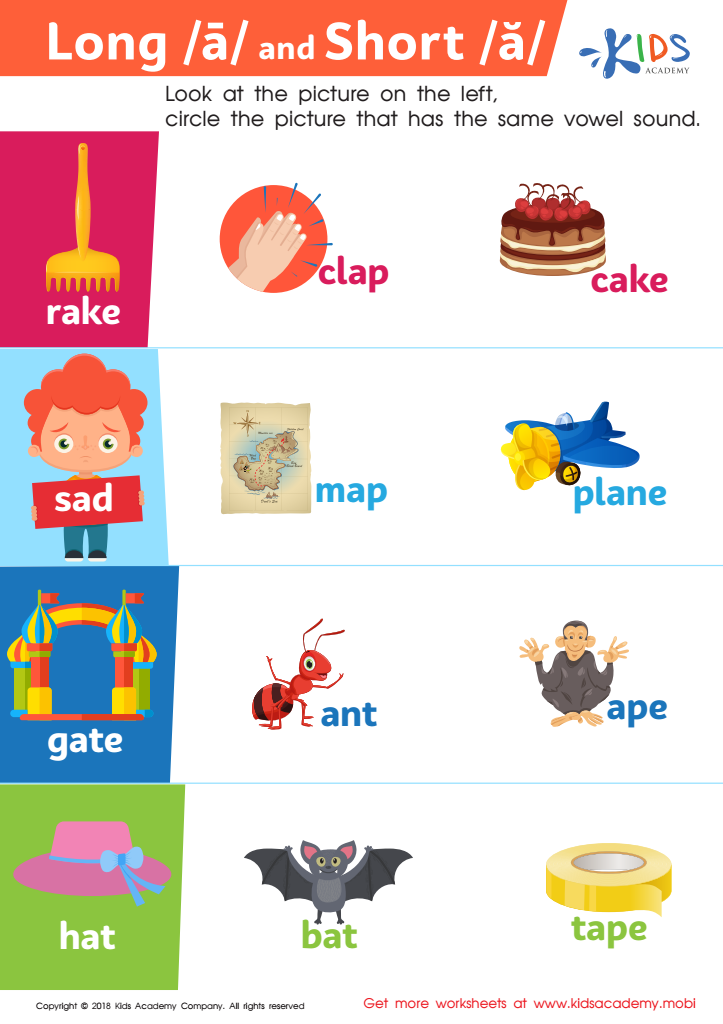
Reading: Long a and Short a Worksheet
This printable helps students practice distinguishing the long and short A sound. Pictures provide clues to read each word and students identify if it has a short or long sound. By completing this worksheet, children gain mastery of the phonics skill.
Reading: Long a and Short a Worksheet
Worksheet
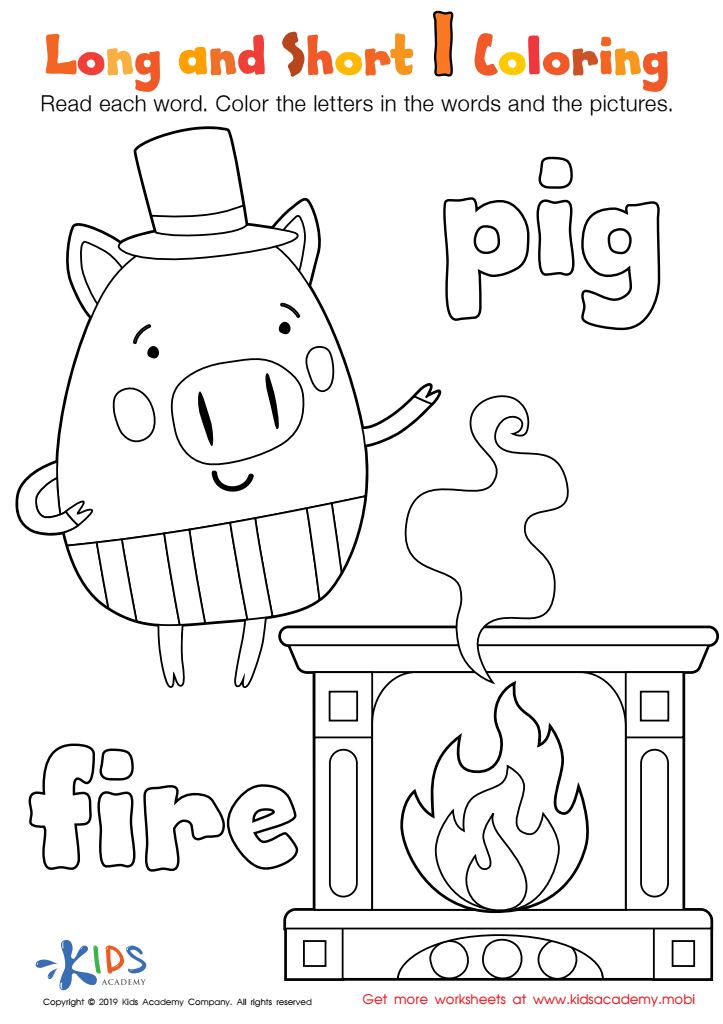
Long and Short I Worksheet
Print the worksheet and have the students read "pig" and "fire". Check for understanding the difference between long and short vowels. Color in words and pictures to make learning phonics fun! This exercise is perfect for introducing the topic to your students.
Download (PDF)
 Assign to My Students
Assign to My Students
Long and Short I Worksheet
Worksheet
Join Kids Academy for Free
Who is primarily going to use this learning content?







Understanding vowel sounds is crucial for early literacy development in children aged 3-8, making it imperative for parents and teachers to prioritize this aspect of reading. Vowel sounds form the foundation of word recognition and pronunciation, serving as building blocks for phonemic awareness—a vital skill that empowers children to decode words when reading. When children grasp how different vowel sounds operate in various contexts, they become more proficient readers and are able to tackle more complex texts confidently.
Moreover, vowel sounds influence spelling and writing skills. By recognizing and practicing vowel sounds, children develop a better understanding of how to spell words correctly and construct sentences effectively. This fluency not only enhances literacy skills but also boosts self-esteem and a love for reading, as children find joy in their newfound abilities.
Additionally, understanding vowel sounds supports language acquisition more broadly, helping children articulate thoughts and ideas more clearly. When parents and teachers emphasize this critical learning component, they contribute positively to a child's educational journey, laying the groundwork for future academic success. Ultimately, fostering a solid foundation in vowel sounds promotes effective communication skills essential for lifelong learning and personal growth.








