Verb identification Normal Reading Worksheets for Ages 3-8
3 filtered results
-
From - To
Explore our Verb Identification Normal Reading Worksheets tailored for ages 3-8. These worksheets make grammar fun and accessible, helping young learners recognize and understand verbs through engaging activities. Perfect for early readers, they promote literacy by incorporating playful exercises that develop critical reading skills. Whether for classroom or home use, each worksheet aligns with educational standards to support language arts programs. Give your child the tools to master verbs and enhance their reading proficiency in an enjoyable way. Discover a treasure trove of learning at Kids Academy today!
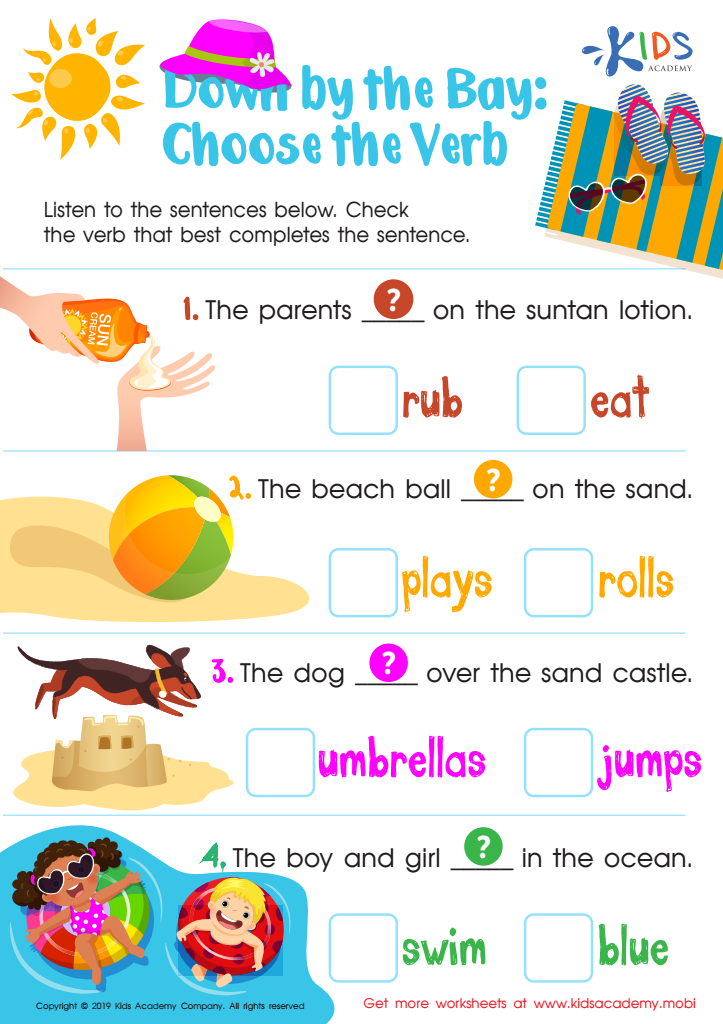
Down by the Bay: Choose the Verb Worksheet
 Assign to My Students
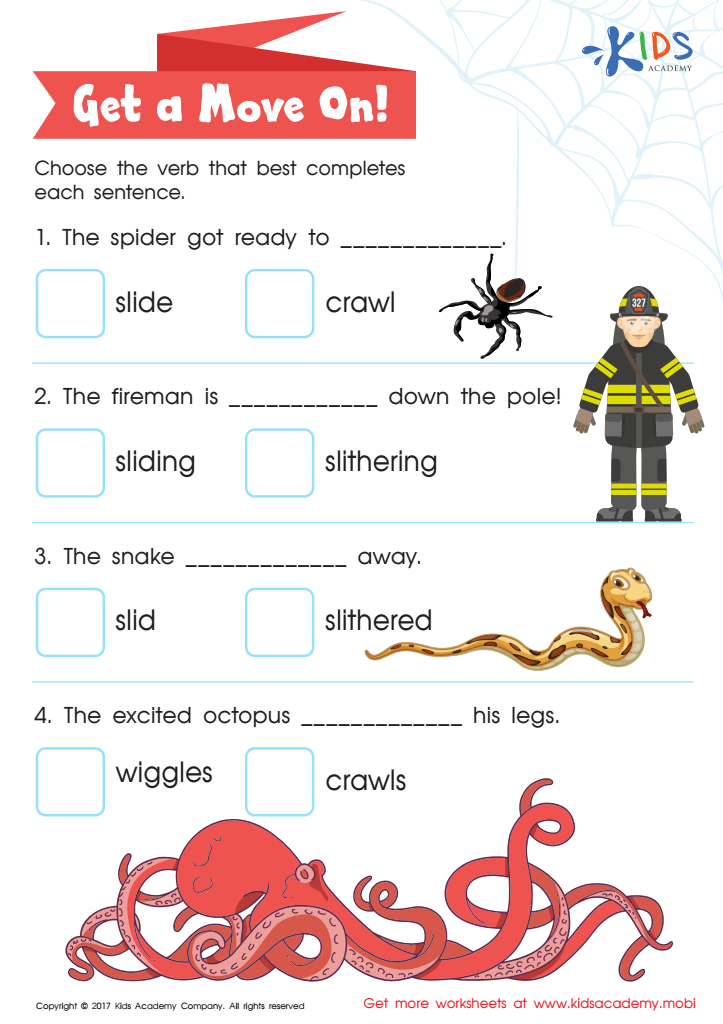
Verb Worksheet
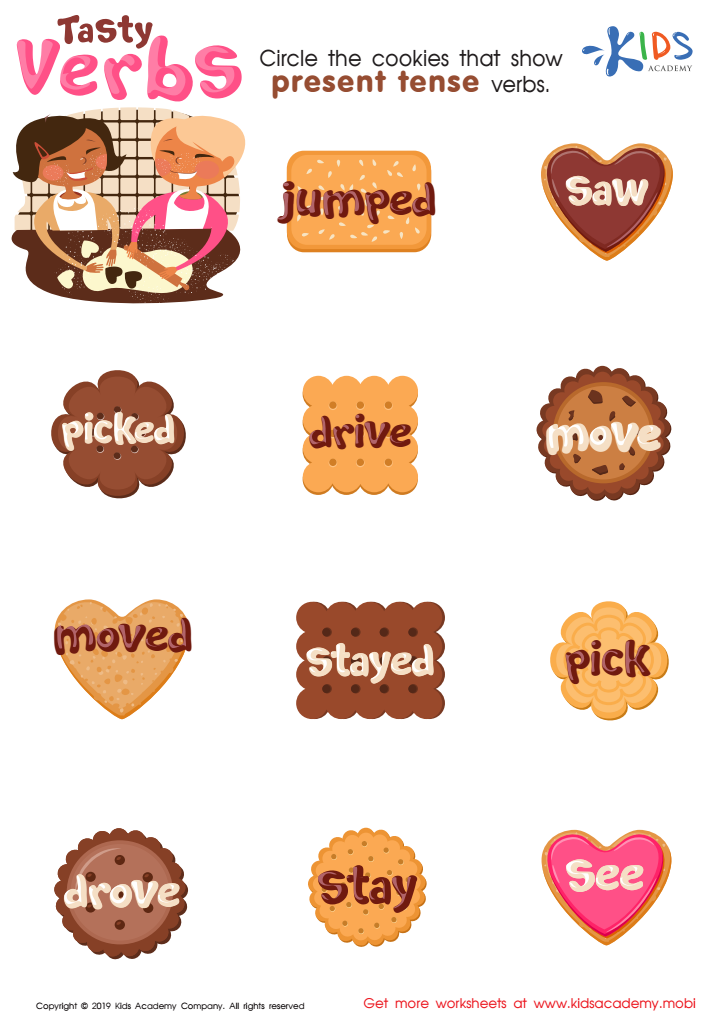
Tasty Verbs Worksheet








Understanding verb identification during normal reading for children aged 3-8 is crucial for several reasons. First, verbs are essential building blocks of language, enabling children to comprehend and convey actions, occurrences, and states. Mastering this fundamental aspect enhances a child’s ability to form complete sentences and communicate effectively. By recognizing verbs within the flow of a sentence, children develop a deeper understanding of syntax and grammatical relationships, leading to improved reading comprehension and fluency.
Parents and teachers should care because early identification of verbs fosters better language development and academic achievements. As children become proficient readers, they can more easily decode complex texts, derive meaning, and engage in critical thinking. Early intervention in language skills also supports cognitive development and literacy skills, setting a strong foundation for future learning.
Moreover, early exposure to verb identification can spark a love for reading. As children feel more confident in their reading abilities, they are more likely to engage with books and other educational materials willingly. This habit can cultivate a lifelong joy for reading, creating independent learners who thrive in various academic and social settings.
In summary, focusing on verb identification during normal reading is a vital element of a child’s early education, promoting comprehensive language development, cognitive skills, and a positive attitude towards learning.








