Analytical skills Normal Reading Fiction Worksheets for Ages 3-8
5 filtered results
-
From - To
Foster your child's analytical prowess with our expertly designed "Analytical Skills Normal Reading Fiction Worksheets for Ages 3-8." Targeted at young readers, these worksheets gently introduce critical thinking and comprehension through engaging fiction stories. Each activity is crafted to enhance young minds' reading skills, making learning both fun and effective. As children delve into captivating narratives, they’ll learn to identify key plot elements, understand character motivations, and draw conclusions. Boost literacy and analytical capabilities with this essential tool, ensuring a solid foundation for future educational success. Empower your child to explore the enriching world of reading today!
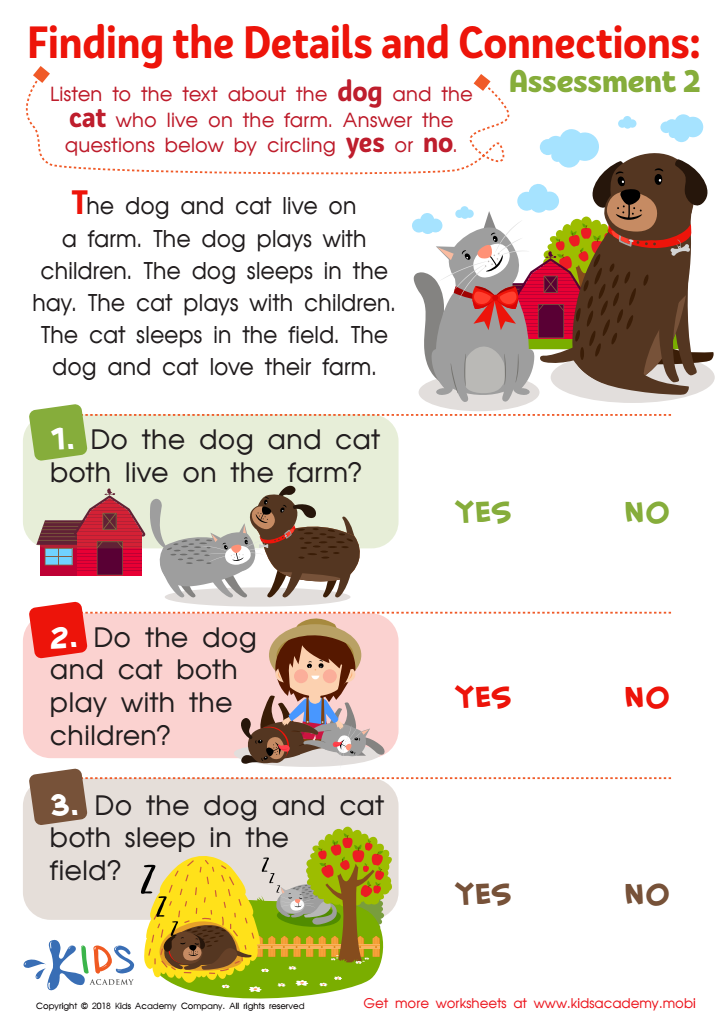
Finding the Details and Connections: Assessment 2 Worksheet
 Assign to My Students
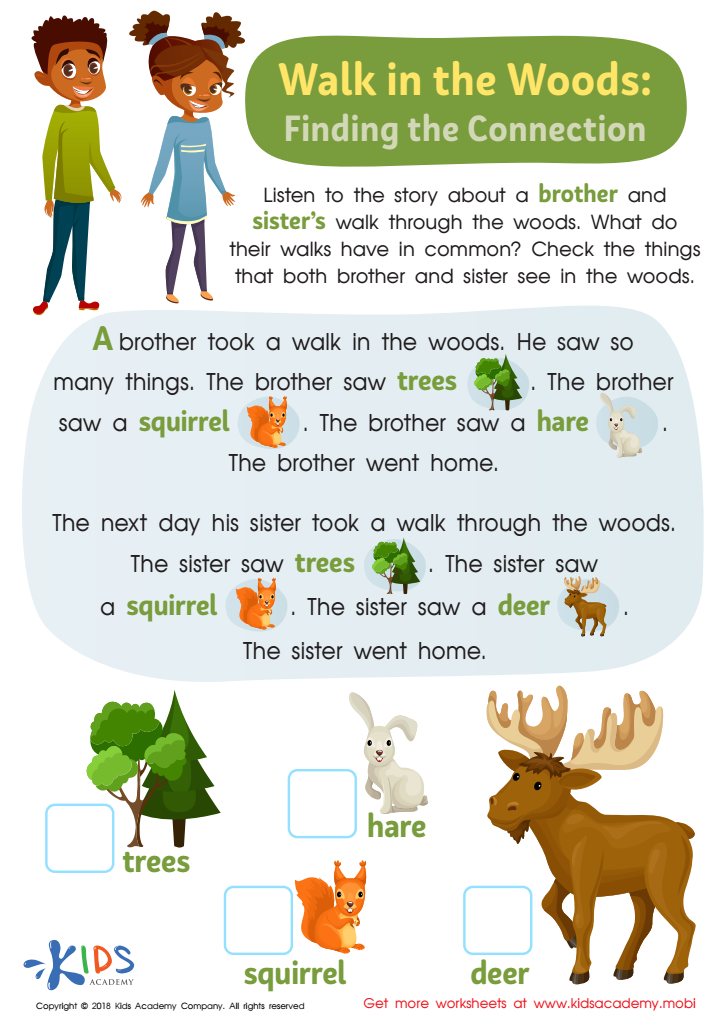
Walk In the Woods: Finding Connections Worksheet
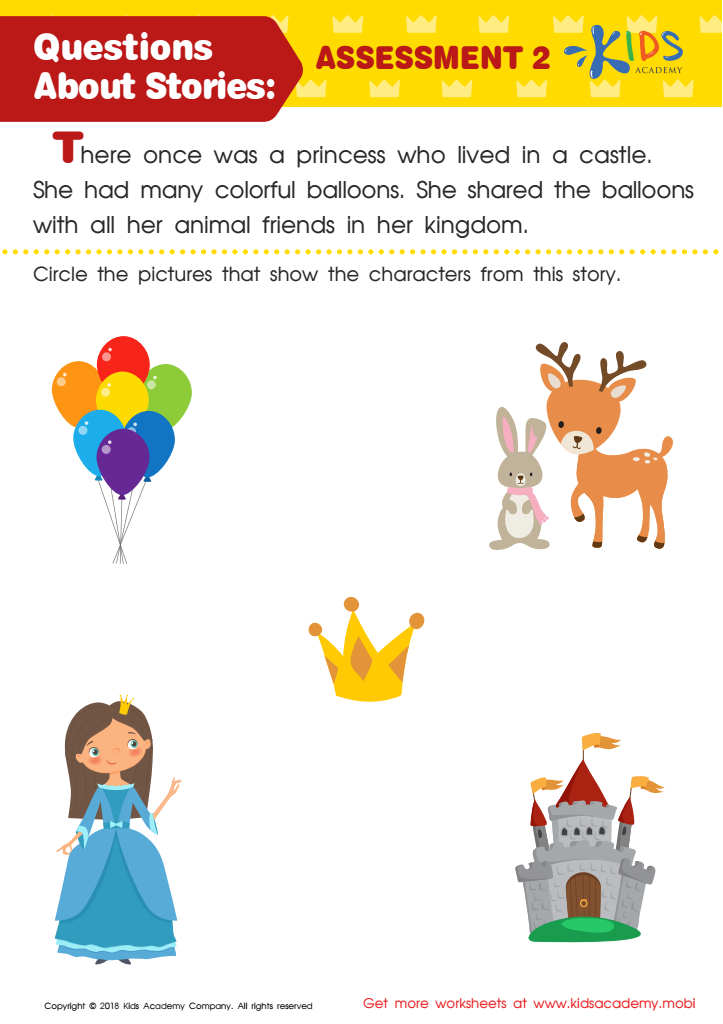
Questions About Stories: Assessment 2 Worksheet
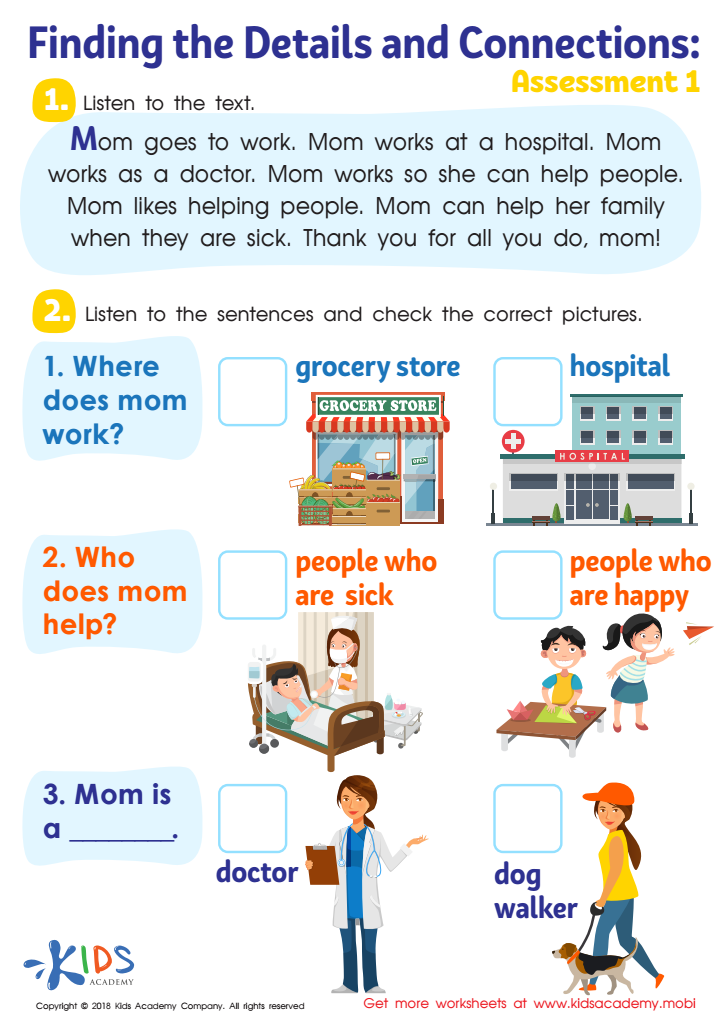
Finding the Details and Connections: Assessment 1 Worksheet
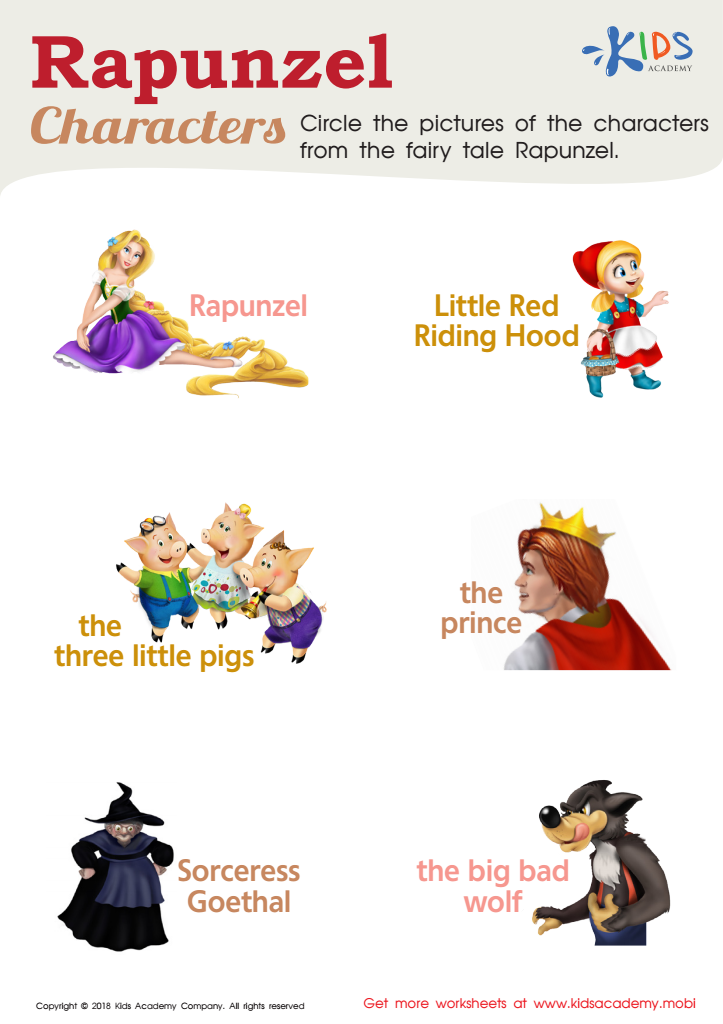
Rapunzel Characters Worksheet


.jpg)



.jpg)

Analytical skills developed through normal reading of fiction are crucial for children ages 3-8 as they lay the foundational cognitive abilities essential for their academic and personal development. At this formative stage, engaging with fiction not only fosters imagination but also enhances critical thinking by stimulating curiosity and encouraging children to question, infer, and predict outcomes within the storyline.
Reading fiction provides children with both an emotional and intellectual gateway to understanding their world and others' perspectives. When children analyze characters’ actions, motivations, and the sequence of events, they refine their ability to think logically and develop empathy, an essential social skill.
Moreover, developing strong analytical skills through reading enhances comprehension and retention, preparing children for more complex reading and problem-solving tasks in later academic endeavors. This ensures they can interact with a text beyond its surface meaning, extracting deeper significance and applying learned concepts to various contexts.
Teachers and parents who actively nurture these skills through consistent reading habits and discussions around stories enrich a child's cognitive toolbox. This sets the stage for lifelong learning and curiosity, equipping young minds to navigate the world with keen observation and thoughtful inquiry. Thus, the interplay between reading fiction and developing analytical skills is indispensable in early childhood education.







