Identifying story elements Normal Reading Fiction Worksheets for Ages 3-8
3 filtered results
-
From - To
Enhance your child's reading experience with our "Identifying Story Elements" Normal Reading Fiction Worksheets, specially designed for ages 3-8. These engaging worksheets introduce young learners to essential story elements such as characters, setting, plot, and theme. Fun and interactive, they encourage creativity and critical thinking while fostering a love for reading. Ideal for parents and educators, these worksheets offer a variety of activities that make learning enjoyable. Support your child's reading journey and comprehension skills as they explore captivating tales. Download our printable worksheets now and watch their understanding of storytelling soar! Perfect for home or classroom use.
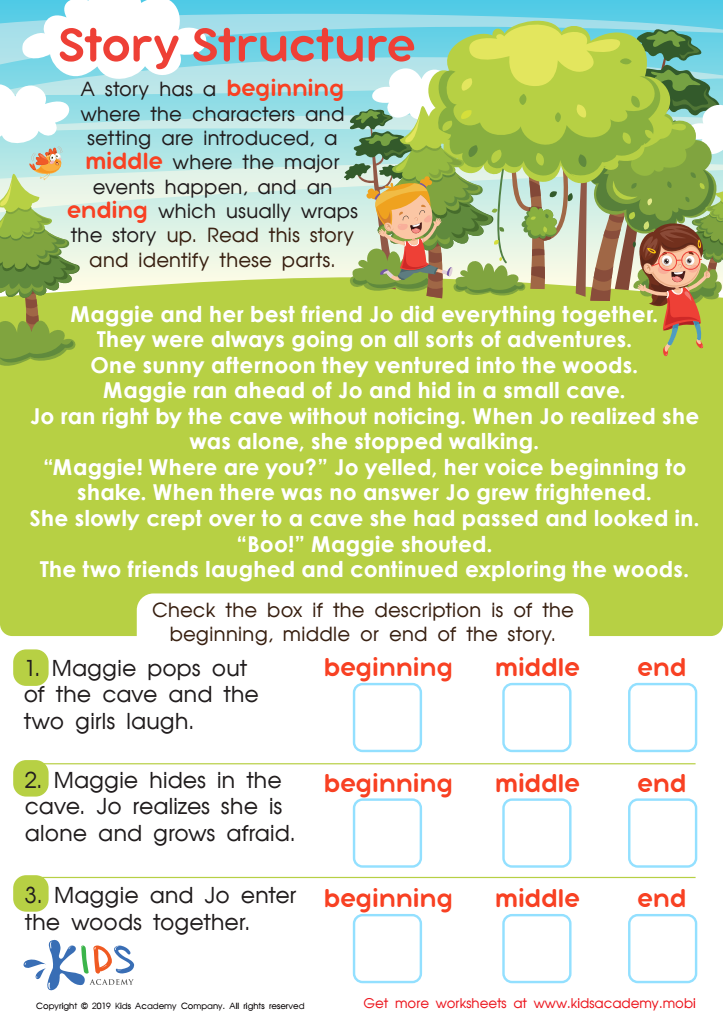
Story Structure Worksheet
 Assign to My Students
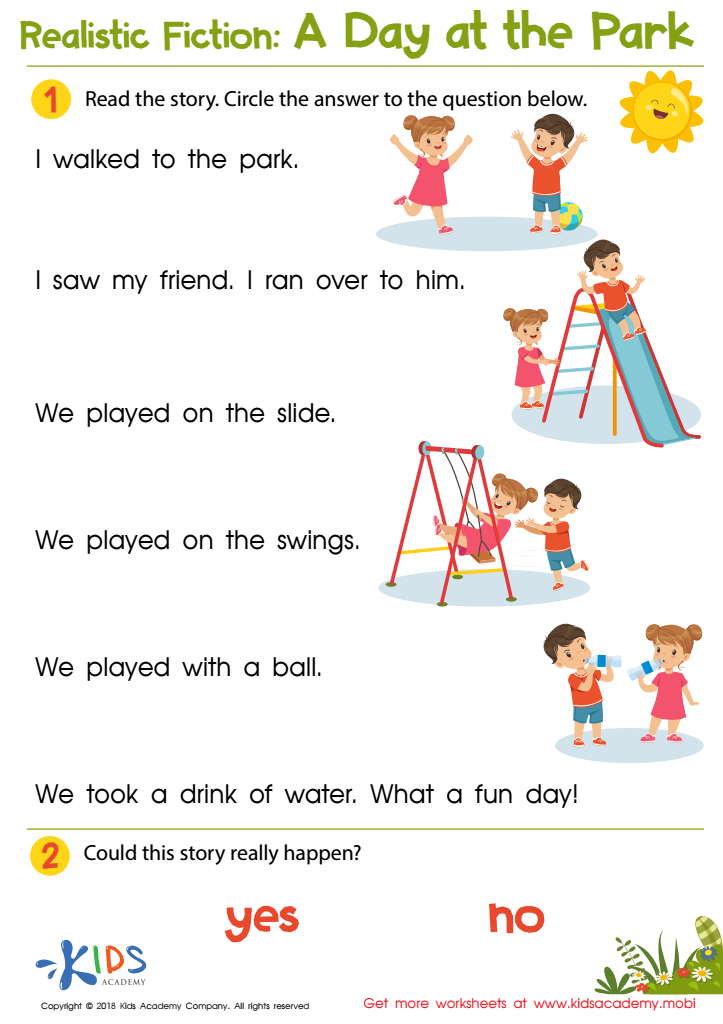
A Day at the Park Worksheet
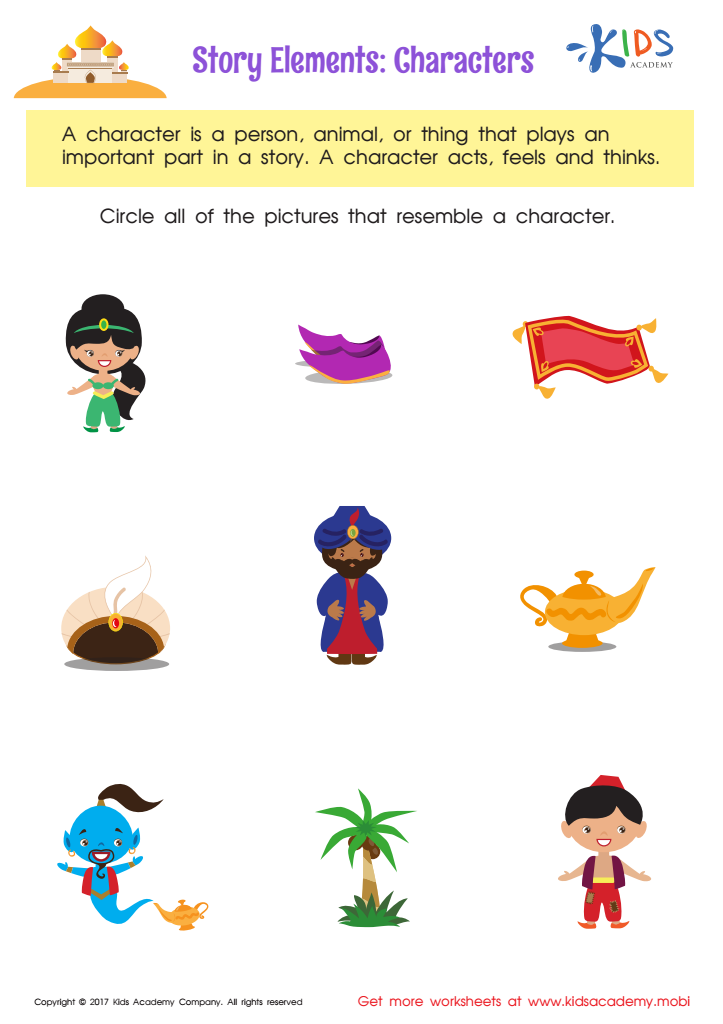
Story Elements Printable








Identifying story elements in reading fiction is crucial for children aged 3-8, and it's important for parents and teachers to prioritize this skill. Understanding story elements—characters, setting, plot, conflict, and resolution—provides young readers with a solid foundation in comprehension, which is essential for their overall literacy development.
By recognizing characters and their motivations, children learn to empathize and relate to others—a valuable social skill. The setting invites imaginative thinking, allowing children to explore new worlds and contexts. Moreover, grasping plot structure fosters critical thinking as children assess cause and effect, helping them understand how events unfold and relate to one another.
Early identification of these elements enhances discussion and engagement with stories, promoting richer conversations about texts. This interactive approach engages children's curiosity and creativity, essential for developing a lifelong love of reading. Parents and teachers can ignite this enthusiasm by asking guided questions, prompting discussions, and leading fun activities related to the story.
Ultimately, understanding story elements not only supports academic success but also nurtures emotional intelligence, encouraging children to articulate thoughts and feelings, and fostering strong communication skills. By focusing on this early literacy skill, parents and teachers lay a strong foundation for children's future education and personal growth.







