Logical Reasoning Normal Reading Fiction Worksheets for Ages 3-8
5 filtered results
-
From - To
Explore our enriching collection of Logical Reasoning Normal Reading Fiction Worksheets, designed specifically for children aged 3-8. These colorful, engaging activities use age-appropriate fictional stories to develop critical thinking and logical reasoning skills. Each worksheet encourages young learners to make predictions, draw conclusions, and decipher story elements, laying the foundation for proficient reading and analytical skills. Incorporating fun characters and scenarios, our worksheets not only captivate young minds but also foster a love for reading and problem-solving. Perfect for classroom or home learning, these resources ensure a balanced and interactive educational experience for your child.
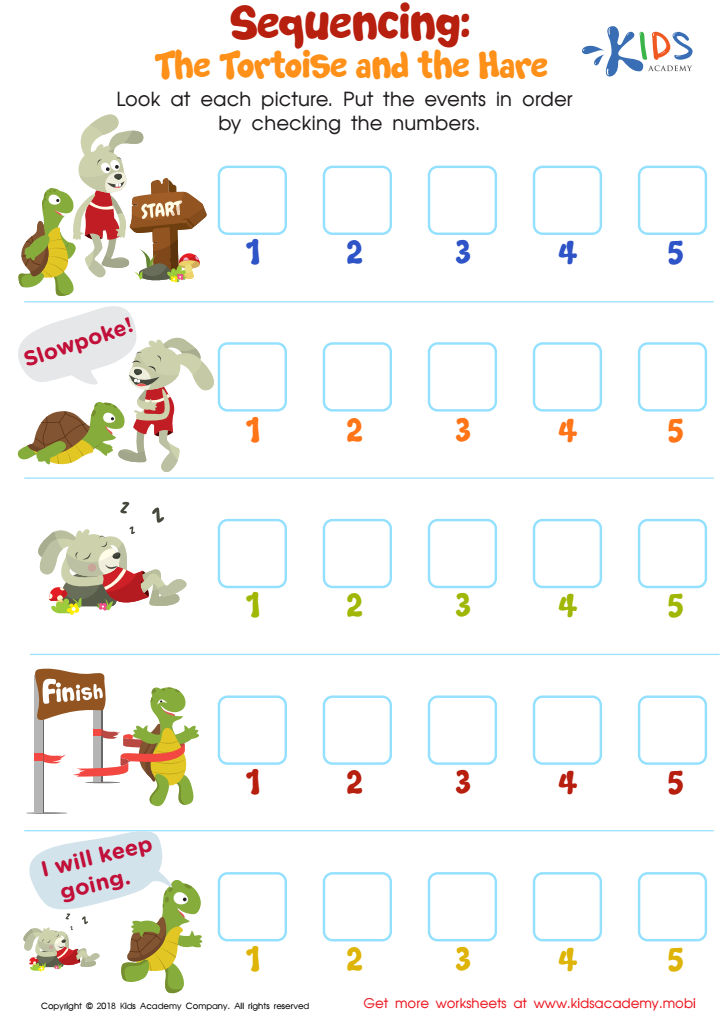
Sequencing: The Tortoise and the Hare Worksheet
 Assign to My Students
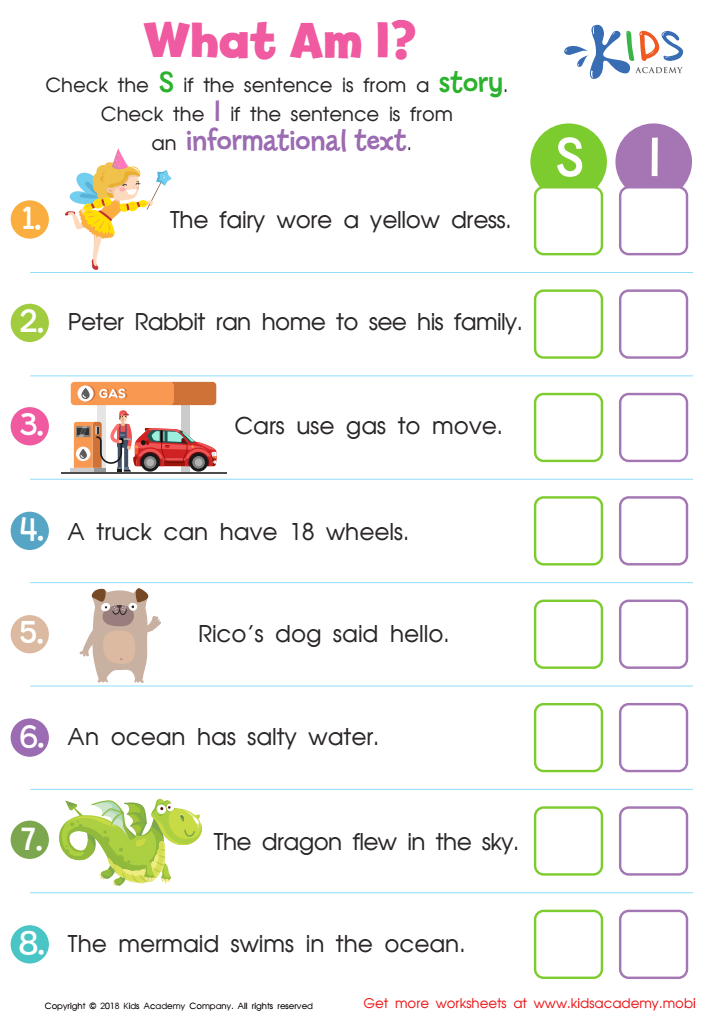
What Am I? Worksheet
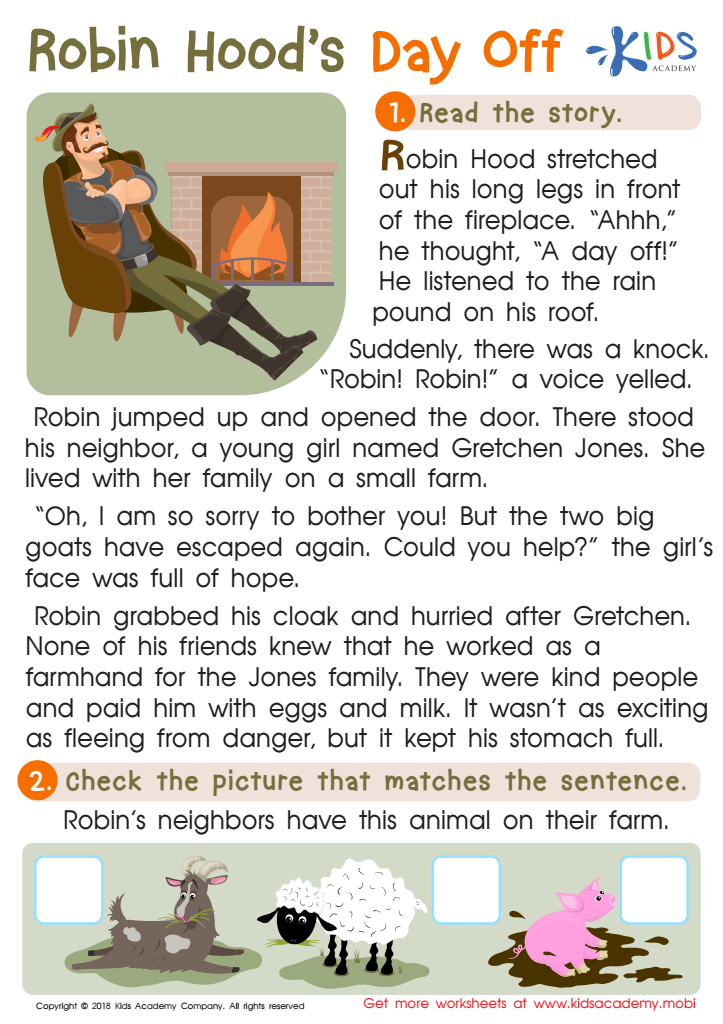
Robin Hood's Day Off Worksheet
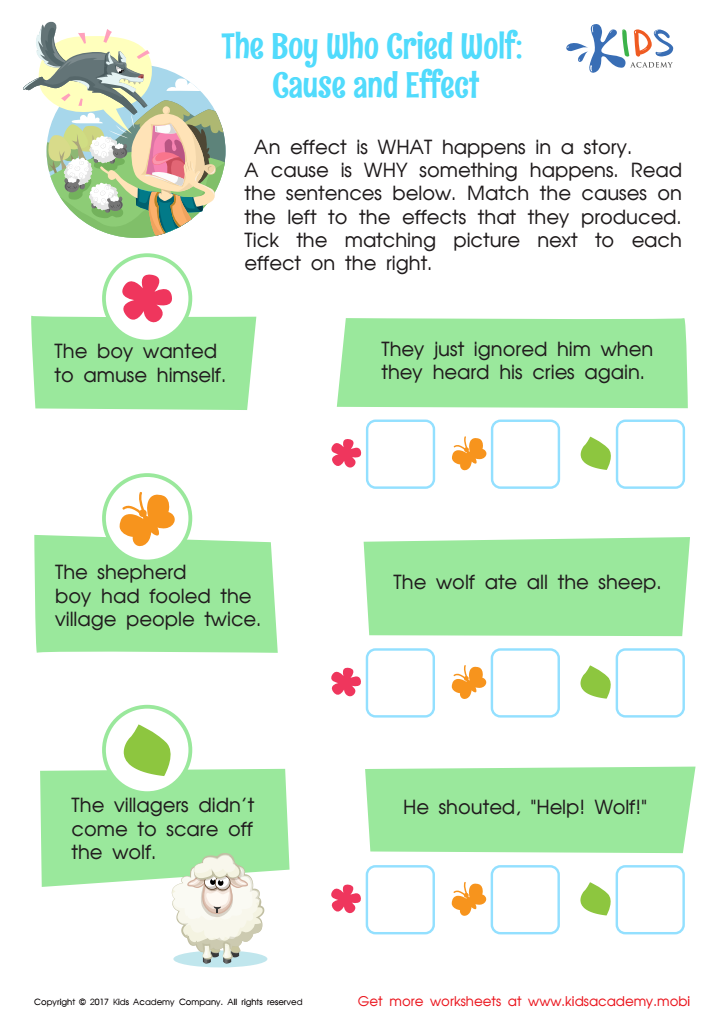
The Boy Who Cried Wolf: Cause and Effect Worksheet
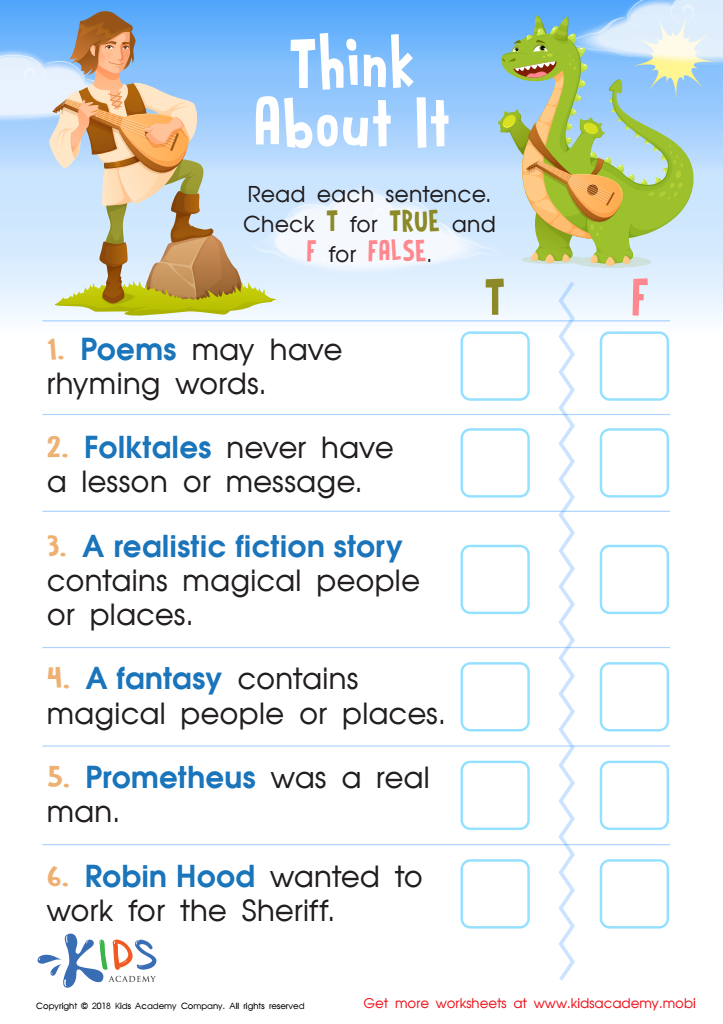
Think About It: Assessment Worksheet








Parents and teachers should prioritize logical reasoning and normal reading fiction for children aged 3-8 because these foundational activities foster crucial developmental skills. Logical reasoning helps young minds develop critical thinking and problem-solving abilities, essential for future academic success and everyday decision-making. Encouraging activities like puzzles and age-appropriate problem sets cultivates an analytical mindset, aiding in understanding patterns, cause-and-effect, and sequences, all vital for grasping more complex concepts as they grow.
Similarly, introducing fiction during normal reading activities is crucial for young children's cognitive and emotional development. Fictional stories expand a child’s imagination, allowing them to explore different scenarios, characters, and settings beyond their immediate experience. This boosts creativity and empathy as they understand and relate to diverse perspectives and emotions. Fiction also enhances vocabulary and language skills by exposing children to varied sentence structures and new words in context, laying a strong foundation for literacy.
Balancing logical reasoning and engaging with fiction provides a holistic approach to early childhood education. It nurtures intellectual, emotional, and social growth, paving the way for well-rounded individuals. Prioritizing these aspects equips children with skills that are fundamental for learning and success in all areas of life.







