Logical thinking Normal Reading Fiction Worksheets for Ages 3-8
3 filtered results
-
From - To
Enhance your child's cognitive abilities with our engaging Logical Thinking Normal Reading Fiction Worksheets for Ages 3-8. Designed to augment comprehension and critical thinking, these worksheets merge captivating stories with fun activities. As children navigate through fictional narratives, they improve their reasoning skills and boost imagination. Each worksheet is crafted by education experts to align with normal reading levels, ensuring age-appropriate challenges that foster learning. Perfect for early readers, these resources offer a delightful way to enrich reading experiences while nurturing logical proficiency. Trust our high-quality worksheets to make learning an enjoyable adventure for your young learner.
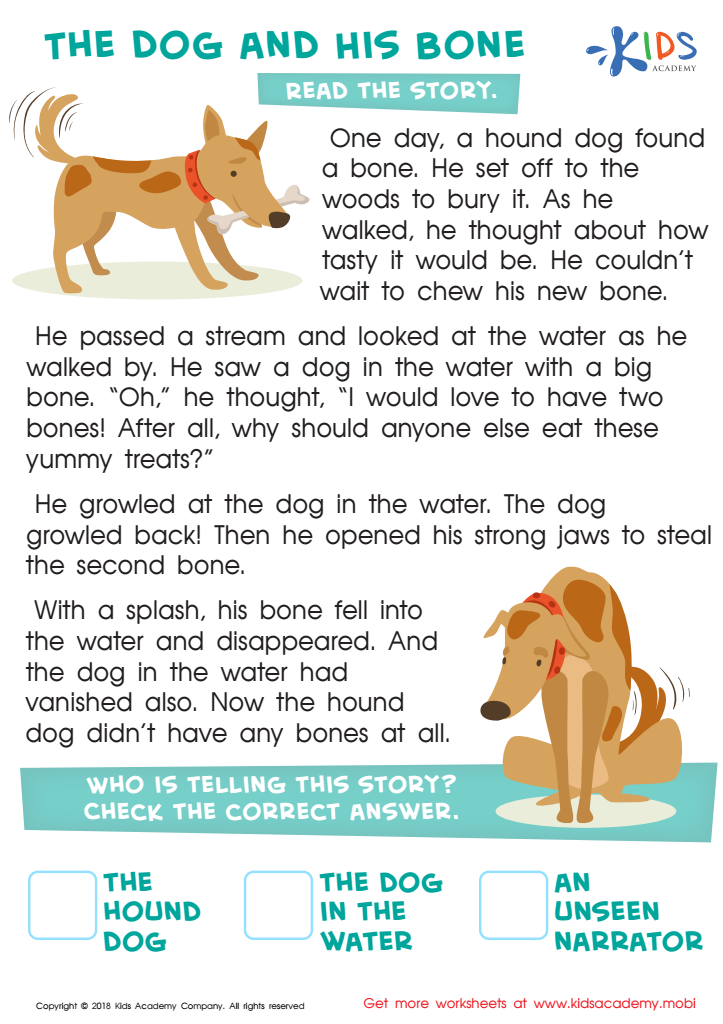
The Dog and His Bone Worksheet
 Assign to My Students
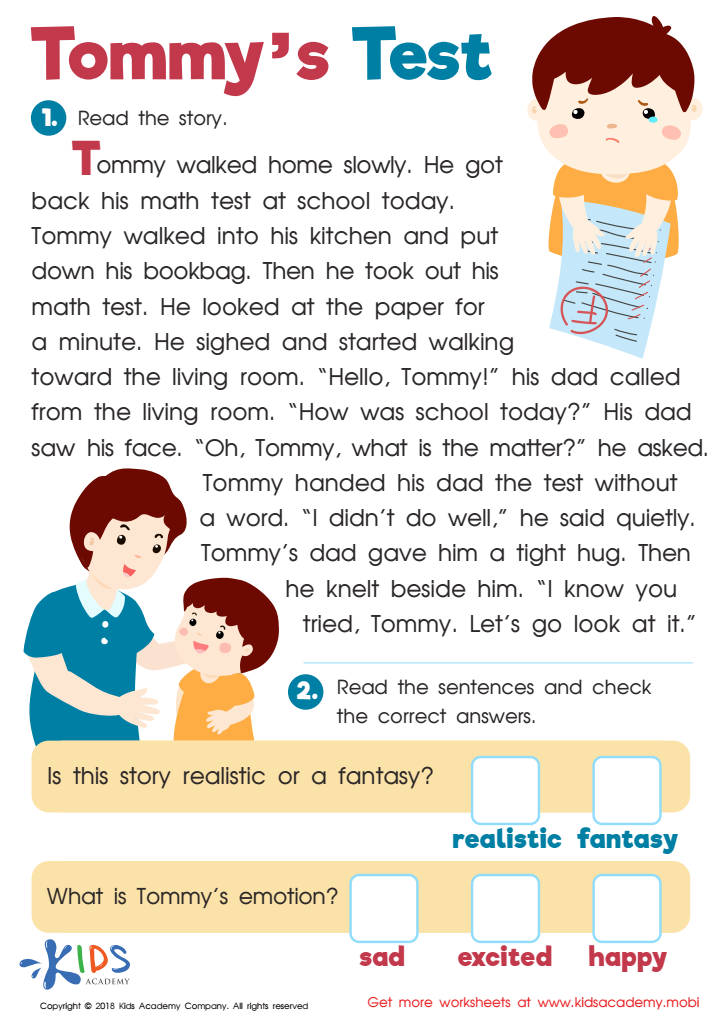
Tommys Test Worksheet
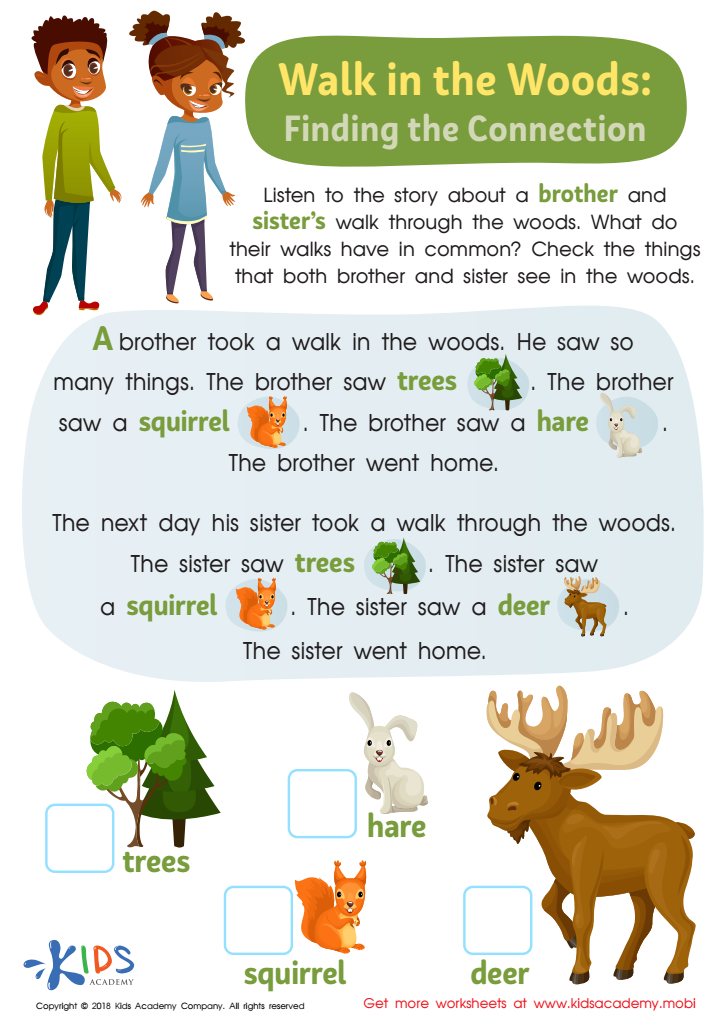
Walk In the Woods: Finding Connections Worksheet


.jpg)





Logical thinking, normal reading, and exposure to fiction are essential developmental dimensions for children aged 3-8, and educators and parents play a vital role in fostering these skills.
Logical thinking lays the foundation for problem-solving and critical thinking abilities. It allows children to understand cause-and-effect relationships, make informed decisions, and approach problems with structured solutions. Encouraging activities that promote logical reasoning, such as puzzles and simple coding games, can build these crucial cognitive skills.
Normal reading is indispensable for language development and enhances a child's ability to understand and use language effectively. It improves vocabulary, grammar, and comprehension skills, which are fundamental to academic success in later years. Regular reading practices establish essential literacy skills and foster attention span and focus.
Reading fiction provides a gateway to creative thinking and empathy. Fiction exposes children to a plethora of characters, cultures, and scenarios, broadening their understanding of the world's diversity. It allows young minds to explore emotions vicariously, encouraging empathy, and emotional intelligence.
By emphasizing these three domains, teachers and parents not only foster cognitive and emotional growth but also lay down a solid academic foundation that supports lifelong learning and development. Engaging children in a variety of experiences in these areas leads to well-rounded individuals capable of thinking creatively and logically.







