Sight word recognition Normal Sight Words Worksheets for Ages 3-8
7 filtered results
Difficulty Level
Grade
Age
-
From - To
Subject
Activity
Standards
Boost your child’s reading fluency with our Sight Word Recognition Normal Sight Words Worksheets designed for ages 3-8. These engaging printable exercises help young learners instantly recognize commonly used words, essential for developing confident and competent readers. Our worksheets provide fun, interactive activities that reinforce word recognition through repeated exposure and practice. Build a strong foundation in reading with our expertly crafted materials, suitable for nursery to early elementary students. By mastering sight words, children can enhance their comprehension skills and enjoy a more seamless, enjoyable reading experience. Explore our collection today and give your child the tools they need to succeed!
Favorites
With answer key
Interactive
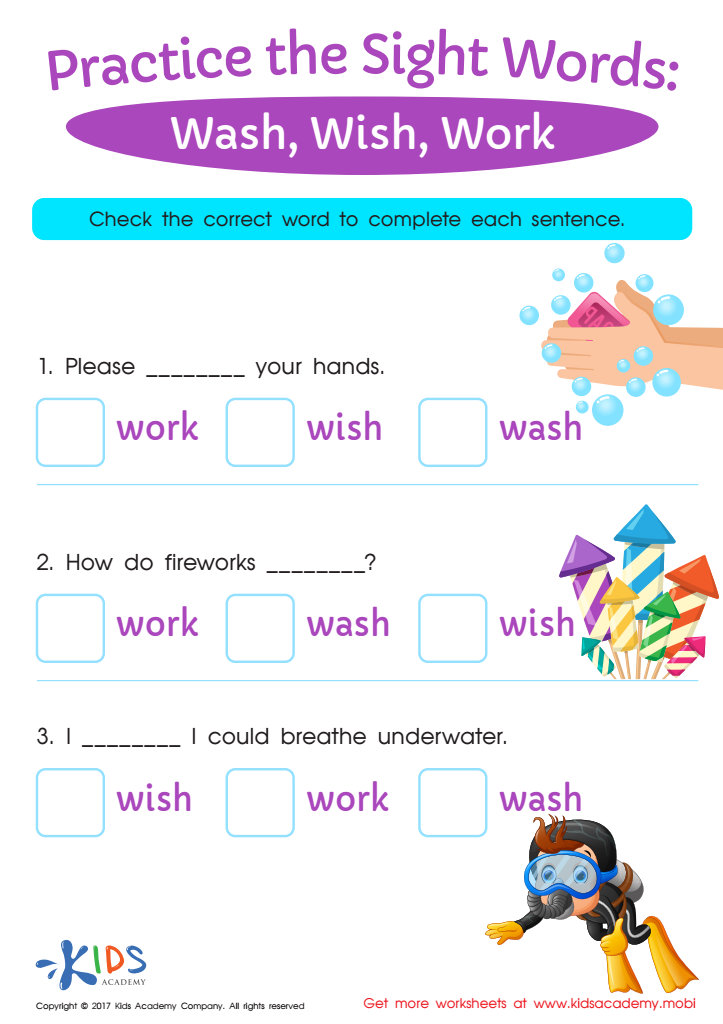
Wash, Wish, Work Sight Words Worksheet
Help your child distinguish between 'wash', 'wish' and 'work' with this sight words printable worksheet. It features sentences with the words and colorful images that aid your child's memory. Help them get one step closer to becoming a confident reader!
 Assign to My Students
Wash, Wish, Work Sight Words Worksheet
Worksheet


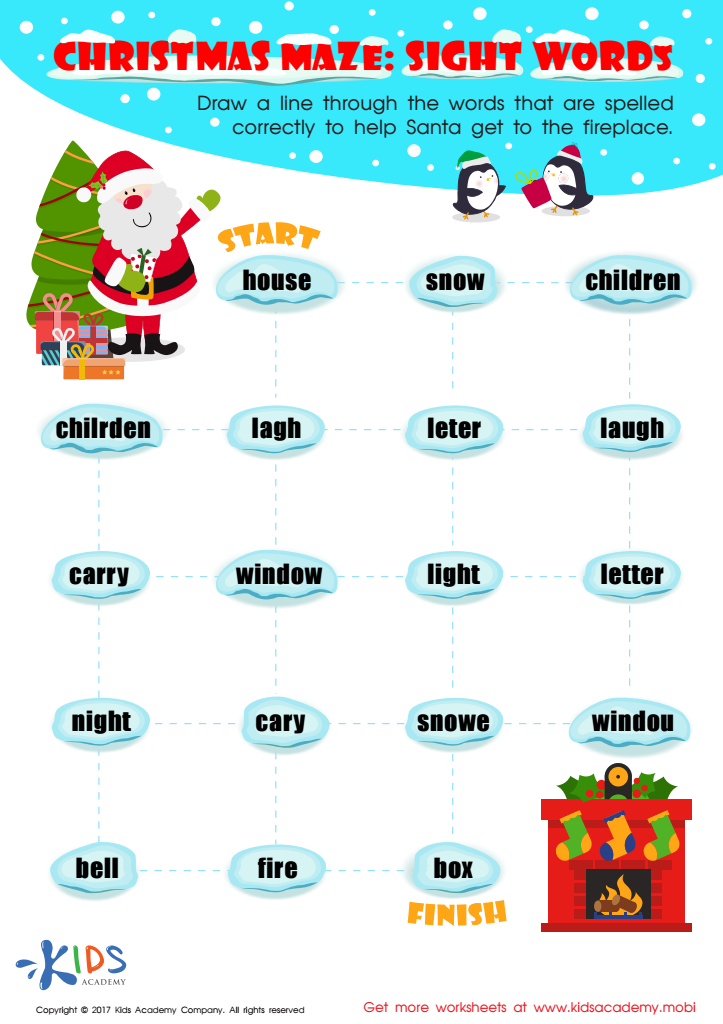
Sight Words Christmas Maze Printable
Let your 3rd grader practice early reading and spelling with this festive Christmas maze! Have fun helping Santa find the fireplace and build fluency skills at the same time. This free worksheet is sure to be a hit and get your child excited for the holidays!
Sight Words Christmas Maze Printable
Worksheet
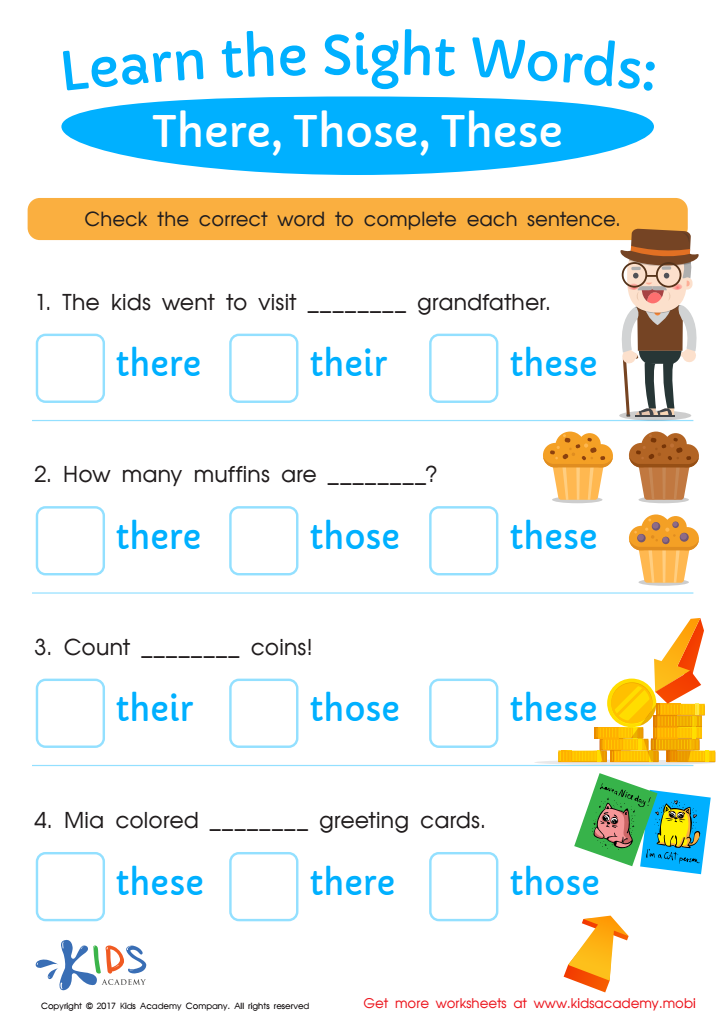
There, Those and These Sight Words Worksheet
Help teach your child to read and use tricky demonstrative pronouns. Use this 2nd grade sight words worksheet: there, those, these. Have them read each sentence and choose the right pronoun by looking at the pictures.
There, Those and These Sight Words Worksheet
Worksheet
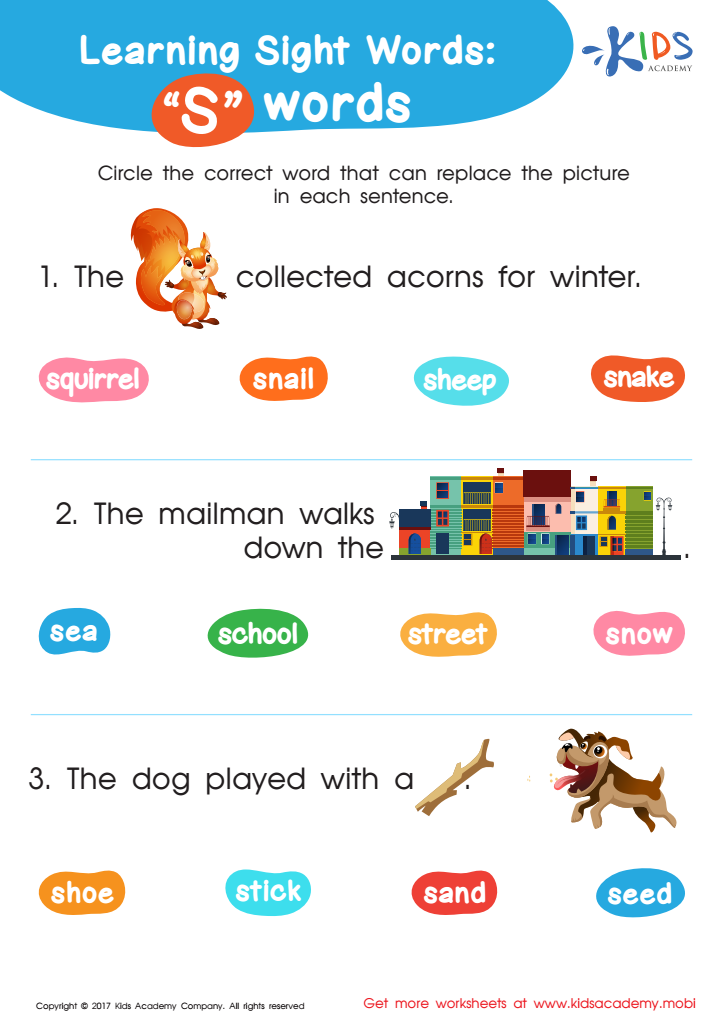
S Words Sight Words Worksheet
This 2nd grade worksheet encourages kids to practice using context clues when identifying sight words that begin with 's'. Engage them with colorful pictures to enhance the learning, helping them to understand the context of each sentence and choose the correct word.
S Words Sight Words Worksheet
Worksheet
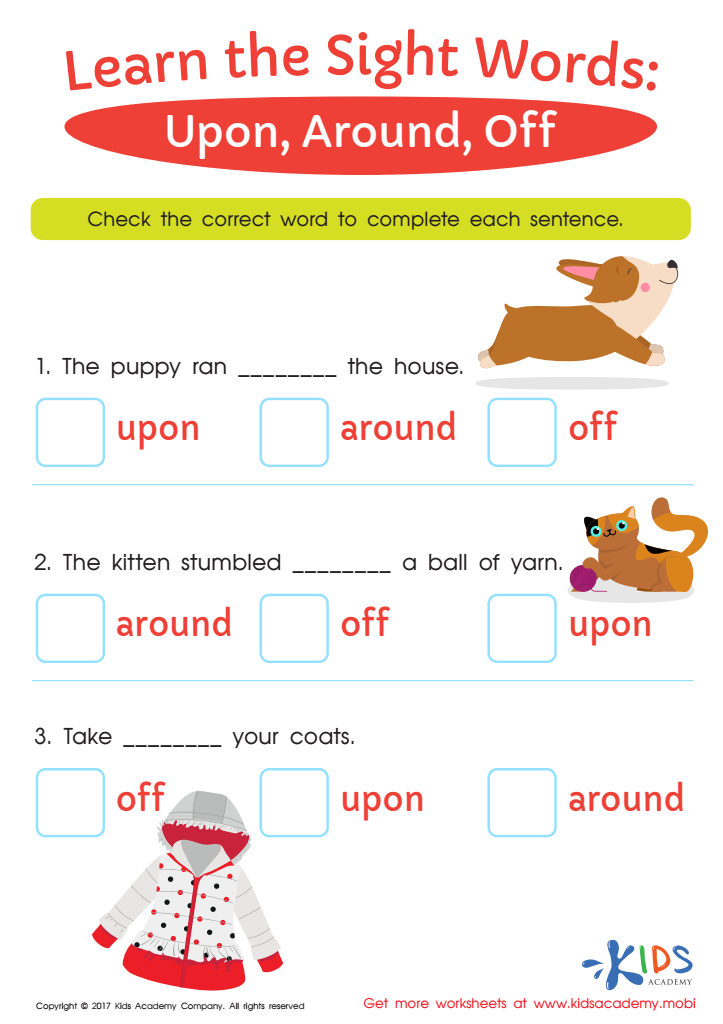
Upon, Around, Off Sight Words Worksheet
Assist your child in mastering prepositions by printing off this worksheet featuring three sight words: upon, around, off. Read the sentences aloud and use the illustrations to demonstrate the meaning of each. Your kid will soon master these words quickly.
Upon, Around, Off Sight Words Worksheet
Worksheet
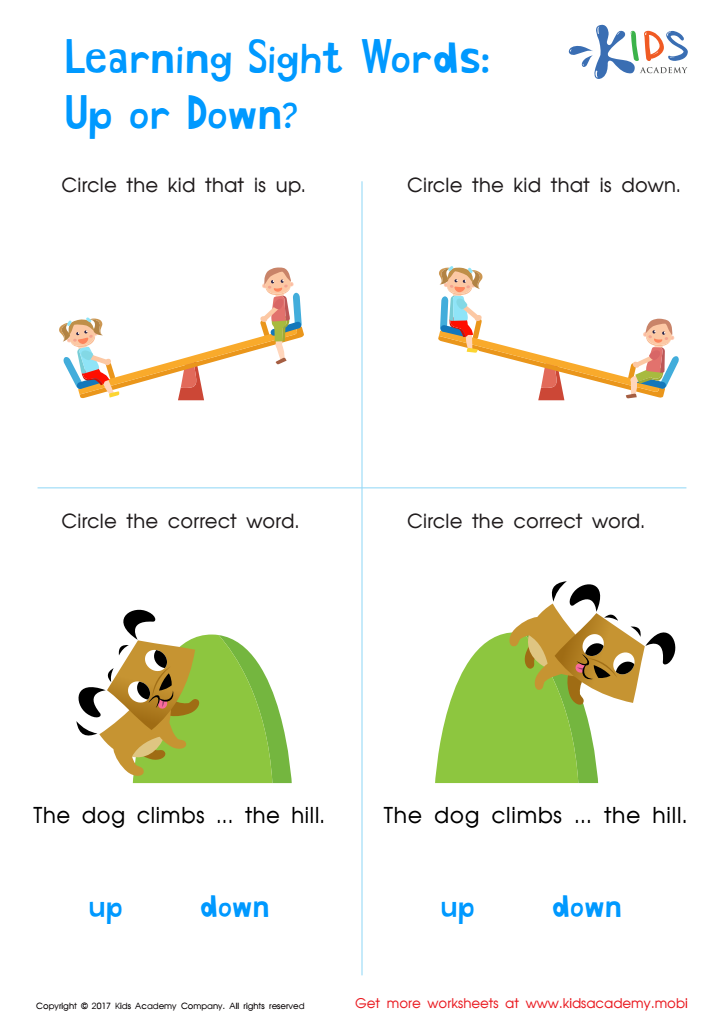
Up or Down Printable Sight Words Worksheet
Help your child identify up and down in print with this sight words worksheet. It has simple sentences, vibrant images and easy-to-read language that allow your little learner to practice these essential sight words. Perfect for early readers!
Help your early reader identify and read up and down with this sight words worksheet. It provides simple sentences, clear language and vibrant images to help them practice these essential sight words. Perfect for toddlers!
Up or Down Printable Sight Words Worksheet
Worksheet
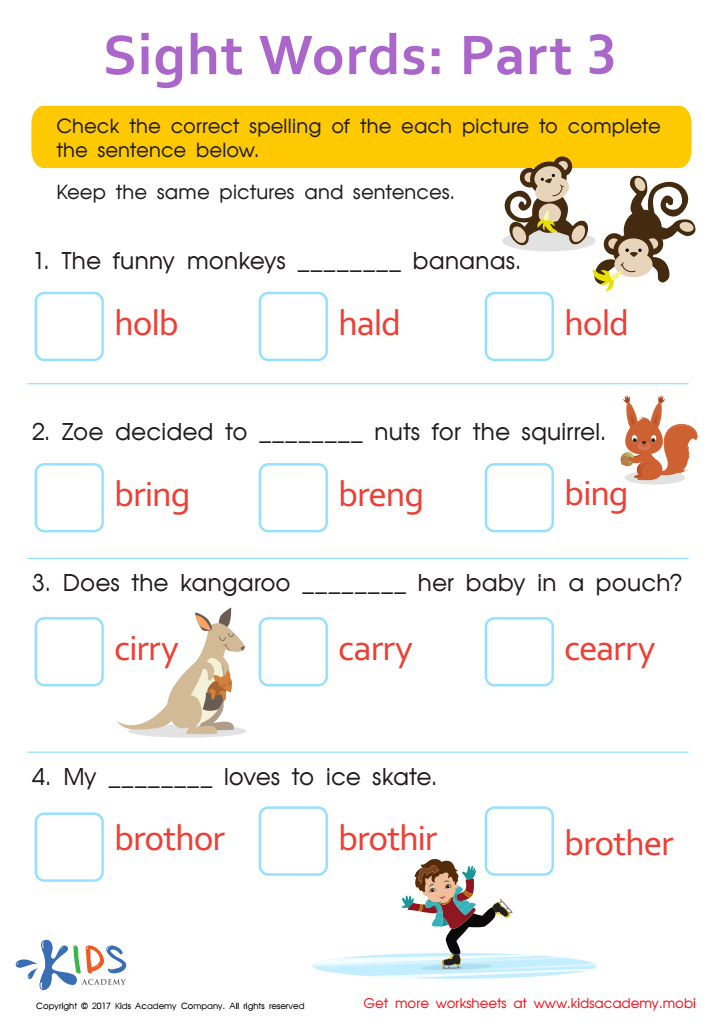
Hold, Bring, Carry, Brother Sight Words Worksheet
This sight words worksheet has fun illustrations to engage kids. They must read each sentence, then fill in the missing word, selecting from: hold, bring, carry, brother!
Hold, Bring, Carry, Brother Sight Words Worksheet
Worksheet
Join Kids Academy for Free
Who is primarily going to use this learning content?








Sight word recognition is a critical skill for young learners because it forms the foundation of their reading abilities. Sight words, often high-frequency words like "the," "and," "it," can't always be sounding out using traditional phonetic rules and must be instantly recognized by sight. By ages 3-8, children are in a crucial developmental period where mastering these words can dramatically influence their reading fluency and comprehension.
For parents and teachers, helping children recognize sight words is essential. Firstly, it accelerates reading progress. When kids spot familiar words instantly, they read more smoothly and naturally, which fosters a love for reading. This increased fluency helps in better understanding and enjoying stories, leading to improved engagement with text.
Secondly, strong sight word recognition supports better academic performance. Early readers who can quickly and accurately identify sight words develop greater confidence in their literacy skills. This not only eases the transition from "learning to read" to "reading to learn" but also benefits other subjects where reading is integral.
Lastly, focusing on sight words aids in language development and communication. As children become adept readers, they gain better vocabulary, understand sentence structures more clearly, and can communicate more effectively.
In summary, prioritizing sight word recognition for ages 3-8 sets the stage for lifelong literacy and learning, making it a key concern for any caregiver or educator.