Animal Classification Normal Animals Worksheets for Ages 3-8
6 filtered results
-
From - To
Explore the exciting world of animals with our "Animal Classification Normal Animals Worksheets" designed for children aged 3-8. These engaging and educational printables help young learners discover and understand animal categories, such as mammals, birds, fish, and more. Each worksheet features vibrant illustrations and simple activities, perfect for nurturing curiosity and enhancing scientific thinking. Aligning with early learning standards, these resources support skill development in sorting, recognizing patterns, and comparing characteristics. Ideal for classrooms, homeschooling, or fun learning at home, our worksheets make discovering animals enjoyable and informative for young minds. Download now and watch them thrive!
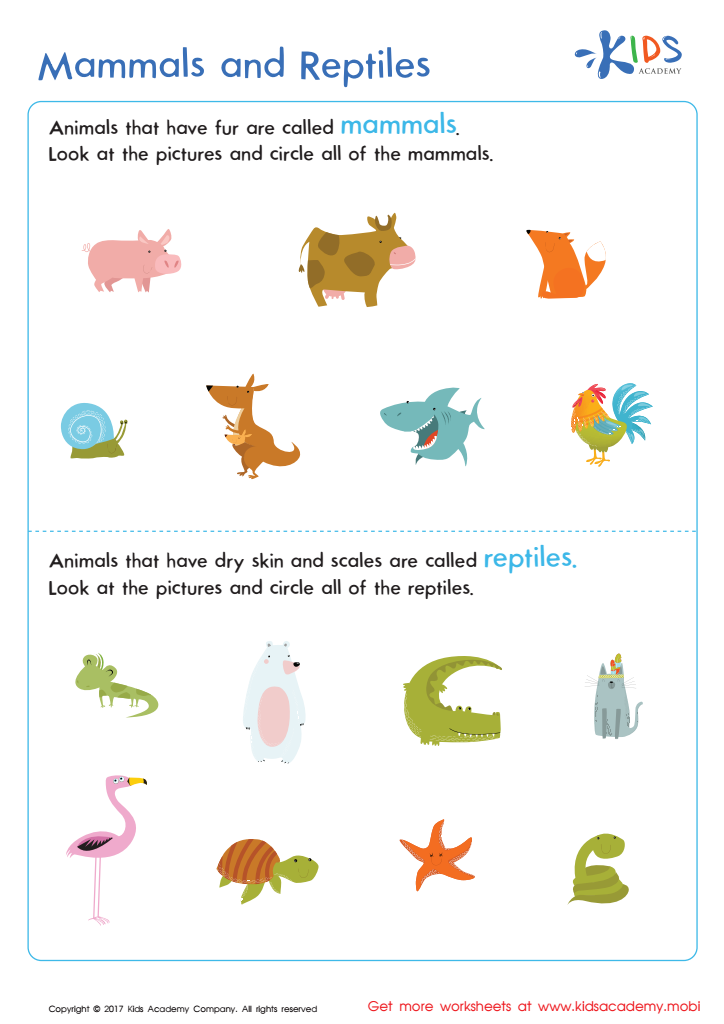
Mammals and Reptiles Worksheet
 Assign to My Students
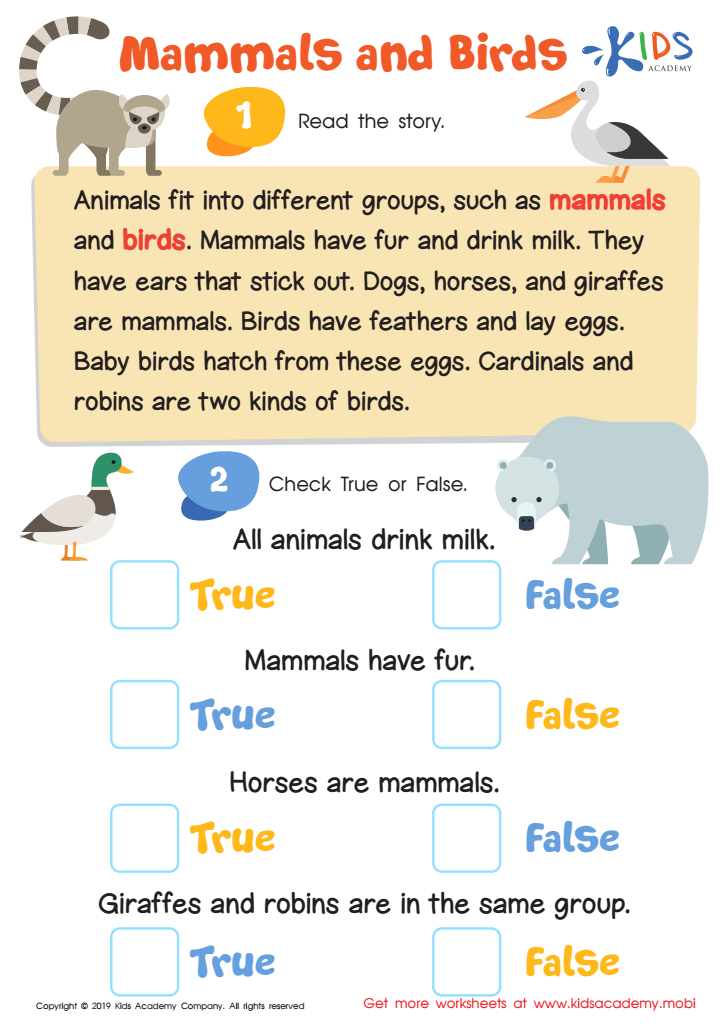
Mammals and Birds Worksheet
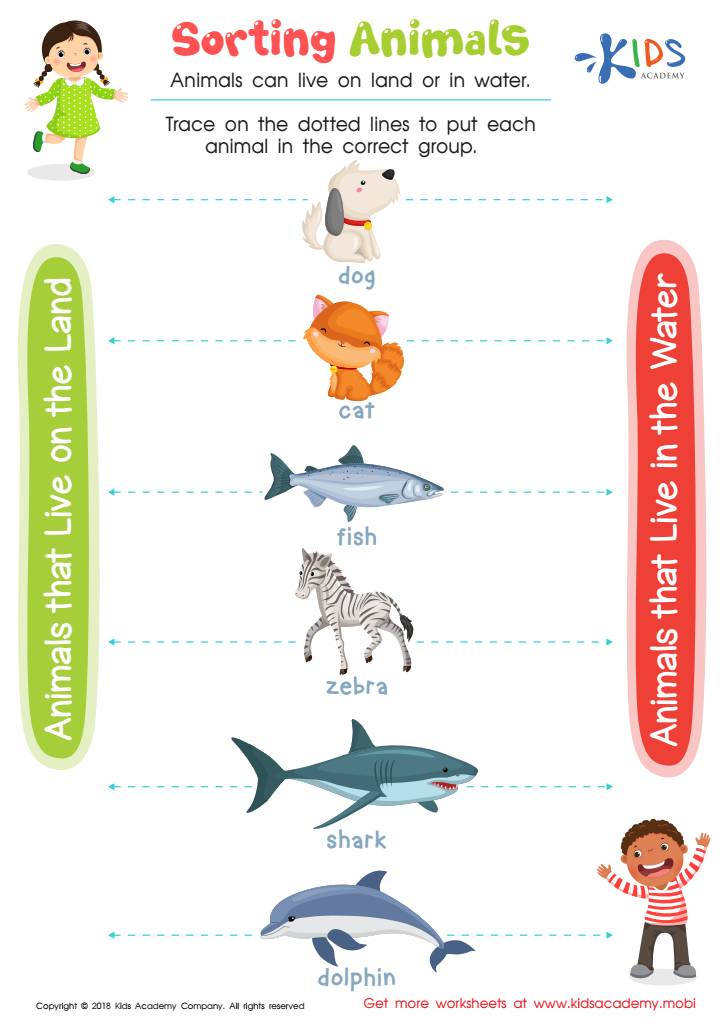
Sorting Animals Worksheet
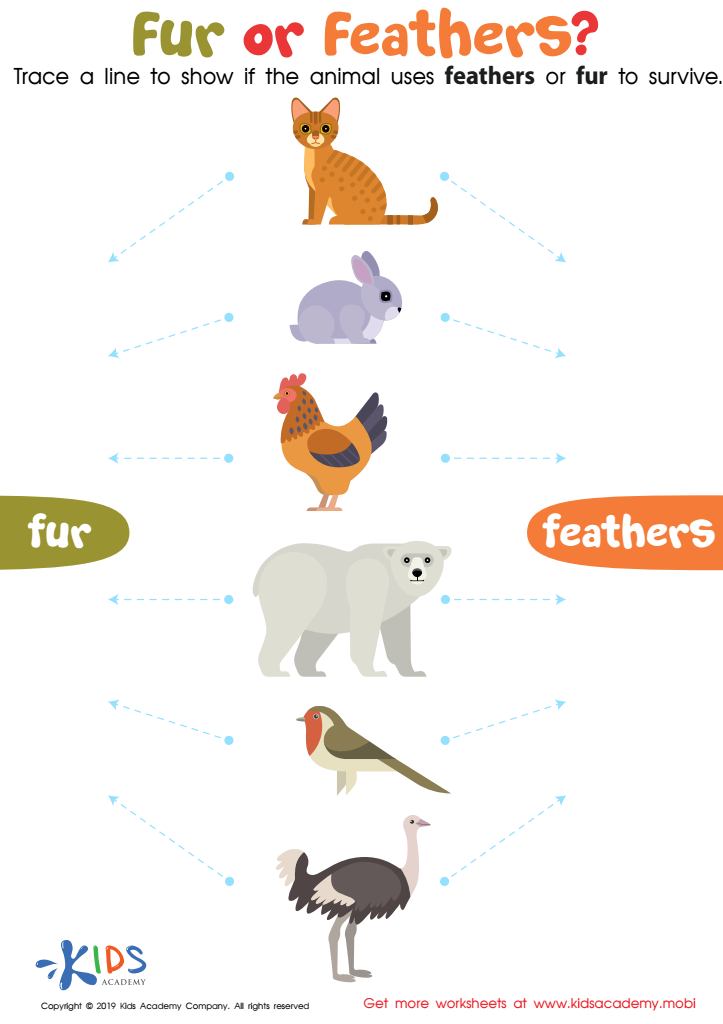
Fur or Feathers? Worksheet
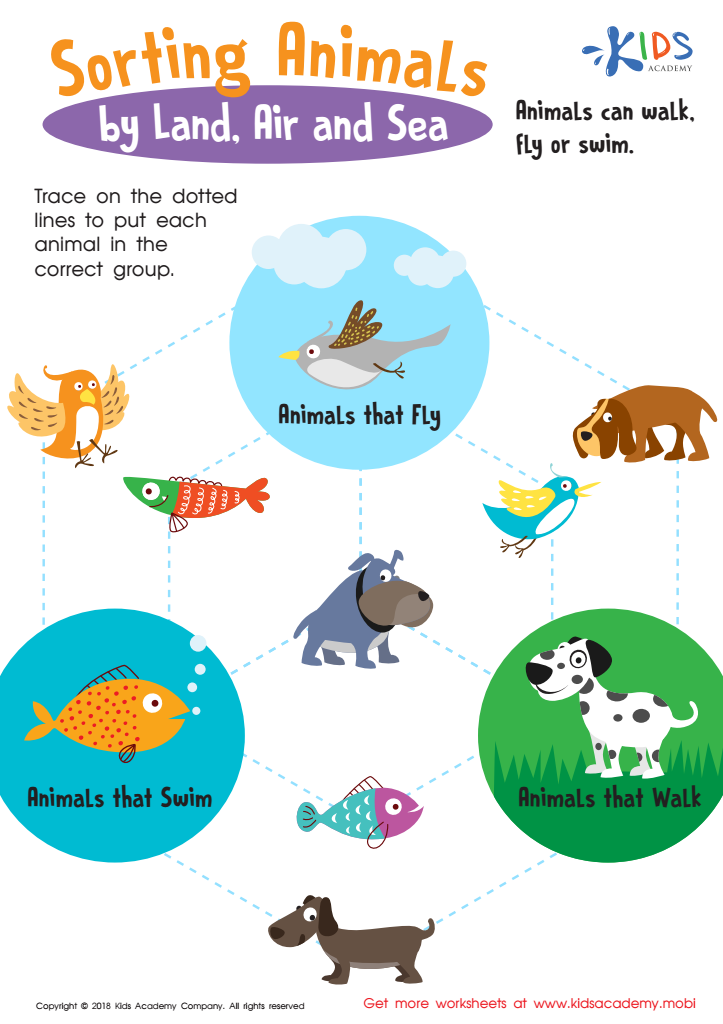
Sorting Animals by Land, Air and Sea Worksheet
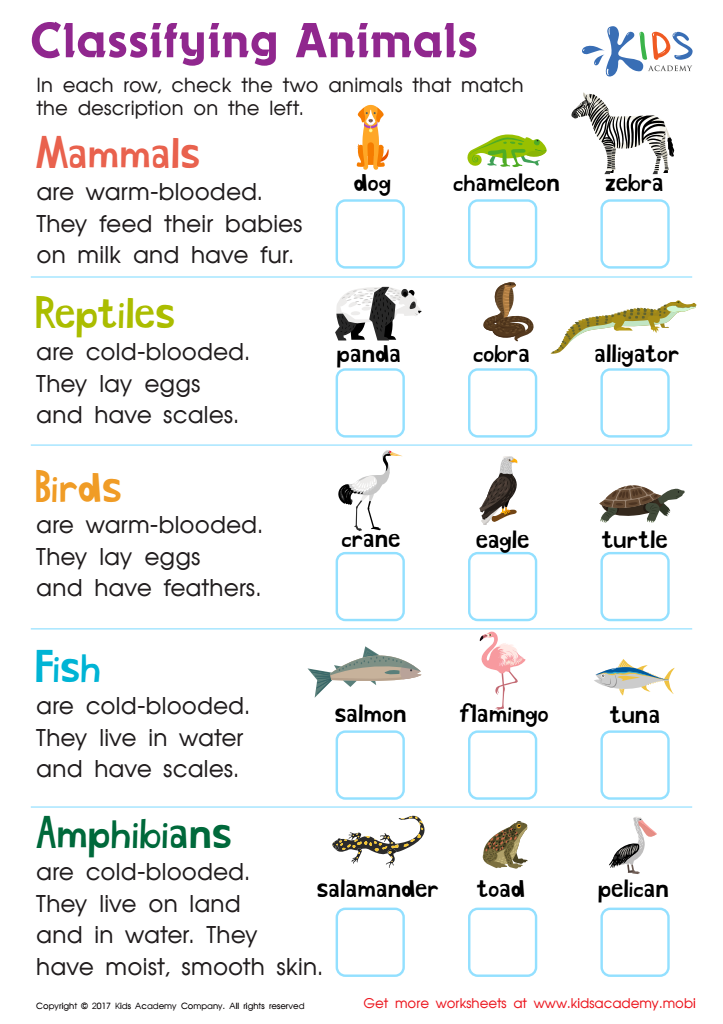
Classifying Animals Worksheet


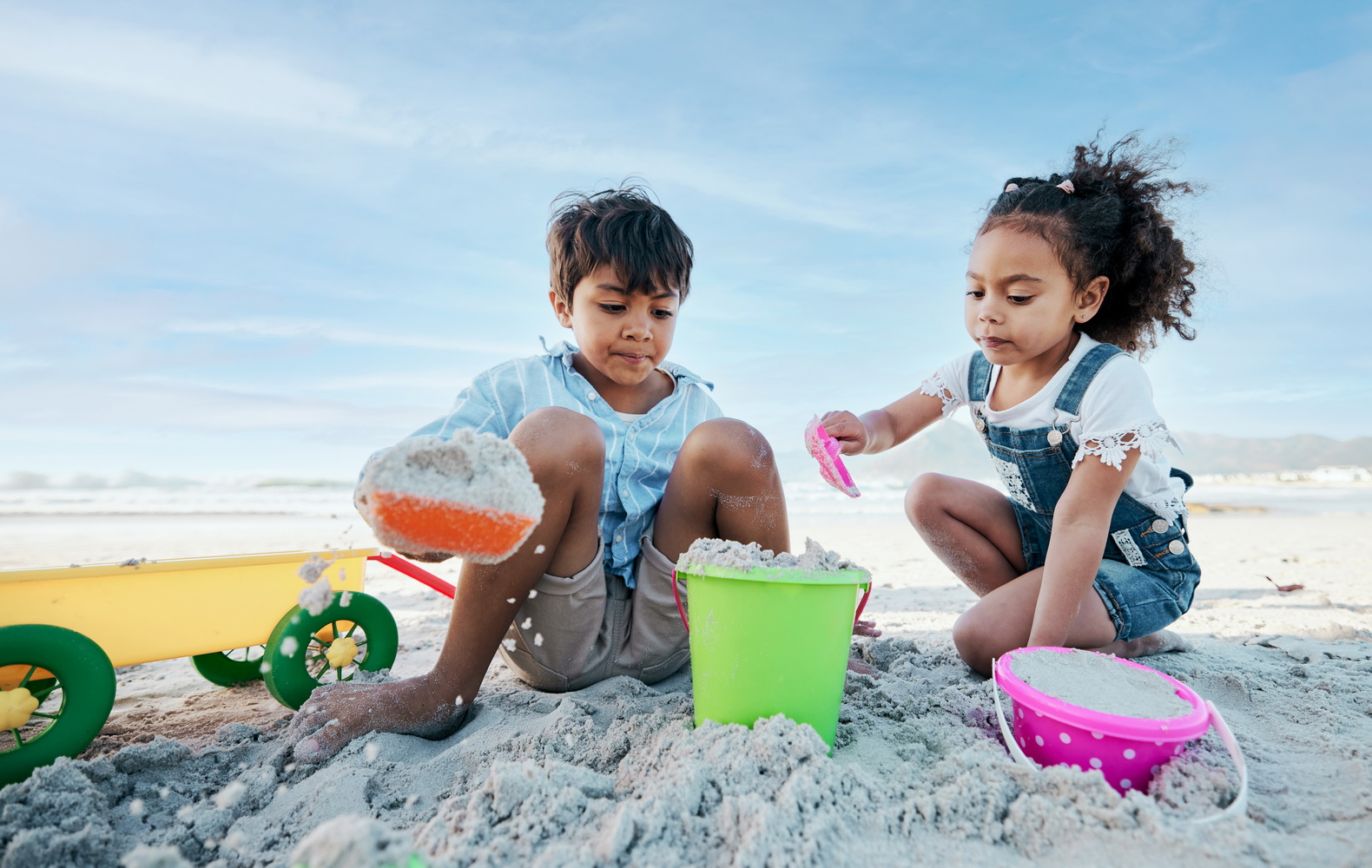





Understanding animal classification is essential for young children ages 3-8, as it lays the groundwork for their cognitive and academic growth. Learning about different animals and their categories fosters curiosity, instills a sense of wonder about the natural world, and develops critical thinking skills. Engaging with animal classification activities helps children recognize patterns and make connections, enhancing their problem-solving abilities.
By learning to classify animals as mammals, birds, reptiles, amphibians, or fish, children develop organizational skills and a scientific framework to understand biological diversity. This knowledge supports early literacy and language development by introducing new vocabulary and concepts. For instance, understanding terms like "mammal" or "reptile" helps children articulate their observations and broadens their comprehension.
Additionally, familiarity with animals and their habits encourages empathy and environmental awareness. Children learn to appreciate the importance of preserving animal habitats and the concept of biodiversity. Lessons on animal classification can spark a lifelong interest in biology, ecology, and conservation.
Parents and teachers play crucial roles in guiding these explorations. They can provide rich resources, stimulating activities, and supportive discussions, creating a positive learning environment. Ultimately, understanding animal classification equips children with foundational knowledge and skills that benefit their overall educational journey.








