Categorizing animals Normal Science Worksheets for Ages 3-8
3 filtered results
-
From - To
Discover our engaging "Categorizing Animals Normal Science Worksheets" designed for children aged 3-8! These worksheets promote essential learning skills by encouraging young minds to classify various animals based on their characteristics. With vibrant illustrations and simple instructions, kids will enjoy sorting animals into categories like mammals, birds, and reptiles, enhancing their understanding of the animal kingdom. Ideal for home or classroom use, these resources support early science education while fostering critical thinking. Download our free printable worksheets today and empower your child to explore the fascinating world of animals through play and discovery! Perfect for little learners ready for fun scientific adventures!
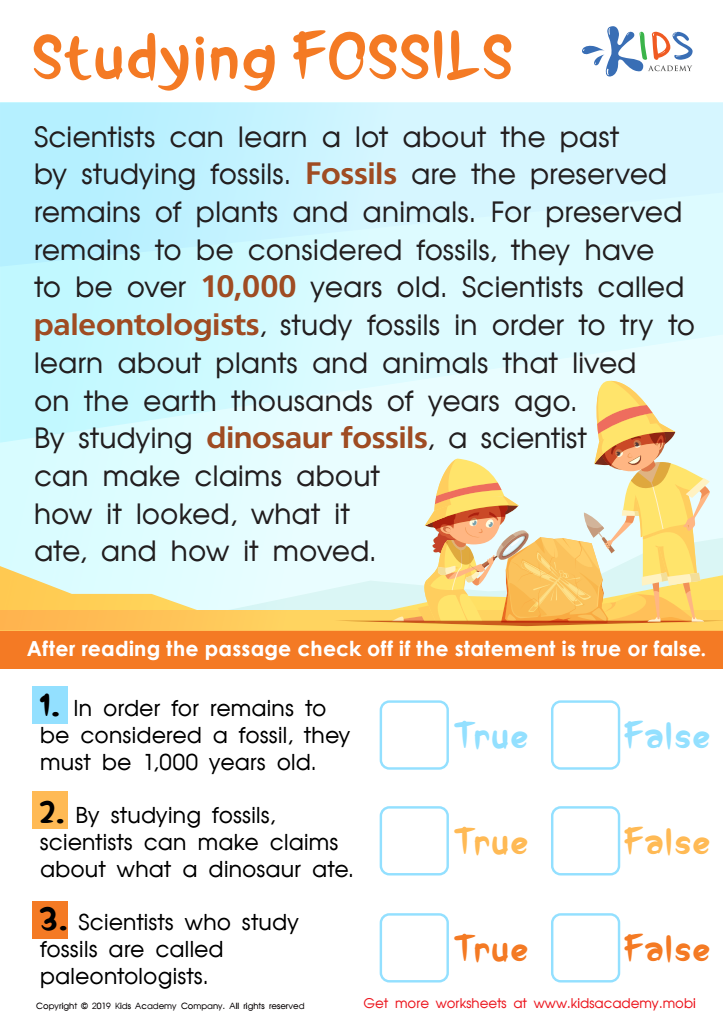
Studying Fossils Worksheet
 Assign to My Students
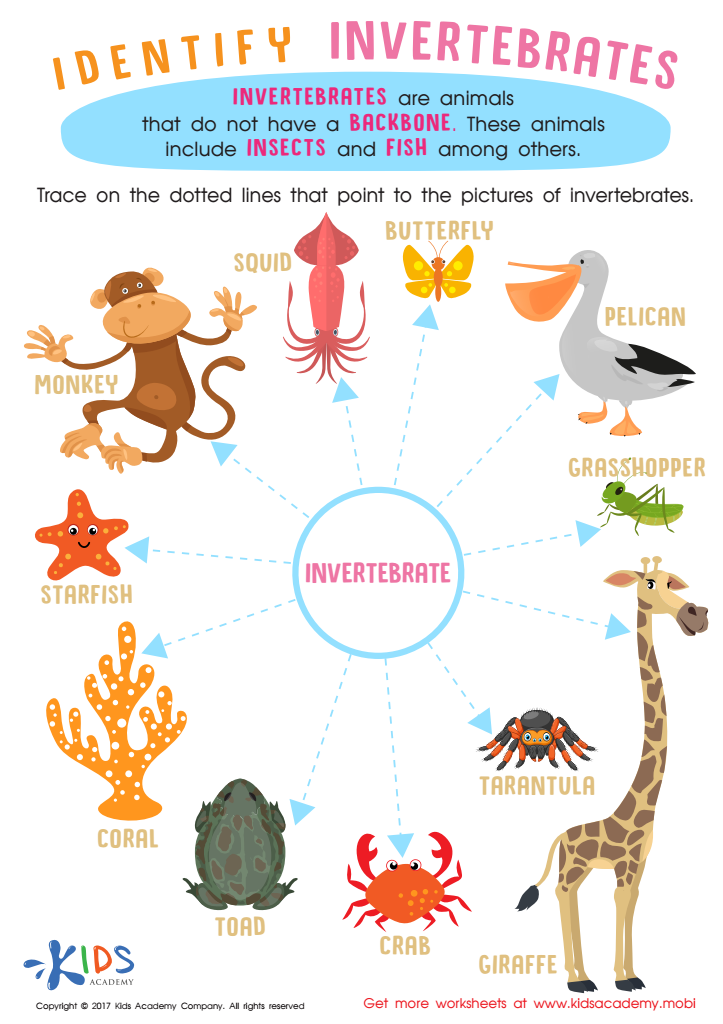
Invertebrates Worksheet for Grade 3
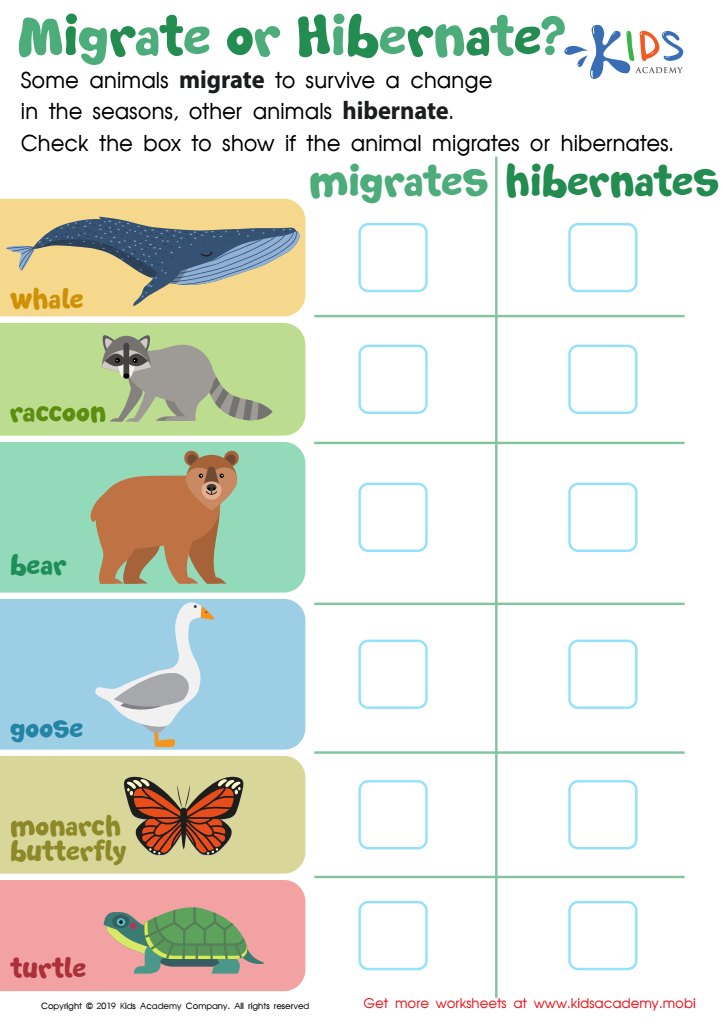
Migrate or Hibernate? Worksheet








Categorizing animals in a way that's accessible for ages 3-8 is crucial for fostering early cognitive development and a foundational understanding of the natural world. For parents and teachers, engaging children in categorization activities lays the groundwork for skills in observation, critical thinking, and problem-solving. Children learn to identify similarities and differences among animals, stimulating curiosity about their environment and encouraging exploration.
Additionally, categorizing animals can nurture empathy and respect for living beings, embedding values of conservation at a young age. When children learn about various habitats, ecosystems, and animal characteristics, they develop a sense of responsibility toward the planet. This engagement can also enhance language skills, as children learn specific vocabulary related to animals, their behaviors, and their classifications, such as mammals, birds, reptiles, and more.
Moreover, these activities can promote social development. Sharing discoveries with peers or family members encourages collaboration and communication. Using fun materials, games, and interactive discussions makes learning enjoyable. Thus, parents and teachers play an essential role in integrating these concepts seamlessly into everyday life, cultivating a lifelong love for learning and understanding of the animal kingdom. Ultimately, categorizing animals empowers young learners, sparking their imagination and setting the stage for future scientific inquiry.







