Categorizing objects Normal Science Worksheets for Ages 3-8
4 filtered results
-
From - To
Discover our engaging "Categorizing Objects Normal Science Worksheets" designed for children ages 3-8. These worksheets provide young learners with fun and interactive ways to explore the world around them by grouping items based on their shared features. Each worksheet encourages critical thinking and observation skills, making learning about categories both educational and enjoyable. Ideal for home or classroom use, our printable resources promote creativity while laying the foundation for important scientific concepts. Strengthen your child's ability to distinguish and classify objects with our easy-to-use worksheets that inspire curiosity and foster a love for learning through hands-on activities.
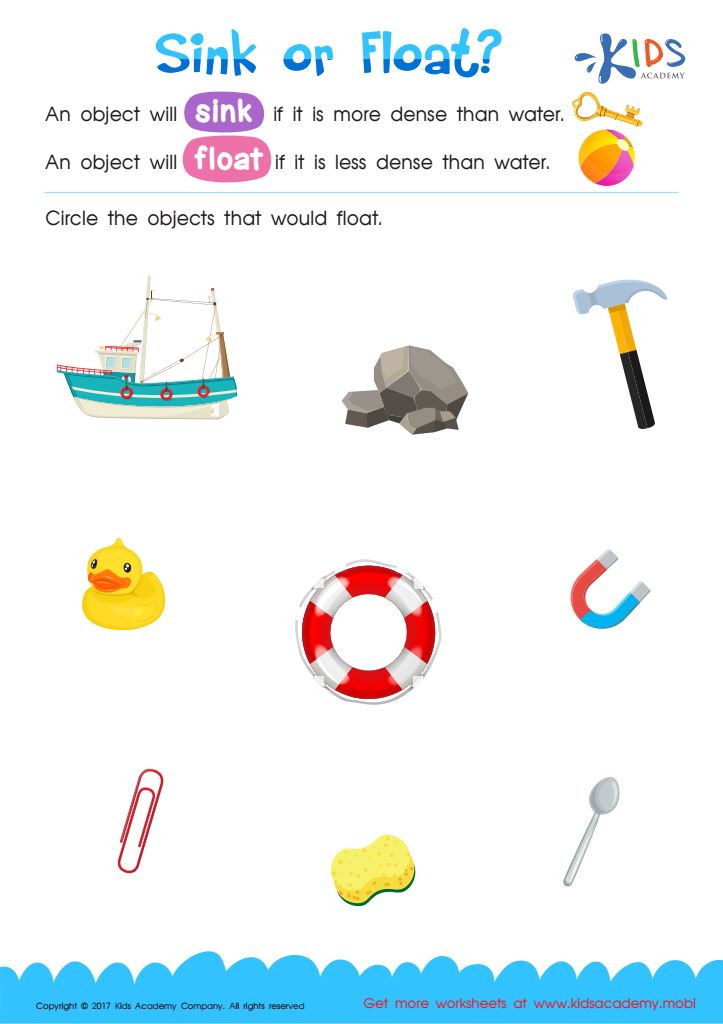
Sink or Float Printable
 Assign to My Students
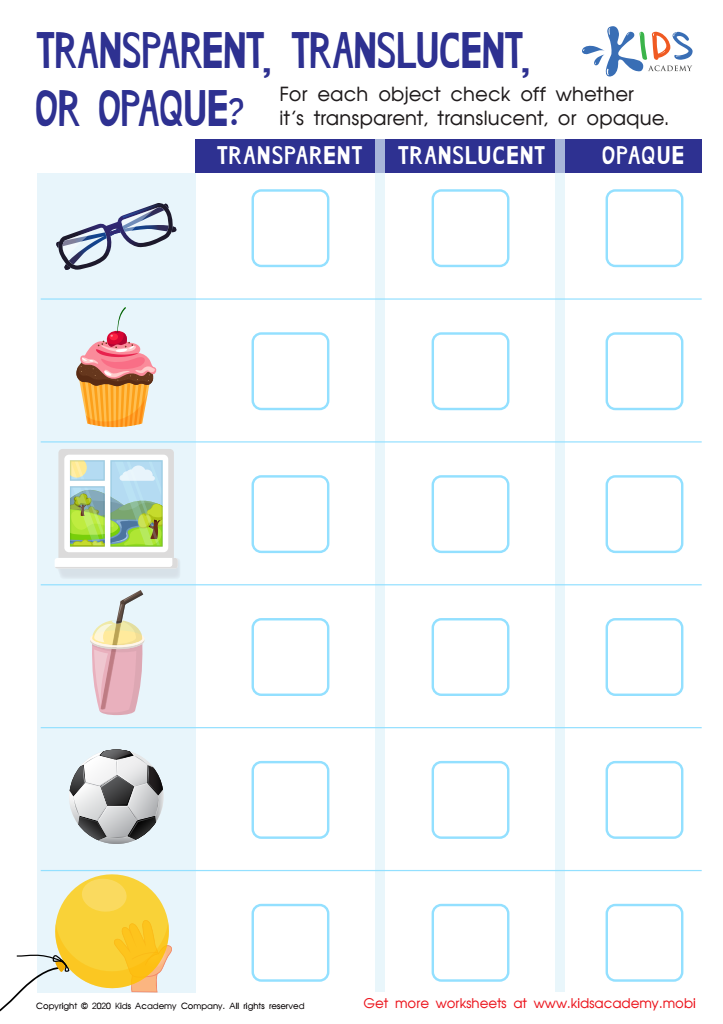
Transparent, Translucent, or Opaque Worksheet
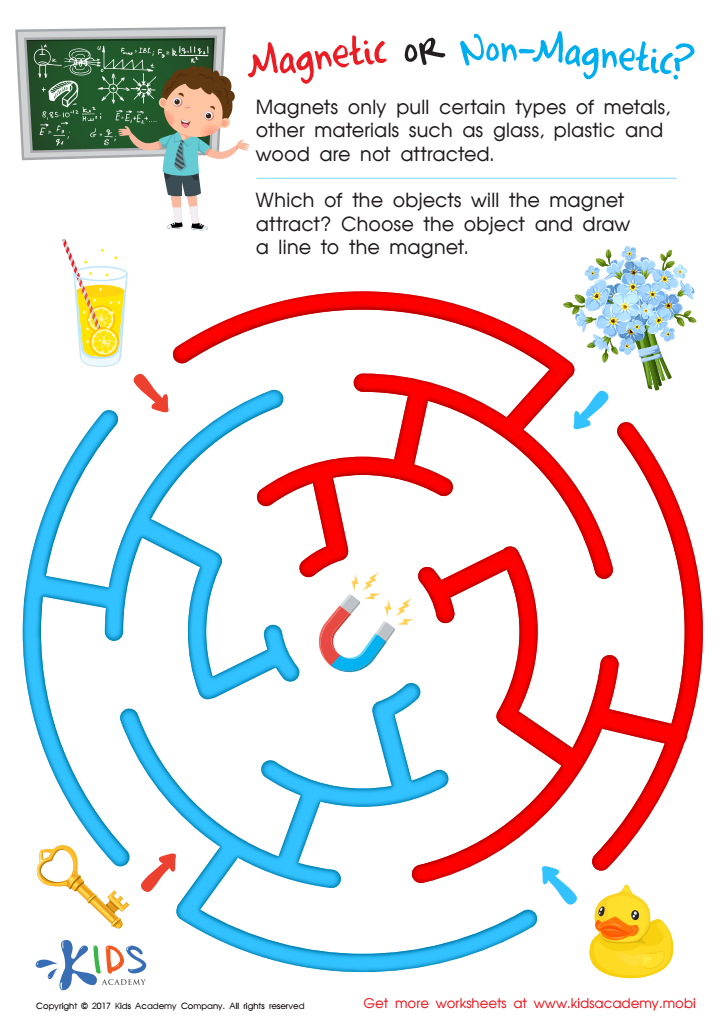
Magnetic or Non–Magnetic Worksheet
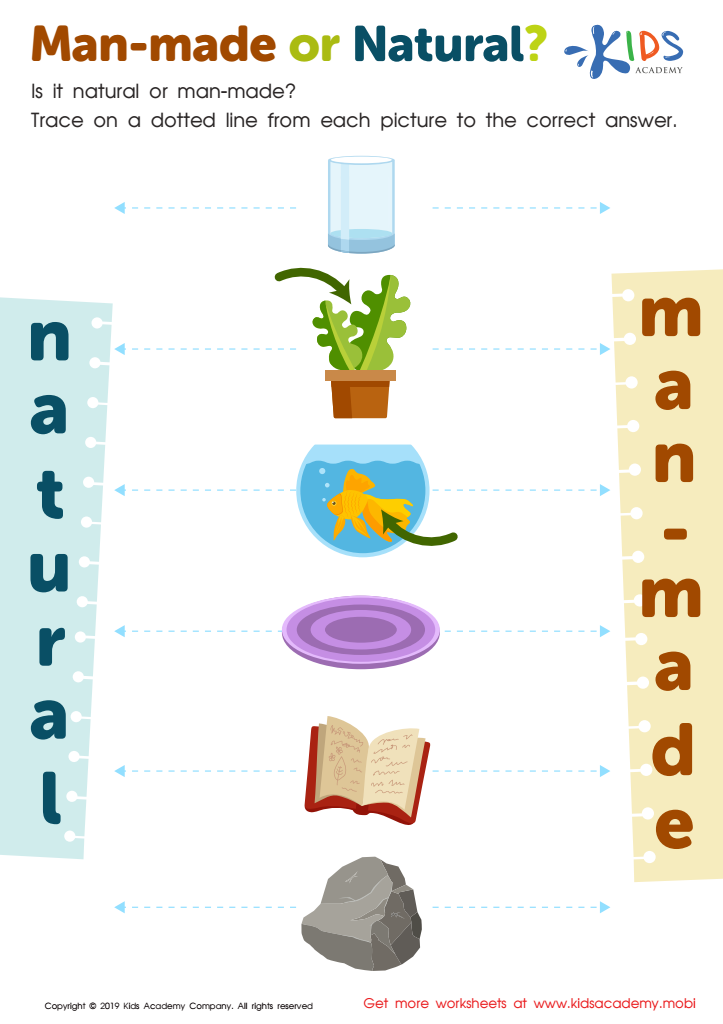
Man-Made or Natural? Worksheet







Categorizing objects is a fundamental cognitive skill that plays a crucial role in the early development of children aged 3-8. It helps them make sense of the world around them and enhances their reasoning abilities. For parents and teachers, understanding the significance of categorization can enable them to support children’s learning effectively.
When children categorize objects, they learn to identify similarities and differences, which promotes critical thinking skills. This practice lays the groundwork for more advanced scientific reasoning, including classification and organization. By sorting items based on various attributes such as shape, color, or function, children enhance their observational skills and improve their ability to think abstractly.
Additionally, categorizing objects supports vocabulary development. As children describe their sorting criteria, they learn new words and concepts related to different categories. Moreover, engaging in categorization activities fosters socialization, as children often work in groups, encouraging teamwork and communication.
In conclusion, promoting categorization in early childhood education equips children with necessary analytical skills, enhances their language development, and fosters collaborative learning experiences—essential components for their academic and social success. Parents and teachers should prioritize these activities to cultivate a robust foundation for lifelong learning.







