Developing critical thinking Normal Science Worksheets for Ages 3-8
3 filtered results
-
From - To
Unlock the potential of young minds with our "Developing Critical Thinking Normal Science Worksheets" designed for children ages 3-8. These engaging worksheets encourage curiosity and analytical skills through fun, age-appropriate activities. Children will explore fundamental scientific concepts while honing their ability to question, hypothesize, and derive conclusions. Each worksheet fosters critical thinking through hands-on exercises that make learning enjoyable. Perfect for both classroom and home use, these resources help nurture independent thinkers equipped for future challenges. Explore our vibrant collection today and watch your child’s logical reasoning and problem-solving skills blossom through the wonders of science!
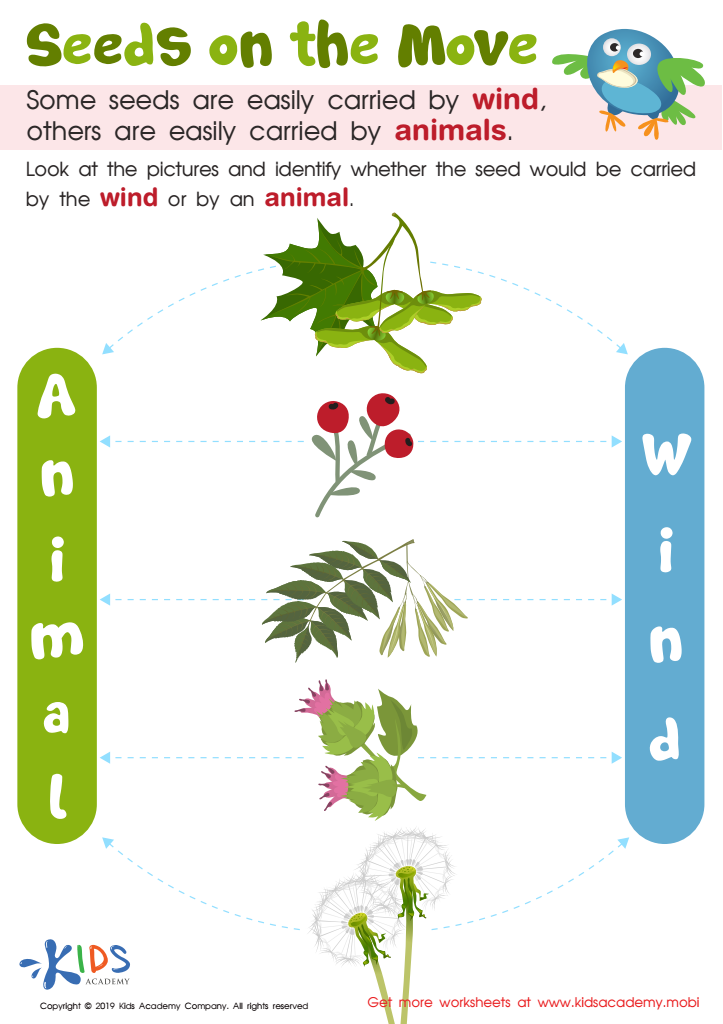
Seeds on the Move Worksheet
 Assign to My Students
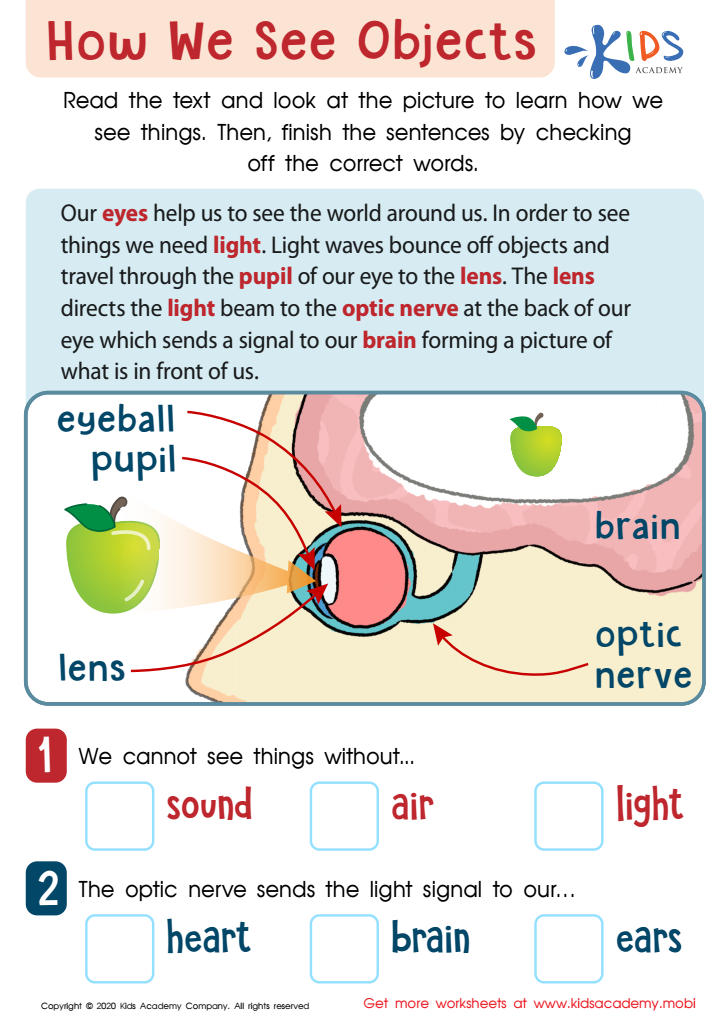
How We See Objects Worksheet
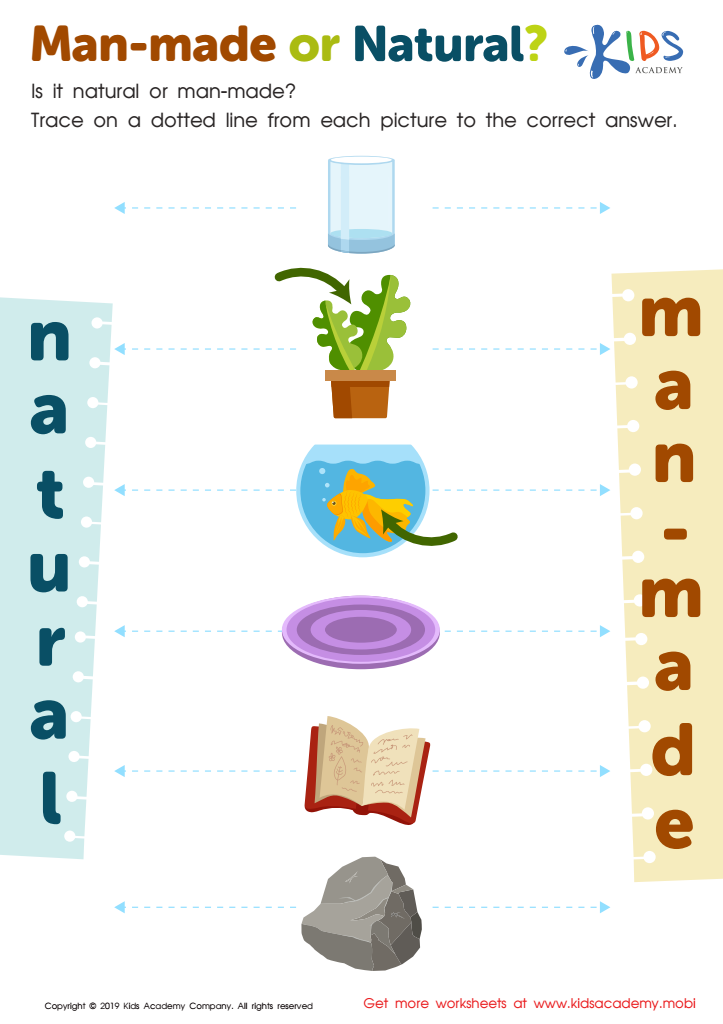
Man-Made or Natural? Worksheet








Developing critical thinking skills in children, particularly within the context of normal science, is vital for their overall cognitive development, especially from ages 3-8. During this formative stage, children are natural explorers, and encouraging critical thinking fosters curiosity and inquiry, which are central to scientific understanding.
Parents and teachers should recognize that early engagement in science-themed activities promotes analytical skills, allowing young learners to ask questions, make observations, and draw conclusions based on evidence. By integrating concepts of normal science—those that align with everyday experiences—children learn to relate empirical data to their surroundings, sharpening their observational and reasoning skills.
Moreover, fostering critical thinking helps children learn to solve problems effectively and be creative innovators. This approach not only enhances academic performance but also empowers children to approach new challenges with resilience and confidence. In a world increasingly reliant on technology and critical analysis, these foundational skills equip children for future academic pursuits and informed citizenship.
In summary, nurturing critical thinking through activities centered on normal science builds a solid base for lifelong learning, ensuring children become thoughtful, informed individuals. Parents and teachers play a crucial role in shaping this dynamic, paving the way for children's future success.







