Geography knowledge Normal Our Planet and Environment Worksheets for Ages 3-8
3 filtered results
-
From - To
Discover our engaging "Geography Knowledge Worksheets" designed for young learners aged 3-8! These interactive resources focus on essential concepts related to our planet and environment, helping children understand their world through fun and educational activities. With vibrant illustrations and age-appropriate content, these worksheets encourage children to explore the earth's landscapes, ecosystems, and the importance of environmental stewardship. Ideal for both classroom and home use, our worksheets aim to cultivate curiosity and foster a love for geography in early learners. Start nurturing your child's understanding of the world around them today with our thoughtfully crafted materials!
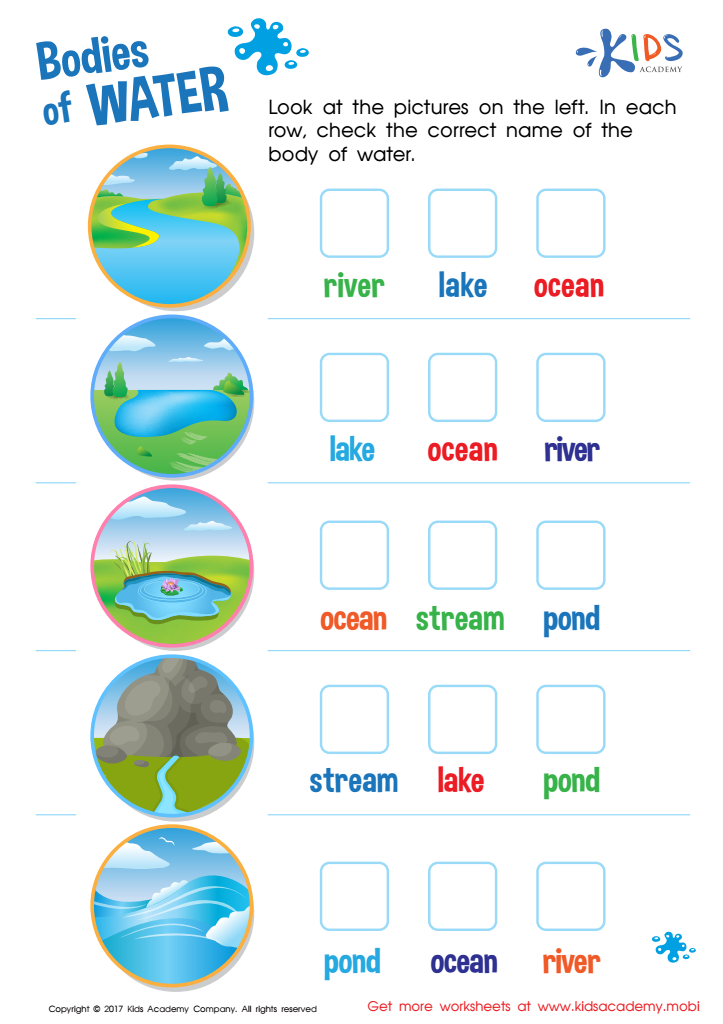
Bodies of Water Worksheet
 Assign to My Students
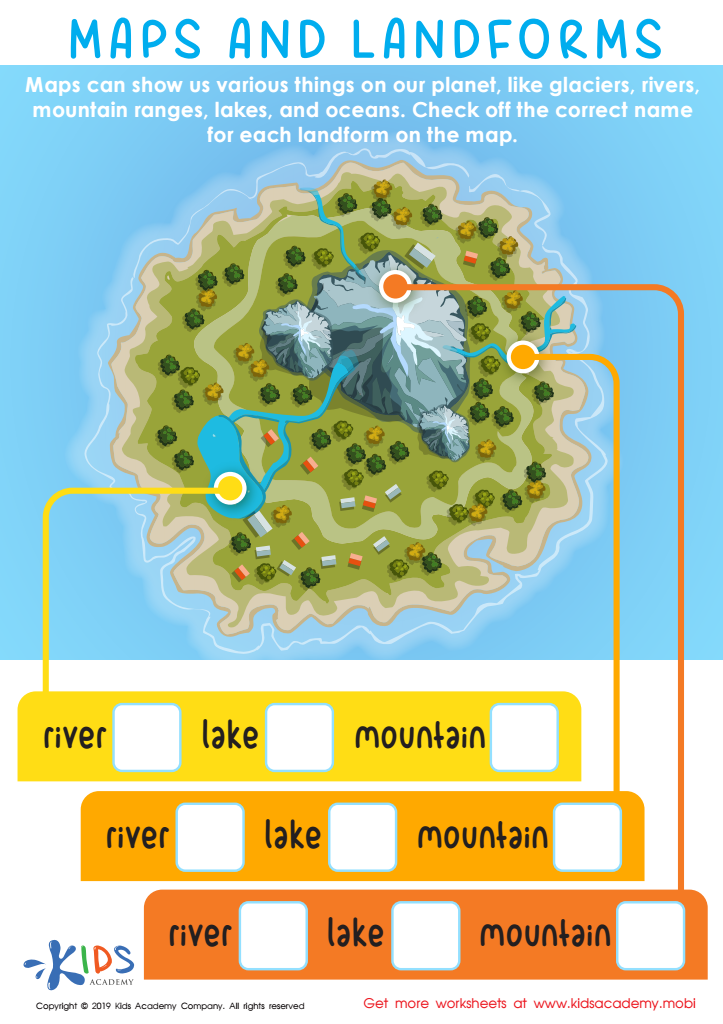
Maps and Landforms Worksheet
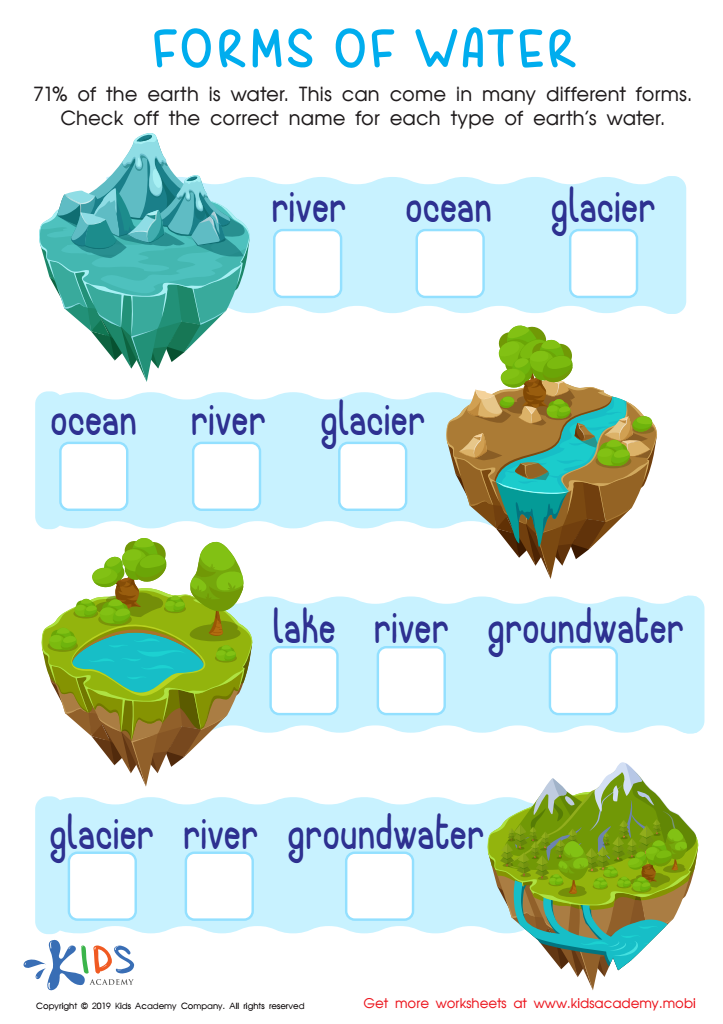
Forms of Water Worksheet



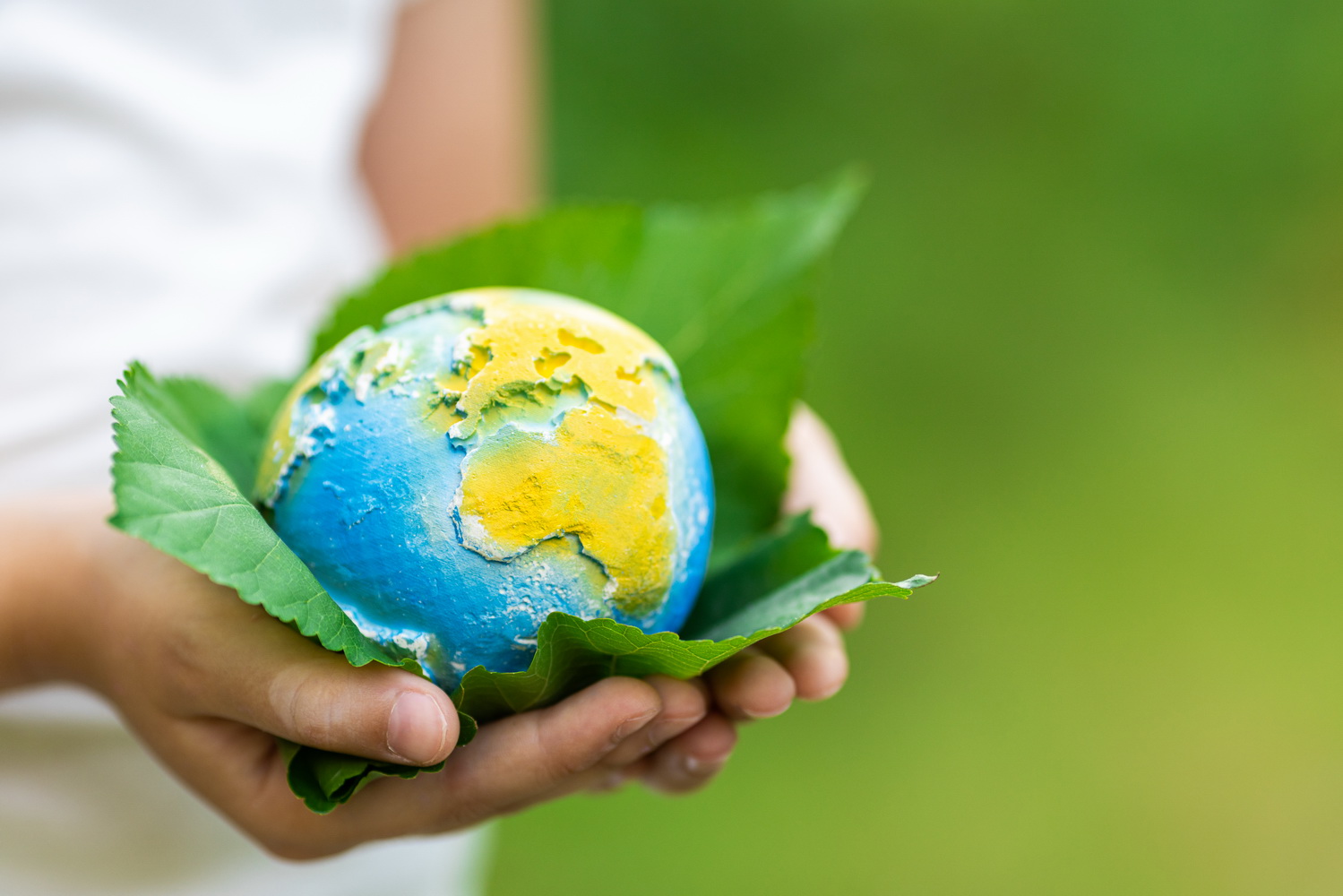


Understanding geography is essential for young children, especially when considering their knowledge of our planet and environment. Between ages 3-8, children are naturally curious about the world around them, making this an ideal time to introduce geographic concepts. Teaching geography helps children develop spatial awareness, an appreciation for diversity, and a foundational understanding of their surroundings.
By exploring topics like maps, local landmarks, natural features, and ecosystems, children enrich their vocabulary and learning experiences. They begin to appreciate different cultures, climates, and terrains, fostering respect and empathy toward others. Additionally, understanding weather patterns and ecosystems encourages environmentally conscious behavior from a young age, instilling a sense of responsibility toward the planet.
For parents and teachers, engaging children with geographic knowledge can enhance critical thinking and problem-solving skills as they learn to ask questions about their environment. Incorporating geography into play-based learning encourages engagement and makes complex ideas more accessible. By nurturing this knowledge during formative years, we empower children to become informed citizens who can navigate and positively impact their world. Encouraging competence in geography lays the groundwork for lifelong learning and inspires a deeper connection to and understanding of our shared planet.







