Categorizing objects Normal Physical Science Worksheets for Ages 3-8
3 filtered results
-
From - To
Our "Categorizing Objects" worksheets are tailored for children aged 3-8, focusing on Normal Physical Science skills. These engaging resources help young learners develop critical thinking by sorting objects based on varied attributes such as size, shape, and color. With vibrant illustrations and interactive tasks, these worksheets are perfect for fostering a child’s understanding of the physical properties of everyday items. They support children in building a solid foundation in science while enhancing their cognitive abilities. Ideal for both classroom and home use, these activities make learning about categorizing objects fun and educational. Explore and enhance your child's potential today!
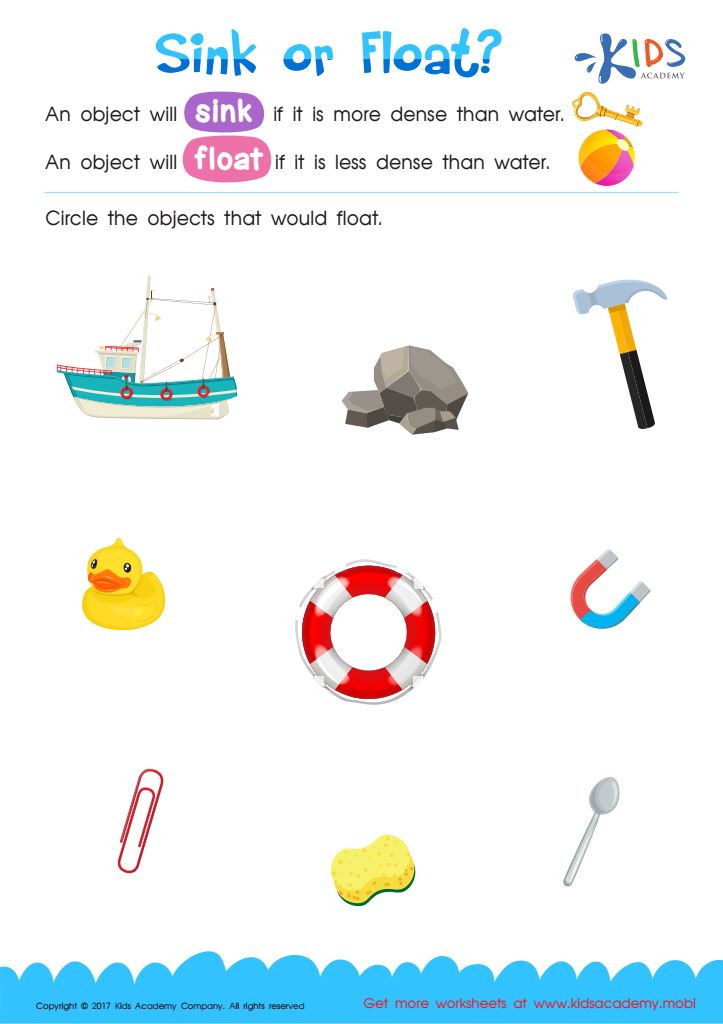
Sink or Float Printable
 Assign to My Students
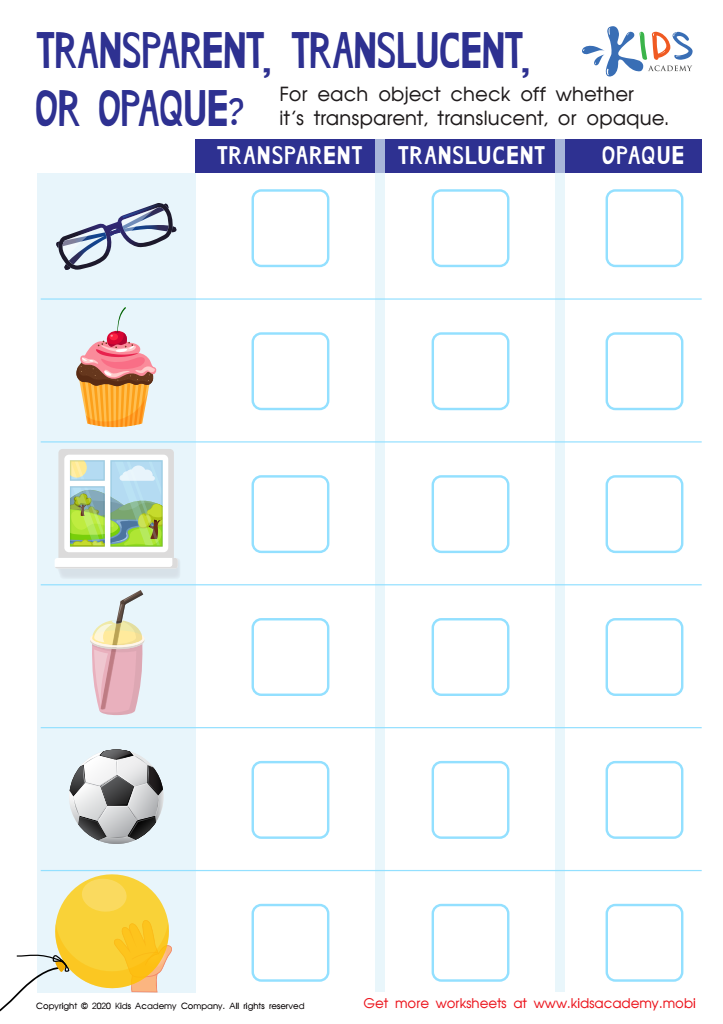
Transparent, Translucent, or Opaque Worksheet
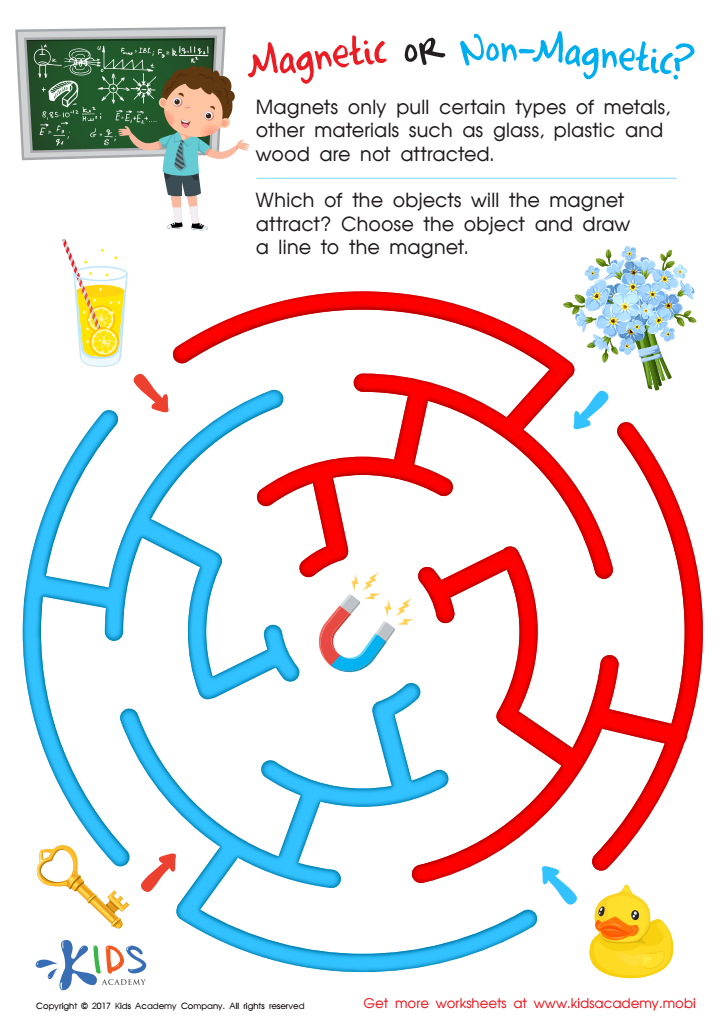
Magnetic or Non–Magnetic Worksheet





Categorizing objects in normal physical science is fundamental for children ages 3-8 as it lays the groundwork for cognitive development and scientific understanding. At this age, children are naturally curious about the world around them. By teaching them to categorize, parents and teachers help enhance a child's observational skills and ability to recognize patterns, which is crucial for problem-solving and logical thinking.
When children sort objects based on attributes like size, shape, color, material, or use, they begin to understand basic scientific concepts such as classification and generalization. This sorting activity also improves their vocabulary and communication skills as they learn to describe the similarities and differences between items. Moreover, categorizing objects supports memory retention and organizational skills.
From a developmental perspective, engaging young children in these activities fosters critical thinking and nurtures their innate curiosity, making them more confident learners. Children start to develop a sense of order and structure, which is essential not just in science but across all areas of learning. Plus, these early experiences ignite a passion for asking questions and investigating the world, positioning children on a path of lifelong learning and appreciation for science.
By prioritizing these activities, parents and teachers lay a solid foundation for future academic achievement and intellectual growth.







