Understanding communities Normal Social Studies Worksheets for Ages 3-8
4 filtered results
-
From - To
Unlock your child's potential with our "Understanding Communities" Social Studies worksheets designed for ages 3-8. These engaging worksheets help young learners discover the basics of communities, fostering a sense of trust and cooperation. Through fun activities, children explore different types of communities, their roles, and the importance of citizenship. Our resources encourage curiosity, critical thinking, and social skills. Perfect for both classroom use and homeschooling, these worksheets provide a solid foundation for understanding the world around them. Enhance your child's learning journey today with our well-crafted and educational guided exercises.
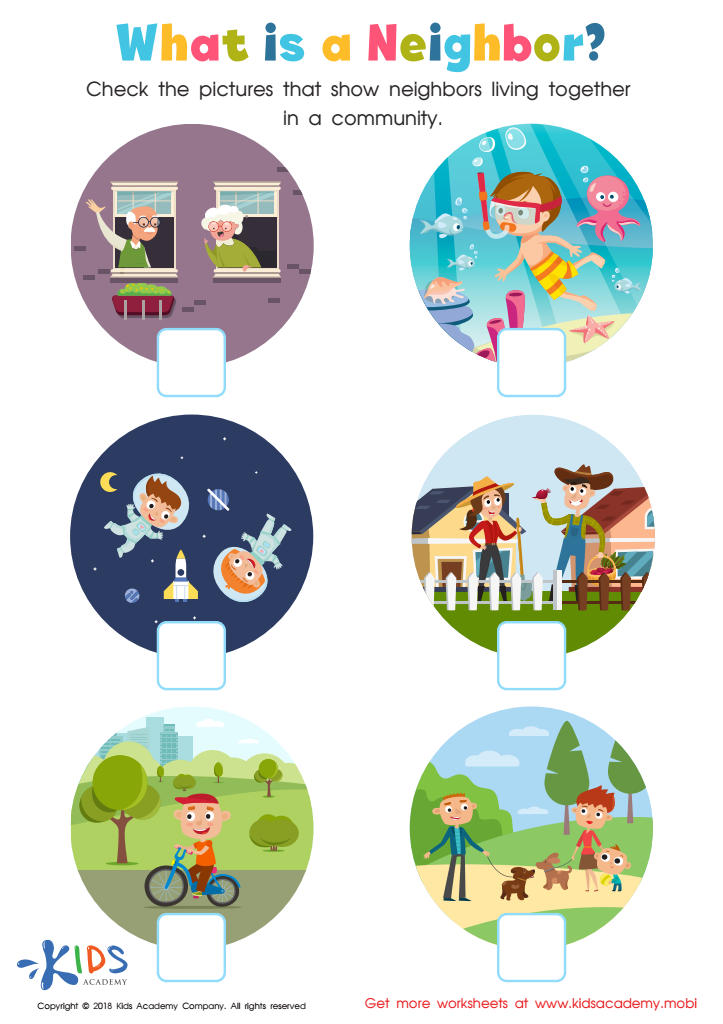
What is a neighbor Worksheet
 Assign to My Students
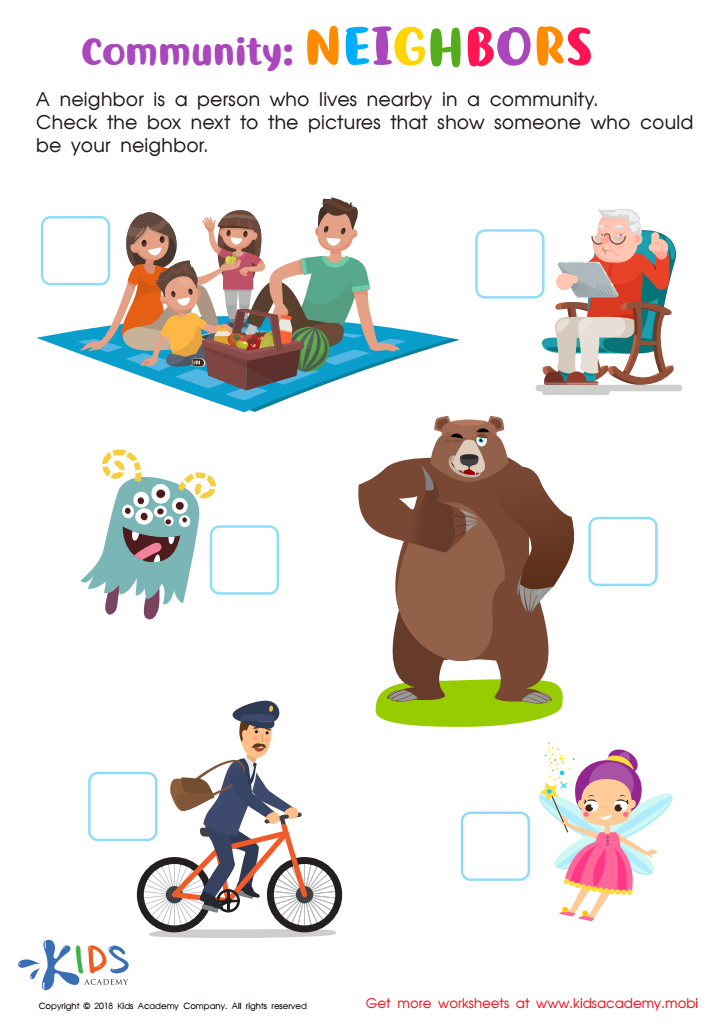
Community: Neighbors Worksheet
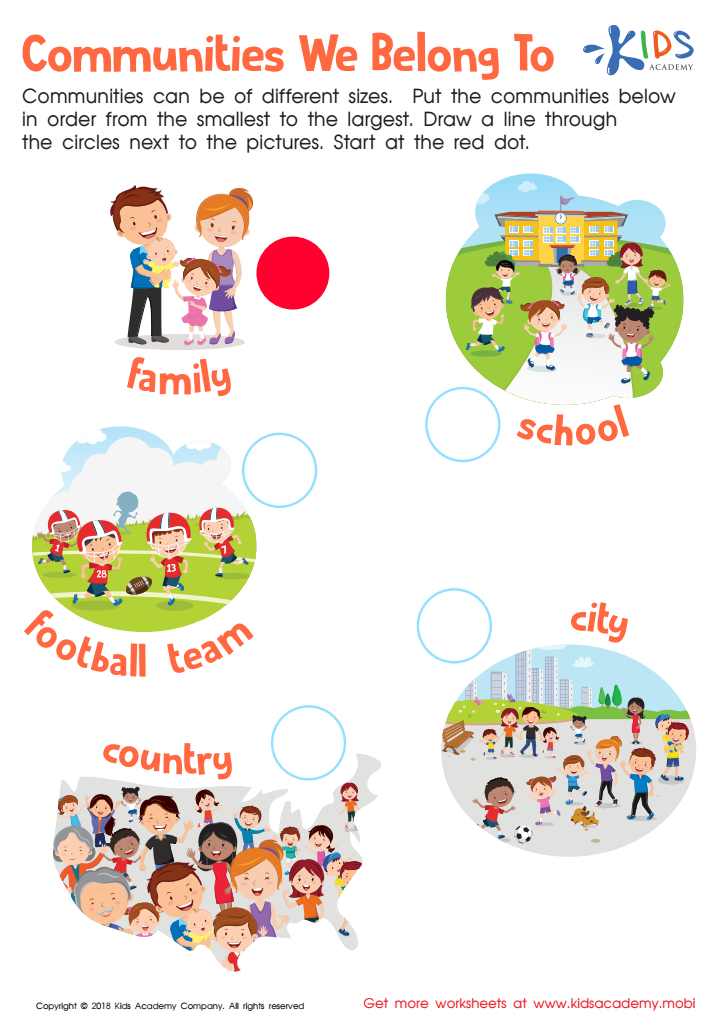
Communities We Belong to Worksheet
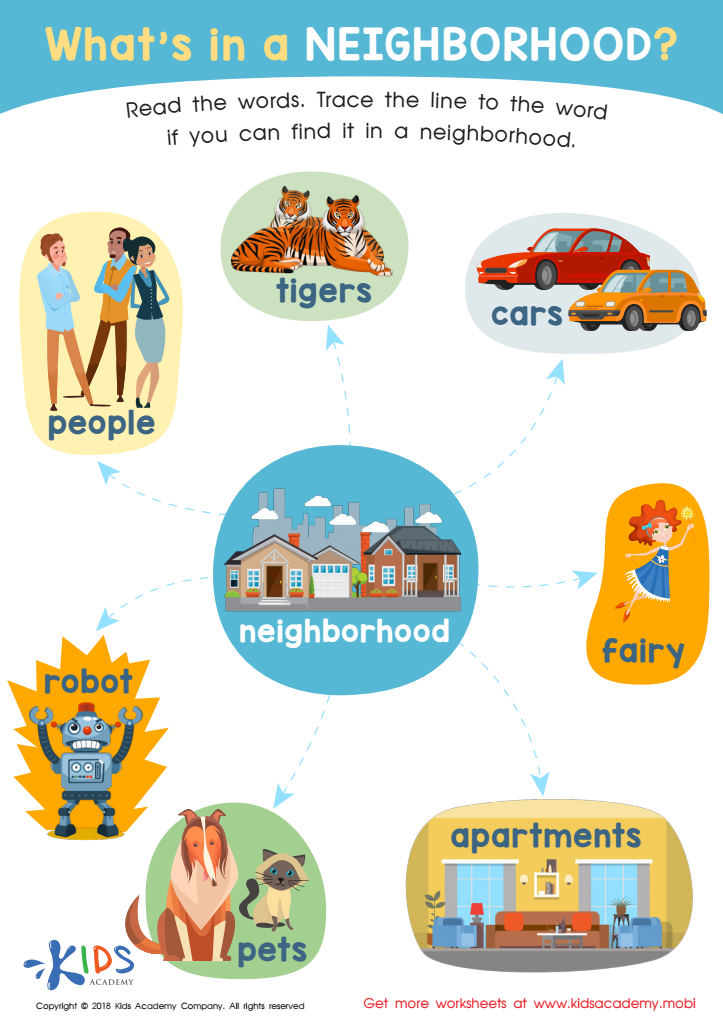
What's in a Neighborhood? Worksheet







Understanding communities is crucial for young children's social studies education because it helps them develop social awareness and a sense of belonging. At ages 3-8, children are naturally curious about the world around them. Teaching them about different communities, including their own, builds a foundation for empathy, cooperation, and social skills.
When parents and teachers introduce children to the concept of communities, they help kids understand various roles and responsibilities within any social group. By learning about community helpers, such as firefighters, doctors, and teachers, children appreciate teamwork and the importance of different jobs. It instills respect for others and fosters a sense of gratitude and interdependence.
Moreover, discussing diverse communities aids in nurturing open-mindedness and cultural awareness from a young age. Children begin to recognize and celebrate differences, reducing prejudices and enhancing social harmony. This foundation encourages children to be more accepting and understanding individuals as they grow.
Incorporating lessons on communities also strengthens problem-solving and critical thinking skills. Children learn about rules, cooperation, and decision-making processes that are vital for an orderly society. Parents and teachers should prioritize this aspect of social studies to guide children in becoming informed, compassionate, and active members of their communities.