Understanding seasons Normal Social Studies Worksheets for Ages 3-8
4 filtered results
-
From - To
Discover our "Understanding Seasons" social studies worksheets designed for children aged 3-8. These fun, educational printables help young learners explore the four seasons through engaging activities and vivid illustrations. Each worksheet is crafted to promote critical thinking, observation skills, and a deeper appreciation of the natural world. Perfect for early grade students, these resources align with learning standards and support classroom or home study routines. Foster curiosity and a love for nature with our expertly designed worksheets, making seasonal changes easy and enjoyable to understand for young minds. Visit now to download and start learning!
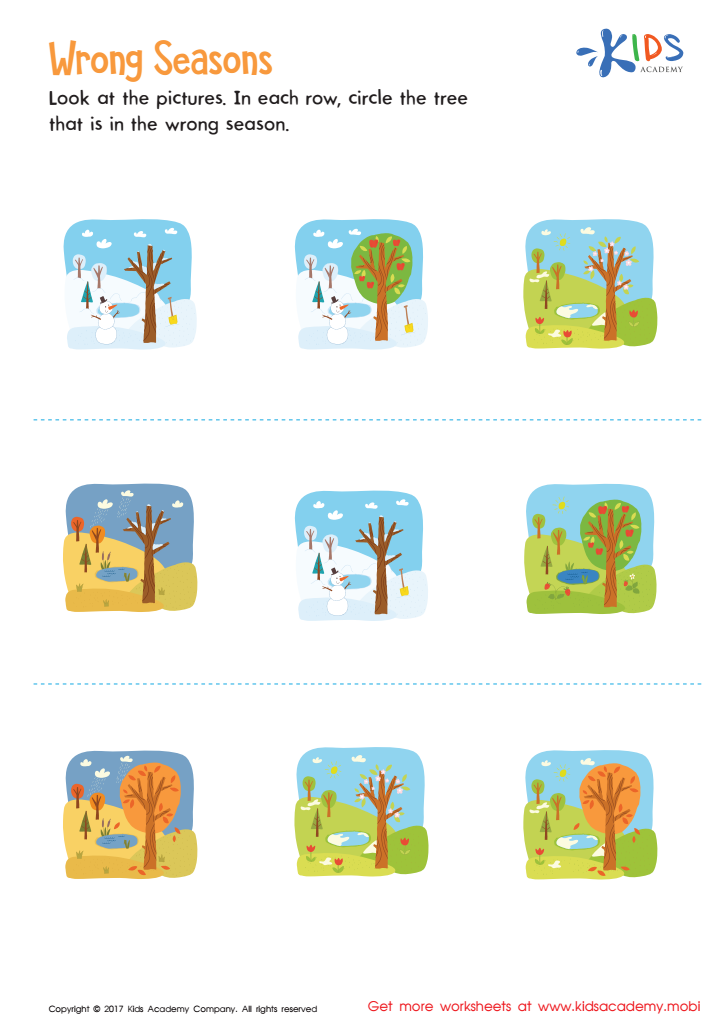
Wrong Seasons Worksheet
 Assign to My Students
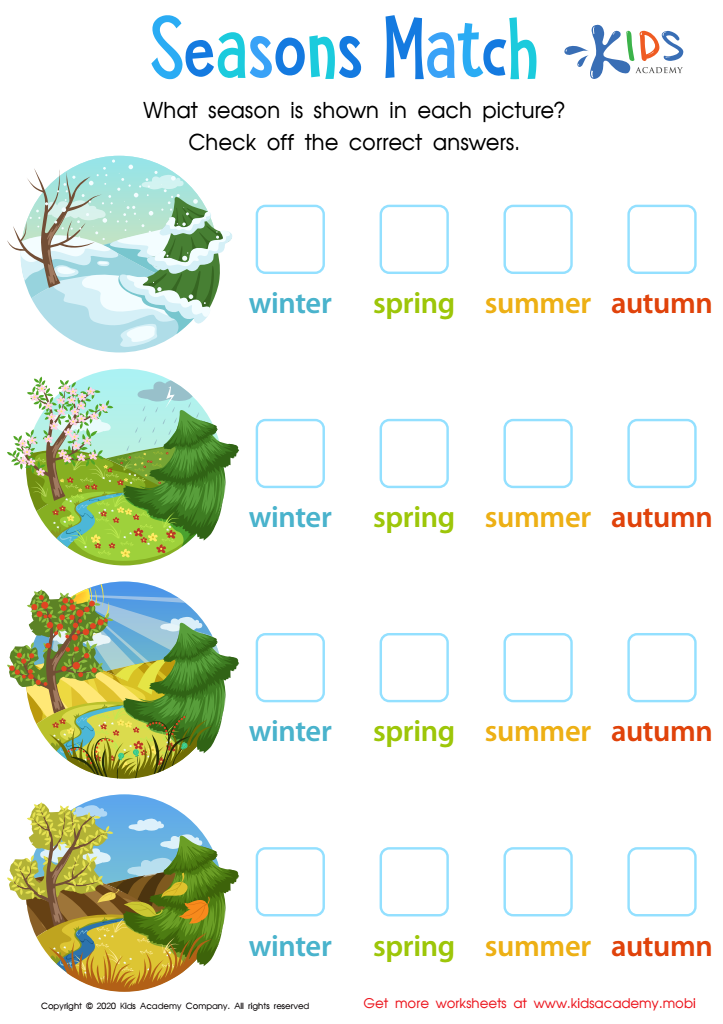
Seasons Match Worksheet
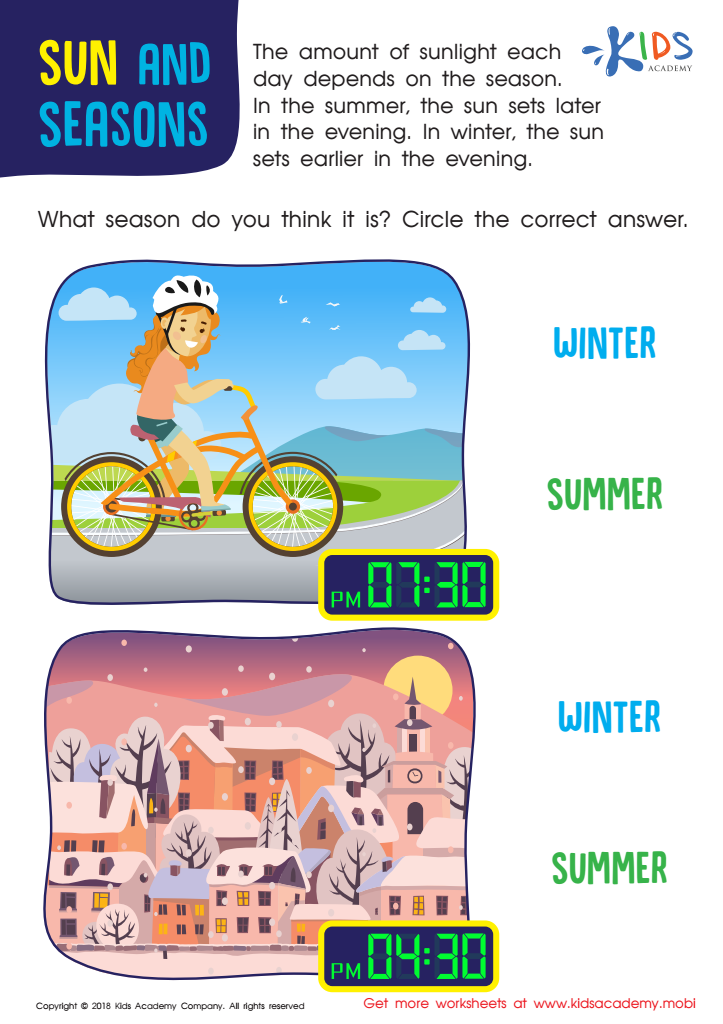
Sun and Seasons Worksheet
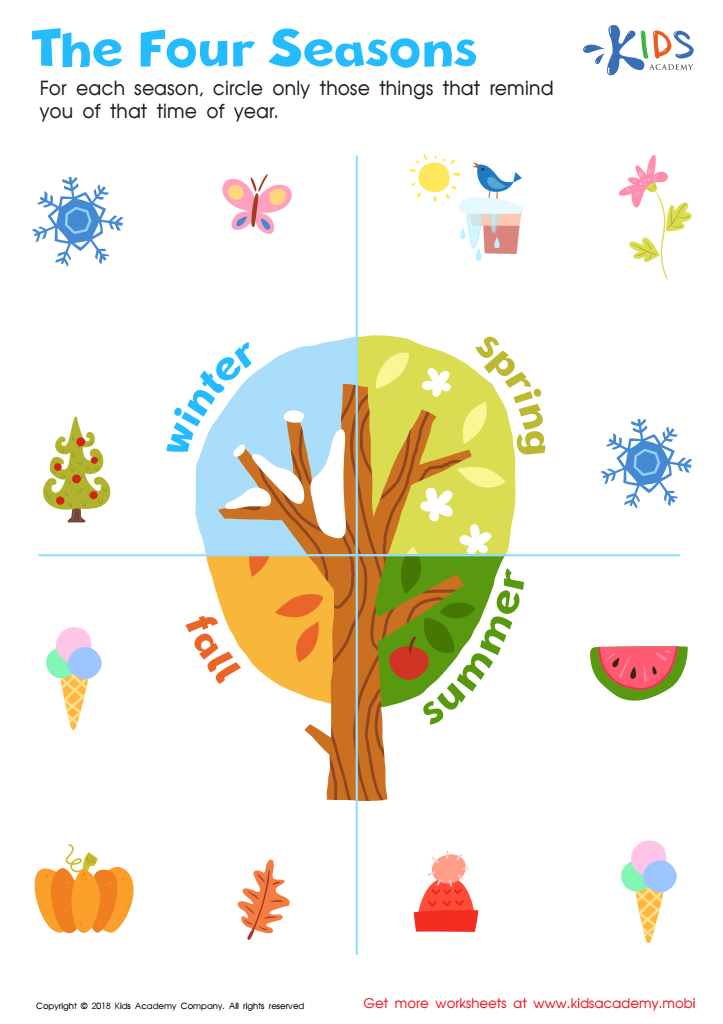
The Four Seasons Worksheet








Understanding seasons is a fundamental aspect of early education in social studies for children ages 3-8. Parents and teachers should care about teaching this concept because it lays the groundwork for comprehending numerous natural and social phenomena. Seasons explain why we experience different weather, how flora and fauna adapt to changes in climate, and influence cultural activities and traditions linked to specific times of the year.
At an early age, children are naturally curious about the world around them. By learning about seasons, they begin to understand the cyclical nature of Earth’s environment. This knowledge helps them make sense of why they wear certain clothes in winter versus summer and why certain holidays fall at specific times. For instance, the association of winter with Christmas in many cultures enriches their understanding of cultural practices.
Moreover, insight into seasonal changes promotes cognitive development by teaching children about cause and effect, refining observation skills, and enhancing their ability to predict and anticipate changes, which are critical thinking skills. Observing seasonal patterns also connects to concepts in science, such as weather patterns and ecosystems, and boosts their vocabulary through terms like hibernation, migration, and bloom.
Overall, understanding seasons is pivotal because it integrates scientific and cultural literacy, fostering a more comprehensive view of the world from a young age.








