Visual perception improvement Normal Social Studies Worksheets for Ages 3-8
3 filtered results
-
From - To
Enhance your child's visual perception skills with our engaging Normal Social Studies Worksheets, designed specifically for ages 3-8. These fun and interactive worksheets from Kids Academy focus on improving visual acuity, spatial awareness, and pattern recognition through a variety of age-appropriate activities. By blending social studies themes with educational exercises, children effortlessly develop critical cognitive abilities essential for reading, writing, and everyday tasks. Our expertly crafted resources foster a deeper understanding of the world while sharpening visual perception, ensuring a well-rounded early educational experience. Explore our collection today and watch your child's skills flourish!
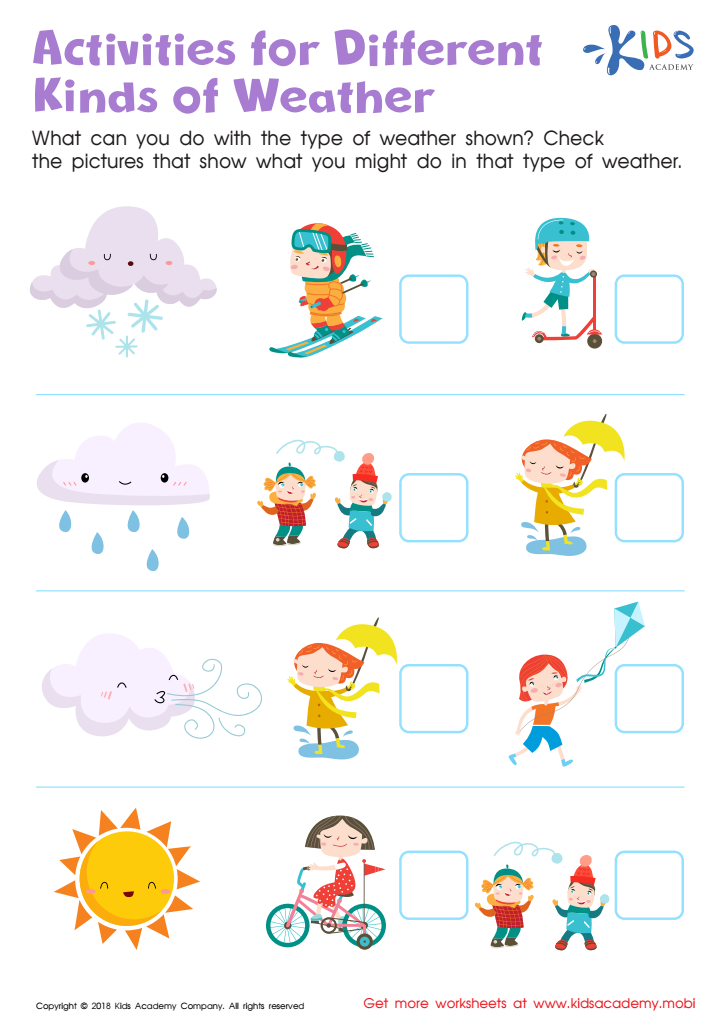
Activities for Different Kinds of Weather Worksheet
 Assign to My Students
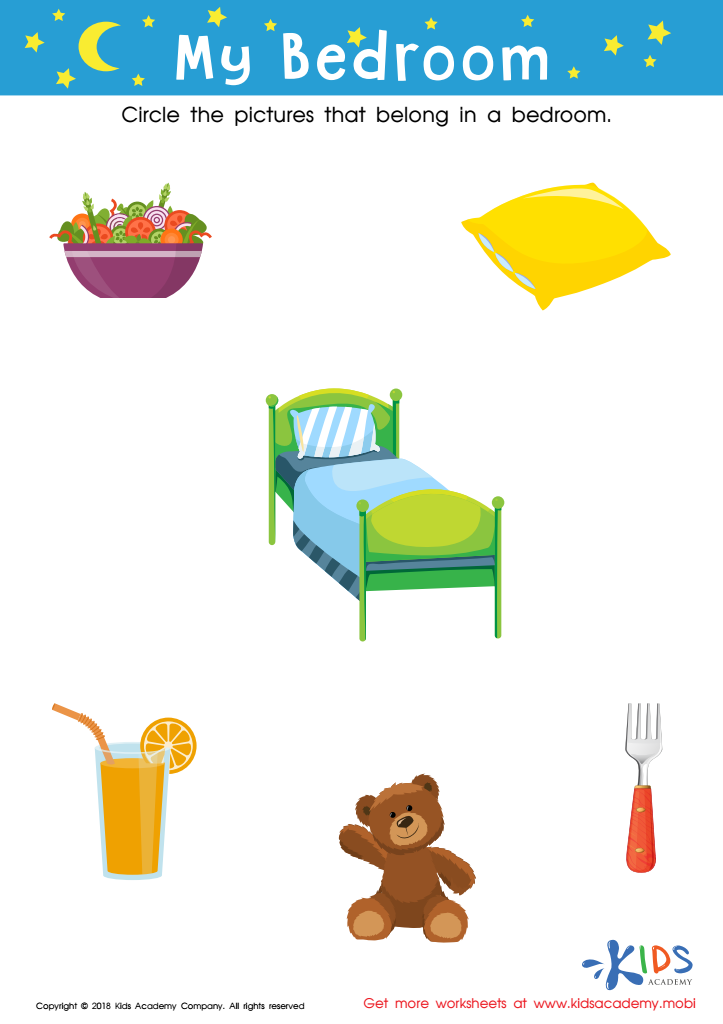
My Bedroom Worksheet
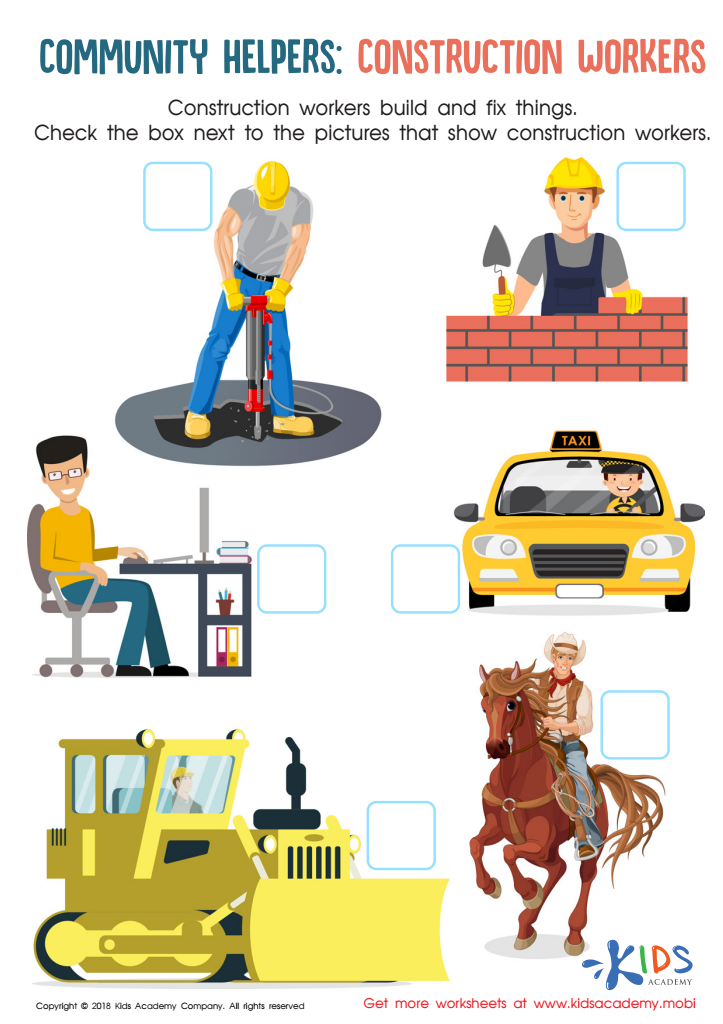
Construction Workers Community Helpers Worksheet


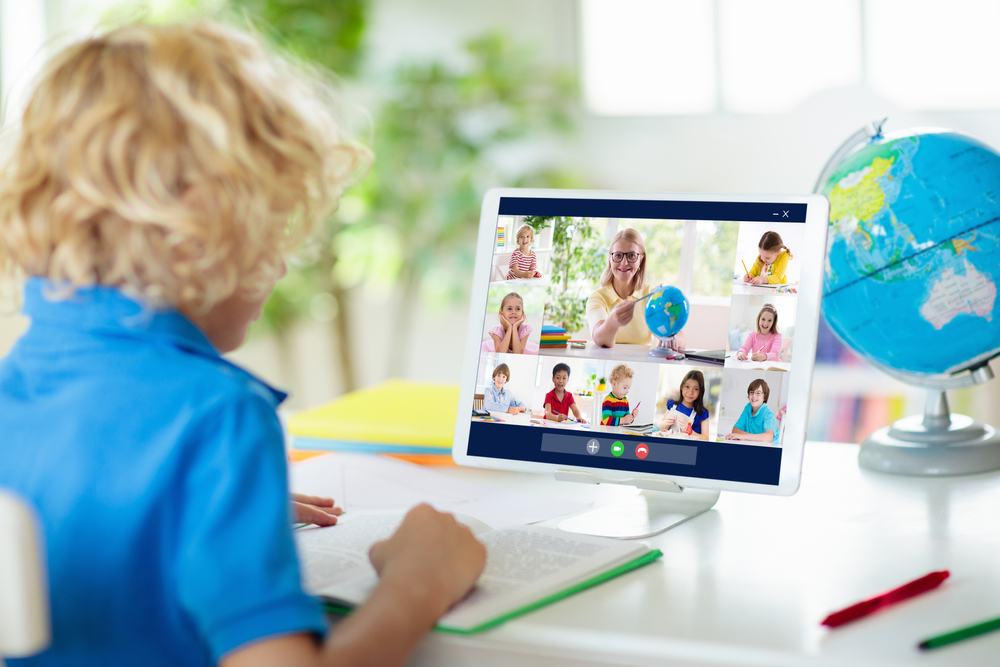


.jpg)
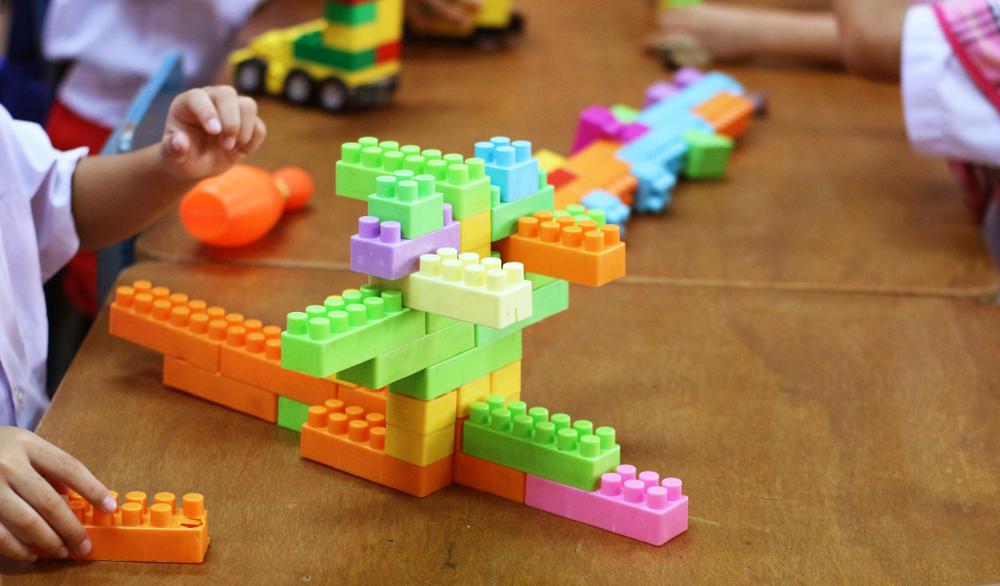
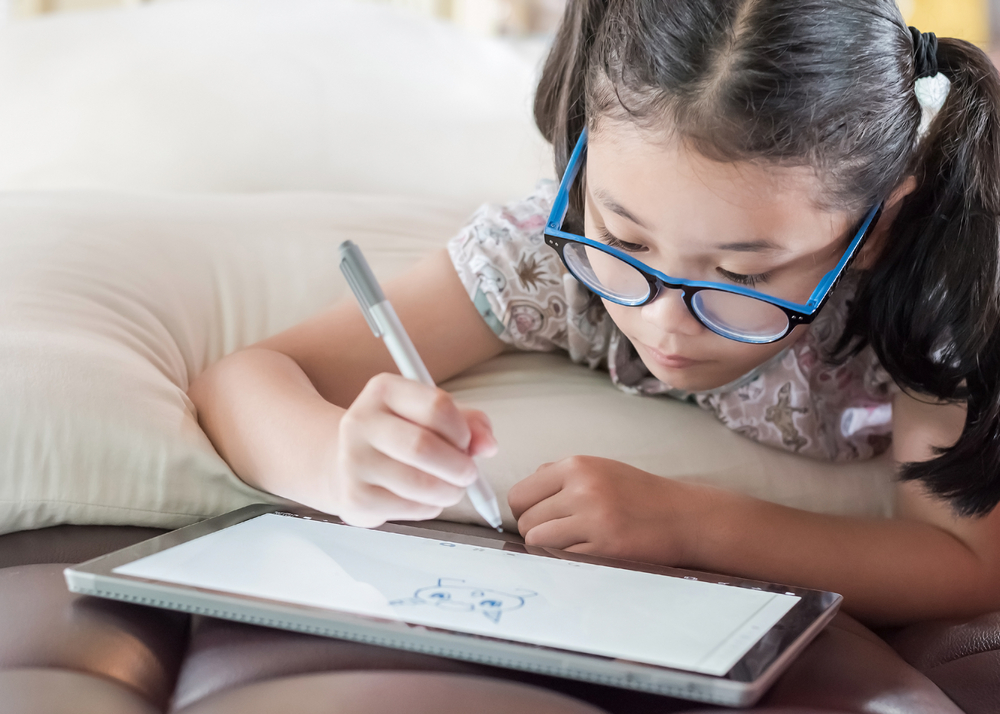
Visual perception refers to the brain's ability to make sense of what the eyes see. It's a crucial part of early childhood development because it directly impacts a child's ability to read, write, and engage in various learning activities. For children between the ages of 3-8, improving visual perception can have a significant influence on their academic performance and social development.
When children have strong visual perception skills, they can better recognize letters, numbers, and shapes, which lays the foundation for reading and math. Activities that enhance these skills, like puzzles, drawing, and matching games, can make academic concepts more accessible and enjoyable.
Moreover, visual perception aids in understanding social studies concepts. For example, interpreting maps, understanding diagrams, and recognizing historical artifacts are all easier when visual perception is well-developed. This can help children grasp basic principles of geography, history, and society, which are integral parts of early social studies education.
Beyond academics, visual perception plays a vital role in daily life and social interactions. Children learn to read social cues, navigate their environments safely, and participate in group activities more effectively. By prioritizing visual perception improvement, parents and teachers can support a child's holistic development, setting them up for success both in school and in everyday life.








