Capitalization rules Normal Writing Worksheets for Ages 3-8
3 filtered results
-
From - To
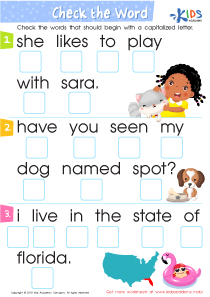
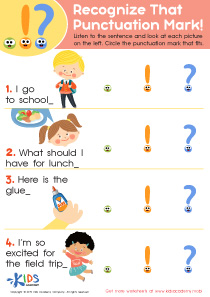
Discover our engaging Capitalization Rules Normal Writing Worksheets crafted for kids ages 3-8, designed to foster essential writing skills. These educational worksheets make learning about capitalization both fun and easy, helping young learners understand when and how to use capital letters. With a variety of activities, from identifying capital letters to practicing with simple sentences, children will build a strong foundation in grammar. Ideal for home or classroom use, our worksheets support early literacy and boost confidence in young writers. Equip your child with the tools they need for writing success today!
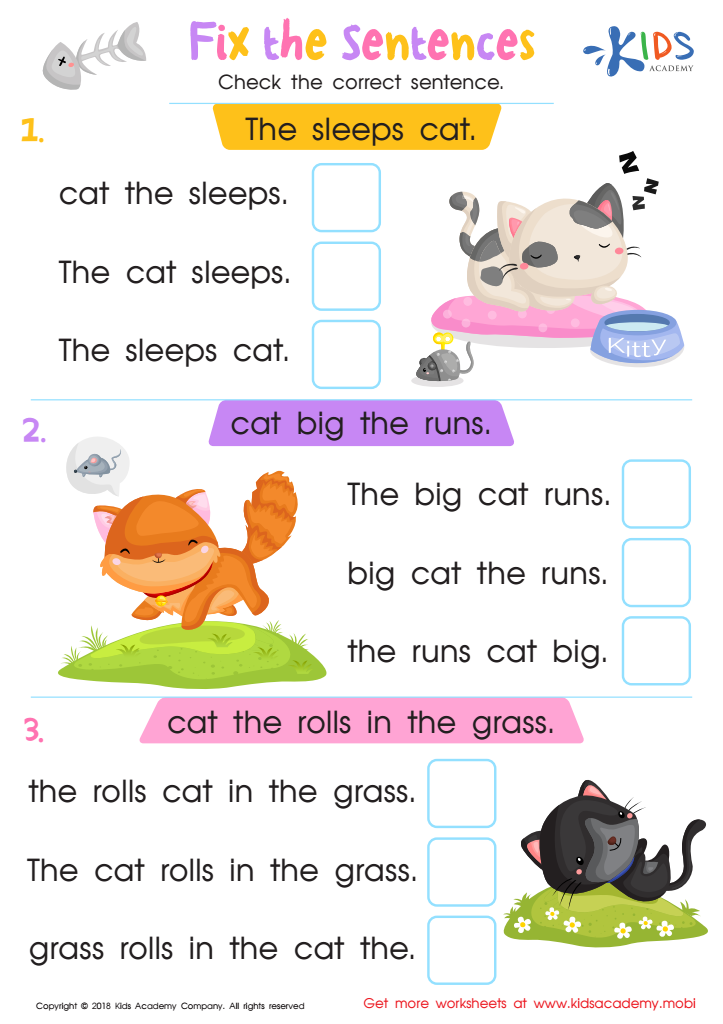
Fix the Sentences Worksheet
 Assign to My Students
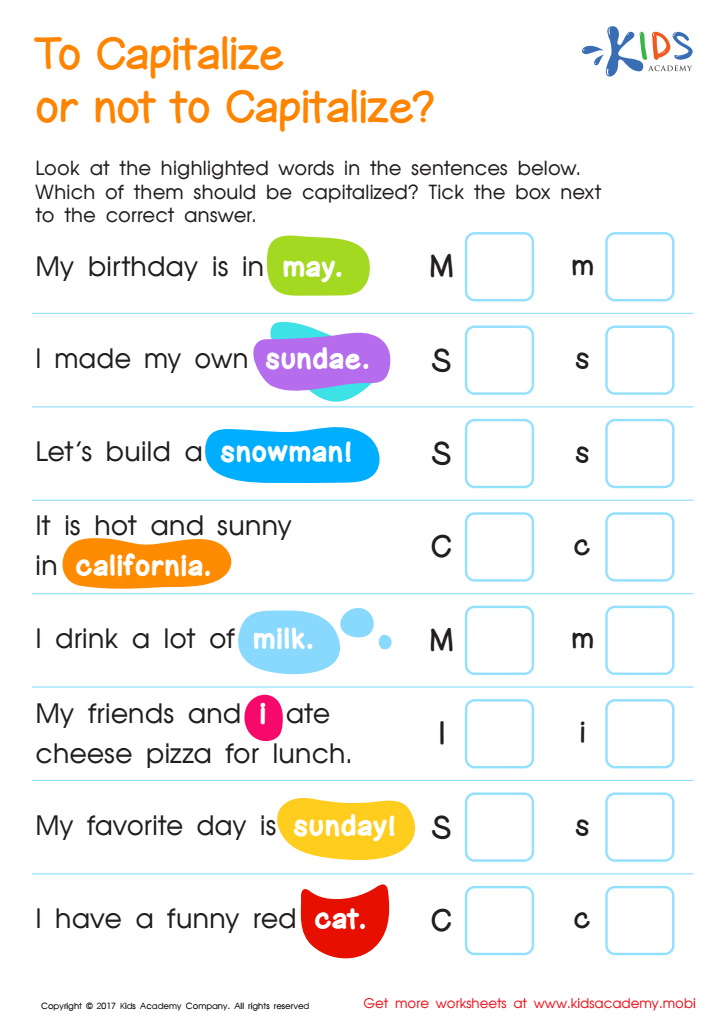
Capitalization: To Capitalize or Not? Printable
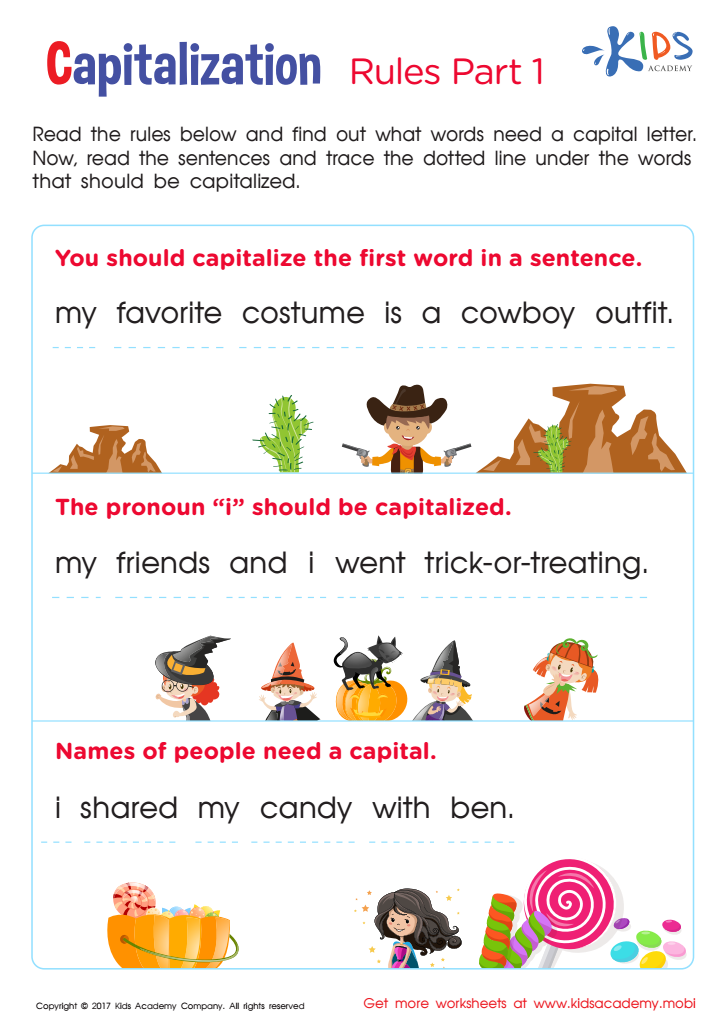
Capitalization Rules: Part 1 Worksheet








Understanding capitalization rules is foundational for young children ages 3-8 as it sets the stage for effective communication. Proper capitalization influences how children read and understand written text as well as contributes to their writing skills, which are critical for their academic success.
From a young age, learning the correct use of capital letters helps children identify the beginning of sentences, recognize proper nouns, and understand the context of written information. For example, capitalizing the first word in a sentence helps children distinguish it from other words. Recognizing proper nouns, such as "Emily" versus a common noun like "girl," aids in comprehension by specifying a particular person, place, or thing.
Parents and teachers who emphasize these rules encourage early reading and writing proficiency. Additionally, consistent practice with capitalization boosts confidence and reduces the likelihood of grammatical errors in more advanced stages of education. As children master these basics, they are better equipped to tackle more complex language tasks competently.
Moreover, good writing habits foster attention to detail and discipline, valuable skills that extend beyond academics to other areas of life. Therefore, by prioritizing capitalization rules, parents and teachers are effectively laying down the building blocks for their children’s lifelong learning and communication skills.