Word identification Normal Writing Worksheets for Ages 3-8
5 filtered results
-
From - To
Boost your child's literacy skills with our engaging Word Identification Normal Writing Worksheets designed for ages 3-8. These worksheets provide a fun and interactive way for young learners to recognize, trace, and write essential vocabulary words. Each activity promotes the development of fine motor skills and enhances word recognition, which is crucial for early reading success. Ideal for both home and classroom settings, our resources cater to diverse learning styles, making word identification an enjoyable experience for every child. Watch your little one gain confidence as they learn to identify and write words with our expertly crafted worksheets!
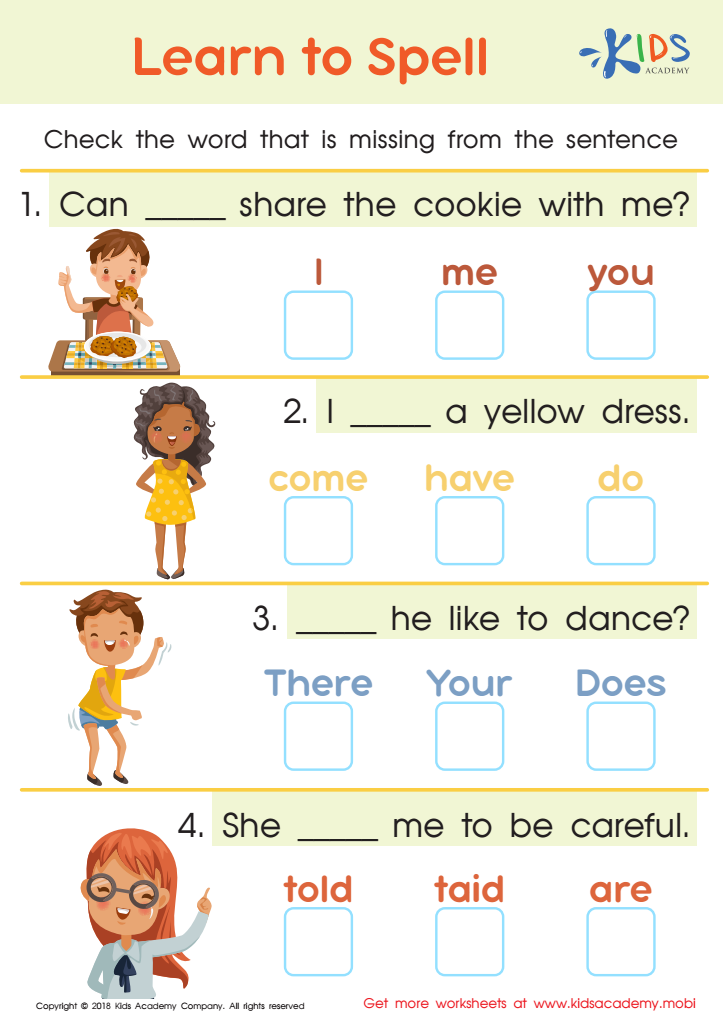
Learn to Spell Worksheet
 Assign to My Students
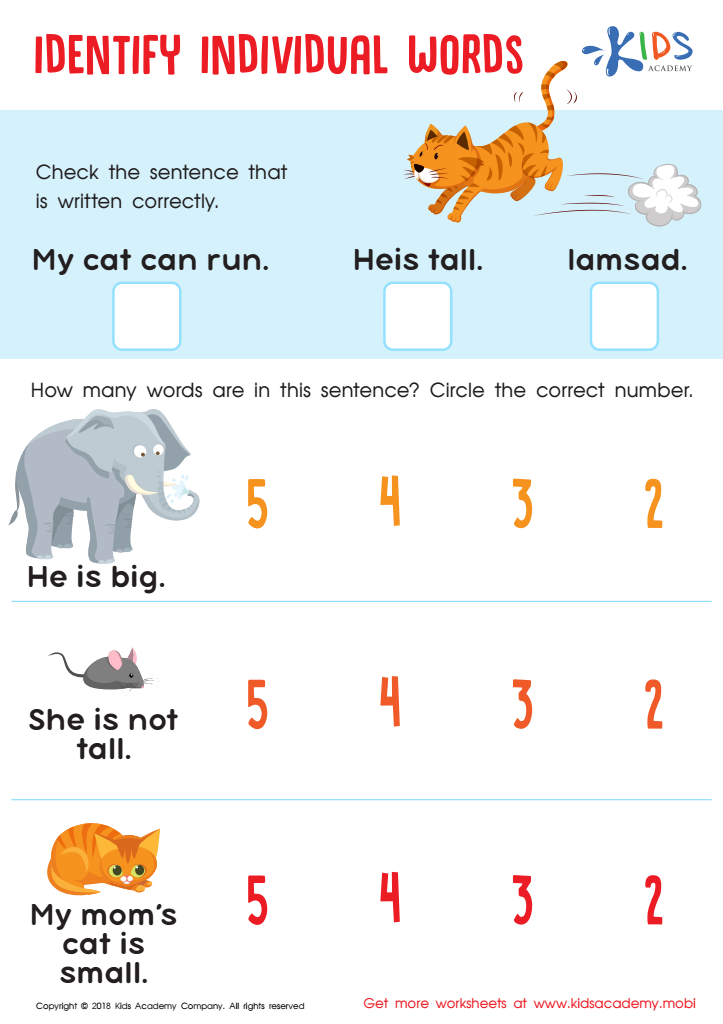
Identify Individual Words Worksheet
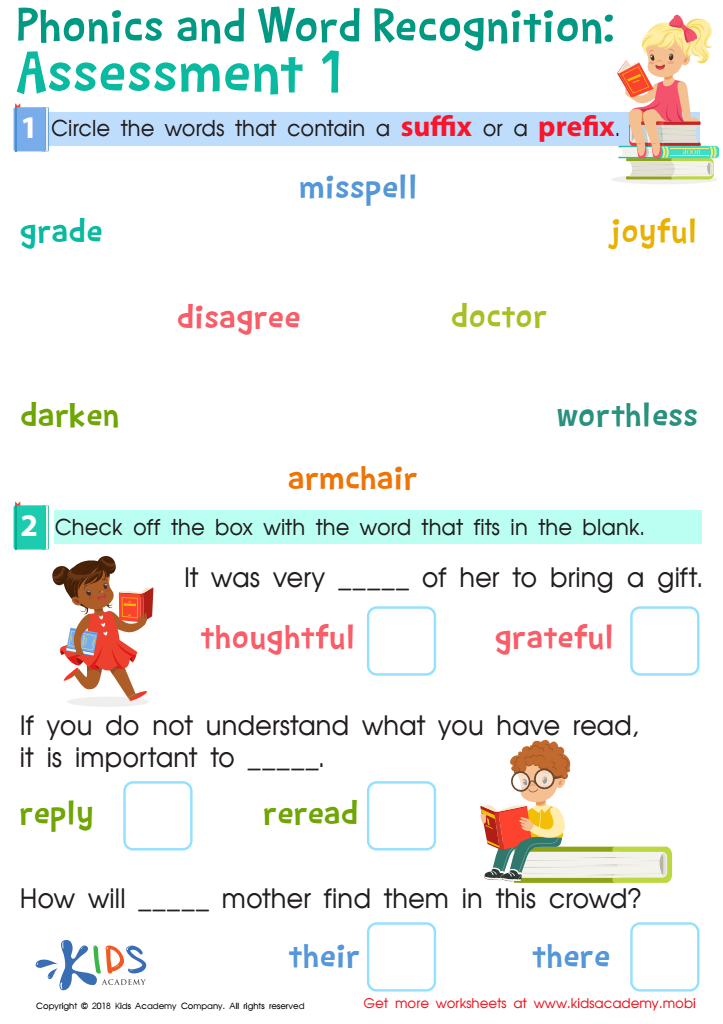
Phonics and Word Recognition: Assessment 1 Worksheet
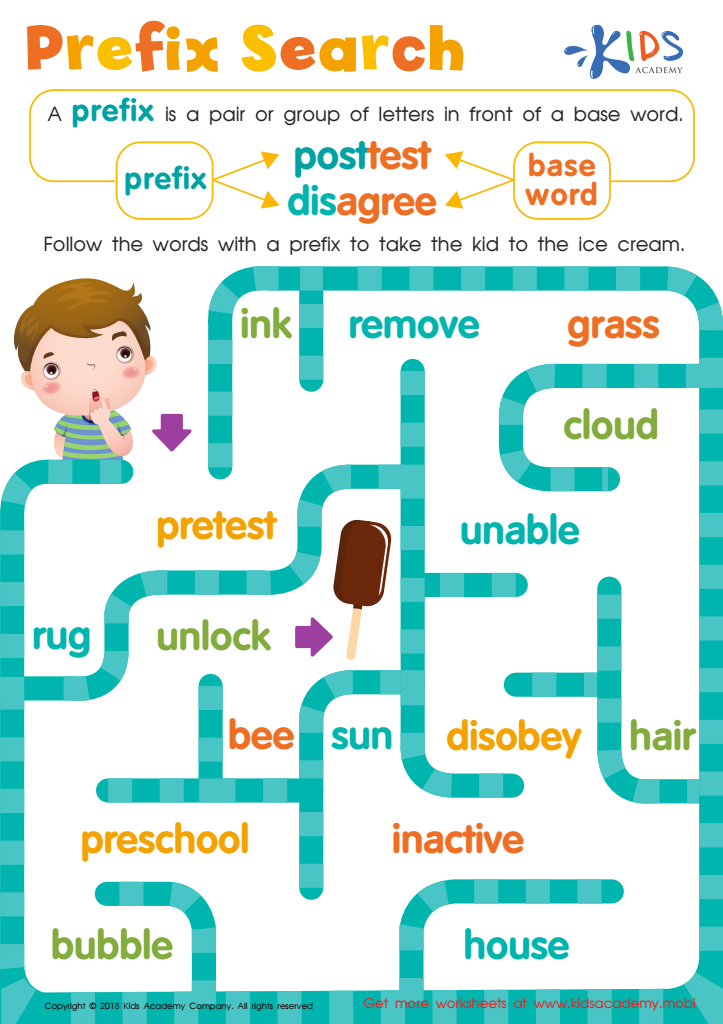
Reading: Prefix Search Worksheet
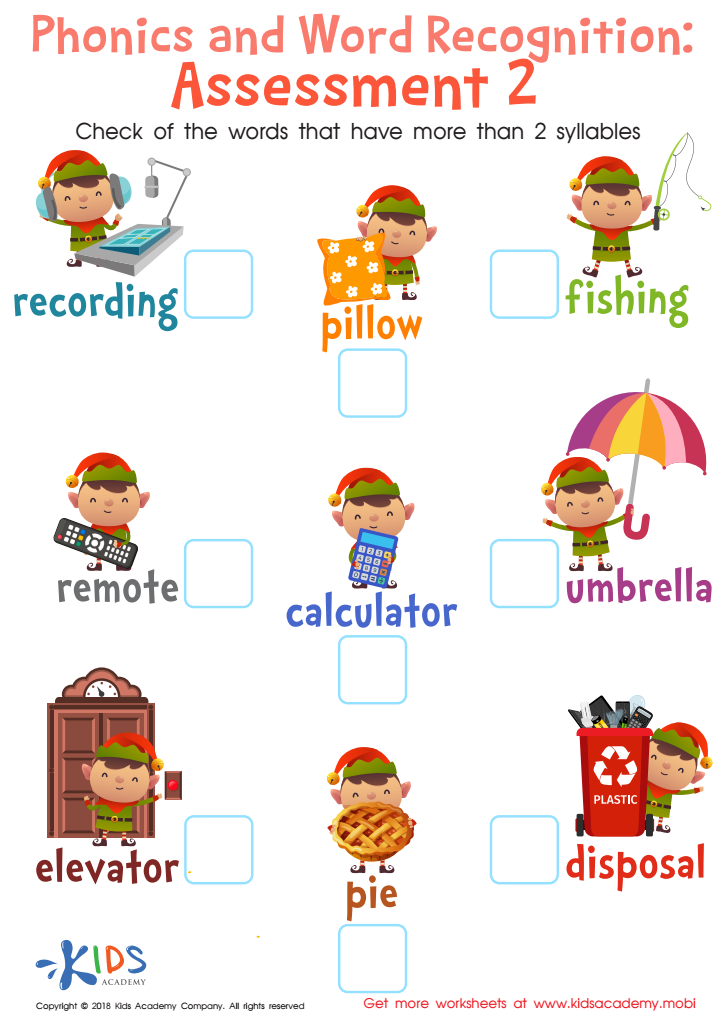
Phonics and Word Recognition: Assessment 2 Worksheet







Word identification is a crucial skill for children ages 3-8 as it forms the foundation for literacy development. During this formative stage, children learn to recognize and understand words, which significantly impacts their reading and writing abilities. Parents and teachers should care about word identification for several reasons.
First, it enhances language development. Recognizing words not only improves vocabulary but also boosts comprehension skills. Children who can identify words are better equipped to make sense of sentences and ideas, fostering a love for reading.
Second, word identification plays a vital role in building confidence. When children can read familiar words, they feel a sense of accomplishment, encouraging them to tackle more complex texts. This positive reinforcement cultivates a lifelong passion for learning.
Furthermore, early word identification supports overall academic success. Strong literacy skills are linked to better performance in all subjects, laying the groundwork for more advanced reading and writing skills in later years.
Finally, parental involvement can amplify these efforts. Engaging in word games, reading together, and providing a print-rich environment at home can create meaningful learning experiences, reinforcing what children explore in school. Fostering word identification should be a shared goal for parents and teachers to help children thrive cognitively and emotionally.