
Letter recognition Normal ABC Letters Worksheets for Ages 3-9
16 filtered results
Difficulty Level
Grade
Age
-
From - To
Subject
Activity
Standards
Unlock the world of literacy with our engaging "Letter Recognition Normal ABC Letters Worksheets" designed specifically for children ages 3-9. These worksheets provide a fun and interactive way to help young learners identify, recognize, and differentiate between uppercase and lowercase letters. Featuring vibrant illustrations and captivating activities, each worksheet encourages practice through tracing, matching, and coloring. Our resources support early reading skills, making learning enjoyable and effective. Perfect for homeschooling, classroom activities, or extra practice at home, our ABC worksheets tailor to varying skill levels, ensuring every child develops a solid foundation in letter recognition. Start your child's alphabet adventure today!
Favorites
With answer key
Interactive
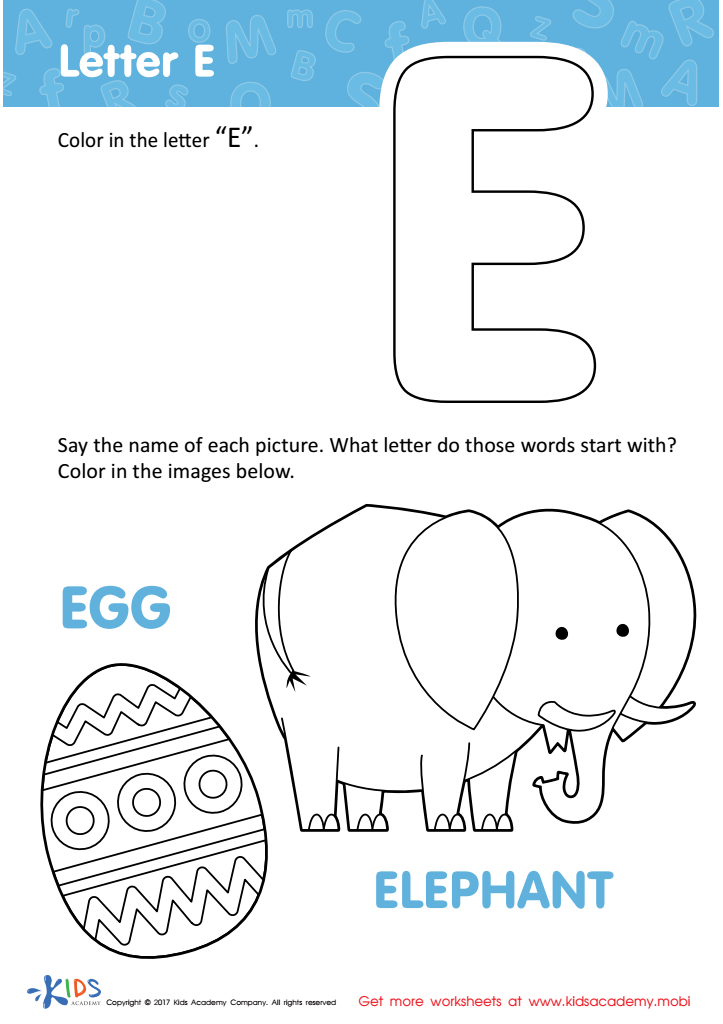
Letter E Coloring Sheet
Coloring pages are great for teaching kids the alphabet and words! This "E" page features a cute elephant and Easter egg. Kids will love it and learn the letter "E" at the same time. 80 words
Download (PDF)
 Assign to My Students
Assign to My Students
Letter E Coloring Sheet
Worksheet

Letter P Tracing Page
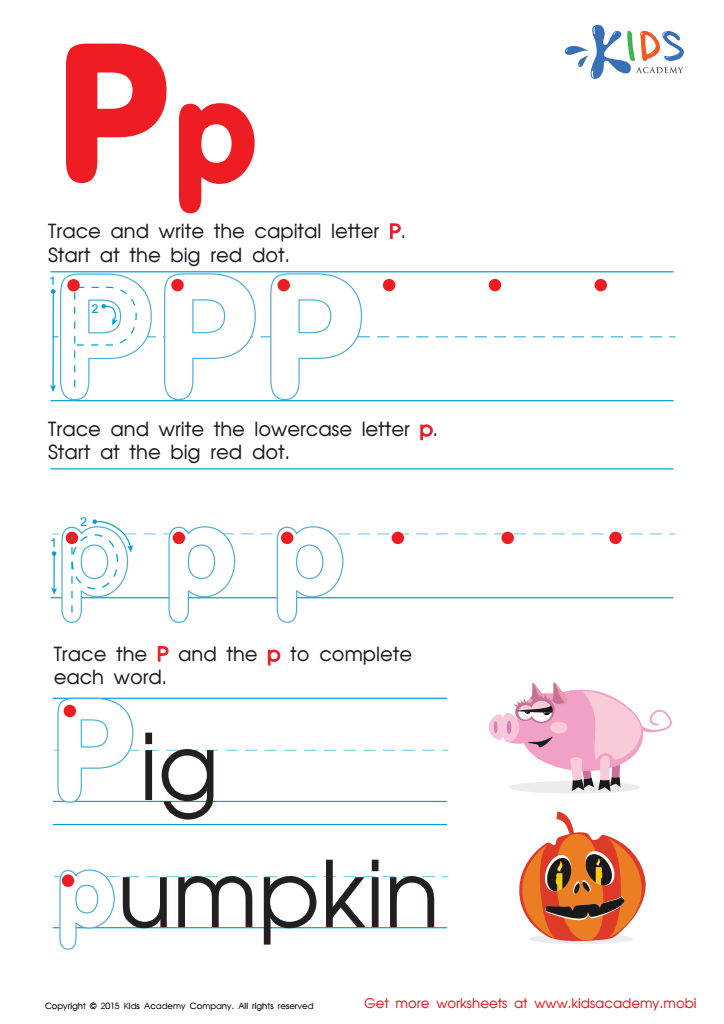
Trace the lines from the red dot to learn to write "P"! Then practice this letter with the fun activities: complete the word "Pig" and "Pumpkin". Check out Kids Academy to get more free ABC worksheets.
Letter P Tracing Page
Worksheet
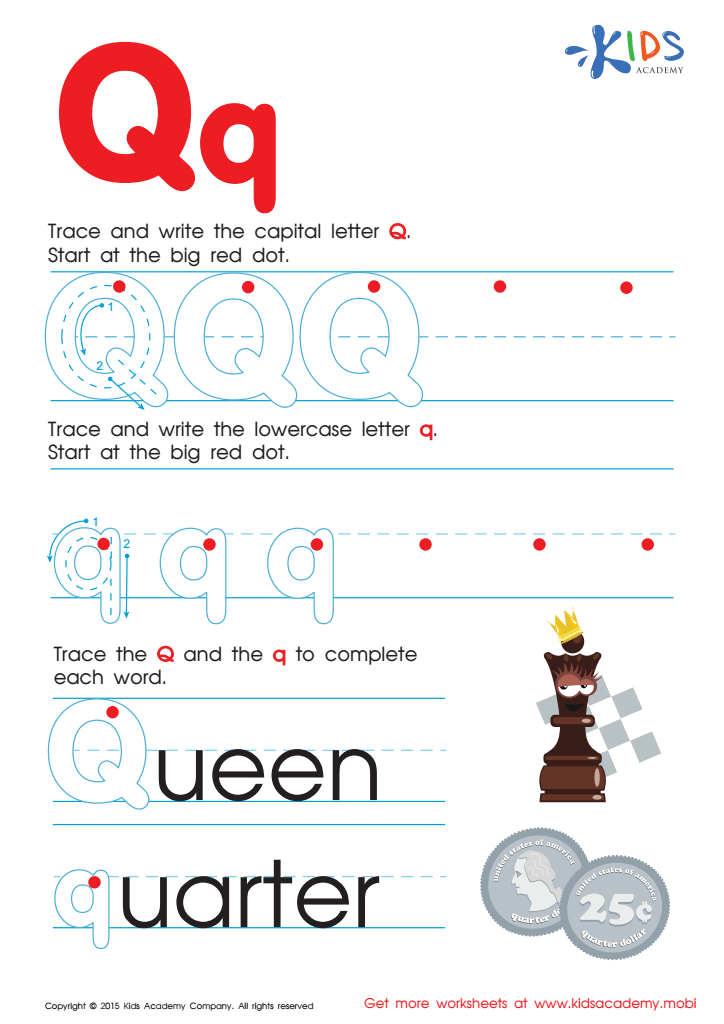
Letter Q Tracing Page
Learn the letter "Q"! Trace and write it a few times in upper and lowercase. Then help the Queen by writing her initial letter. Finally, write "quarters" and practice with more alphabet worksheets.
Letter Q Tracing Page
Worksheet
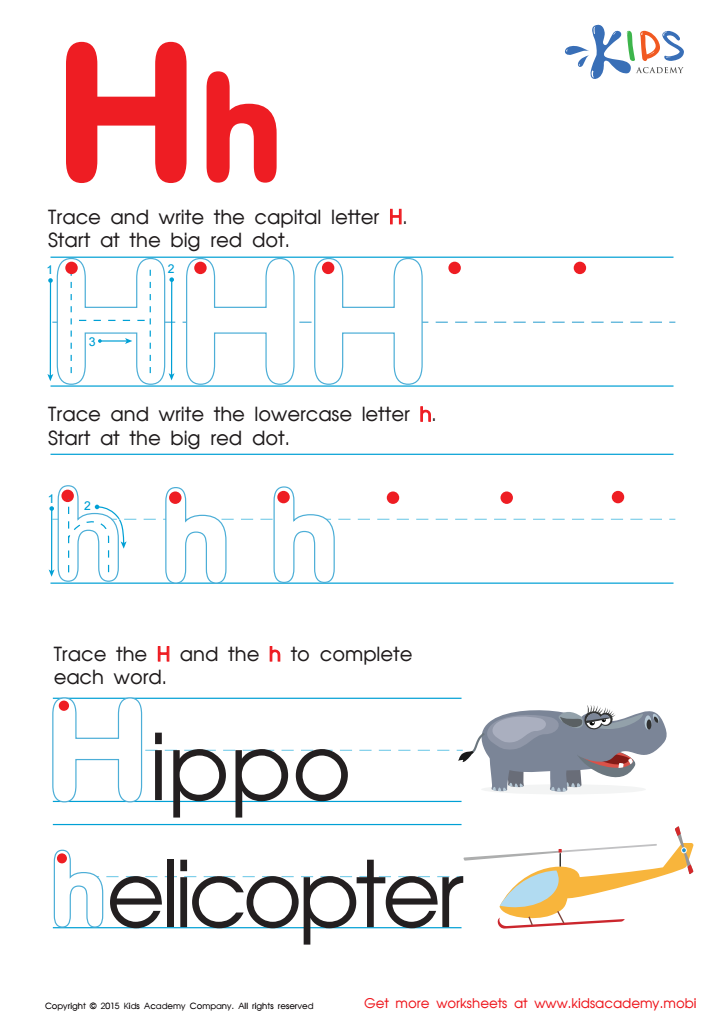
Letter H Tracing Page
Trace the letter "H", then practice writing its lowercase form. Finally, choose your favorite form of transport and ride away! Get our worksheets to make learning fun and easy.
Letter H Tracing Page
Worksheet

Letter G Tracing Page
Get ready to trace the letter "G" – with a big red spot as the starting point, trace the lines and watch the letter appear. Uppercase and lowercase letters are both easy and fun to write. Give it a go and finish the word "go". Play the guitar and say "hello" to a funny ghost!
Letter G Tracing Page
Worksheet
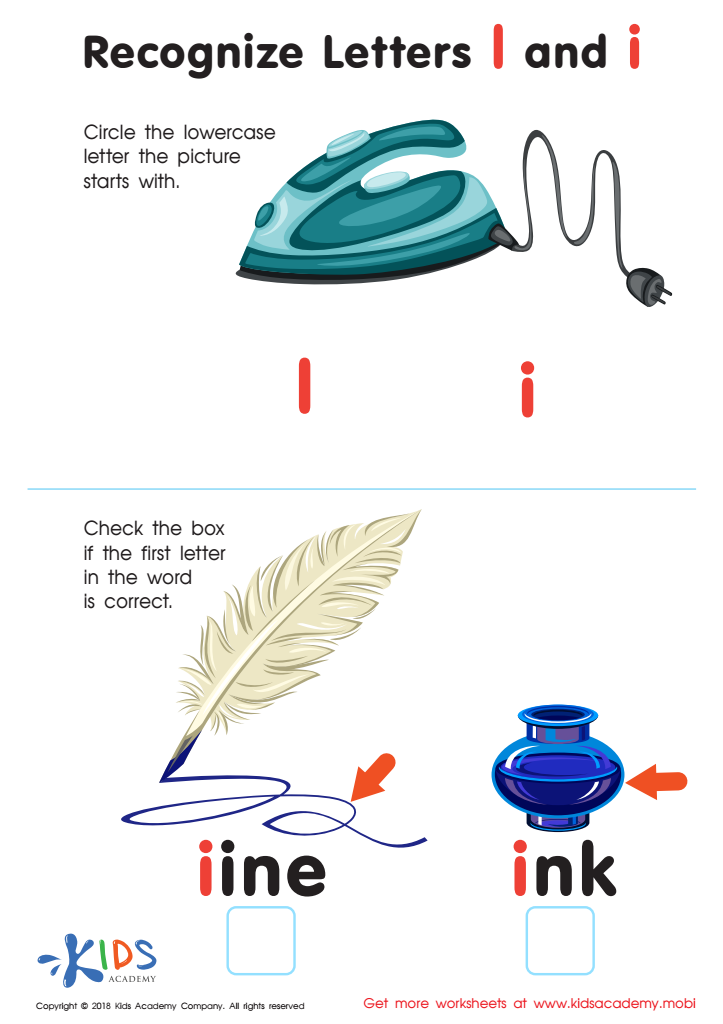
Recognize Letters l and i Worksheet
Help your child become familiar with uppercase and lowercase letters. Have them look at the pictures in the worksheet and circle the lowercase letter the picture starts with. For example: which one is the lowercase "i", the capital "I" or the small "i"?
Recognize Letters l and i Worksheet
Worksheet
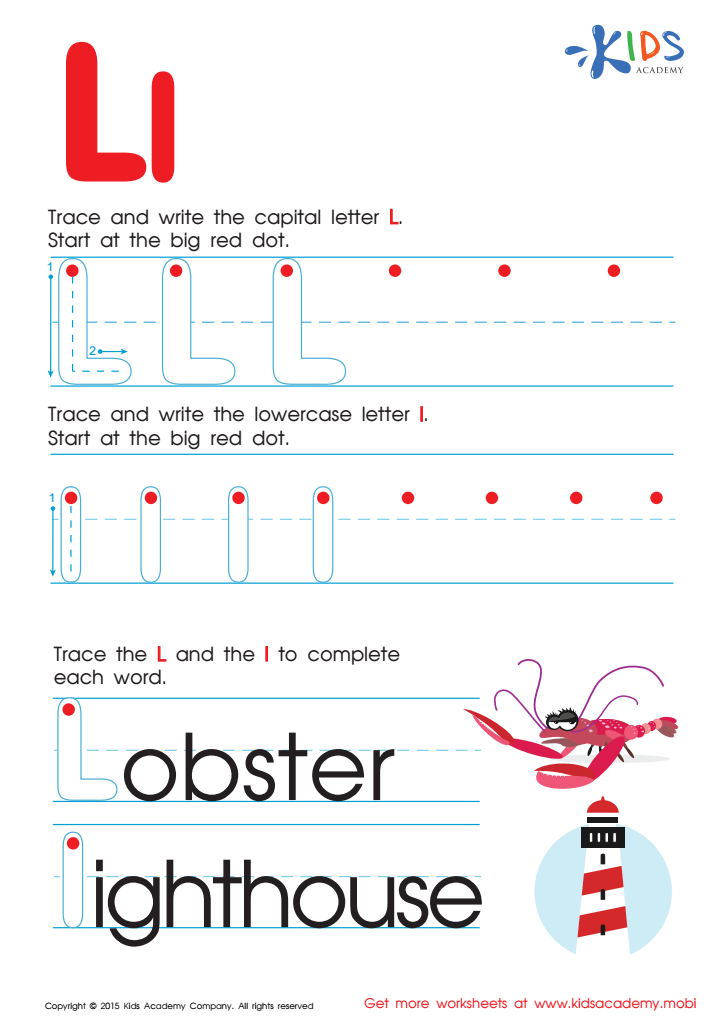
Letter L Tracing Page
Trace uppercase and lowercase letters to practice writing. Pay attention to the lowercase letters, like the "L", that are not as tall as an uppercase "I" or as short as a lowercase "i". Words like "lobster" and "lighthouse" are waiting to be completed. Enjoy!
Letter L Tracing Page
Worksheet
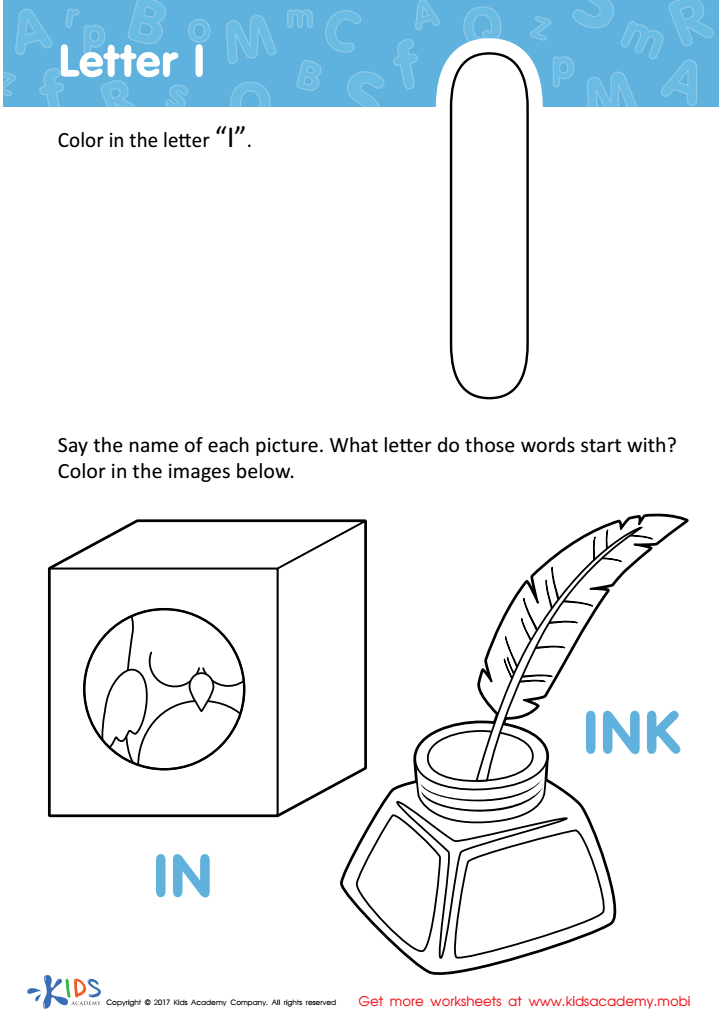
Letter I Coloring Sheet
This coloring page helps your child recognize the letter "I" and the positional word "in". It also introduces them to sight words, enhancing language skills. It's great for teaching parts of speech and boosting your little learner's confidence!
Download (PDF)
Assign to My Students
Assign to My Students
Letter I Coloring Sheet
Worksheet
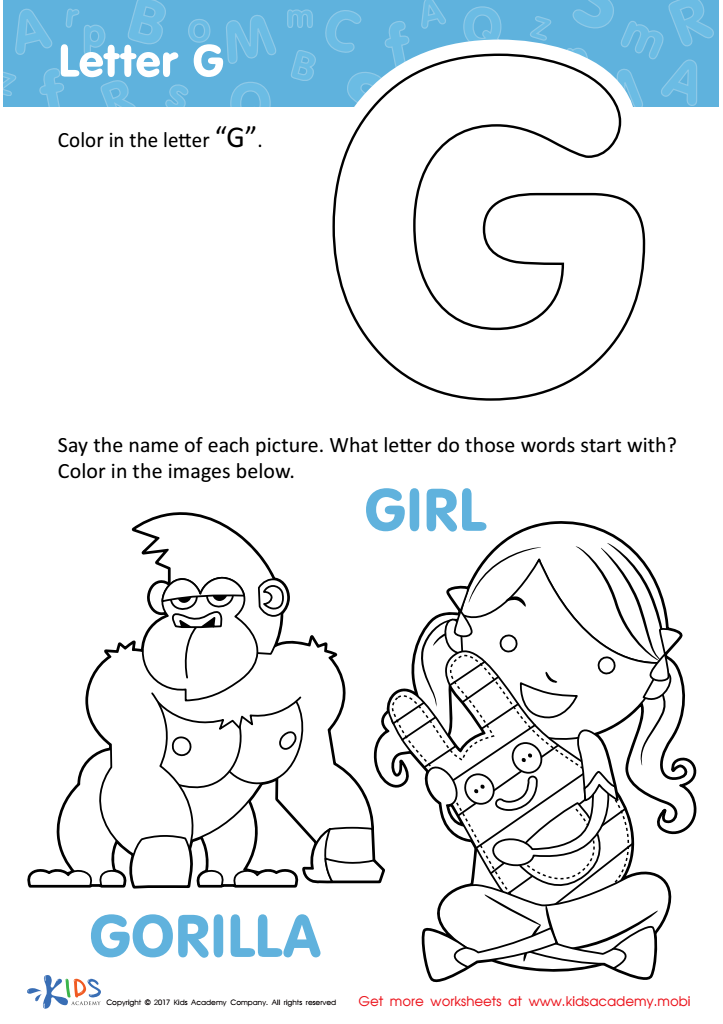
Letter G Coloring Sheet
This "G" coloring page encourages creativity and teaches kids the letter "G" sound. With its fun visuals and familiar words, it's sure to excite your child. Plus, you can talk about the letter’s sound with the pictures given.
Download (PDF)
Assign to My Students
Assign to My Students
Letter G Coloring Sheet
Worksheet
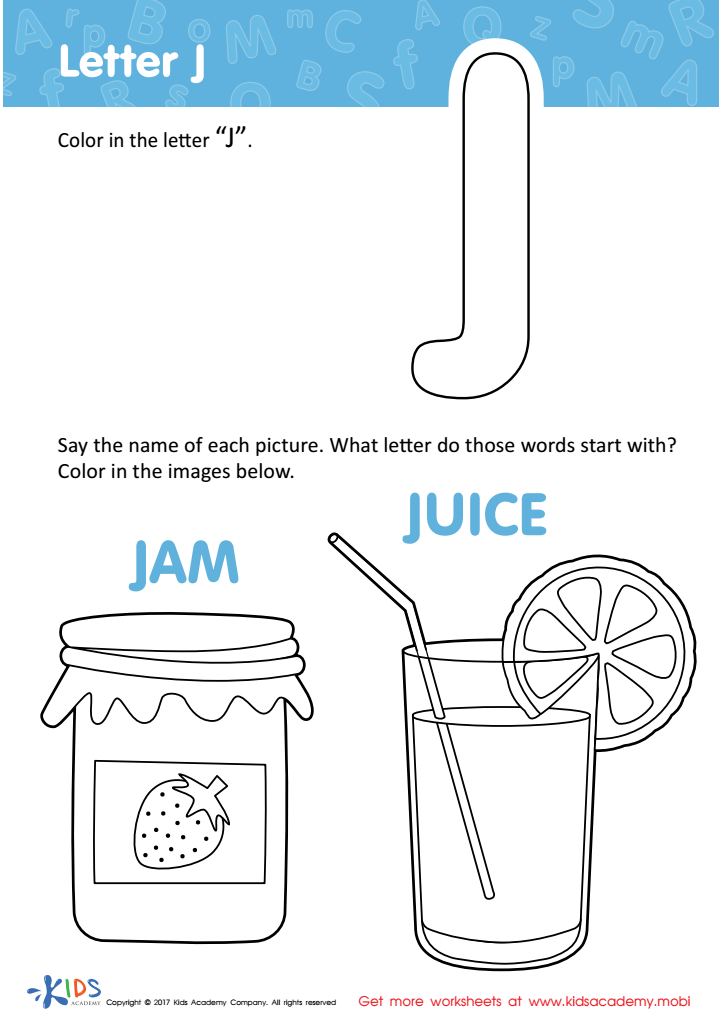
Letter J Coloring Sheet
Practice the letter 'J' with your little one with this fun coloring page! Pictures of jar, juice, jam and jelly make it an enjoyable experience for kids. Learning the letter and coloring is fun for even the youngest learners.
Download (PDF)
Assign to My Students
Assign to My Students
Letter J Coloring Sheet
Worksheet
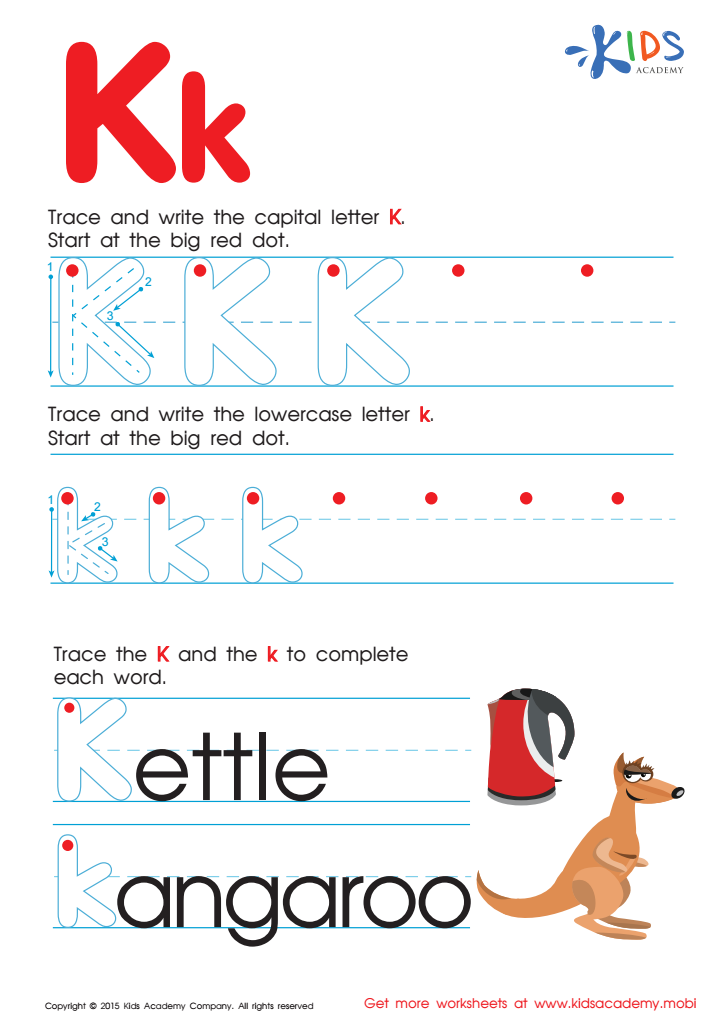
Letter K Tracing Page
Trace and write the letter K; start at the big red dot. Use it to complete words like "Kettle" and "Kangaroo". Visit Kids Academy for more free alphabet worksheets for kindergarten.
Letter K Tracing Page
Worksheet
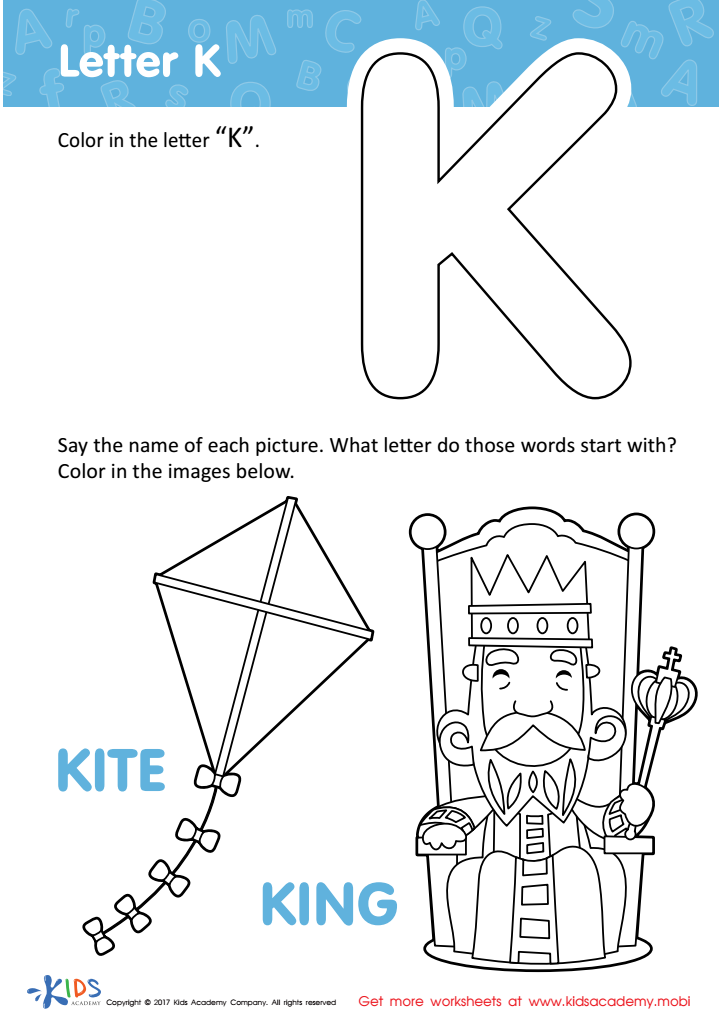
Letter K Coloring Sheet
This letter K coloring page captivates your child's creativity while learning the letter! Showcasing a king and kite, common words for their age group, it's sure to spark their imagination.
Download (PDF)
Assign to My Students
Assign to My Students
Letter K Coloring Sheet
Worksheet

Letter F Tracing Page
Trace "F" with your pencil! Start at the red dot and draw lines — it's fun! Check it out — it looks great! Keep practicing to make it even better. Then, try completing words. Help out the broken fan and funny frog! Get free alphabet worksheets and activities for your kids. Come see our new tracing pages!
Letter F Tracing Page
Worksheet

Letter N Coloring Sheet
Let your child get creative and learn the alphabet with this letter "N" coloring page! It's a fun way to recognize the letter, featuring a body part all kids know. Coloring and reinforcing recognition of "N" will help your child have fun while learning!
Download (PDF)
Assign to My Students
Assign to My Students
Letter N Coloring Sheet
Worksheet

Letter D Tracing Page
Trace and write capital and lowercase letter "D" with our free printable alphabet worksheet! Be careful not to mix up "b" and "d" - just look at the ducks and write their first letter. The dolphin wants to join the fun too - do you like dolphins? Get more fun worksheets and activities at Kids Academy!
Letter D Tracing Page
Worksheet
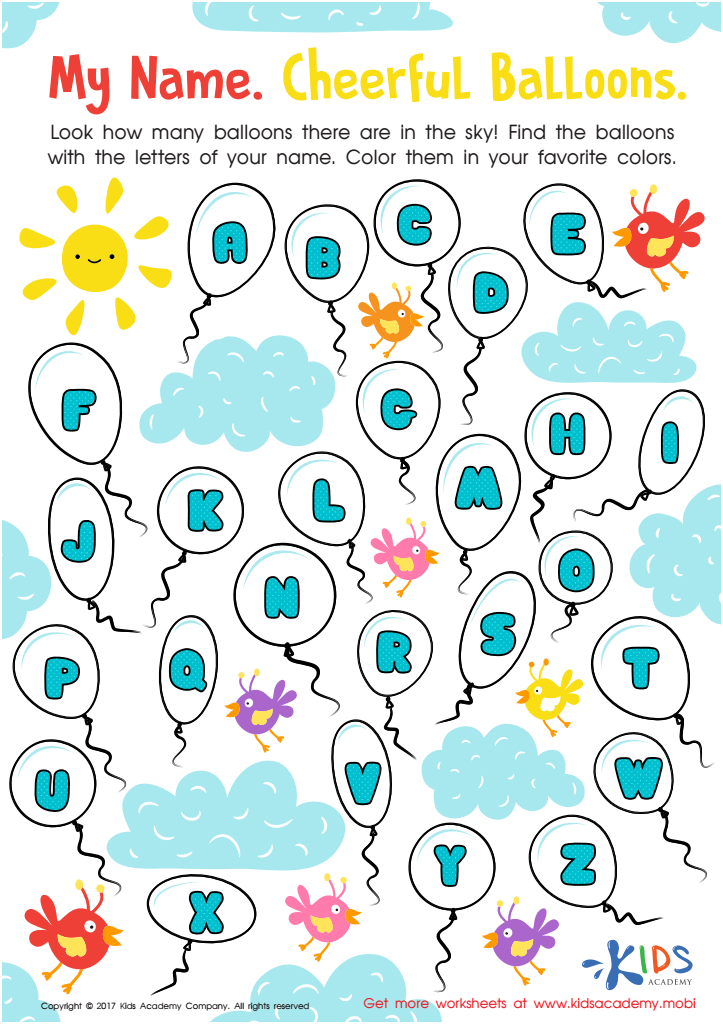
My Name: Cheerful Balloons Worksheet
Encourage toddlers and preschoolers to soar with this fun worksheet! Find the letters in the balloons and help your child find the letters of their name. Then, fill in each balloon with their favorite colors and turn the paper over to write their name on the back. A great way to give imaginations wings!
Download (PDF)
Assign to My Students
Assign to My Students
My Name: Cheerful Balloons Worksheet
Worksheet
Join Kids Academy for Free
Who is primarily going to use this learning content?






Letter recognition is a fundamental skill for children ages 3-9, serving as a building block for literacy and overall academic success. Parents and teachers should prioritize this skill because it lays the groundwork for reading and writing proficiency. By learning the alphabet, children develop their phonemic awareness, enabling them to understand the relationship between letters and sounds, which is crucial for word decoding.
Early letter recognition fosters a love for reading and language. When kids can identify letters and associate them with sounds, they become more engaged and confident in their reading abilities. This confidence often leads to improved communication skills and better performance in school.
Furthermore, letter recognition enhances cognitive development. Engaging with letters challenges children to recognize patterns and make connections, promoting critical thinking and problem-solving skills. It also encourages fine motor skills as children practice writing letters.
For parents and teachers, fostering letter recognition not only aids in academic development but also strengthens parent-child and teacher-student relationships as they engage in supportive and interactive learning activities. Nurturing this skill at an early age sets the stage for lifelong learning, making it vital to prioritize letter recognition in education.







