Phonics understanding Normal Alphabet Worksheets for Ages 3-9
3 filtered results
-
From - To
Unlock the magic of reading with our Phonics Understanding Normal Alphabet Worksheets tailored for ages 3-9! Packed with engaging activities, these worksheets are designed to build a solid foundation in phonics and alphabet recognition. Young learners will delight in connecting sounds to letters as they enhance their reading skills. Ideal for early grade students, these resources provide hands-on practice to support literacy development effectively. Boost your child’s confidence and abilities with fun and educationally robust content that transforms learning into an exciting adventure. Explore our collection now and watch their reading journey take flight!
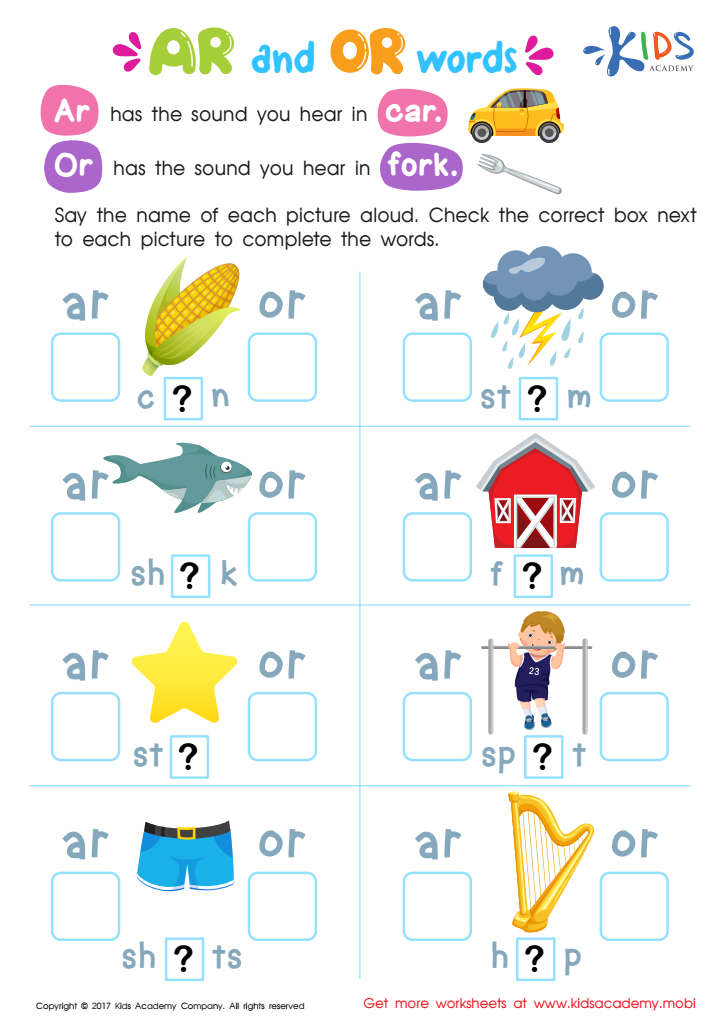
Ar and Or Words Phonics Worksheet
 Assign to My Students
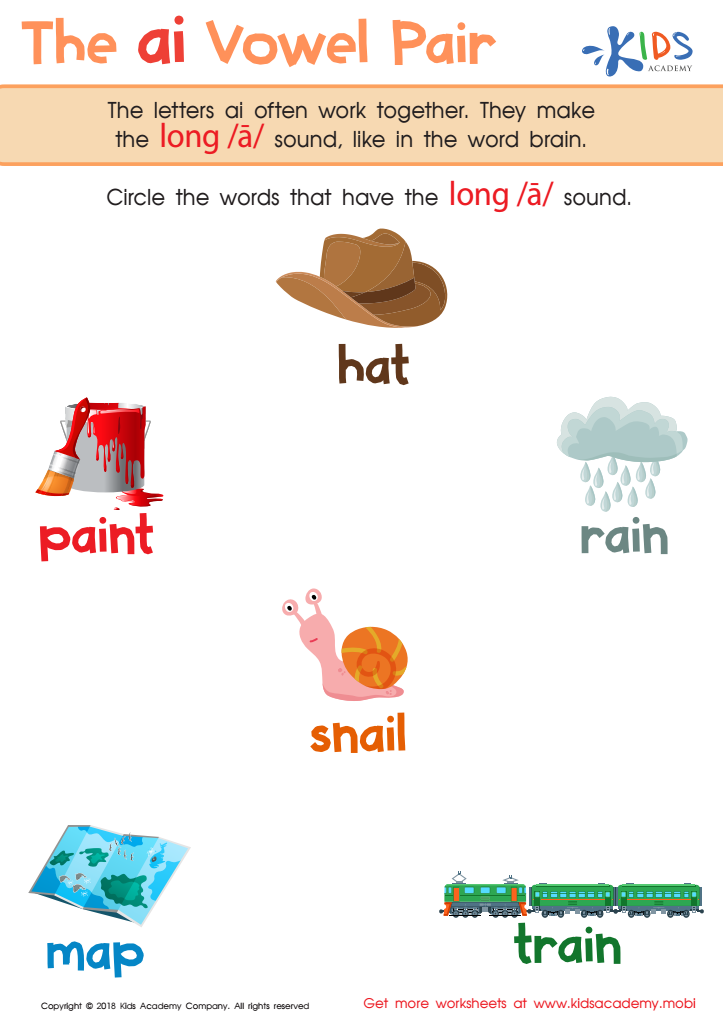
The AI Vowel Pair Worksheet
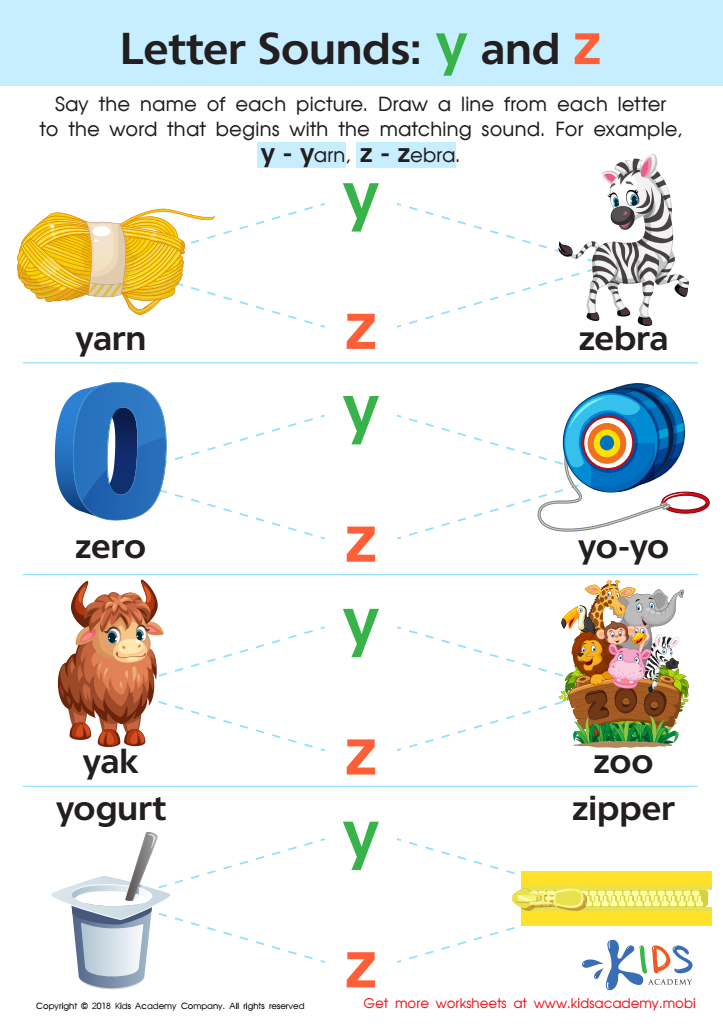
Letter Y and Z Sounds Worksheet







Understanding phonics in the context of the normal alphabet is crucial for children aged 3-9, as it lays the foundation for proficient reading and writing skills. Phonics is the method of teaching reading based on the sound of letters, groups of letters, and syllables. It helps children recognize the relationship between written letters and their spoken sounds, enabling them to decode new words by sounding them out.
For parents and teachers, focusing on phonics can radically transform a child's literacy journey. Early phonics education promotes fluent reading, which is linked to improved comprehension skills. Children who learn to read early with ease are more likely to become enthusiastic readers, setting a positive loop for lifelong learning.
Moreover, phonics supports spelling and grammar development. When children understand how letters and sounds combine, they can apply these rules to both familiar and unfamiliar words, bolstering their written communication skills. This is particularly important during their formative years when their cognitive abilities related to language are most pliable.
Early mastery of phonics also instills confidence. As children successfully decode words, the satisfaction of overcoming challenges enhances their self-esteem and fosters a love for learning. For these reasons, parents and teachers should prioritize phonics within the normal alphabet framework to ensure a strong literacy foundation, critical for academic success and personal growth.







