
Reading practice Normal Alphabet Worksheets for Ages 3-9
4 filtered results
Difficulty Level
Grade
Age
-
From - To
Subject
Activity
Standards
Our Reading Practice Normal Alphabet Worksheets for ages 3-9 are meticulously designed to boost your child's reading skills comfortably. Engaging and effective, these worksheets introduce letters, phonetics, and simple words through fun activities tailored for young learners. Enhance your child's confidence and proficiency in reading with exercises that grow with them, each targeting essential learning milestones. Perfect for both classroom and home use, our worksheets are a reliable resource for parents and teachers. Discover a wealth of strategies and tools to support your child's literacy journey and foster a lifelong love for reading.
Favorites
With answer key
Interactive
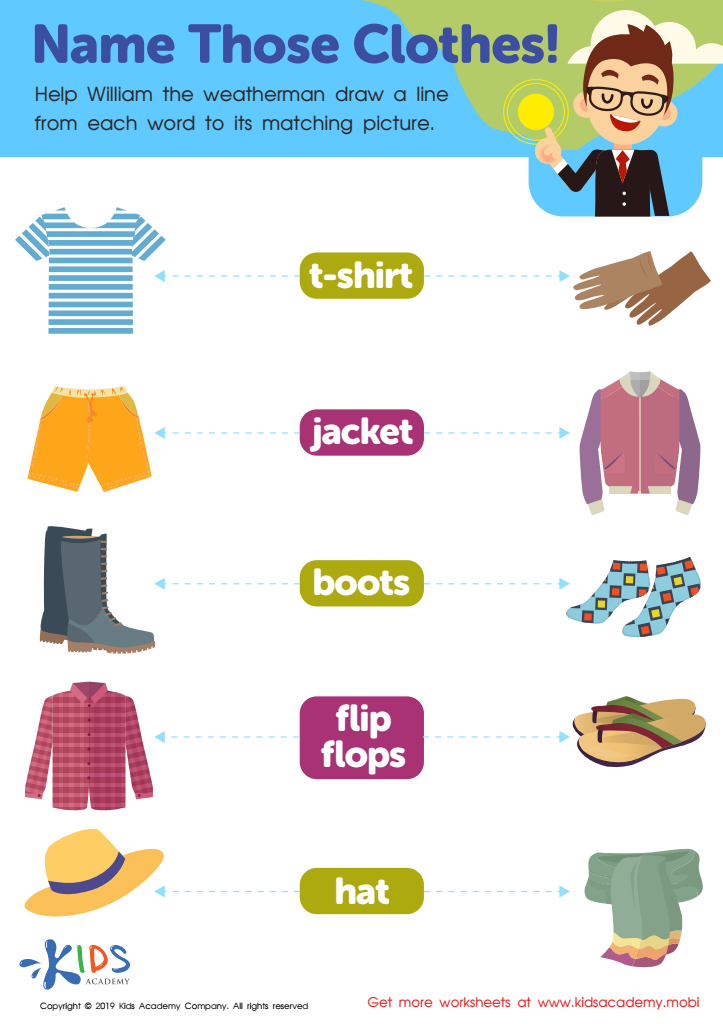
Name Those Clothes Worksheet
This worksheet will help your preschooler build their vocabulary, develop life-skills and work on fine motor skills. They'll analyze which clothing goes with the weatherman and match it to the word. It's a fun and interactive way to recognize high-frequency words.
 Assign to My Students
Name Those Clothes Worksheet
Worksheet
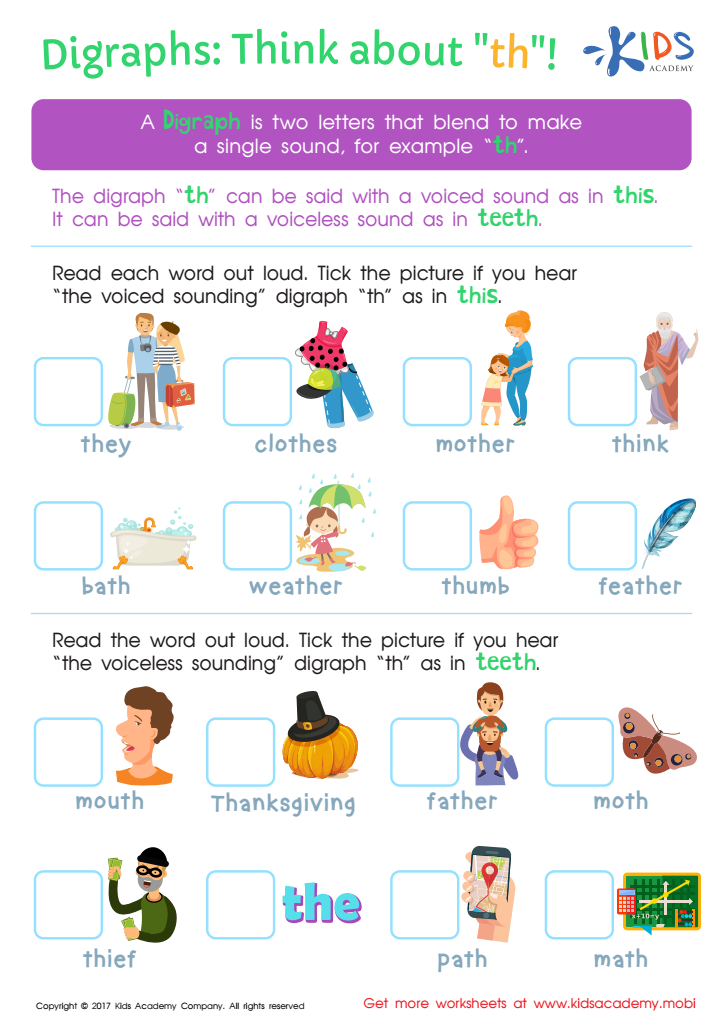
Digraphs: Think About "th" Worksheet
Help your child master phonics with this illustrated digraph Th printable worksheet. It will help recognize "Th" words, differentiate voiced and voiceless sounds and understand key concepts. Use similar words while they work to reap its full benefits!
Digraphs: Think About "th" Worksheet
Worksheet
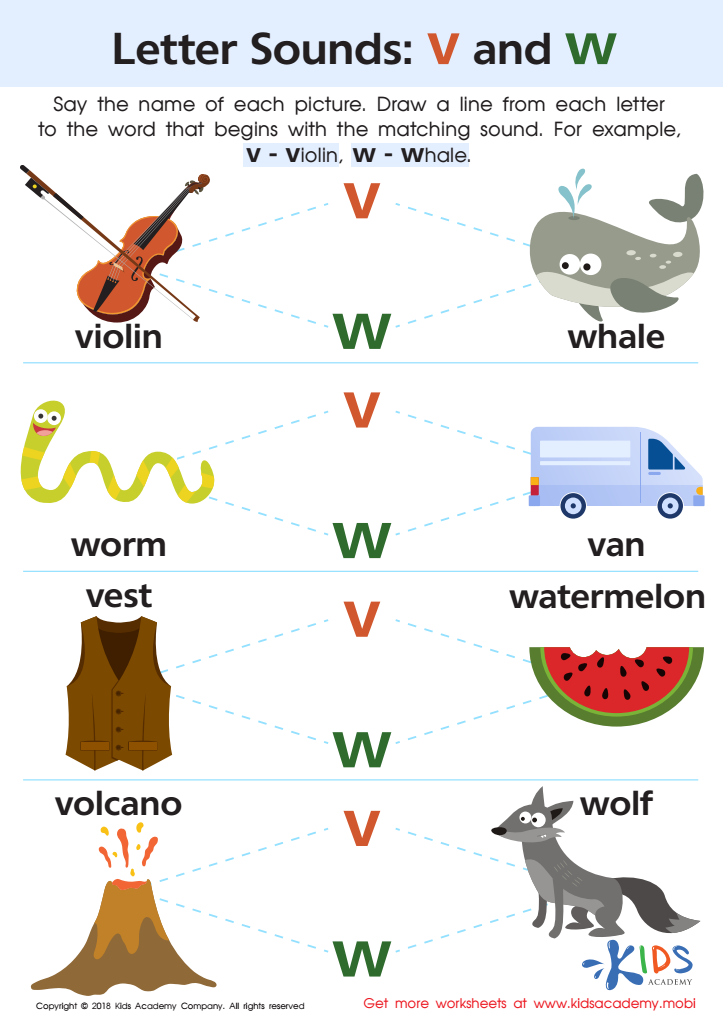
Letter V and W Sounds Worksheet
Help your child master the sounds of W & V while completing this fun phonics worksheet. Have them trace the dotted line from letter to picture while saying words like "worm", "violin" and "van" aloud to notice how each word begins with either W or V. Listen and pay attention to the pronunciation to complete the practice.
Letter V and W Sounds Worksheet
Worksheet
Join Kids Academy for Free
Who is primarily going to use this learning content?







Fostering reading practice using a normal alphabet for children aged 3-9 is crucial for multiple compelling reasons. This developmental period is foundational for literacy skills that directly influence a child's academic success and lifelong learning.
Firstly, engaging with a standard alphabet enhances letter recognition, a critical initial step in learning to read and write. By practicing with a normal alphabet, children become familiar with the shape, sound, and order of letters, which enables decoding and phonemic awareness—the ability to hear, identify, and manipulate individual sounds in spoken words. Early phonemic awareness forms the bedrock of reading fluency and comprehension skills.
Secondly, during these ages, children are developing crucial cognitive skills. Consistent reading practice bolsters their working memory, enhances vocabulary, and improves attention span. Exposure to a variety of words and sentence structures through reading promotes language acquisition and richer expression capabilities.
Furthermore, reading practice fosters a love for reading, nurturing a positive attitude towards learning. It also builds children's confidence and independence as they navigate stories and texts, leading to increased motivation and engagement in learning activities.
Lastly, this early engagement has social benefits. It strengthens parent-child or teacher-child relationships through shared reading experiences and opens up opportunities for meaningful discussions about stories and their morals, enhancing both personal and social growth.
Therefore, parents and teachers should prioritize reading practice with a normal alphabet to lay a solid foundation for future academic and personal success.







