Phonics understanding Normal Phonics Worksheets for Ages 3-9
3 filtered results
-
From - To
Discover the joy of phonics with our "Normal Phonics Worksheets for Ages 3-9." Designed to enhance early reading skills, these engaging worksheets provide a fun and effective way for young learners to grasp phonetic concepts. Tailored for children aged 3-9, our resources cover a variety of phonics topics, including letter sounds, blending, and word recognition. Each worksheet features colorful activities that keep children motivated while reinforcing their understanding of phonics fundamentals. Ideal for home or classroom use, these worksheets are an excellent tool for parents and educators aiming to foster a love for reading and boost literacy skills in young minds.
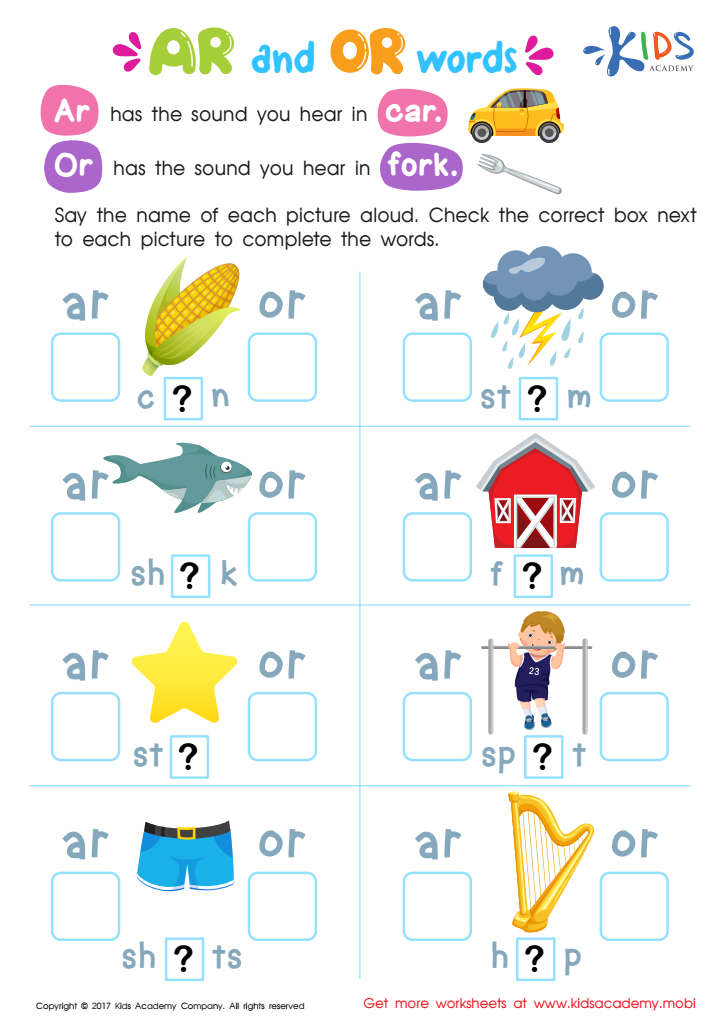
Ar and Or Words Phonics Worksheet
 Assign to My Students
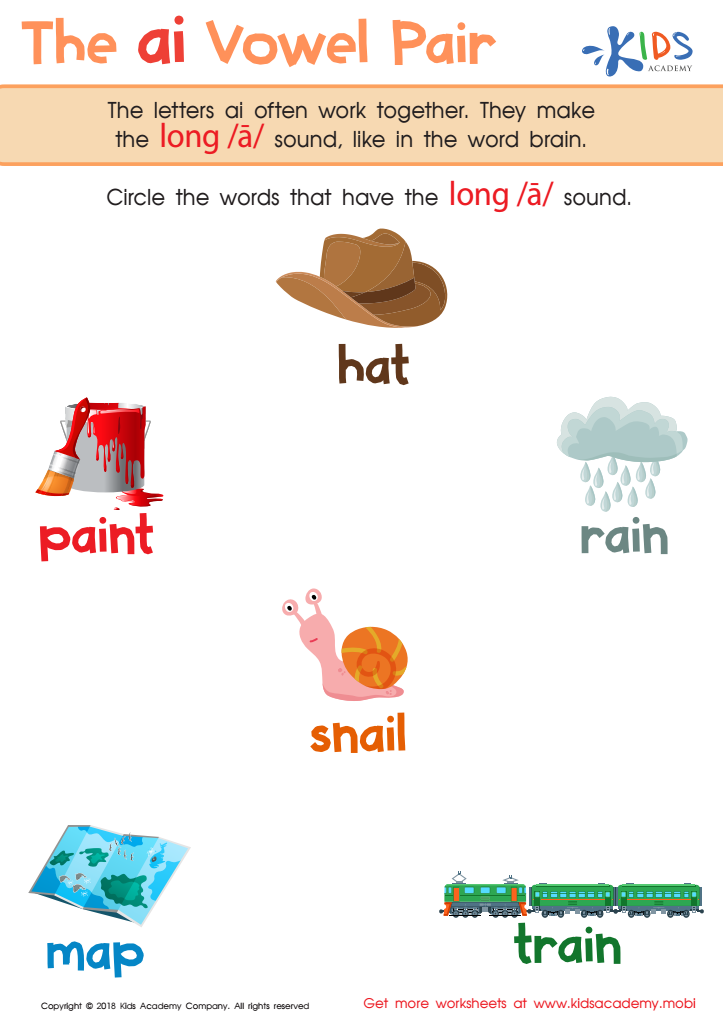
The AI Vowel Pair Worksheet
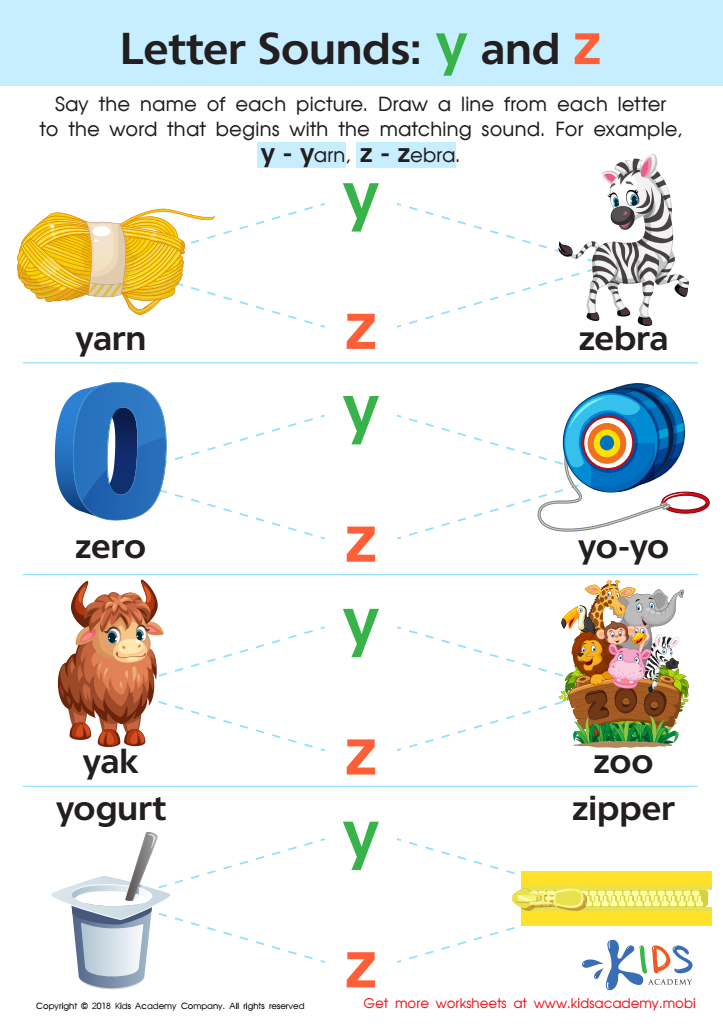
Letter Y and Z Sounds Worksheet








Phonics understanding is a vital component of early literacy development, especially for children aged 3-9. During these formative years, children are developing their reading and writing skills, which are fundamental for their overall academic success. By learning phonics, children gain the ability to decode words, enabling them to recognize sound-letter relationships. This skill lays the foundation for reading fluency and comprehension, which are essential for later academic achievement.
Parents and teachers should prioritize phonics instruction as it fosters confidence in young learners. When children can sound out words independently, they are more likely to enjoy reading and engage with text, which further enhances their vocabulary and comprehension skills. Additionally, phonics instruction can address diverse learning needs, making reading accessible for all children, including those who may struggle with traditional learning methods.
Moreover, a strong phonics foundation can prevent future reading difficulties, which can have long-term negative effects on a child's educational journey. By investing in phonics, parents and teachers empower children to become competent, confident readers who are prepared to succeed not just in school, but in life. Thus, understanding and implementing effective phonics strategies should be a critical focus for both educators and parents alike.







