Phonological awareness Normal Phonics Worksheets for Ages 3-9
3 filtered results
-
From - To
Phonological awareness is crucial for young learners, setting the foundation for effective reading and writing skills. Our "Phonological Awareness Normal Phonics Worksheets for Ages 3-9" are designed to make learning phonics fun and engaging. These expertly crafted worksheets use playful activities to help children recognize sounds, understand letter blends, and improve word formation. Tailored to fit various learning styles, each worksheet aims to boost confidence and mastery in phonological skills. Perfect for preschool and elementary age, these resources support both parents and educators in guiding kids through their early literacy journey with ease and enjoyment.
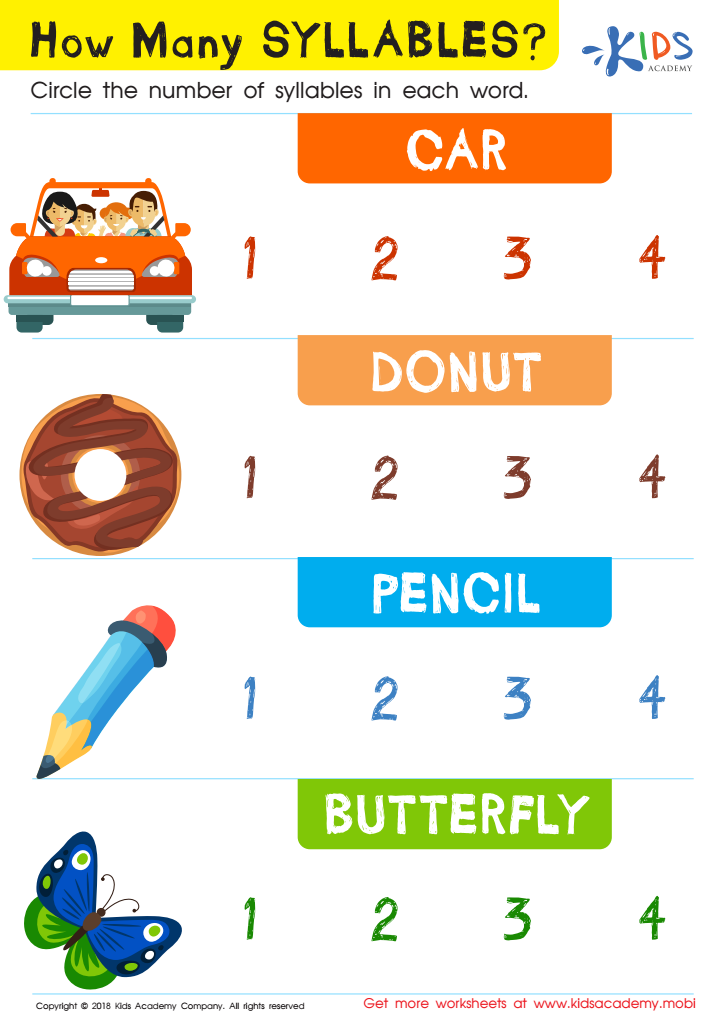
How Many Syllables? Worksheet
 Assign to My Students
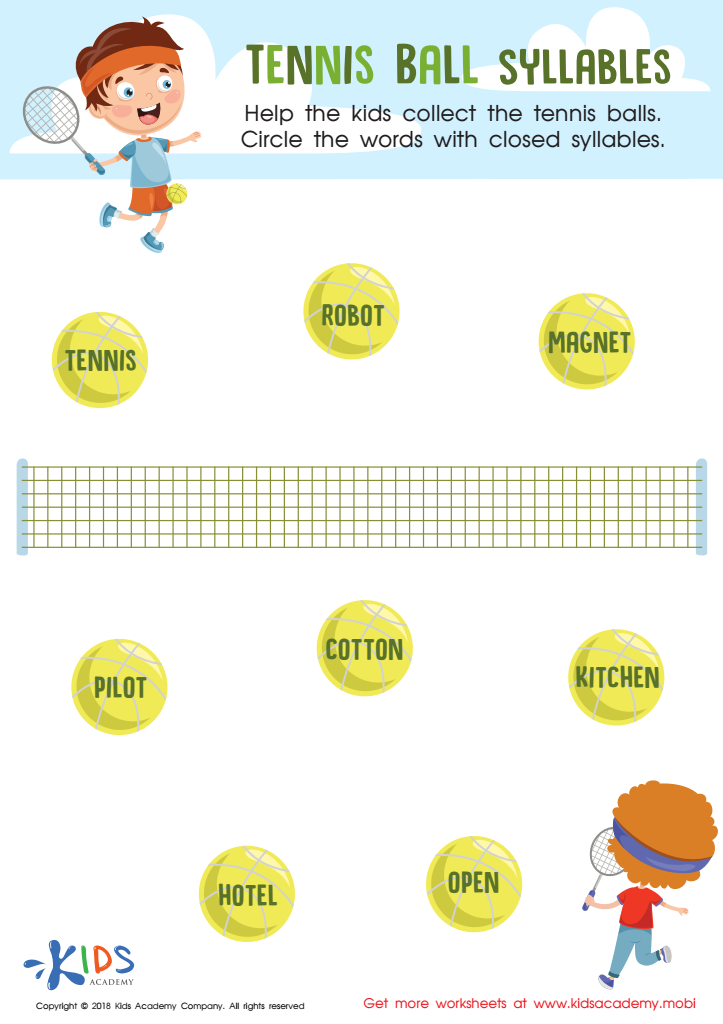
Tennis Ball Syllables Worksheet
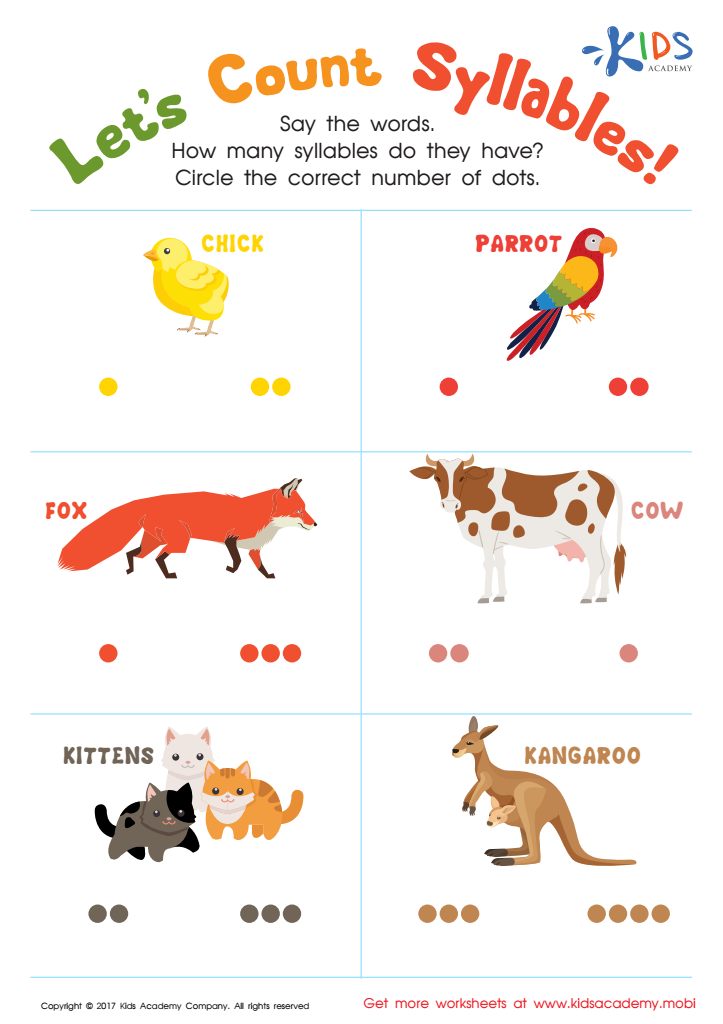
Lets Count Syllables Worksheet








Phonological awareness and phonics are crucial building blocks in early literacy development for children aged 3 to 9. Phonological awareness refers to the ability to recognize and manipulate sounds in spoken language, including rhymes, syllables, and individual phonemes. This skill is foundational because it prepares children to understand that words are made up of smaller sound units, aiding in decoding and spelling once they begin learning to read.
Phonics, on the other hand, involves teaching children the relationship between these sounds and their corresponding letters or groups of letters in written language. It’s a method that helps children apply their phonological awareness to reading and writing. Understanding phonic principles enables children to read unfamiliar words independently, boosts their confidence, and lays the groundwork for fluent reading.
Parents and teachers should prioritize these skills because they are strong predictors of a child's future reading success. Children who develop phonological awareness and grasp phonics principles early often experience fewer difficulties with reading comprehension and are more likely to develop a lifelong love for reading. Consequently, early literacy interventions focusing on phonological awareness and phonics can reduce the risk of reading disabilities and give children a more solid educational foundation, optimizing their academic and cognitive outcomes throughout their schooling.







