
Word Recognition Normal Two Letter Phonics Worksheets for Ages 3-9
6 filtered results
Difficulty Level
Grade
Age
-
From - To
Subject
Activity
Standards
Enhance your child's early literacy skills with our engaging Word Recognition Normal Two Letter Phonics Worksheets, specially designed for ages 3-9. These worksheets provide fun and interactive activities that introduce children to two-letter phonics, fostering their ability to recognize simple words and sounds. Our carefully crafted exercises promote essential literacy skills, helping young learners build a solid foundation for reading. With vibrant illustrations and age-appropriate content, these worksheets capture your child's attention, making learning enjoyable. Perfect for homeschooling or classroom settings, our two-letter phonics worksheets support children's reading development while encouraging a love for learning. Start their phonics journey today!
Favorites
With answer key
Interactive
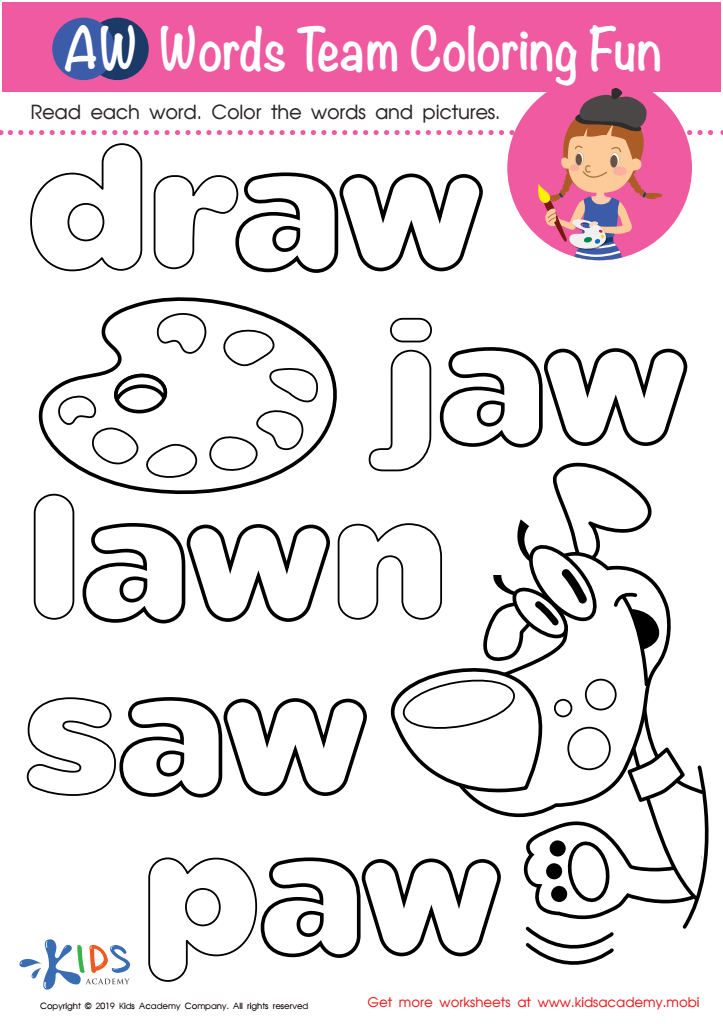
AW Words Team Coloring Fun Worksheet
Coloring words they can read is a blast for little learners! This worksheet offers emerging readers the chance to practice and gain confidence in reading words from the -aw family, while also improving fine-motor and creativity skills. Without knowing it, they'll learn about phonetic teams along the way!
Download (PDF)
 Assign to My Students
Assign to My Students
AW Words Team Coloring Fun Worksheet
Worksheet
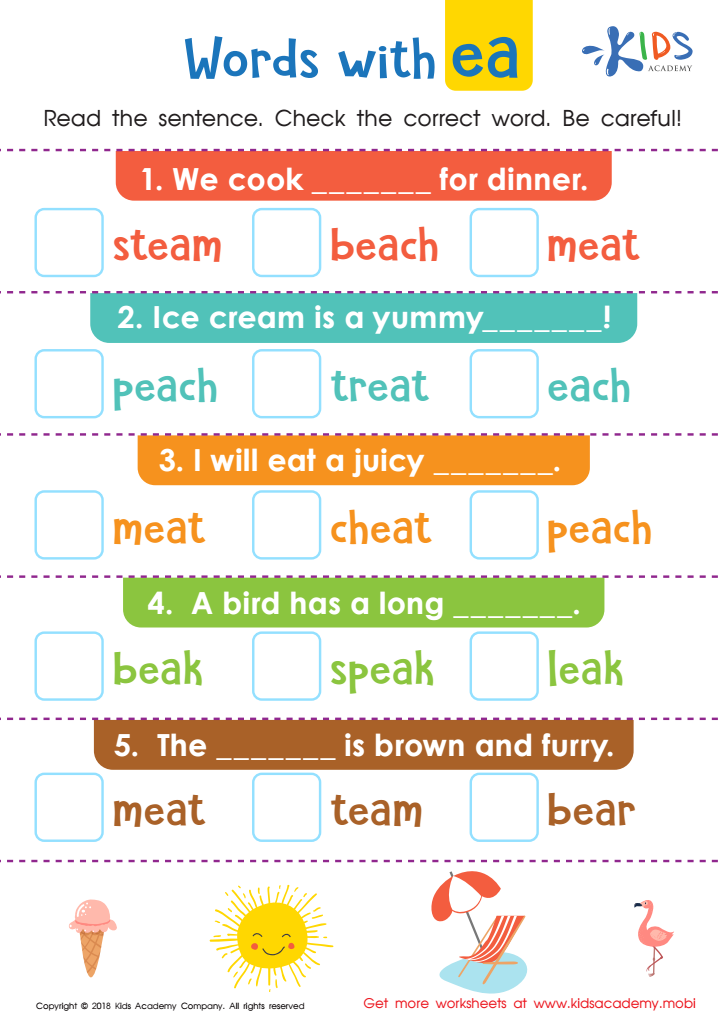
Words with ea Worksheet
Beginning readers may struggle with -ea vowel digraphs, which can have multiple sounds and be tricky to decode. This cheerful worksheet helps kids practice reading sentences with missing -ea words, using context clues to fill in the blanks. They'll also be exposed to various -ea sound examples, and build their sight word knowledge.
Words with ea Worksheet
Worksheet
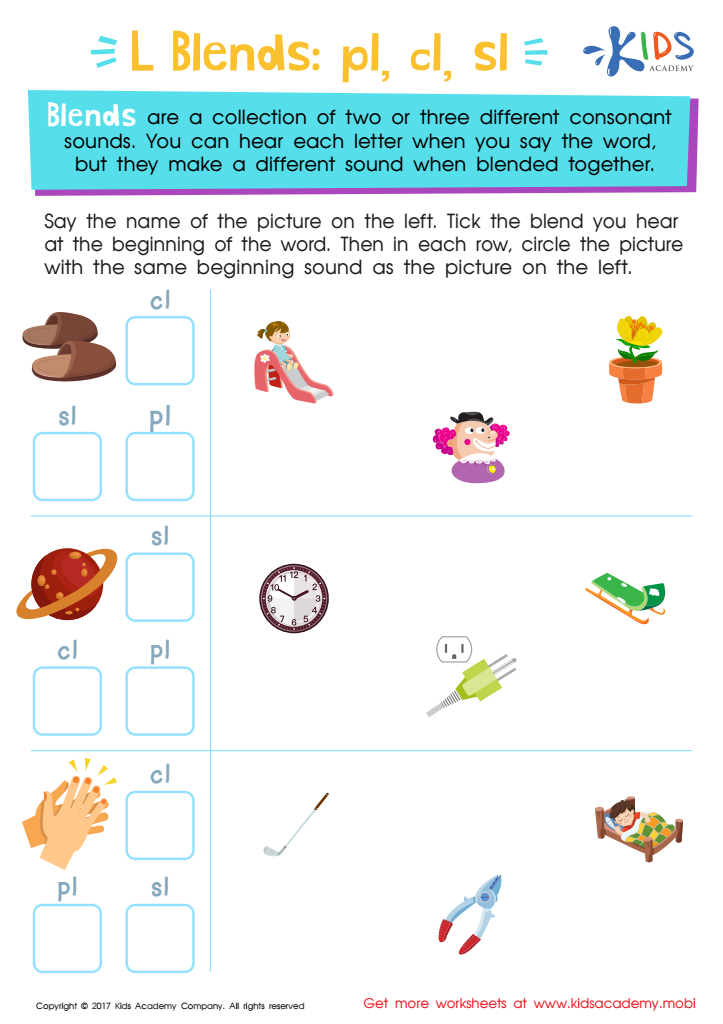
L Blends: "Pl", "Cl" and "Sl" Printable
This printable worksheet will help your child recognize and identify the Pl, Cl, and Sl consonant blends, sound them out, and identify them in print. Improve your child's reading and writing skills with fun and colorful phonics practice!
L Blends: "Pl", "Cl" and "Sl" Printable
Worksheet
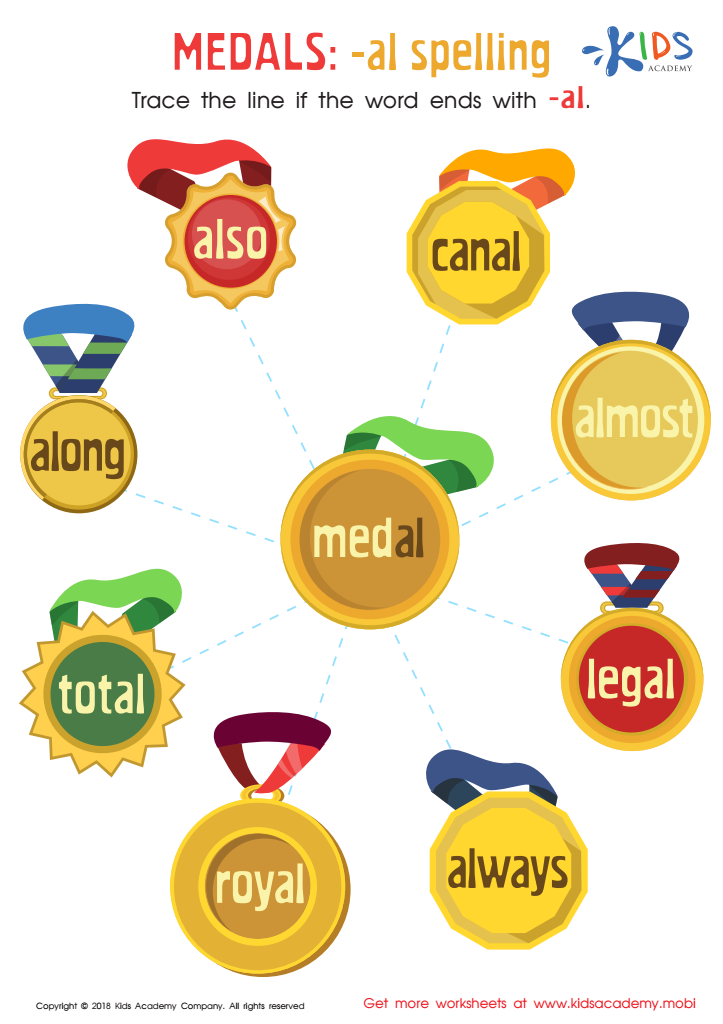
Medals: Al Spelling Worksheet
Have your students list common words ending with -al. See how many they can give and spell. Give examples of your own, assisting with spelling. Now review the words in the worksheet. Guide students to trace the line for each word ending with -al. 80 words
Medals: Al Spelling Worksheet
Worksheet
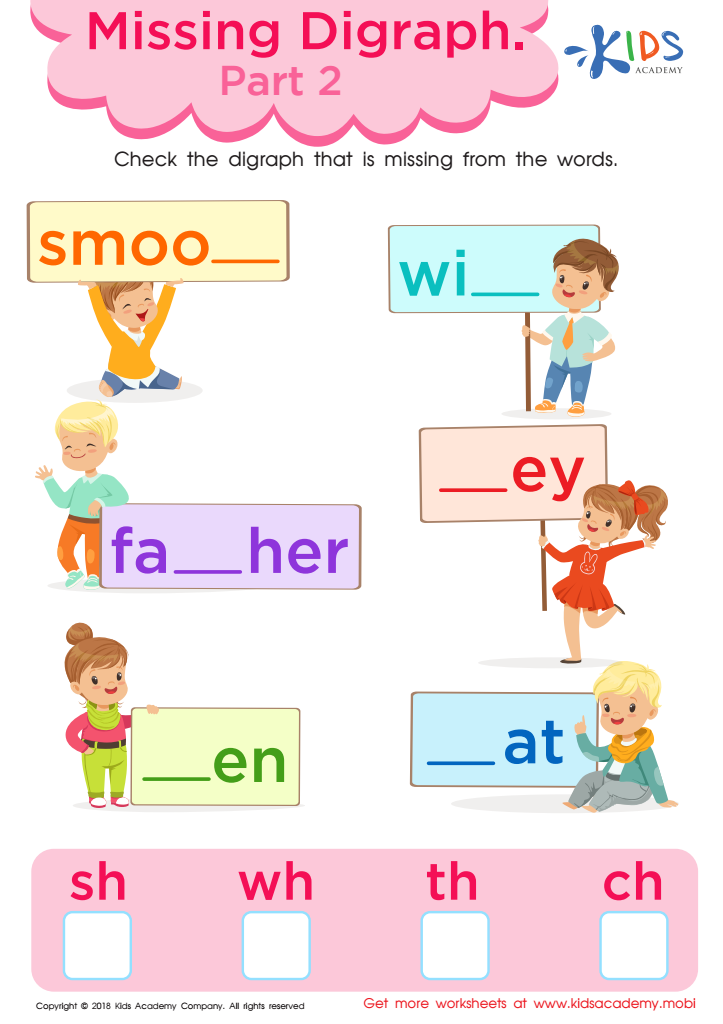
Missing Digraph: Part 2 Worksheet
Practice the "th" digraph with this fun worksheet from Kids Academy! See how it appears at the beginning, middle, or end of words and help learners fill in the blanks. Check if they got it right by finding the th digraph at the bottom!
Missing Digraph: Part 2 Worksheet
Worksheet
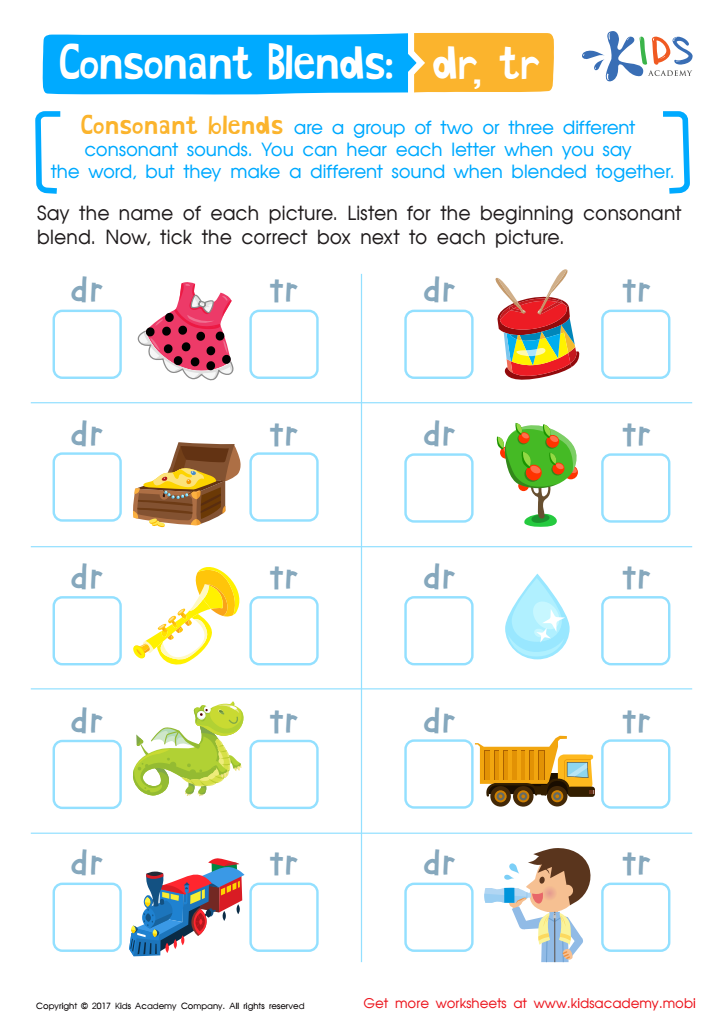
Consonant Blends: "Dr" and "Tr" Printable
Pictures of the words provide a visual cue, and sound-outs help with auditory cues.
Consonant Blends: "Dr" and "Tr" Printable
Worksheet
Join Kids Academy for Free
Who is primarily going to use this learning content?



Word recognition and phonics, particularly for two-letter combinations, play a vital role in early literacy development for children aged 3 to 9. At this stage, children begin to explore the basic building blocks of language, with two-letter phonics representing fundamental sounds and letter combinations. When parents and teachers prioritize teaching these skills, they support children's ability to decode unfamiliar words, a crucial part of reading fluency.
By mastering two-letter phonics, children enhance their confidence in reading, fostering a love for books and learning. Recognizing common two-letter combinations also aids in vocabulary expansion, helping children make connections between sounds and meanings. Moreover, early intervention in phonics lays a strong foundation for advanced literacy skills, ensuring that children do not struggle later on as they encounter more complex language structures.
Furthermore, understanding word recognition contributes positively to overall academic success; literacy skills are essential in all subject areas. Engaging activities centered around two-letter phonics—such as games and songs—can make learning enjoyable and effective. For these reasons, it’s crucial for parents and teachers to value and promote word recognition and phonics, positioning children for future academic achievement and lifelong learning.






