
Analyzing data Normal Worksheets for Ages 3-9
5 filtered results
Difficulty Level
Grade
Age
-
From - To
Subject
Activity
Standards
Discover our engaging "Analyzing Data Normal Worksheets" designed specifically for children aged 3 to 9. These interactive worksheets aim to develop essential analytical skills, enabling young learners to collect, interpret, and represent data in various forms. With colorful illustrations and versatile exercises, children will explore topics such as sorting, graphing, and basic statistics in a fun, hands-on way. Perfect for preschoolers to early elementary students, these worksheets support foundational math skills while fostering critical thinking. Boost your child’s confidence and understanding of data analysis concepts as they embark on an exciting learning journey. Download now for hours of educational fun!
Favorites
With answer key
Interactive
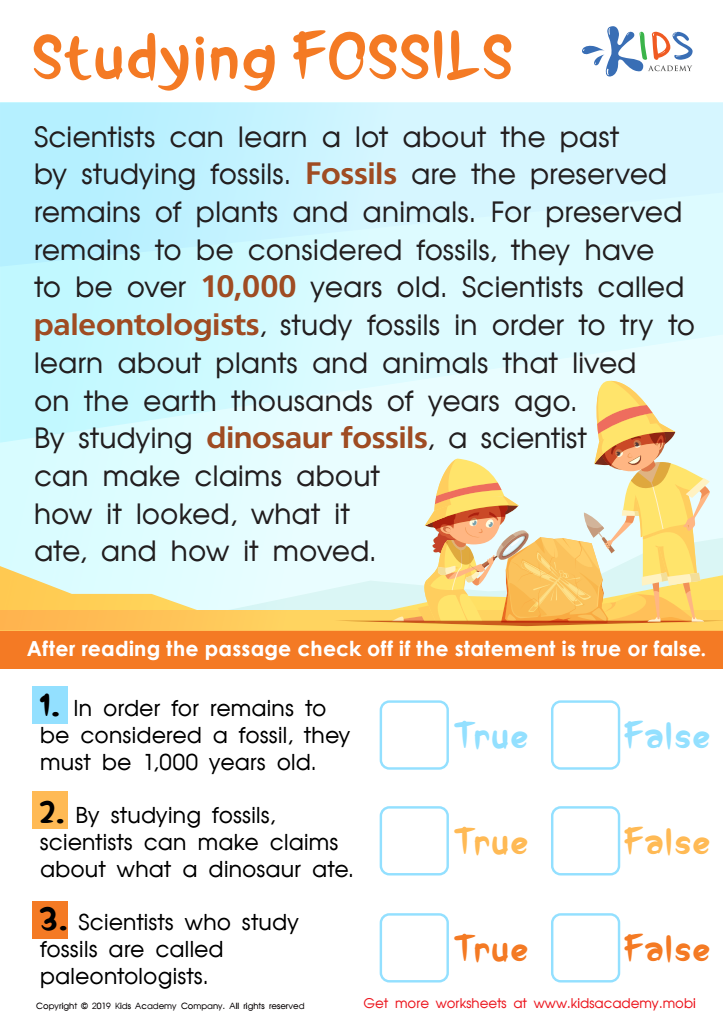
Studying Fossils Worksheet
Fossils captivate children! It's no wonder why; when we learn about them, we are getting a glimpse into history and uncovering old mysteries! With this free download, kids will understand what a paleontologist is and how they use fossils to learn about long-gone plants and animals. They'll discover that old bones are priceless and that exploring ancient history can be exciting!
 Assign to My Students
Studying Fossils Worksheet
Worksheet
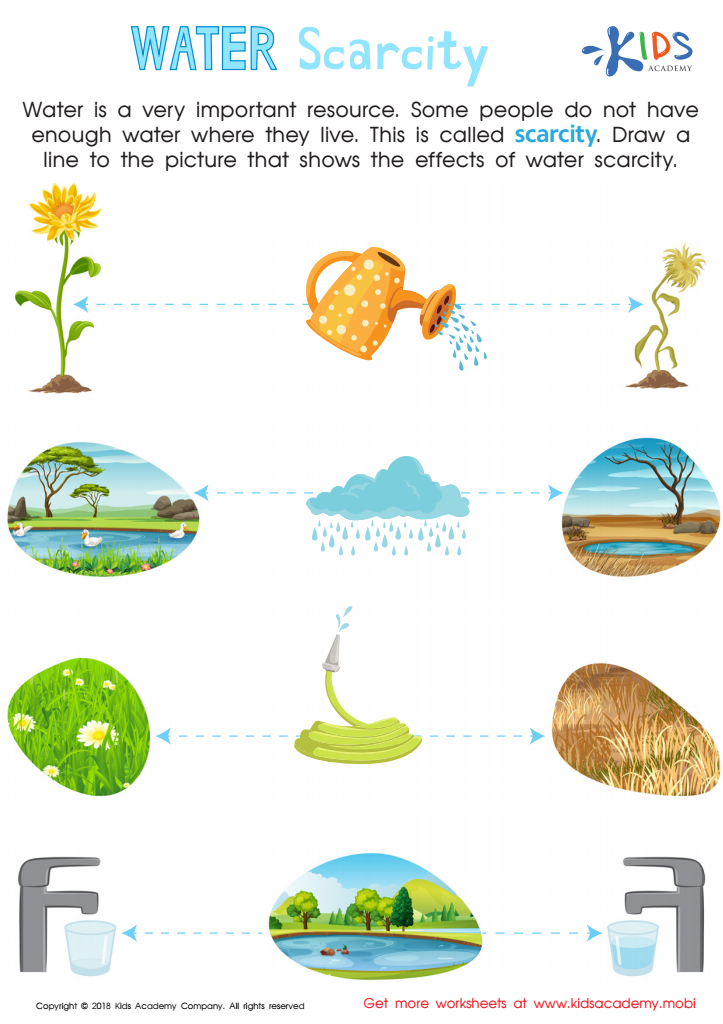
Water Scarcity Worksheet
Water is an essential part of our lives. Ask your students to list five everyday activities which require water. Use this worksheet to explain why water is important and how privileged we are to have access to it. Many people are not as lucky and face water scarcity. Explain this concept with a fun pdf, showing the effects of water scarcity.
Water Scarcity Worksheet
Worksheet
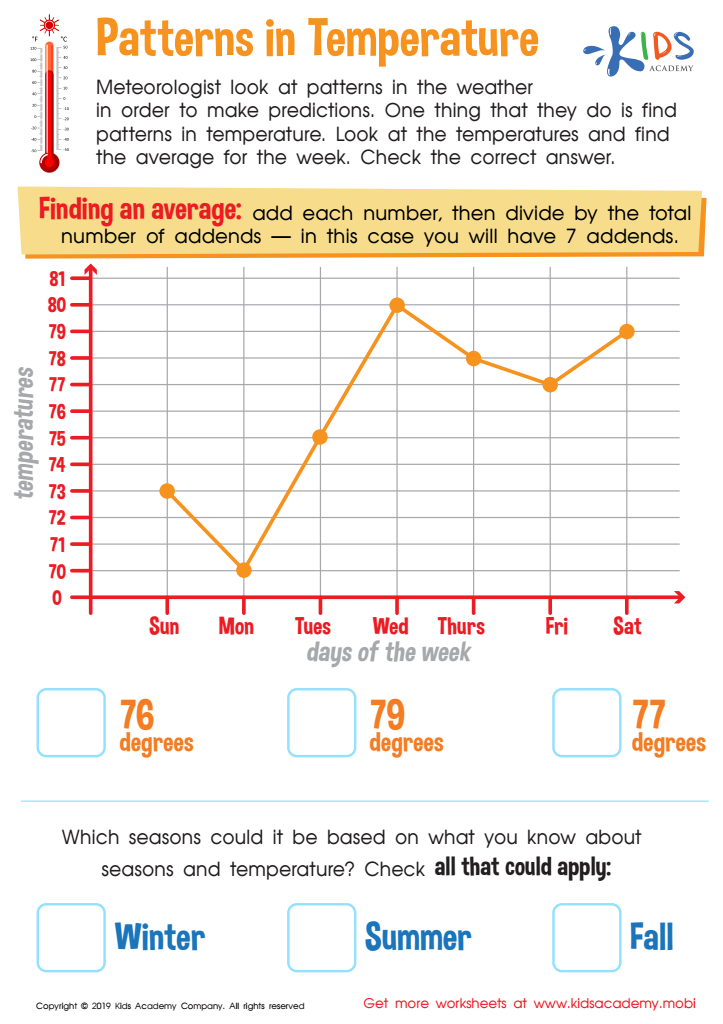
Patterns in Temperature Worksheet
Kids need to learn how to read and interpret data from graphs and charts. This free worksheet on temperature patterns helps them to do just that. They'll practice finding averages and answer questions in multiple-choice format. Plus, it provides a great learning experience!
Patterns in Temperature Worksheet
Worksheet
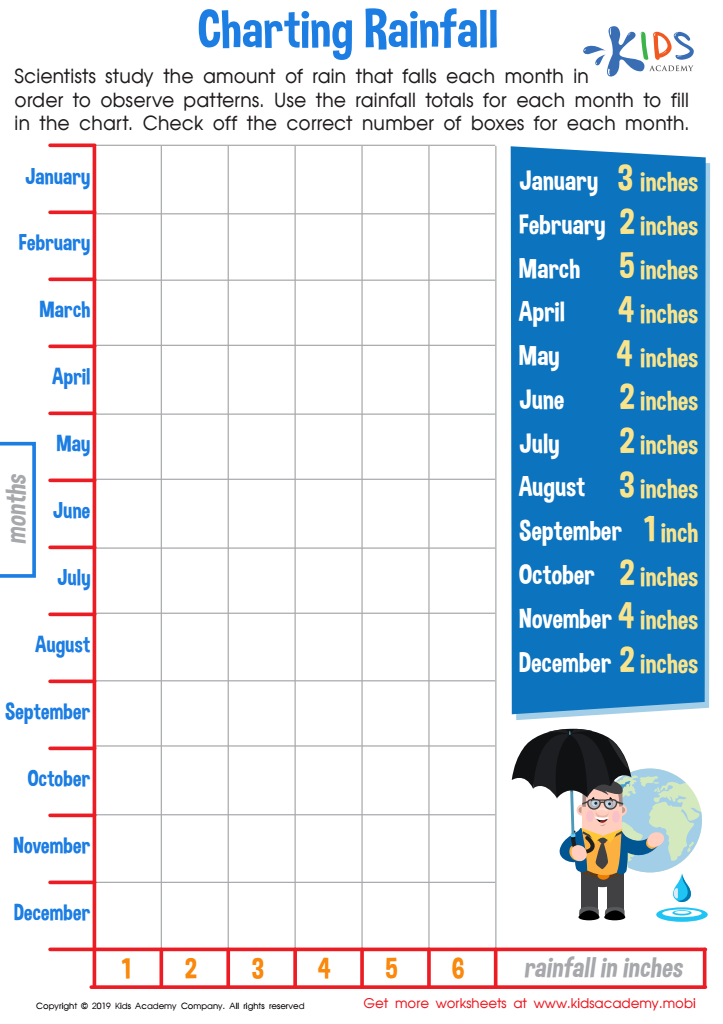
Charting Rainfall Worksheet
Kids need to learn how to graph info in order to understand the world. This rainfall worksheet gives them an opportunity to act as statisticians, charting the amount of rain each month. It also helps them practice data storage and analysis for future math concepts.
Charting Rainfall Worksheet
Worksheet
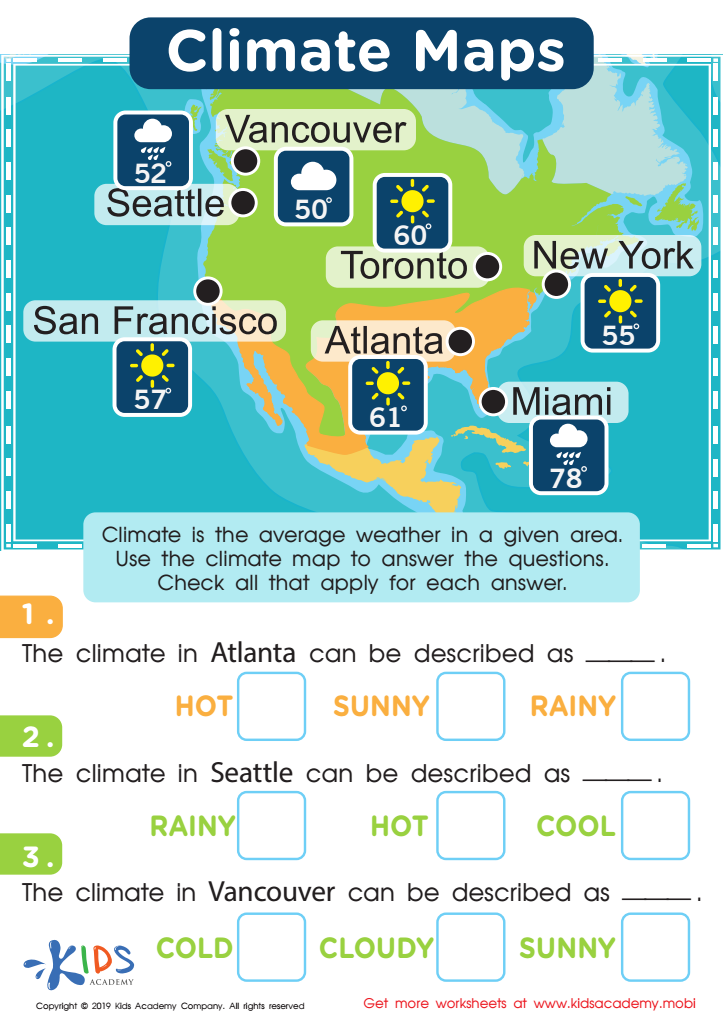
Climate Maps Worksheet
This map offers a fun way to teach kids about the varying climates across North America. They'll learn that Seattle and Miami have different temperatures, yet the same amount of rainfall. Plus other weather facts. This prepares them to answer reading comprehension questions with success!
Climate Maps Worksheet
Worksheet
Join Kids Academy for Free
Who is primarily going to use this learning content?


.jpg)




Analyzing data, particularly concerning child development and education for ages 3-9, is crucial for several reasons. First, children's early years are foundational for lifelong learning and social-emotional development. By examining data on their progress, parents and teachers can identify strengths and areas needing improvement, enabling tailored support that meets individual needs.
Data analysis provides insights into children's cognitive skills, literacy, numeracy, and social interactions. With this information, educators can implement targeted interventions that foster growth and engagement, ensuring that every child reaches their potential. Parents, on the other hand, gain a clearer understanding of their child's learning journey, allowing them to make informed decisions about their education and support them at home.
Additionally, in a diverse classroom environment, data can reveal disparities in learning outcomes among different groups, guiding inclusive teaching practices that address the unique needs of all students. By understanding and utilizing analyzed data, both parents and teachers foster a collaborative approach to education, remaining proactive in nurturing a supportive atmosphere that promotes not just academic success but also well-rounded development in young learners. In essence, data analysis enriches the educational experience and equips caregivers with vital tools for fostering holistic growth.








