Basic measurement concepts Normal Worksheets for Ages 3-9
3 filtered results
-
From - To
Explore our engaging "Basic Measurement Concepts" worksheets designed for children ages 3-9. These printable resources introduce young learners to fundamental measurement skills, including length, weight, height, and volume. With colorful illustrations and interactive activities, children will learn through play as they measure objects around them, investigate comparisons, and solve fun problems. Our worksheets are tailored to fit various skill levels, making them perfect for classroom use or at-home learning. Foster a love for math in your little ones and help them grasp essential concepts that will set a strong foundation for their future education. Discover the joy of learning measurement today!
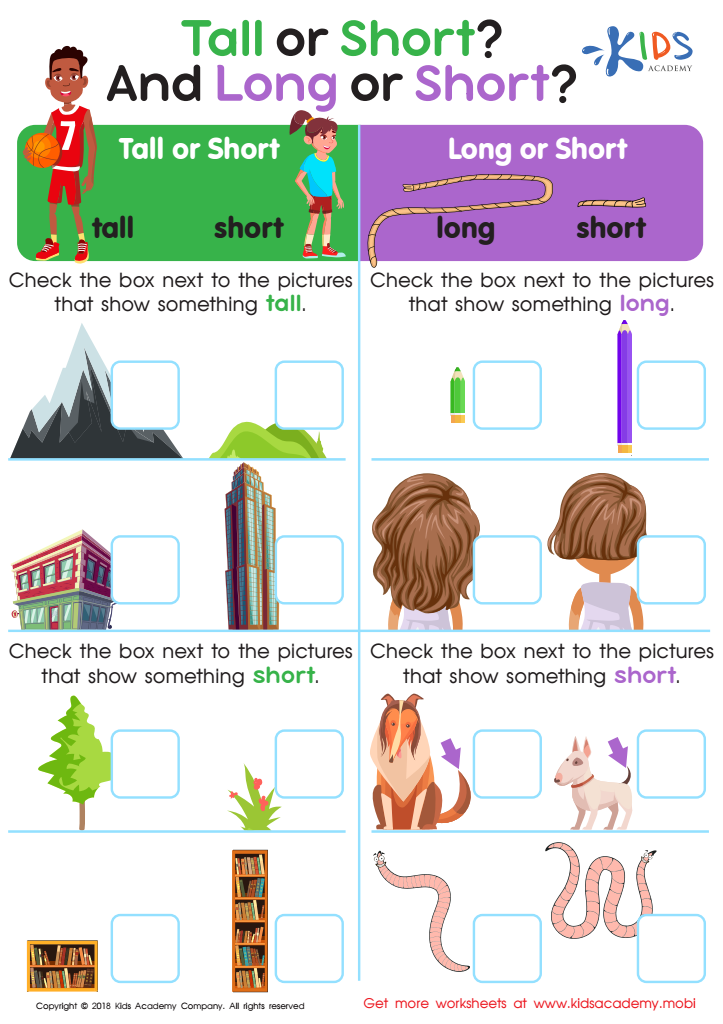
Tall or Short and Long or Short? Worksheet
 Assign to My Students
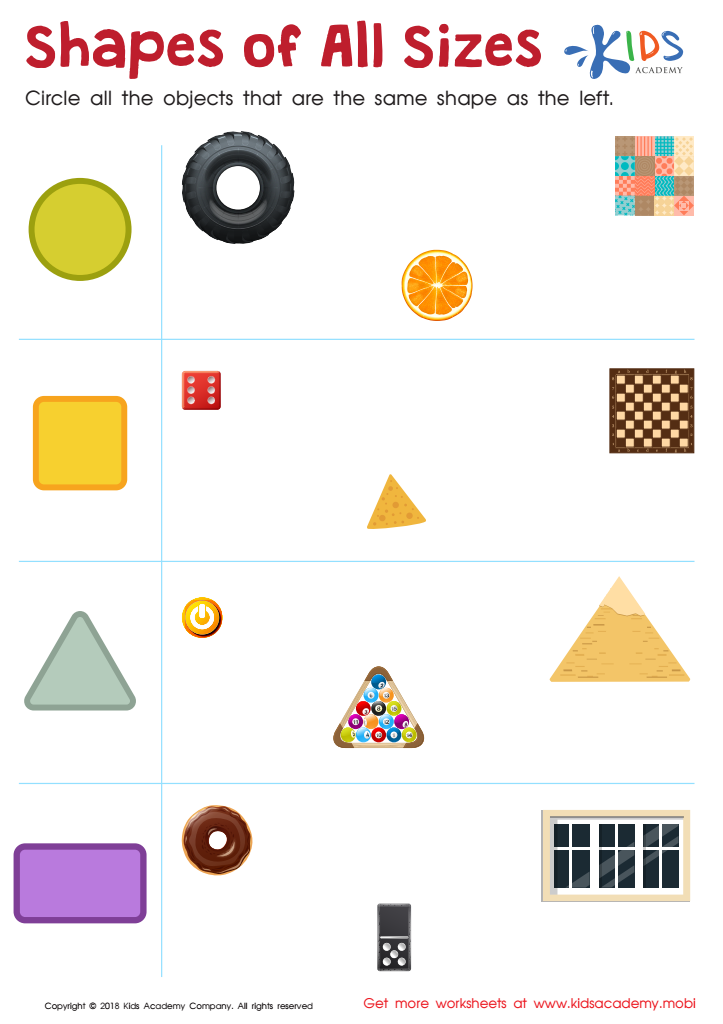
Shapes of All Sizes Worksheet
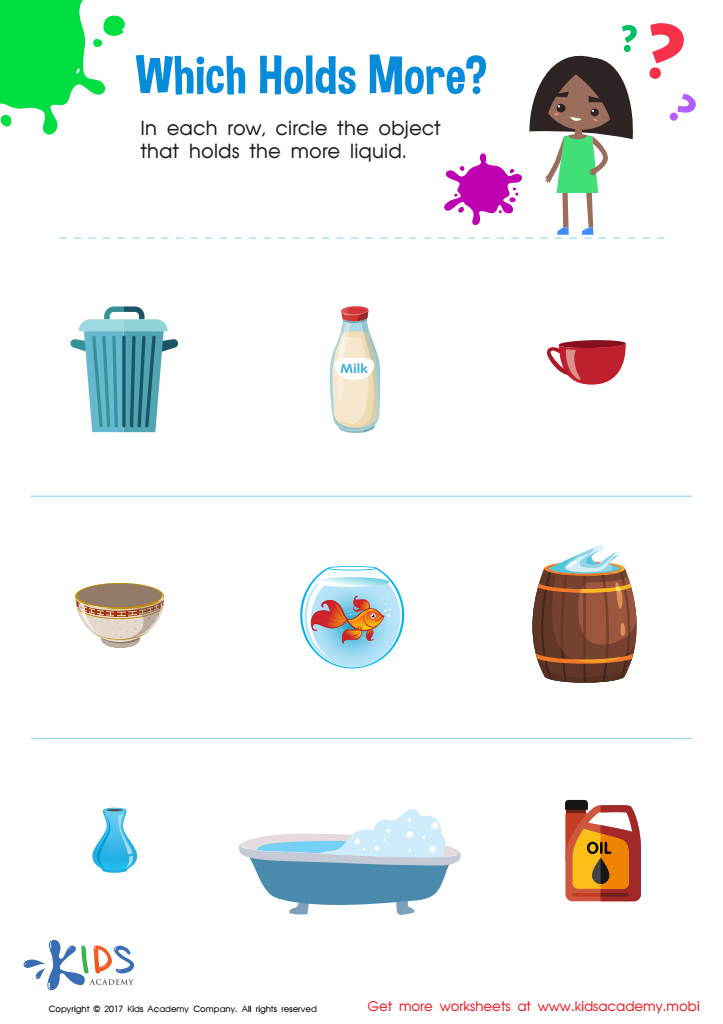
Which Holds More: Capacity Worksheet







Understanding basic measurement concepts is essential for children aged 3-9, as it lays the groundwork for their mathematical understanding and daily life skills. Parents and teachers should care about this for several reasons.
Firstly, measurement skills foster critical thinking and problem-solving abilities. When young learners engage in activities that involve measuring length, weight, and volume, they develop spatial awareness and reasoning skills that are integral to their cognitive development.
Secondly, measurement is a foundational concept for future math learning. Children learn not only numbers and counting but also the relationships between them through measurement. It prepares them for more complex mathematical concepts in later grades, ensuring they remain confident and capable in mathematics.
Moreover, singing, playing, and engaging in hands-on activities involving measurement can turn abstract concepts into tangible experiences, making learning enjoyable and memorable. Parents and teachers can enhance this understanding through practical engagement—like cooking, building, or exploring nature—making math applicable to everyday life.
In summary, nurturing measurement skills in young children cultivates essential cognitive skills and prepares them for academic success and real-life applications, making it a vital area of focus for parents and educators alike.








