Differentiating shapes Normal Worksheets for Ages 3-9
3 filtered results
-
From - To
Introduce your child to the world of geometry with our Differentiating Shapes Normal Worksheets, designed for ages 3-9. These engaging worksheets help young learners identify, differentiate, and understand various shapes through fun and educational activities. Perfect for home or classroom use, each worksheet is developed to enhance your child's spatial awareness, cognitive abilities, and fine motor skills. With a range of exercises tailored to different age groups, kids will gradually progress from basic shape identification to more complex tasks, making learning both effective and enjoyable. Foster a love for learning with our thoughtfully crafted, age-appropriate materials.
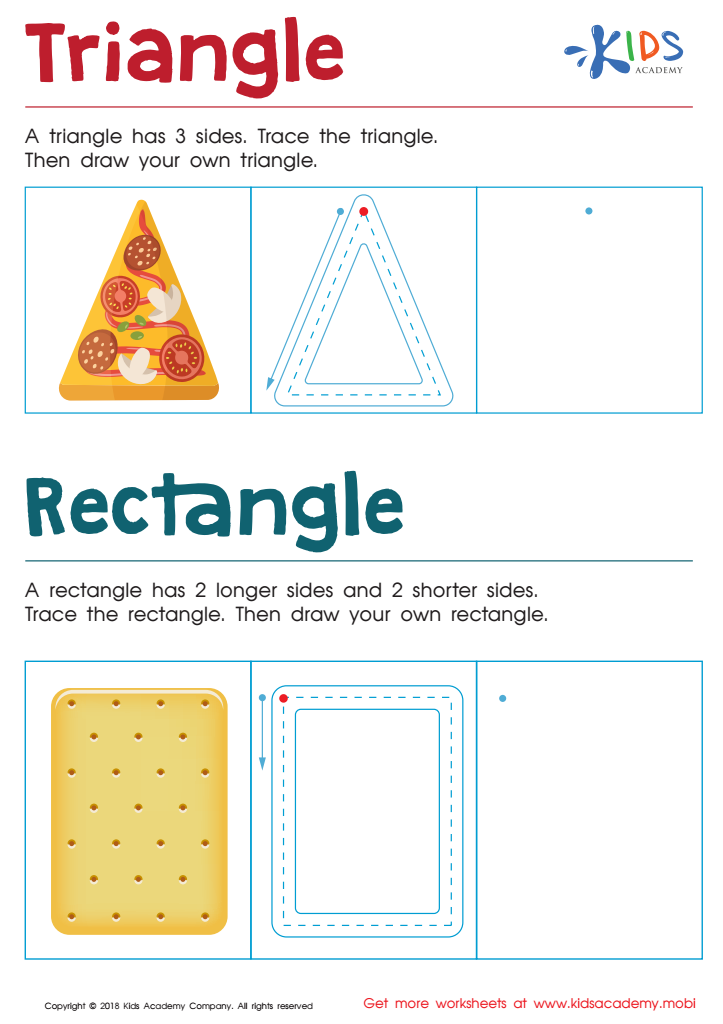
Triangle Rectangle Worksheet
 Assign to My Students
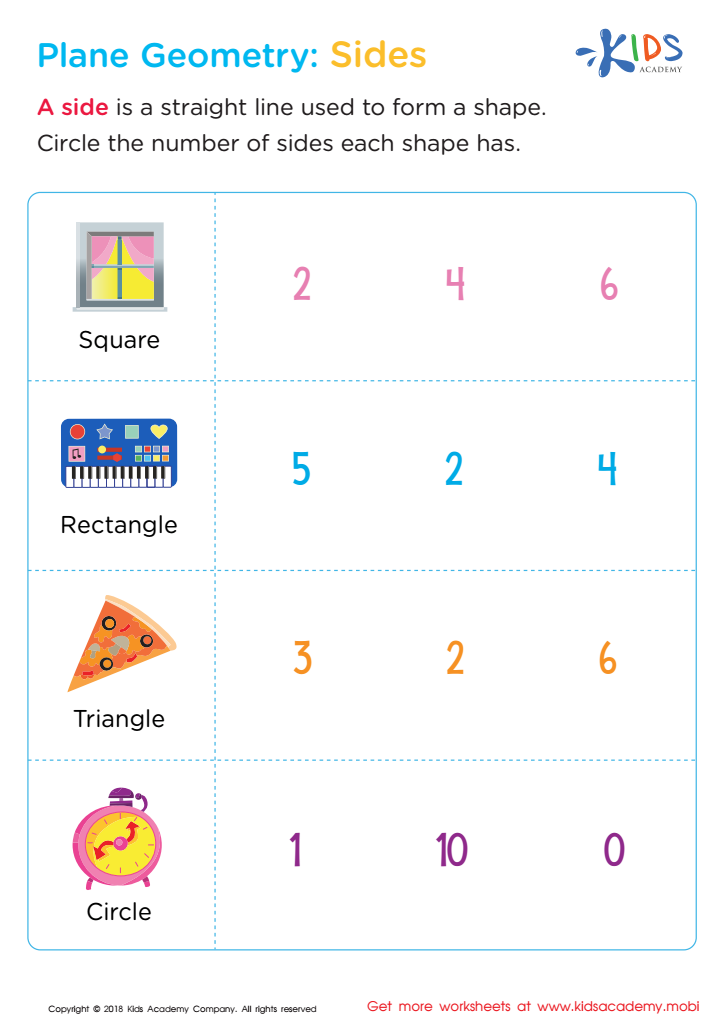
Plane Geometry: Sides Worksheet
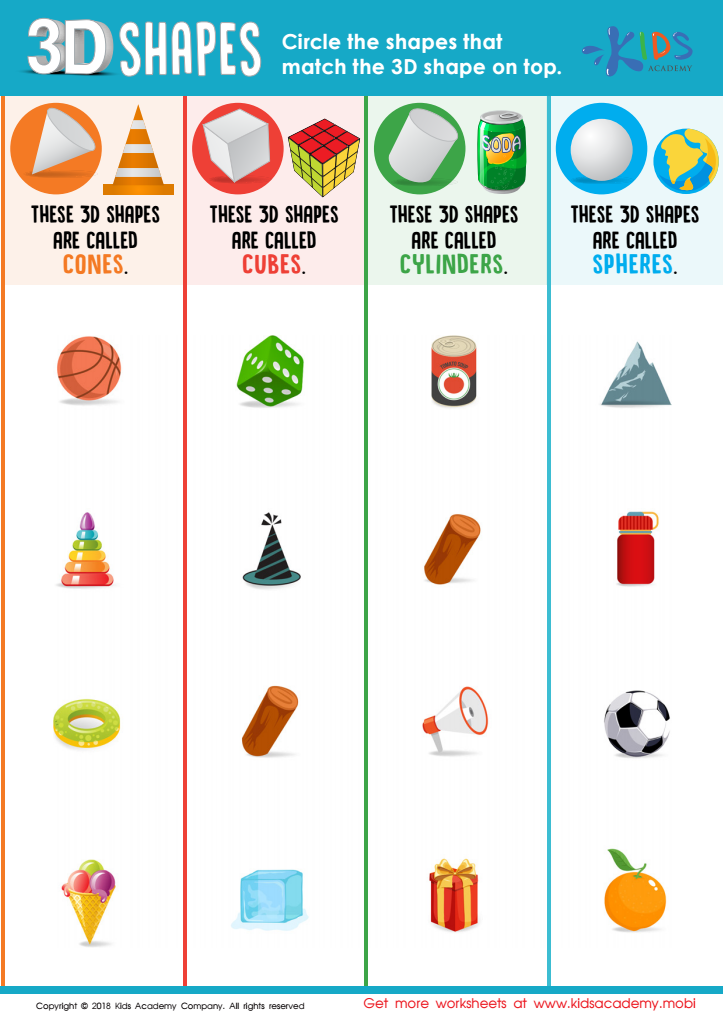
3D Shapes Worksheet








Differentiating shapes is a foundational skill for children aged 3-9, essential for cognitive and developmental growth. When parents and teachers emphasize shape recognition, they aren't merely teaching geometry but fostering a crucial aspect of a child’s early education that underpins various life skills.
First, it's a vital building block for mathematics. Recognizing and differentiating shapes helps children understand spatial relationships, symmetry, and geometry, setting the stage for more complex mathematical concepts in later grades. Shape differentiation also promotes visual perception skills, aiding in the recognition of letters and numbers, thus enhancing reading and writing abilities.
Additionally, these activities support cognitive development by engaging children in problem-solving and critical thinking as they compare and contrast different shapes. Manipulating and sorting shapes can improve fine motor skills, vital for tasks such as writing, cutting, and dressing.
Moreover, grasping the concept of shapes boosts language development. As children learn to identify and describe shapes, they expand their vocabulary, improving their communication skills. They also develop social skills while engaging in interactive play and group activities centered around shapes, fostering teamwork and cooperation.
In sum, focusing on differentiating shapes cultivates a well-rounded developmental foundation, equipping children with essential skills for academic achievement and everyday life. It’s a practical yet profoundly impactful area of early childhood education that parents and teachers should prioritize.








