Geographic knowledge Normal Worksheets for Ages 3-9
4 filtered results
-
From - To
Discover the world with our "Geographic Knowledge Normal Worksheets for Ages 3-9"! Kids Academy provides engaging and educational printable worksheets designed to enhance geographic skills in young learners. Ideal for early grades, these activities help children explore maps, continents, countries, and natural landmarks while developing essential learning skills. Fun and interactive, our resources inspire curiosity about the world's diverse cultures and environments. Perfect for classroom use or homeschooling, each worksheet offers a delightful blend of fun and education. Unlock your child's potential and embark on exciting geographic adventures today with Kids Academy!
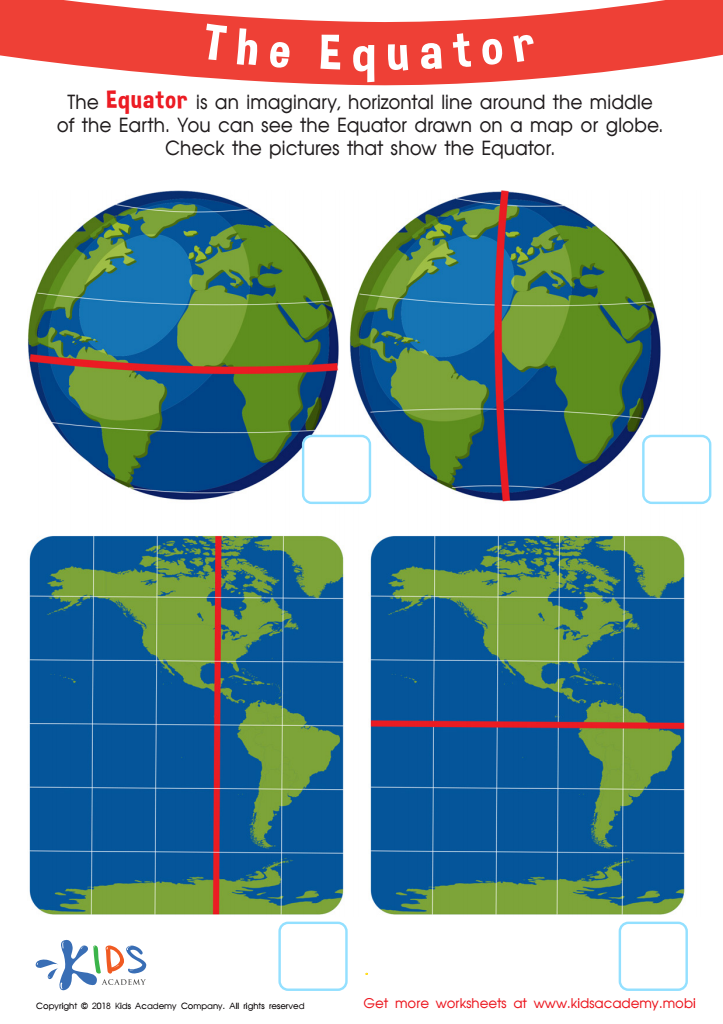
The Equator Worksheet
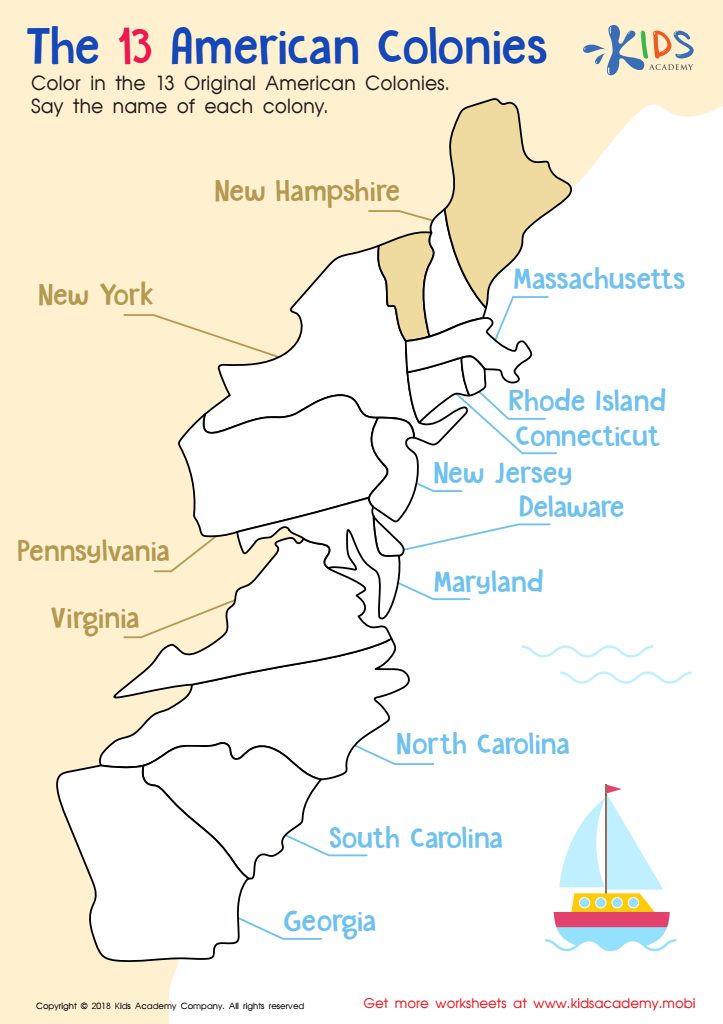
The 13 American Colonies Worksheet
 Assign to My Students
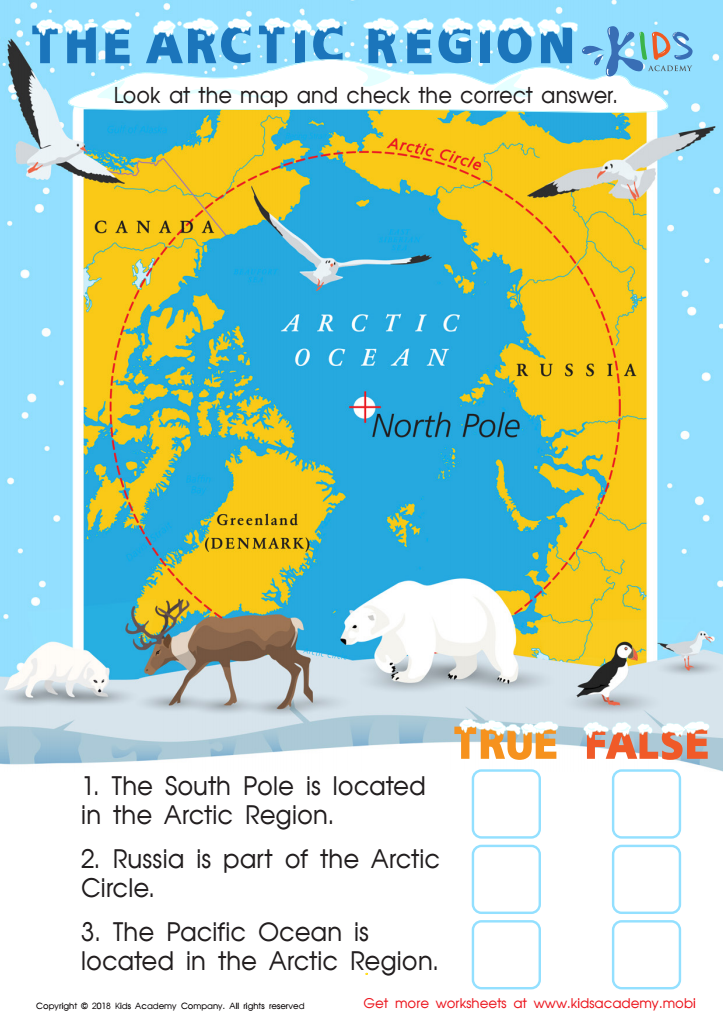
The Arctic Region Worksheet
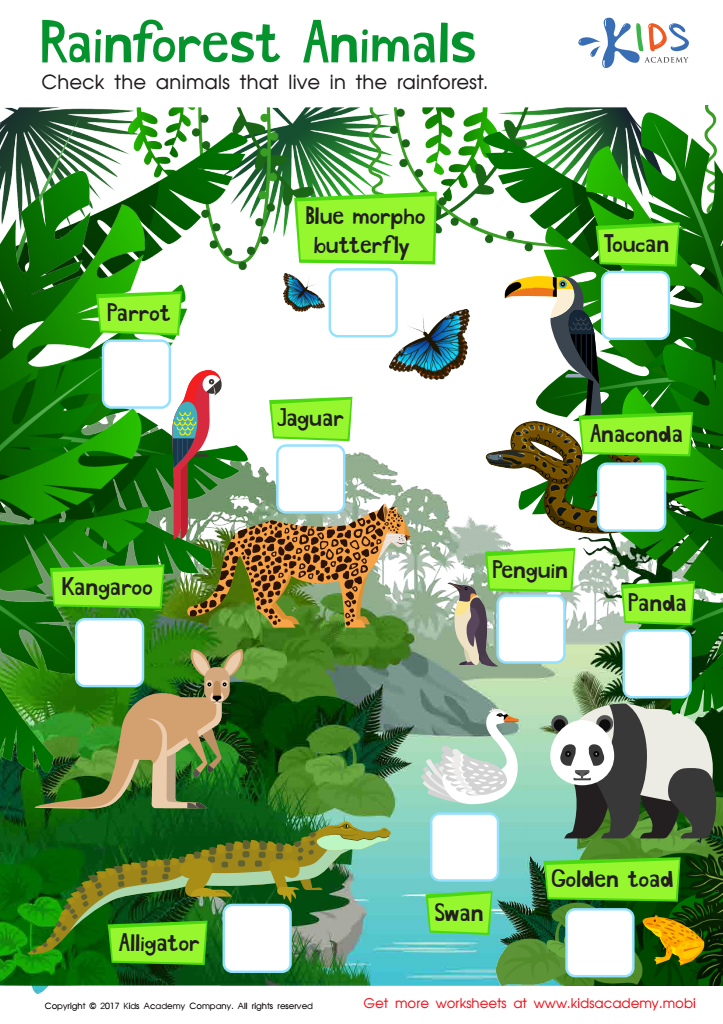
Rainforest Animals Worksheet







Geographic knowledge for children aged 3-9 is essential as it serves as the foundation for their understanding of the world. Engaging young minds in geography stimulates curiosity about diverse cultures, landscapes, and environmental systems, fostering a global perspective early on.
For parents and teachers, nurturing geographic literacy isn't just about maps and capital cities; it's about cultivating awareness and empathy. Children begin to grasp how different regions influence lifestyles, the environment, and economies. This awareness encourages respect for nature and different ways of life, which is crucial in our increasingly interconnected and multicultural world.
Additionally, geographic skills support critical thinking and problem-solving. When children learn about weather patterns, for example, they start understanding cause and effect, spatial relationships, and even early scientific principles. They also develop navigation skills, learning directions and spatial terms that are useful in day-to-day activities.
Furthermore, early geographic education can kindle an ongoing interest in travel, exploration, and nature, which can enhance later academic pursuits, from history to environmental science. Parents and teachers who emphasize geographic knowledge equip children with tools that enrich their social, emotional, and cognitive development.
In summary, by valuing and teaching geography, parents and teachers help children build a well-rounded base of knowledge that supports lifelong learning, an appreciation for diversity, and a more profound understanding of the planet they call home.








