Geographic Understanding Normal Worksheets for Ages 3-9
3 filtered results
-
From - To
Explore the world with our "Geographic Understanding Normal Worksheets" specially designed for children aged 3-9! These engaging resources from Kids Academy help young learners discover continents, countries, maps, and natural wonders. Our worksheets foster cognitive skills through fun activities like puzzles, coloring maps, and matching games, making geography an adventure. Perfect for hands-on learning at home or in the classroom, they encourage curiosity and a love for exploration. Cultivate your child’s global awareness and foundational geographic knowledge with easy-to-follow, printable worksheets. With Kids Academy, geography comes alive in playful, educational ways!
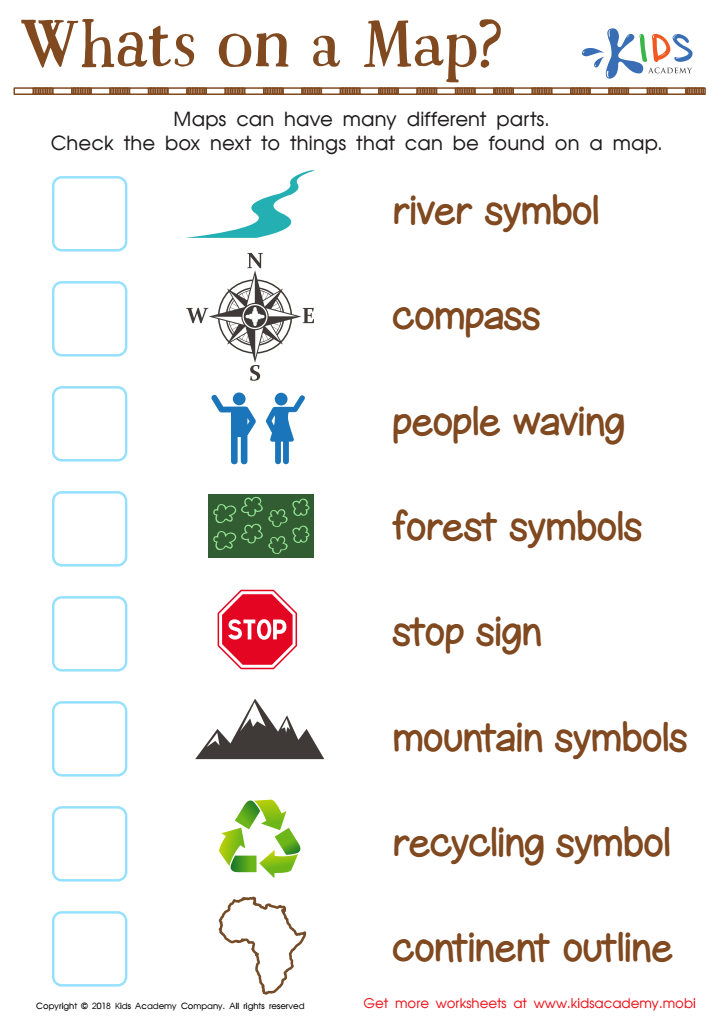
Whats on a Map? Worksheet
 Assign to My Students
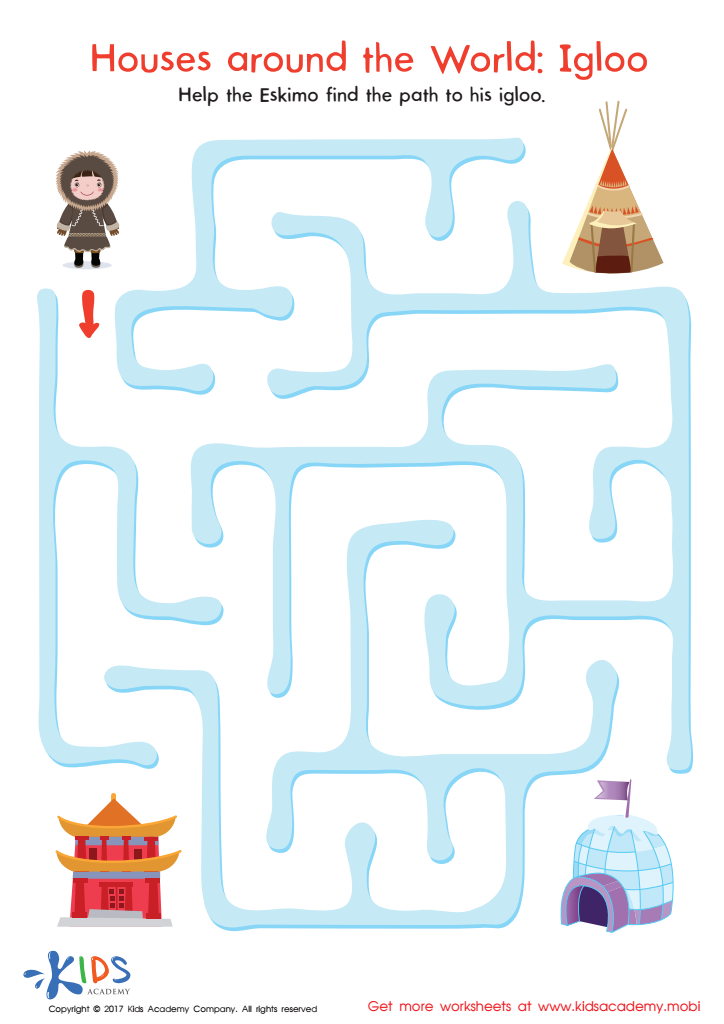
Houses Around the World: Igloo Printable
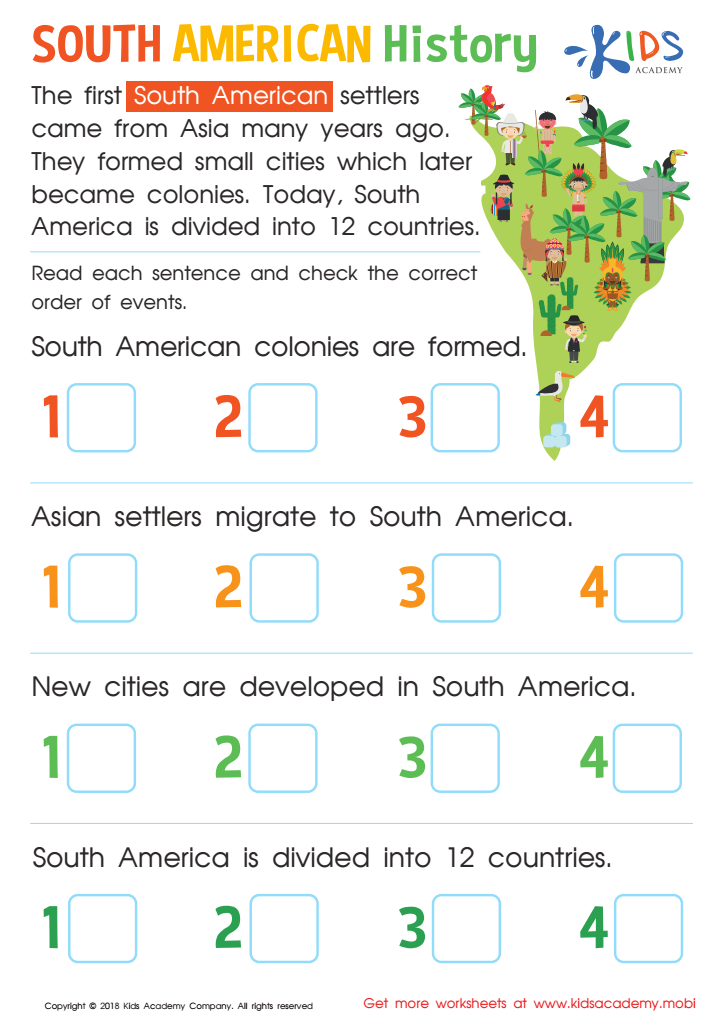
South American History Worksheet








Geographic understanding is essential for young children (ages 3-9) because it lays the foundation for spatial awareness, critical thinking, and cultural understanding. At this age, children begin to form concepts about the world around them, and introducing geographic concepts promotes cognitive development. When children learn about maps, landforms, and different environments, they develop spatial skills that are crucial for problem-solving and learning in subjects like math and science.
Moreover, understanding geography helps children grasp the idea of diversity and connectedness. By learning about different places and cultures, they begin to appreciate the world's variety and develop empathy towards people from various backgrounds. This early understanding fosters open-mindedness and global citizenship, qualities increasingly important in our interconnected world.
Geographic awareness also supports environmental education. When children understand their local environments and the broader world, they are more likely to appreciate and care for their surroundings. This can lead to a lifelong commitment to environmental stewardship.
Parents and teachers play a pivotal role in nurturing geographic curiosity. Simple activities like reading age-appropriate global-themed books, using puzzles and globes, and discussing different cultures can ignite a child’s interest. Investing in geographic education at an early age equips children with essential knowledge and skills that benefit them academically, socially, and emotionally.








