Geography knowledge Normal Worksheets for Ages 3-9 - Page 2
27 filtered results
-
From - To

Towns Worksheet
 Assign to My Students
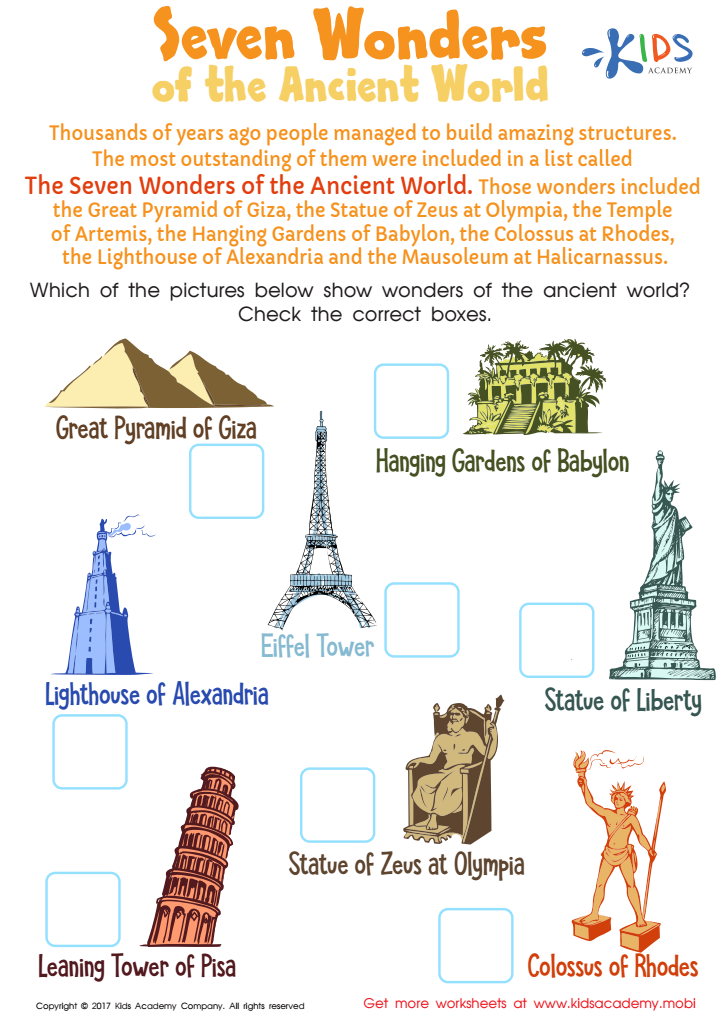
Seven Wonders of the Ancient World Worksheet
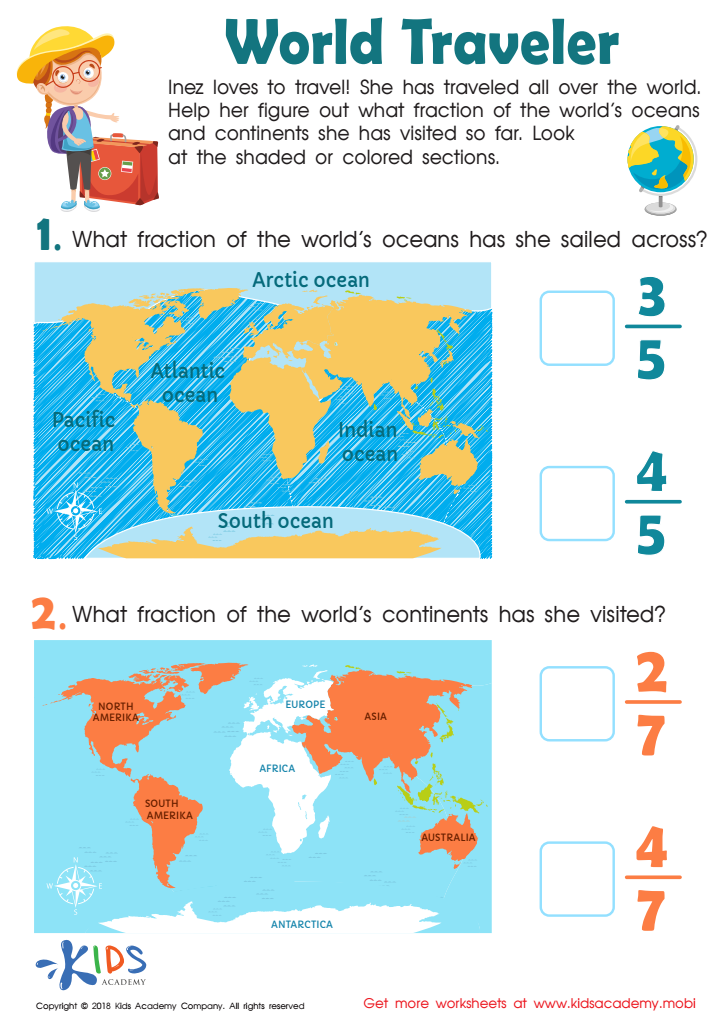
World Traveler Worksheet







There's a profound importance in introducing geography to children aged 3-9, as it shapes their understanding of the world and lays the foundation for diverse learning skills. At this formative age, children's minds are exceptionally receptive, making it ideal to spark curiosity about different cultures, climates, and natural resources.
Geography teaches young learners to recognize places and names, which enhances their memory and encourages spatial thinking. Knowing where continents, countries, and cities are located helps children perceive Earth's vastness and interconnectedness. This understanding fosters an appreciation for cultural diversity, promoting empathy and open-mindedness in an increasingly globalized society.
Additionally, geography brings an interdisciplinary approach to education. It subtly integrates subjects like history, economics, and environmental science, giving students broader learning experiences and critical thinking skills. Encountering concepts like maps and globes, they develop skills in geometry and reading that will be crucial in later academic pursuits.
Teachers and parents also form bonds through shared educational activities. Exploring maps, crafting classroom globes, or even small interactive field trips instills a sense of adventure and togetherness.
In conclusion, early exposure to geography doesn't just impart knowledge; it nurtures inquisitive, culturally aware, and well-rounded thinking that benefits other areas of learning and personal development.








