Identifying Animals Normal Worksheets for Ages 3-9
3 filtered results
-
From - To
Our "Identifying Animals" worksheets for ages 3-9 provide a fun and educational way for children to recognize and learn about various animals. Designed to cater to different learning stages, these colorful, engaging printable worksheets help kids develop essential skills such as observation, comparison, and critical thinking. Activities include matching animals with their habitats, sorting by characteristics, and identifying unique features. Perfect for classroom use or at-home learning, these worksheets support young learners in building a strong foundation in animal knowledge while sparking curiosity and a love for nature. Dive into the world of animals with Kids Academy!
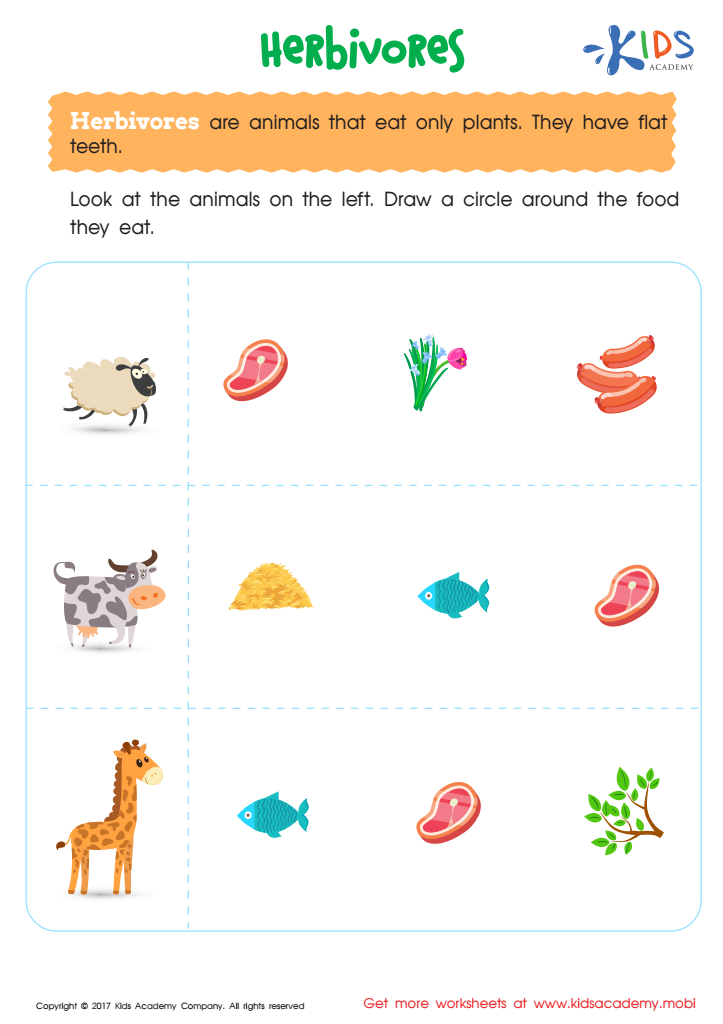
Herbivores Printable
 Assign to My Students
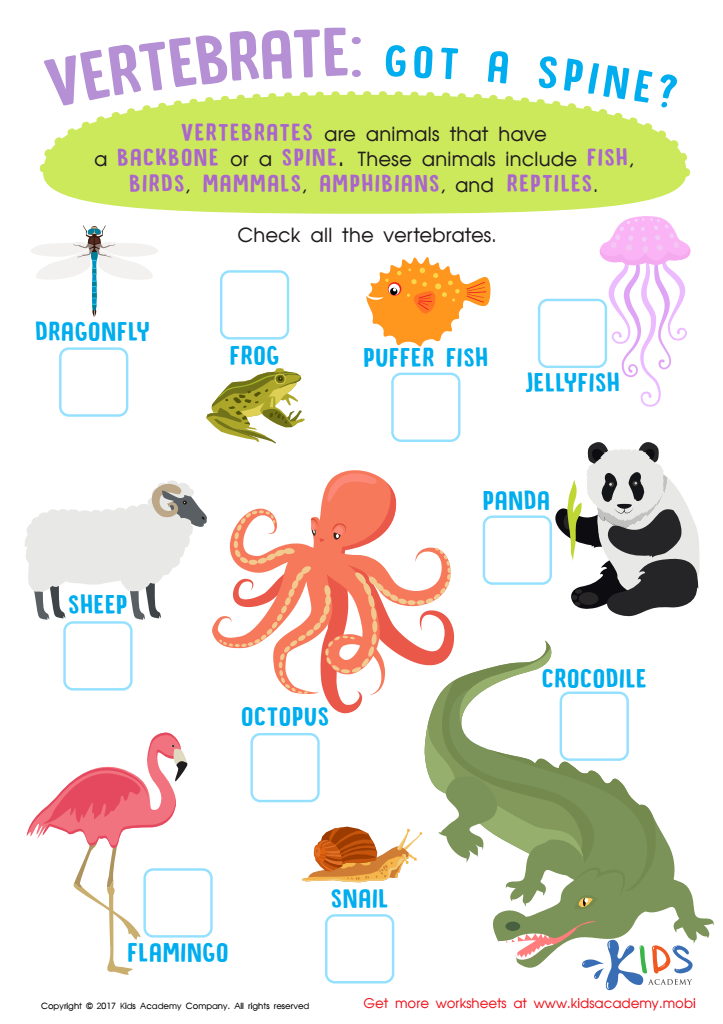
Vertebrates Animals Worksheet for 3rd Grade
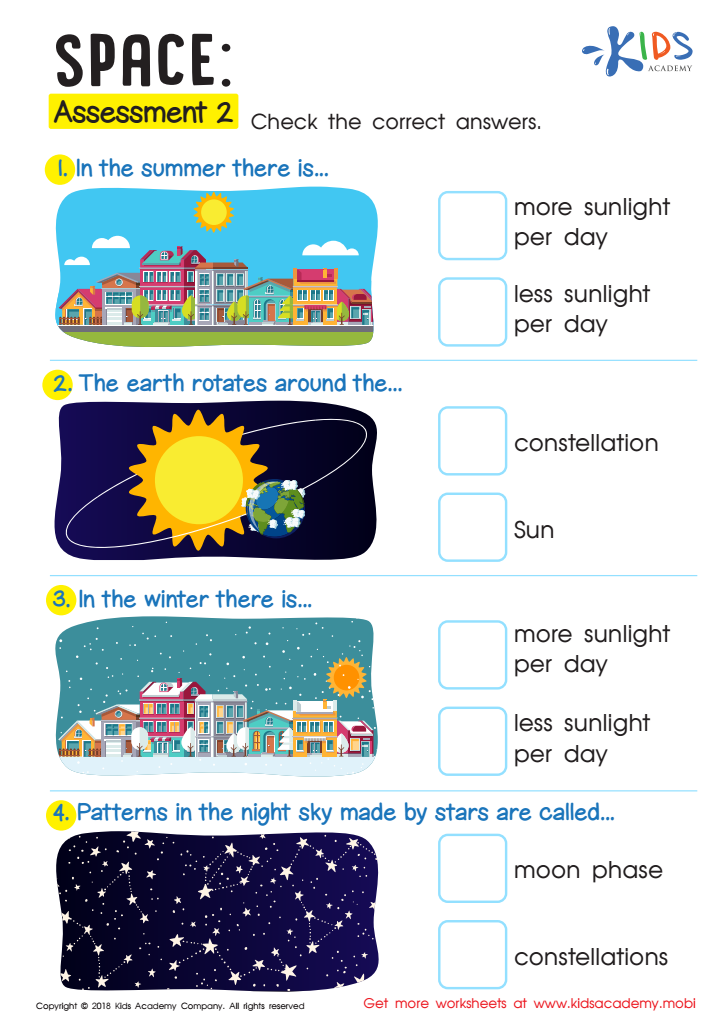
Space: Assessment 2 Worksheet








Understanding animals is foundational for young children’s development for many reasons. Encouraging kids aged 3-9 to identify animals helps them connect with the natural world, nurturing a sense of curiosity and respect for living things. Learning about animals and their behaviors enhances observational skills and fosters critical thinking, as kids ask questions and make connections between animals' characteristics and their habitats.
For parents and teachers, promoting this knowledge ensures the development of vocabulary and cognitive skills as children learn to name animals, describe their features, and categorize them. Knowing about animals also supports emotional and social development. For example, many stories and educational materials use animals to teach valuable life lessons and empathy, such as through tales of animals showing friendship, teamwork, and problem-solving.
Additionally, awareness of diverse animal species can lay the groundwork for STEM education. It introduces basic biological concepts, such as adaptation and ecosystems, making science relatable and exciting. For environmental stewardship, understanding animals early on sets the stage for a lifelong appreciation of biodiversity and conservation efforts.
Overall, teaching children to identify animals and understand their role in the ecosystem not only builds foundational knowledge but also fosters a love for learning and nature, essential for well-rounded development.








