
Information retention Normal Worksheets for Ages 3-9
6 filtered results
Difficulty Level
Grade
Age
-
From - To
Subject
Activity
Standards
Boost your child's learning with our Information Retention Normal Worksheets designed for ages 3-9. These fun, engaging worksheets are expertly crafted to enhance kids' memory skills and retention capacity. Through activities like sorting, matching, and recalling details, children practice retaining important information, setting a strong foundation for future education. Perfect for both classroom and home use, these printable worksheets are great for supporting early development in a playful and effective manner. Help your child excel by incorporating these worksheets into their daily learning routine and watch their confidence soar!
Favorites
With answer key
Interactive
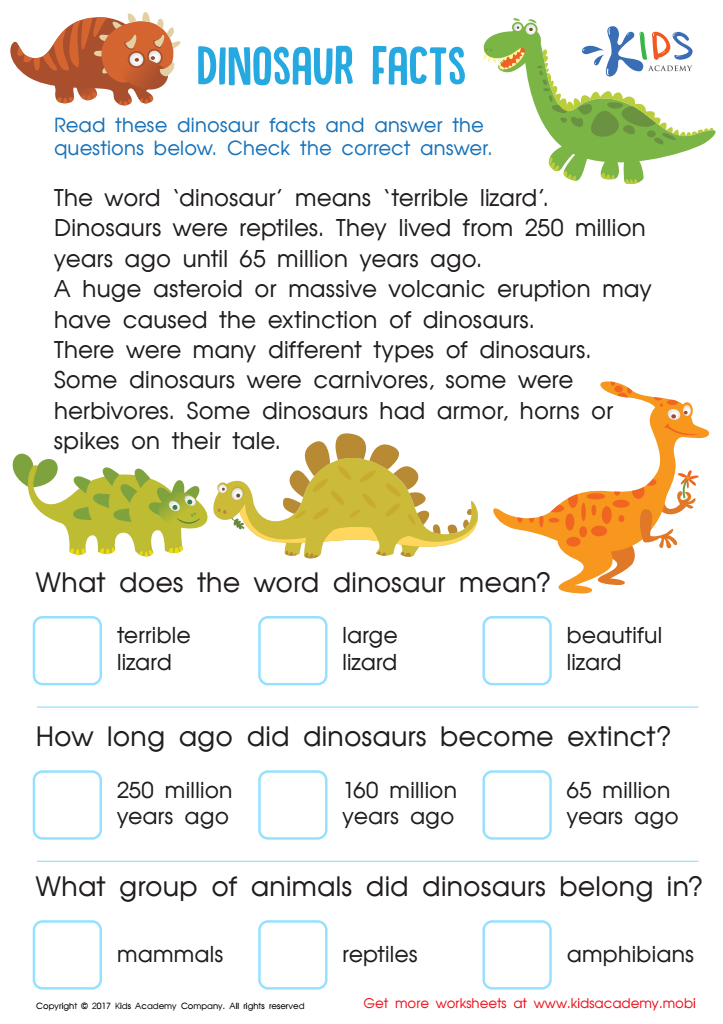
Dinosaur Facts Worksheet
Help your child improve reading skills with engaging nonfiction texts! This dinosaur facts worksheet will teach fun information and test kids on the key details. It'll keep them motivated and ready to learn!
 Assign to My Students
Dinosaur Facts Worksheet
Worksheet
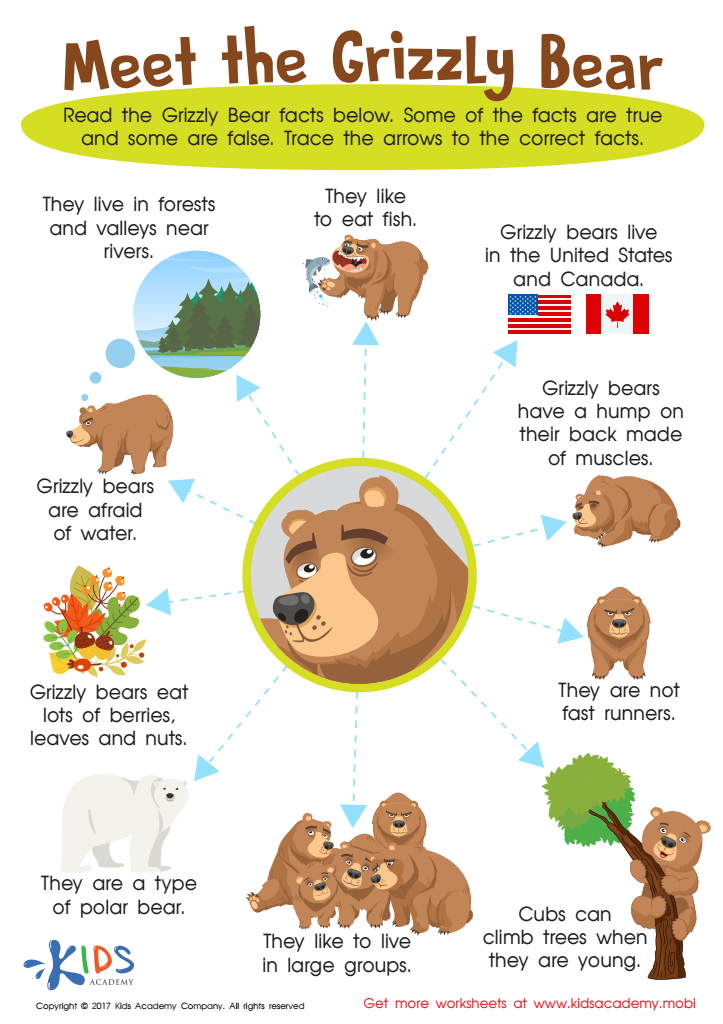
Grizzly Bear Facts Worksheet
Kids will separate truth from fiction in this engaging worksheet about the grizzly bear! Third graders will use their prior knowledge to read the facts and determine which are true and false. Give your child an interesting way to learn more with this vibrant worksheet!
Grizzly Bear Facts Worksheet
Worksheet
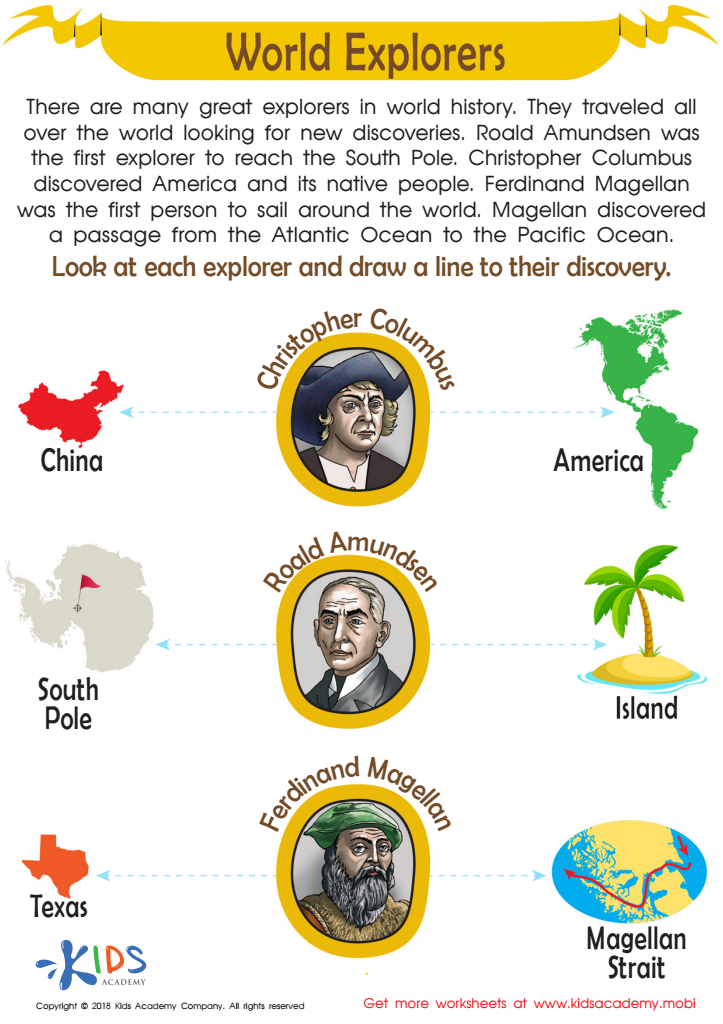
World Explorers Worksheet
Kids are citizens of the world, so it's important to teach them about different cultures and famous explorers. This social studies worksheet helps children learn about the great explorers of history and trace their travels. They'll link Ferdinand Magellan, Christopher Columbus and Roald Amundsen to the places they explored.
World Explorers Worksheet
Worksheet
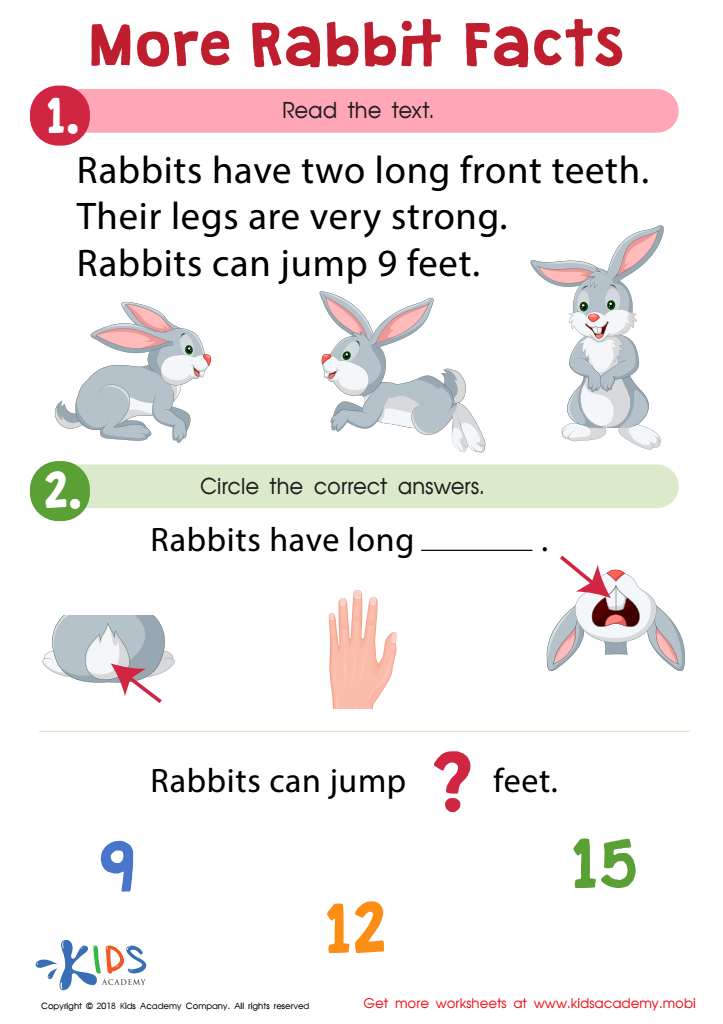
More Rabbit Facts Worksheet
Improve your child's reading comprehension skills with this fun worksheet! Read the paragraph at the top of the page, view the pictures and circle the correct answers indicating what was learned. Develop a better understanding of rabbits while learning how to recall important information from texts.
More Rabbit Facts Worksheet
Worksheet
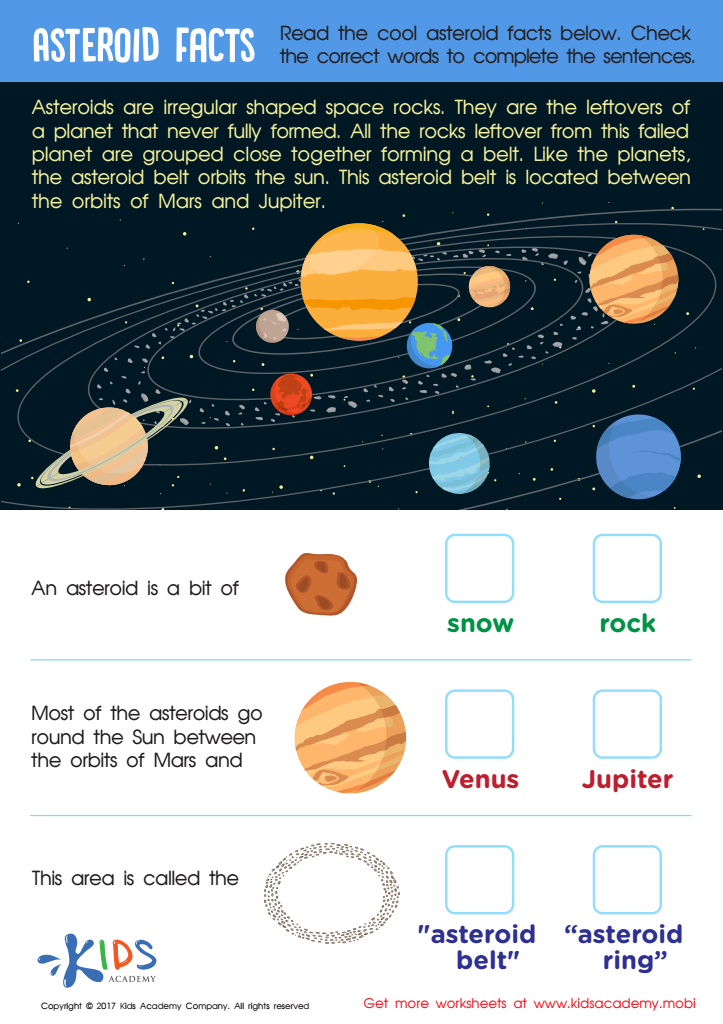
Asteroid Facts Worksheet
Your child can learn about asteroids and hone their comprehension skills with this 2nd-grade asteroid facts worksheet. They'll read a short non-fiction text and select the correct answers to demonstrate understanding of the orbit and properties of these fascinating objects!
Asteroid Facts Worksheet
Worksheet
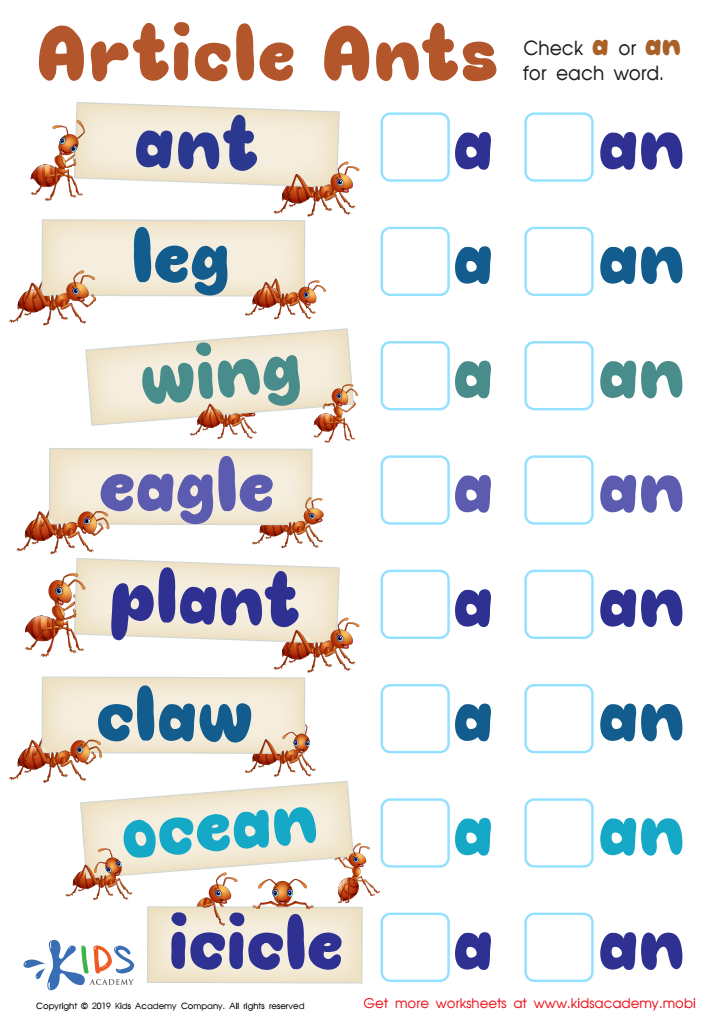
Article Ants Worksheet
Help your child master using "a" and "an" with this fun worksheet! Remind them that "an" goes with vowel sounds, while "a" is used for consonants. Have them check the right box next to each word to complete the activity.
Article Ants Worksheet
Worksheet
Join Kids Academy for Free
Who is primarily going to use this learning content?


.jpg)





Information retention is crucial for children aged 3-9 because these early years are foundational for cognitive and social development. During this period, children's brains are exceptionally receptive to acquiring new information and forming memories. Effective retention enables kids to build on previously learned knowledge, which is essential for mastering basic skills in reading, writing, and arithmetic. When children retain information well, they are better able to understand and apply concepts, making learning more meaningful and less frustrating.
Moreover, strong information retention in early years boosts confidence and fosters a love for learning. When children remember what they've learned, they can contribute more actively in class discussions, feel more competent, and thus are more likely to have positive attitudes toward school. For parents and teachers, monitoring and enhancing information retention ensures that educational approaches are effective. It allows them to provide appropriate interventions or enrichment activities tailored to each child's needs.
Finally, good information retention can help in the holistic development of a child. It aids in developing critical thinking, problem-solving, and decision-making skills. These are essential lifelong skills that benefit children not only academically but also personally and socially. Hence, caring about information retention at an early age prepares children for a successful and balanced future.








