Learning about ecosystems Normal Worksheets for Ages 3-9
3 filtered results
-
From - To
"Learning about ecosystems" is designed for children aged 3-9 to explore the wonders of nature right from their classroom or home. These engaging worksheets introduce fundamental concepts of ecosystems, highlighting various plants, animals, and their habitats. Through fun activities and interactive tasks, children will develop critical thinking and observational skills while learning about the intricate relationships within our environment. Each worksheet is crafted to be age-appropriate, ensuring that young learners grasp essential ecological principles in an enjoyable and simplified manner. Boost your child’s environmental awareness and curiosity with these captivating educational resources!
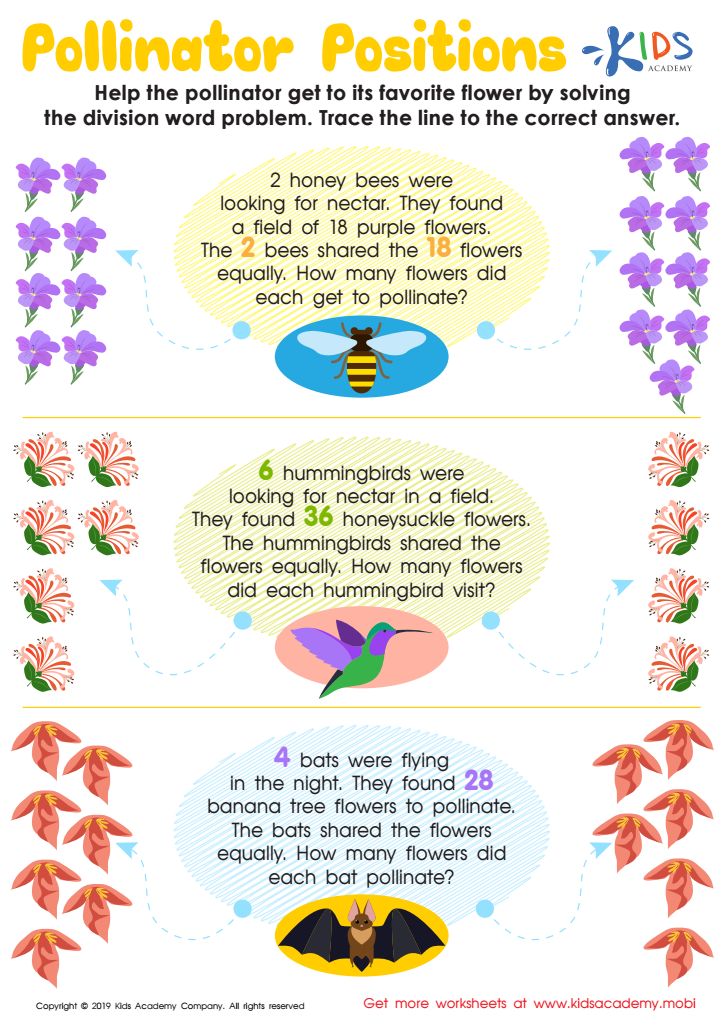
Pollinator Positions Worksheet
 Assign to My Students
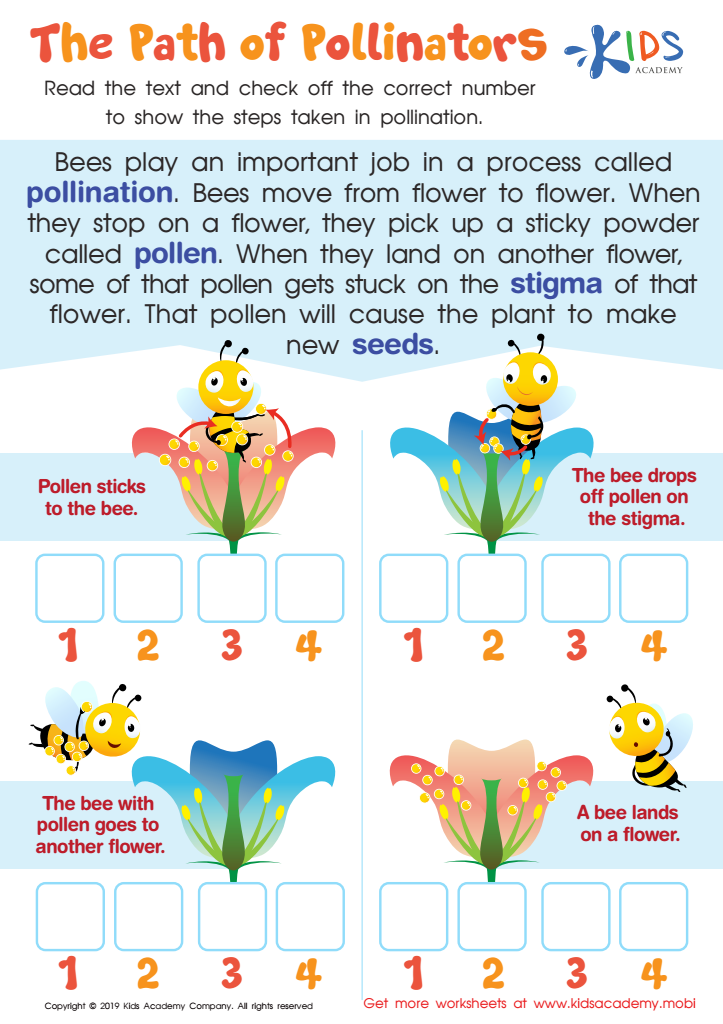
The Path of Pollinators Worksheet
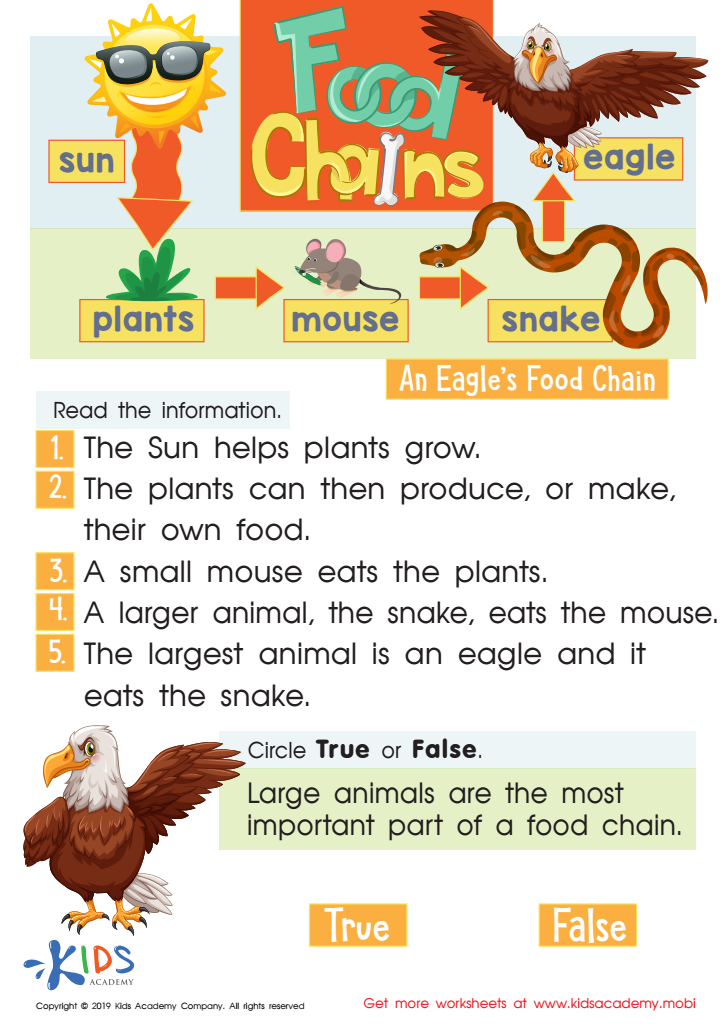
Food Chains Worksheet








Learning about ecosystems is crucial for children as young as ages 3-9 because it lays the foundation for their understanding of the natural world and their place within it. At this formative stage, children are incredibly curious and impressionable. Introducing them to the concept of ecosystems can spark a lifelong interest in science and nature.
Understanding ecosystems teaches children about the interdependence of living organisms and their environments. This builds a sense of respect and responsibility toward nature, cultivating environmentally conscious behavior from an early age. For instance, a young child learning about how bees pollinate flowers and plants can become more inclined to protect these small but vital creatures.
Furthermore, learning about ecosystems can enhance critical thinking and observational skills. When children explore how plants, animals, water, and soils interact, they learn to ask questions, make hypotheses, and engage in problem-solving. These are valuable skills that are applicable in many areas of learning and life.
Engaging with ecosystems can also foster social and emotional development. Group activities, such as planting a garden or visiting a nature reserve, can teach children teamwork and empathy. For educators and parents, understanding how ecosystems work can guide better decisions for sustainable living, offering a holistic approach to nurture both children and the planet.








