
Mathematical problem-solving Normal Worksheets for Ages 3-9
3 filtered results
Difficulty Level
Grade
Age
-
From - To
Subject
Activity
Standards
Unlock your child's potential with our Mathematical Problem-Solving Normal Worksheets for ages 3-9! These engaging and straightforward worksheets sharpen essential math skills, from basic counting and addition to more complex problem-solving tasks. Tailored to different developmental stages, each worksheet blends fun activities with purposeful learning, keeping young minds motivated and challenged. Our expertly designed problems help develop critical thinking and analytical skills, while interactive exercises make math enjoyable. Perfect for classroom use or at-home practice, boost your child’s confidence and proficiency in math today with Kids Academy's top-quality educational resources!
Favorites
With answer key
Interactive
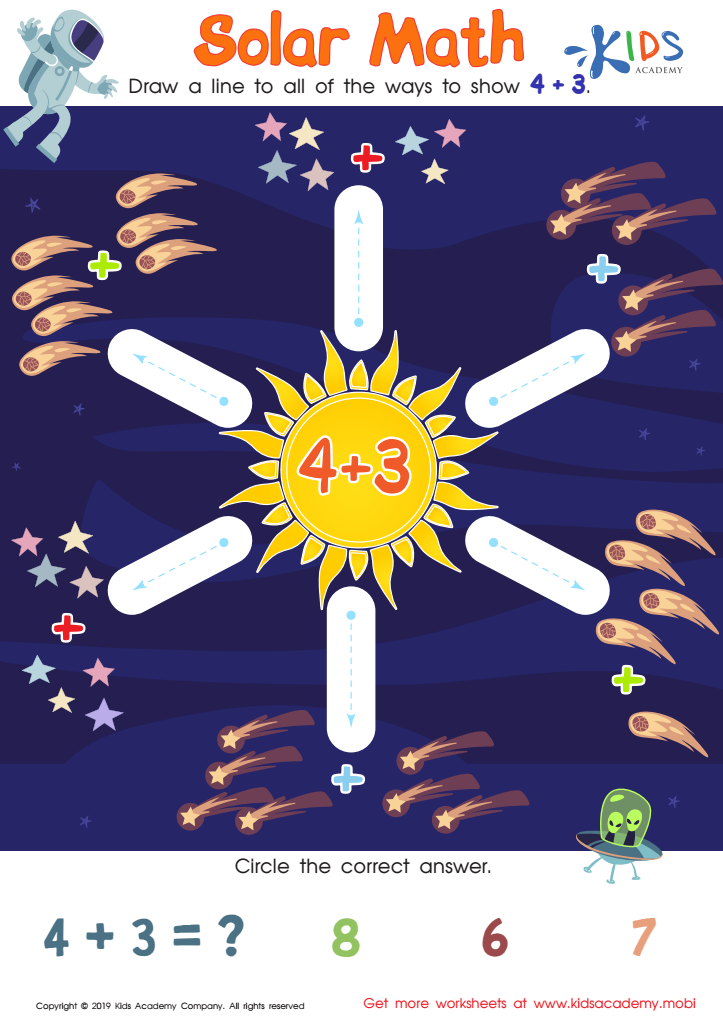
Solar Math Worksheet
Do your students need a lesson on the solar system? Use this colorful worksheet to make learning fun. Math is a must-know for kindergartners; make it enjoyable with this printout. Ask them to draw a line to all the ways to show 4+3.
 Assign to My Students
Solar Math Worksheet
Worksheet
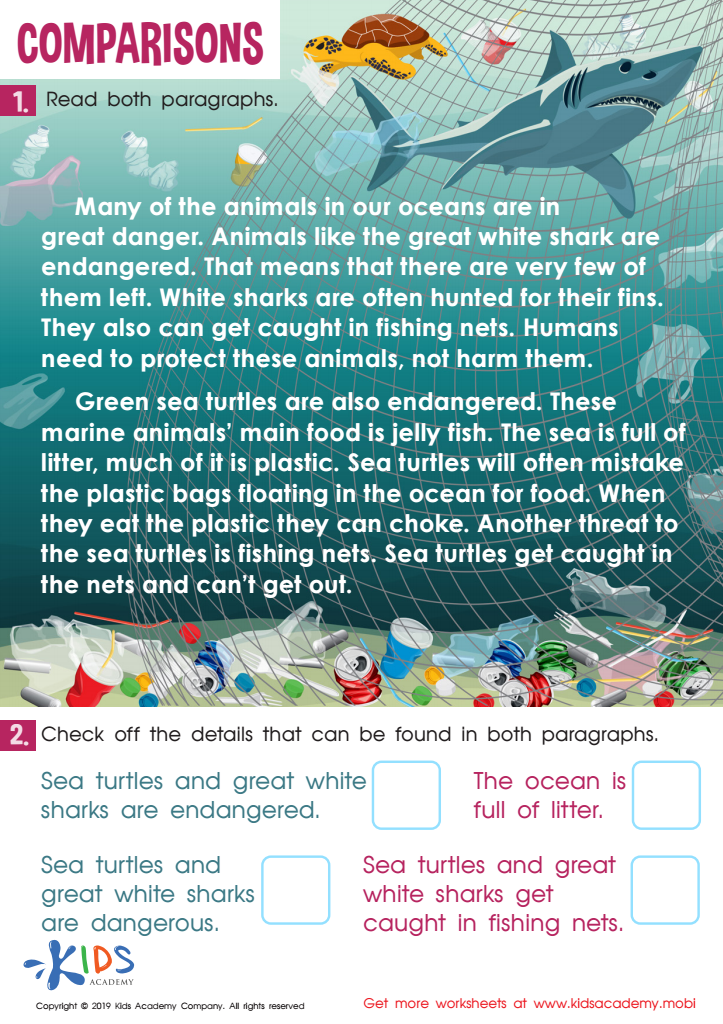
Comparisons Worksheet
Compare two things easily: place them side by side and note the differences. Use this passage to help kids practice reading and comprehension, and teach them about the ocean and sea creatures. Read both paragraphs, then check off details found in both. (80 words)
Comparisons Worksheet
Worksheet
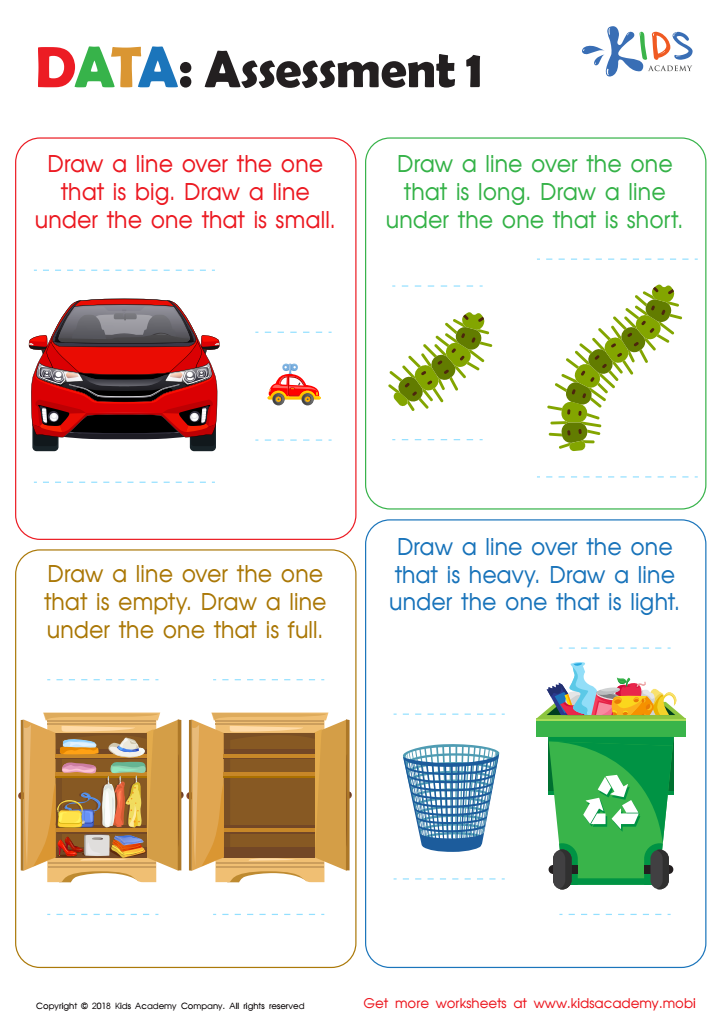
Data: Assessment 1 Worksheet
Assess your students' knowledge of measurement words with this worksheet. Have them compare and describe objects/quantities using words like "big", "small", "long", "short", "empty", "full", "heavy" and "light". Encourage further learning by asking students to provide examples of each word meaning.
Data: Assessment 1 Worksheet
Worksheet
Join Kids Academy for Free
Who is primarily going to use this learning content?








Parents and teachers should prioritize mathematical problem-solving for children ages 3-9 because it lays the foundational blocks of critical thinking, reasoning, and analytical skills. During these formative years, young minds are exceptionally receptive to learning new concepts. Early exposure to math not only builds comfort and competence with numbers but fosters essential cognitive skills used across various life aspects.
Mathematical problem-solving nurtures perseverance and creativity in facing challenges. With each problem, whether sorting shapes or simple addition, children practice patience and adaptable thinking. Beyond understanding math itself, these problem-solving experiences enhance children’s abilities to approach new tasks with confidence and innovation.
Moreover, early familiarity with math can lead to better academic performance in later years. When children are introduced to mathematical concepts early, they develop a strong numerical literacy that supports more complex learning. It also helps counteract the development of math anxiety, making students more likely to engage and achieve in school and future careers.
Overall, integrating mathematical problem-solving into early education creates a stimulating learning environment that prepares children thoughtfully and effectively for future academic endeavors and everyday decision-making. It cultivates not only competence but an enduring curiosity and enthusiasm for learning.








