Mental math practice Normal Worksheets for Ages 3-9
6 filtered results
-
From - To
Unlock your child's mathematical potential with our Mental Math Practice Normal Worksheets for Ages 3-9 at Kids Academy. Designed to make learning fun and engaging, our printable worksheets are perfect for building a strong foundation in mental arithmetic skills. With a focus on addition, subtraction, multiplication, and division, these worksheets cater to every young learner's needs. Ideal for classroom use or at-home practice, our resources ensure steady progress in math fluency through exciting and challenging activities. Help your child develop confidence and proficiency in mental math effortlessly! Explore our extensive collection to elevate their learning journey today.
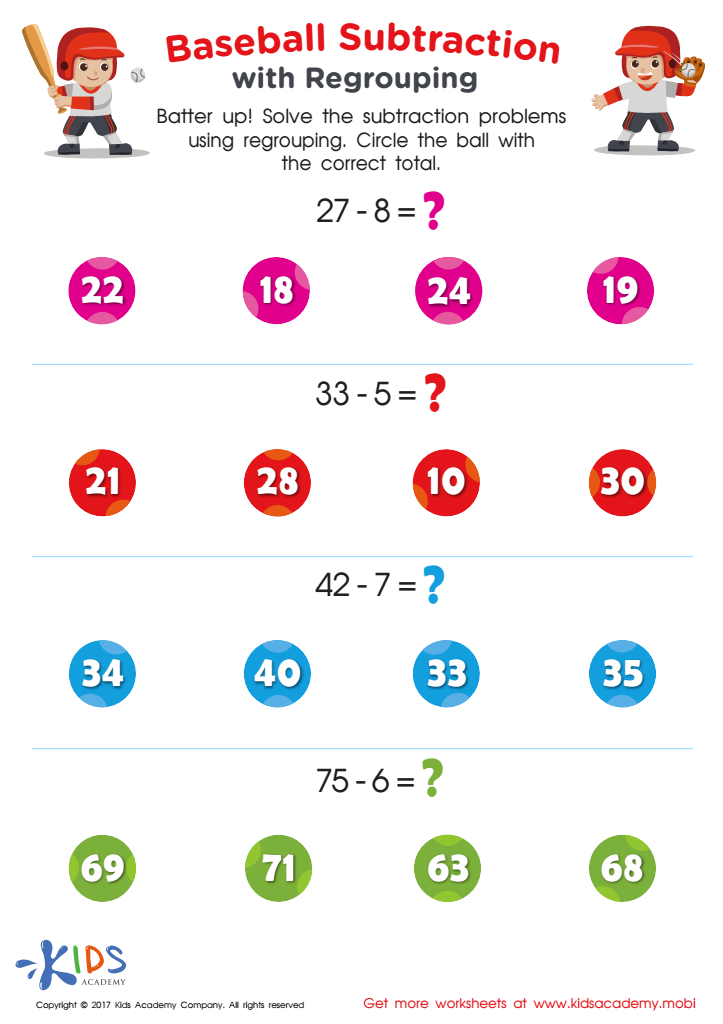
Subtraction With Regrouping for 2nd Grade Worksheet
 Assign to My Students
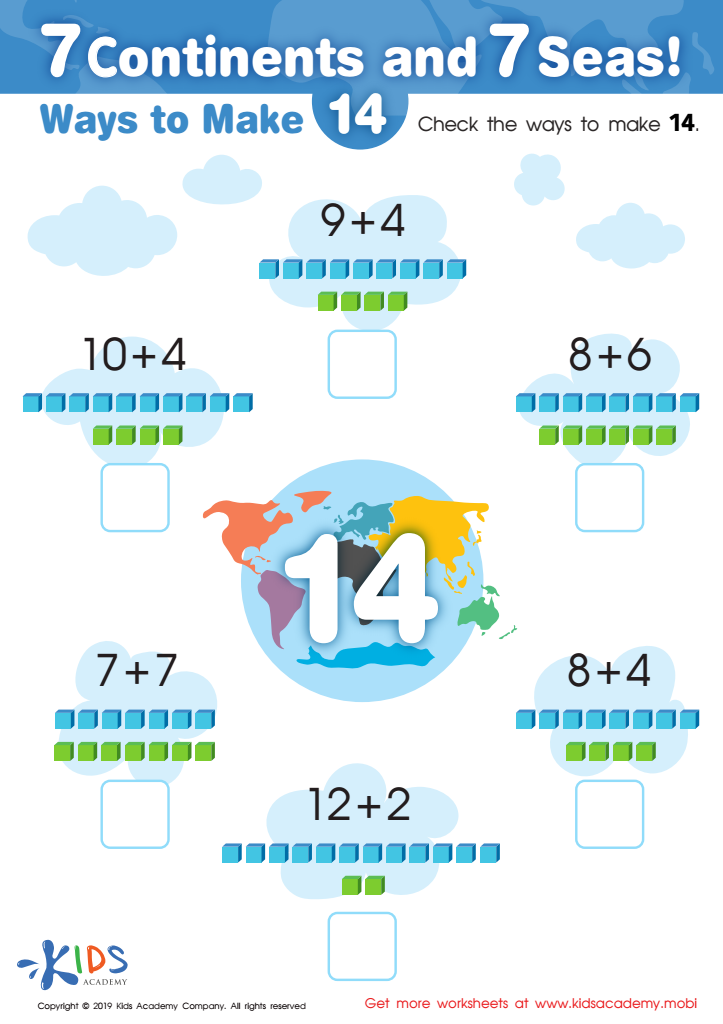
7 Continents and 7 Seas Worksheet
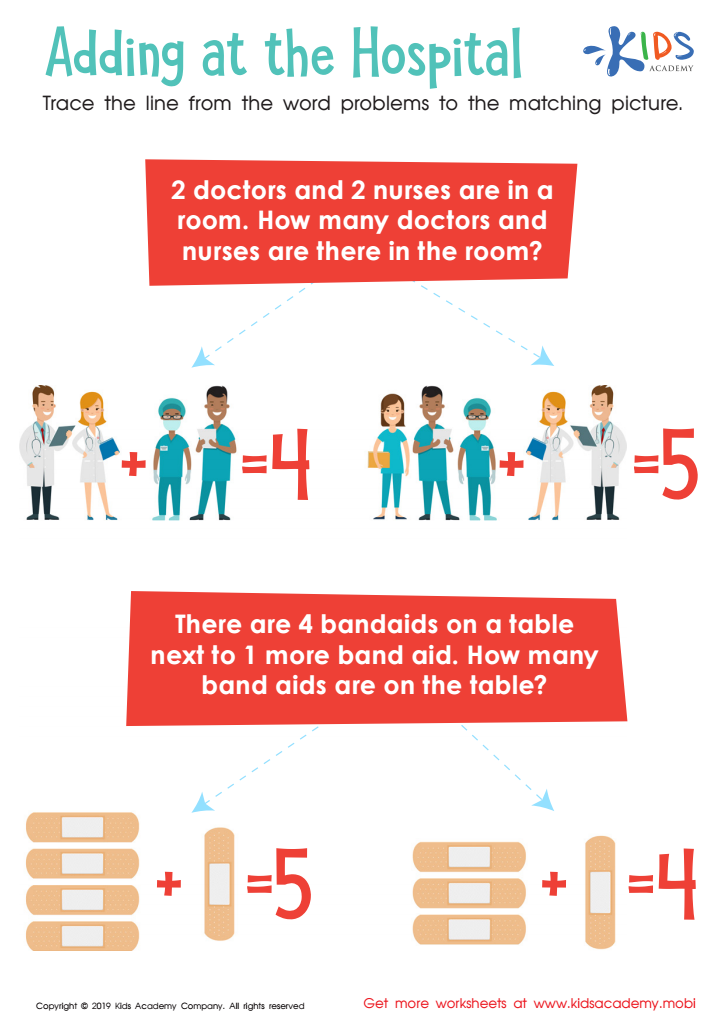
Adding at the Hospital Worksheet
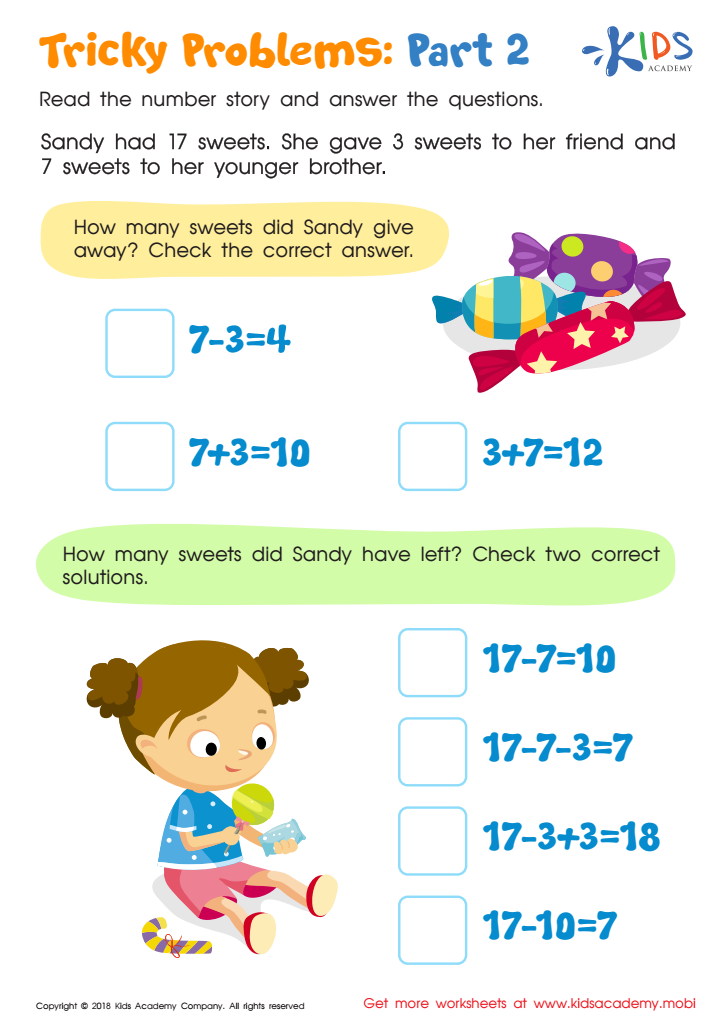
Tricky Problems Worksheet: Part 2
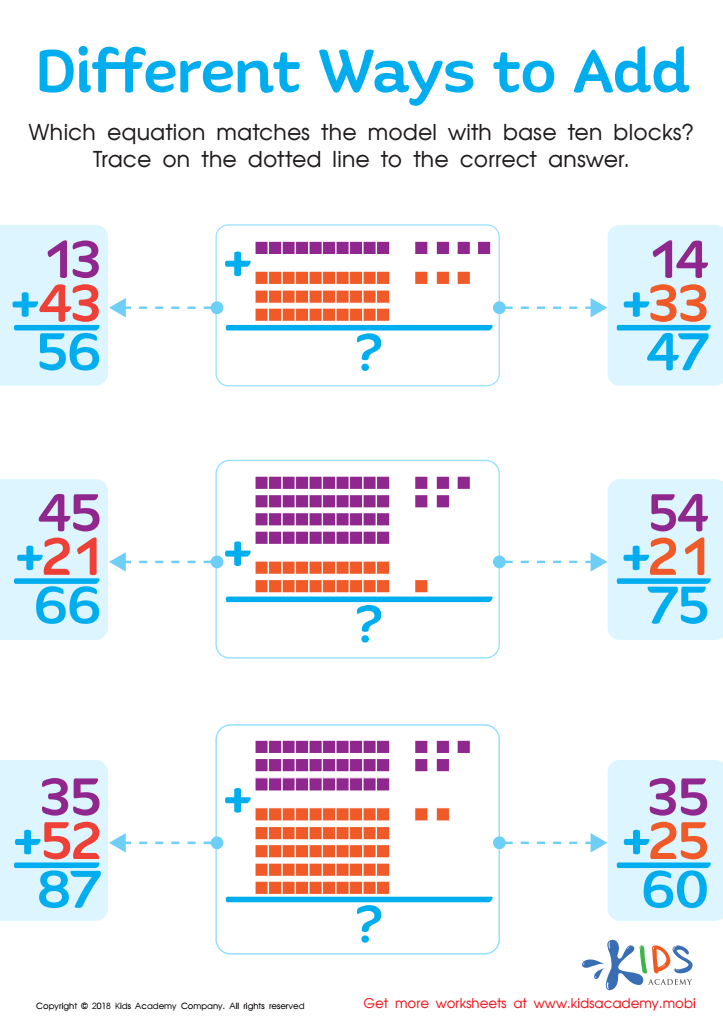
Different Ways to Add Worksheet
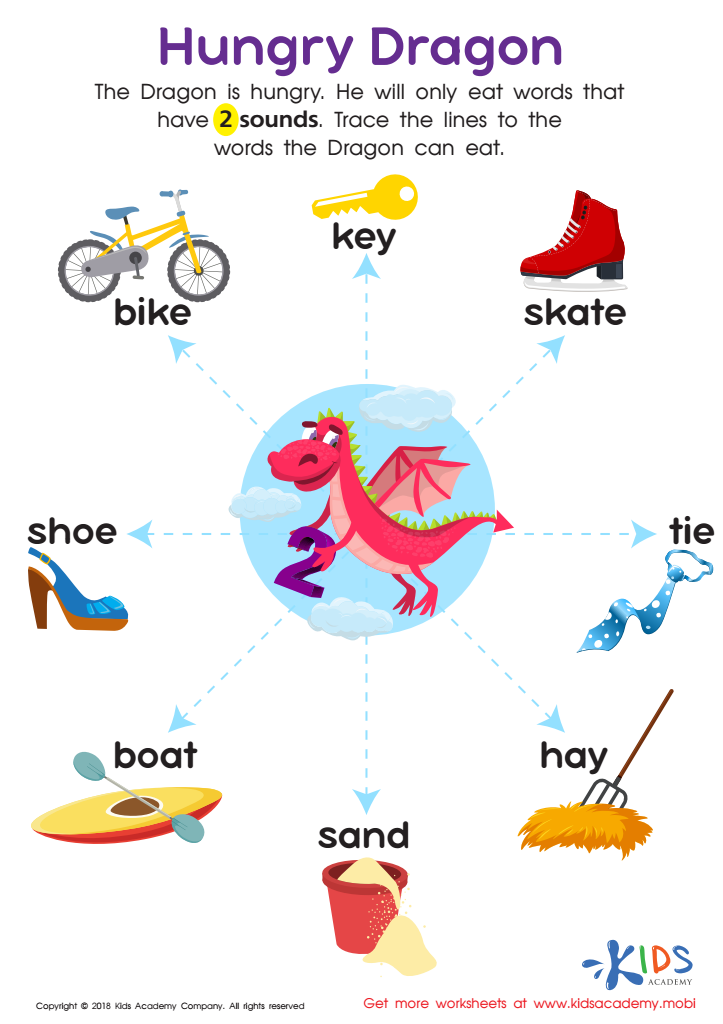
Hungry Dragon Worksheet






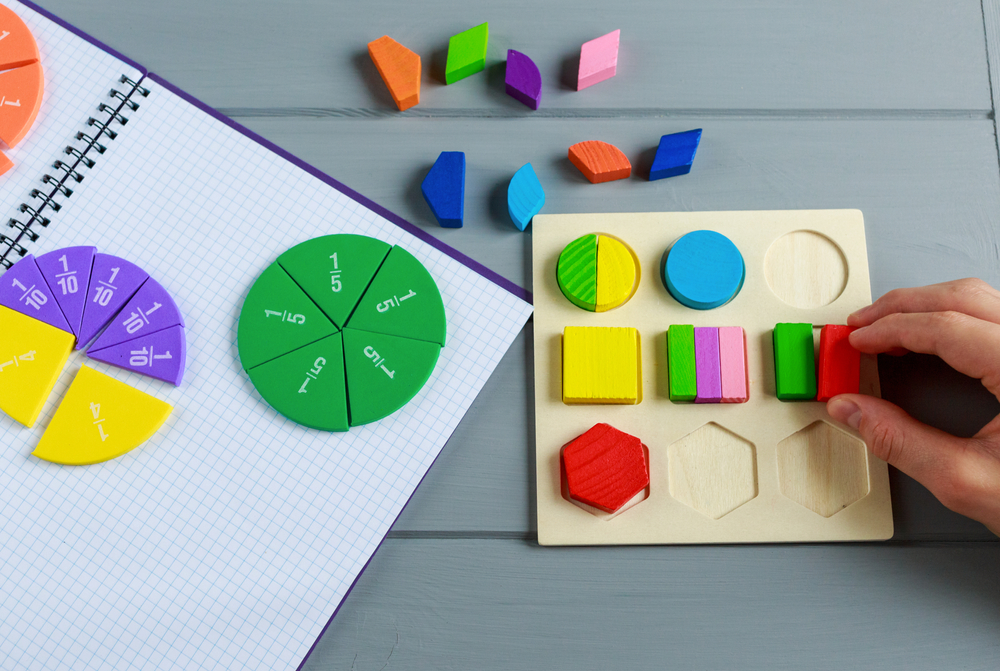
Engaging children in mental math practice from an early age, specifically between ages 3-9, is crucial for enhancing their cognitive development, problem-solving skills, and overall confidence in mathematics. Mental math, the ability to solve mathematical problems without the use of physical tools or written computation, fosters quick thinking and supports the development of a child's number sense — an essential skill for making decisions and solving real-world problems.
During these formative years, children's brains are highly receptive to learning new concepts and skills. Regular mental math practice strengthens their memory and concentration, which are fundamental for academic success in all subjects. Moreover, it enhances their understanding of mathematical concepts, as they learn to manipulate numbers and recognize patterns naturally.
Mental math also promotes independence and self-reliance, as children gain confidence in their ability to solve problems on their own. This confidence often translates into a more positive attitude towards mathematics and a reduced likelihood of math anxiety, a common issue that can hinder academic performance in the later years.
For parents and teachers, incorporating mental math exercises into daily routines not only provides a strong mathematical foundation but also instills a lifelong appreciation for learning. It helps identify and address potential learning gaps early on, ensuring that each child progresses smoothly along their educational journey.








