Observational skills development Normal Worksheets for Ages 3-9
3 filtered results
-
From - To
Enhance your child's learning with our "Observational Skills Development Worksheets" designed for ages 3-9. These engaging and interactive worksheets foster essential observational skills through playful activities that promote critical thinking and attention to detail. Children will enjoy fun exercises involving matching, identifying patterns, and recognizing differences, all while developing their ability to observe and analyze their surroundings. Our resources are suitable for various learning environments, from home to classroom settings. Help your little ones build a strong foundational skill set that supports their overall learning journey. Explore our collection today and watch their observational skills flourish!
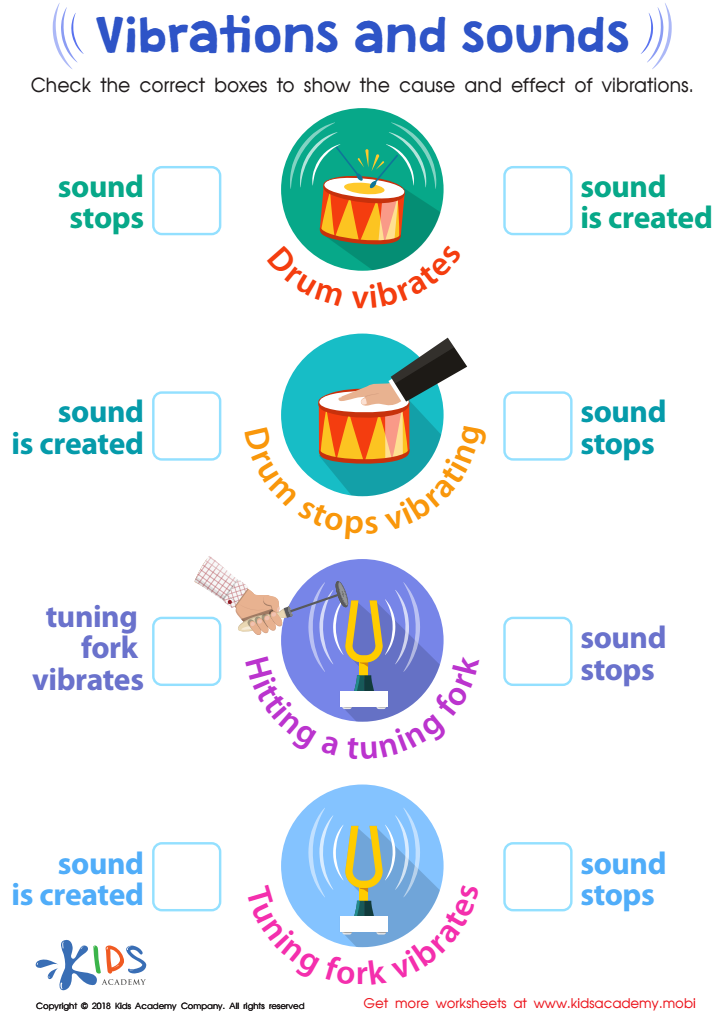
Vibrations and Sounds Worksheet
 Assign to My Students
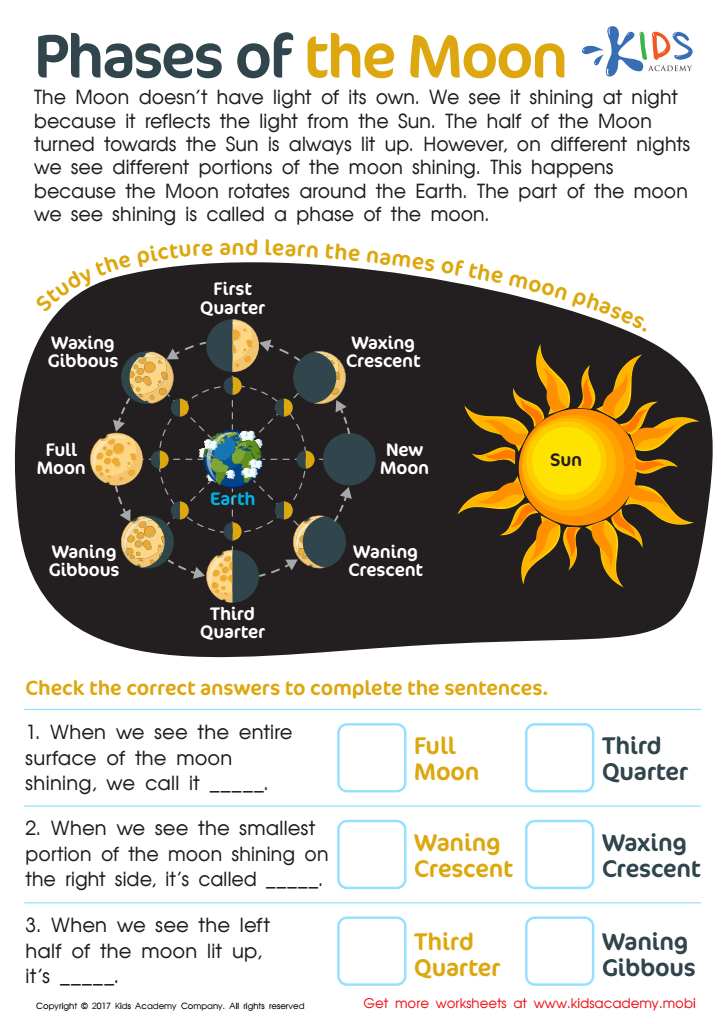
Phases of The Moon Worksheet
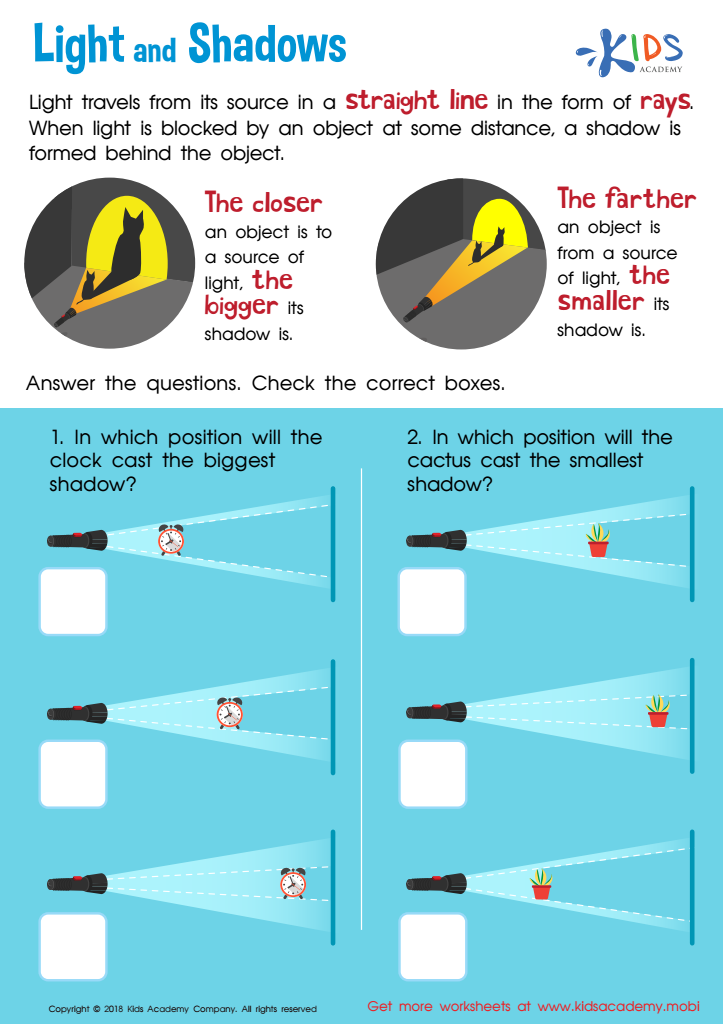
Light and Shadow Worksheet for Grade 3



.jpg)
.jpg)


Observational skills development in children aged 3-9 is crucial for their overall growth and learning. These skills enable young learners to notice details in their environment, understand their surroundings, and make connections between different concepts. For parents and teachers, nurturing observational skills fosters critical thinking and problem-solving abilities.
At an early age, children naturally engage in exploration, making observations that lead to questions and insights. Encouraging these skills helps them make sense of the world, enhances their curiosity, and boosts cognitive development. When children actively observe, they assimilate information more effectively, which supports literacy and numeracy skills, essential for academic success.
Additionally, strong observational skills impact social-emotional development. Children learn to interpret body language and social cues, enhancing their ability to communicate and form relationships. Parents and teachers who prioritize these skills can support collaborative play, conflict resolution, and empathy.
Furthermore, observational skills lay the foundation for lifelong learning. As children develop the ability to analyze and interpret information, they will become more adept learners, capable of thriving in increasingly complex environments. In summary, nurturing observational skills in early childhood is vital for academic success, social-emotional growth, and lifelong learning potential.








