Phonics improvement Normal Worksheets for Ages 3-9
3 filtered results
-
From - To
Discover engaging phonics improvement worksheets designed for children ages 3-9 at Kids Academy! Our fun, printable resources help young learners strengthen their phonetic skills essential for reading and writing. Each worksheet incorporates vibrant illustrations and interactive activities that make phonics practice enjoyable. Suitable for both classroom and home use, these worksheets focus on letter sounds, blending, and decoding skills, fostering a love for language and literacy. Whether your child is just starting or looking to enhance their abilities, our phonics worksheets provide the perfect blend of education and excitement, ensuring effective skill development while promoting a lifelong passion for learning.
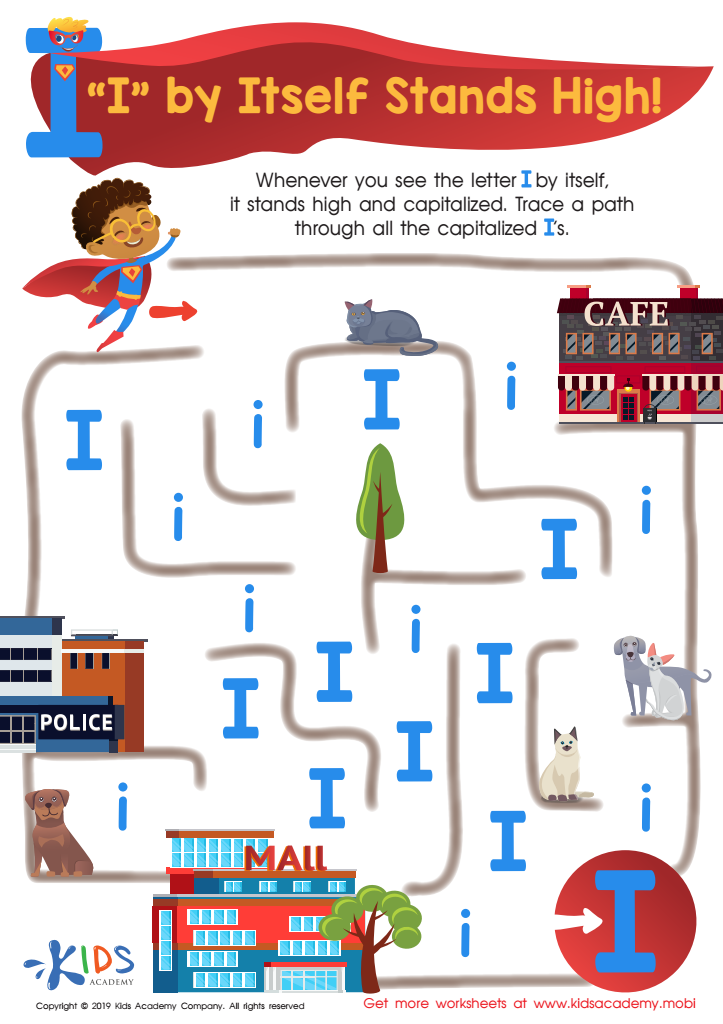
I Stands High Worksheet
 Assign to My Students
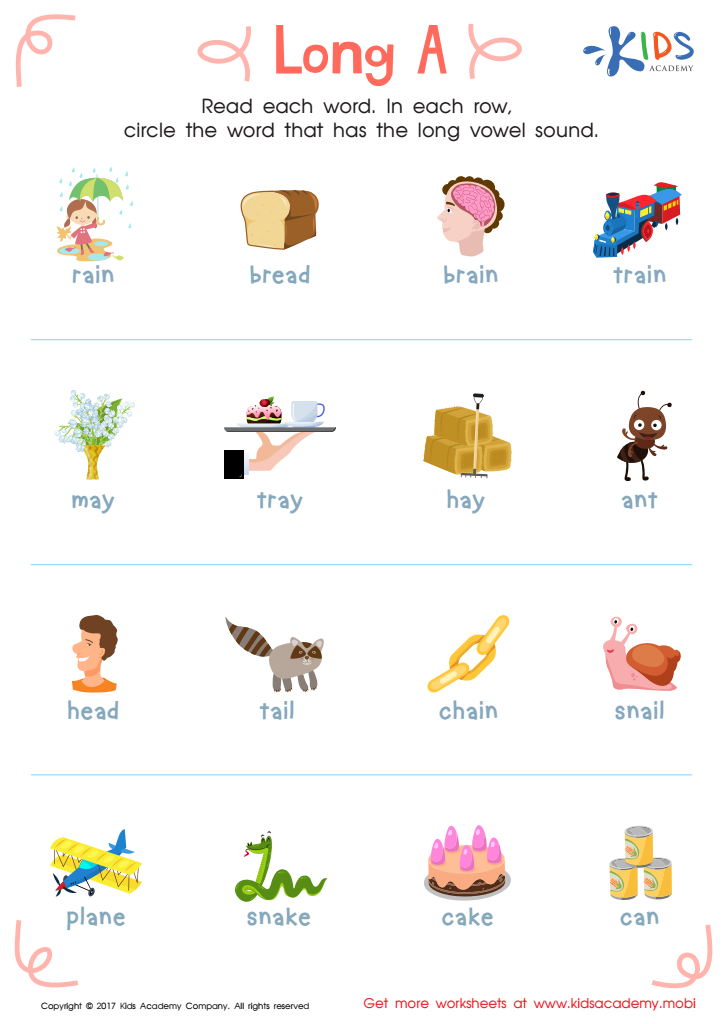
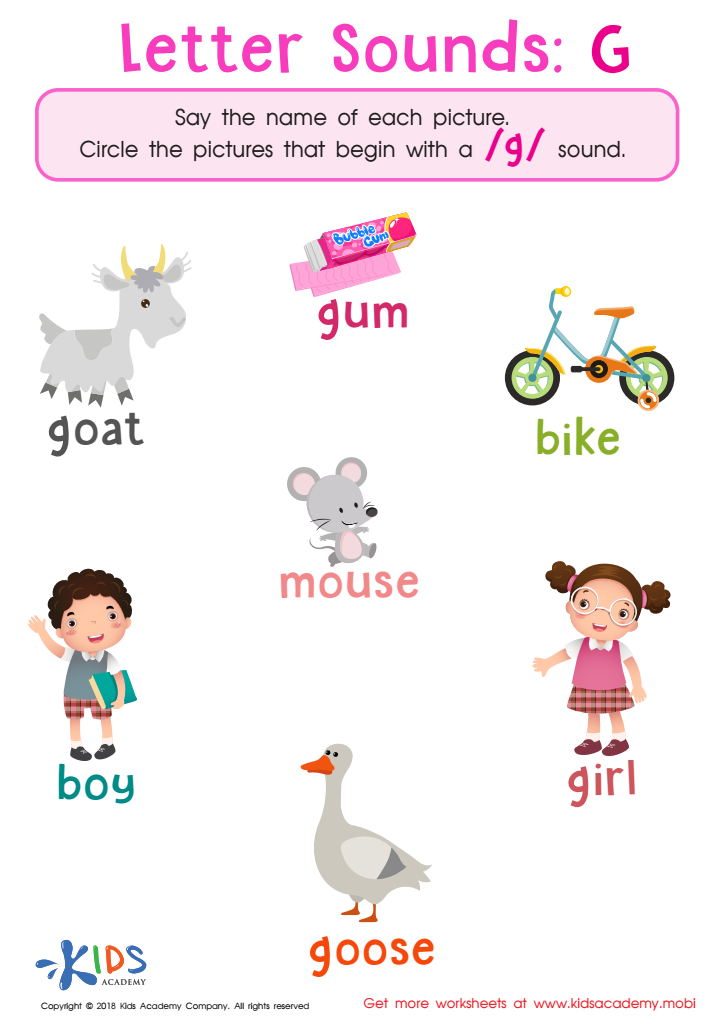
Letter G Sounds Worksheet







Phonics is a crucial foundation for reading and writing development in children aged 3-9. Understanding phonics helps young learners decode words, connect sounds to letters, and develop literacy skills essential for academic success. By focusing on phonics improvement during these formative years, parents and teachers play a vital role in fostering a love for reading and enhancing children's overall communication abilities.
Phonics instruction boosts phonemic awareness, aiding in the identification and manipulation of sounds, which can improve spelling and pronunciation. A strong phonics base also enhances vocabulary acquisition, as children can better sound out and recognize new words. This ultimately contributes to increased comprehension and confidence when reading.
Furthermore, in today's digital age, where literacy is key to engagement andunderstanding information, a solid phonics background ensures that children are well-equipped to navigate various texts, fostering critical thinking and comprehension skills. Careful attention to phonics improvement can prevent potential literacy delays, promoting a smoother transition to more complex reading tasks as children mature.
In summary, prioritizing phonics improvement during early childhood education is essential for laying the groundwork for lifelong learning, promoting academic achievement, and preparing children for future success in a text-driven world.








