Phonics skills development Normal Worksheets for Ages 3-9
6 filtered results
-
From - To
Unlock your child's reading potential with our Phonics Skills Development Worksheets for ages 3-9. Designed to build foundational literacy skills, these engaging worksheets cover essential topics such as letter recognition, vowel and consonant sounds, blending, and decoding words. Each sheet combines fun activities with effective learning strategies, catering to various skill levels. Whether your little one is just starting to explore sounds or refining their phonetic capabilities, our worksheets make learning interactive and enjoyable. Empower your child with the tools to succeed in reading and watch their confidence grow. Access our comprehensive collection and start phonics learning today!
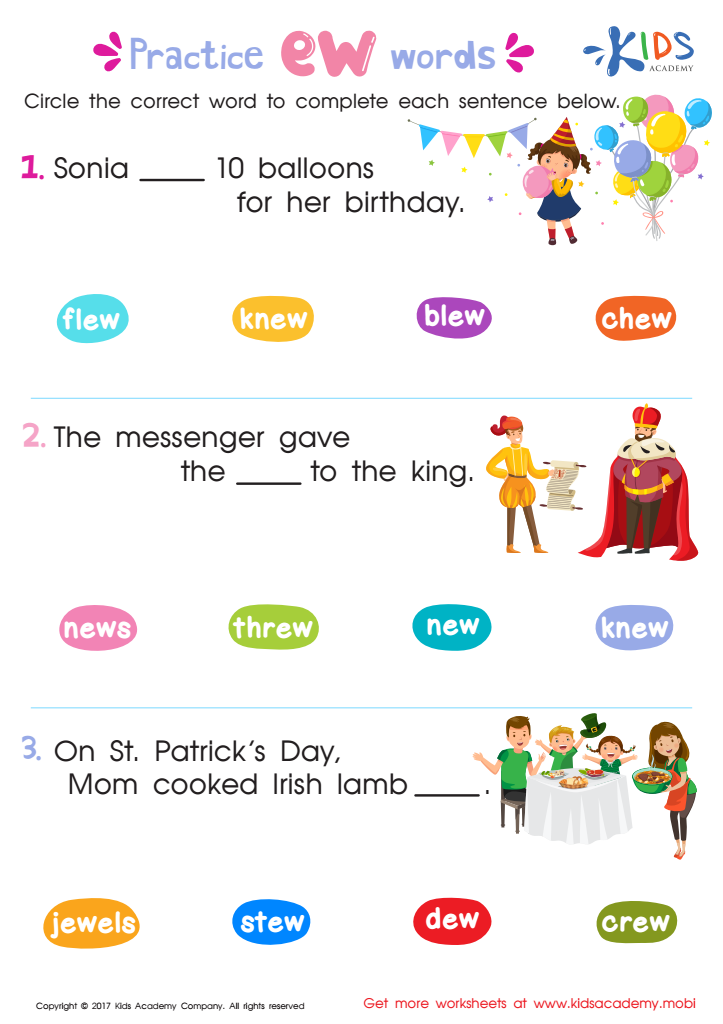
EW Words Worksheet
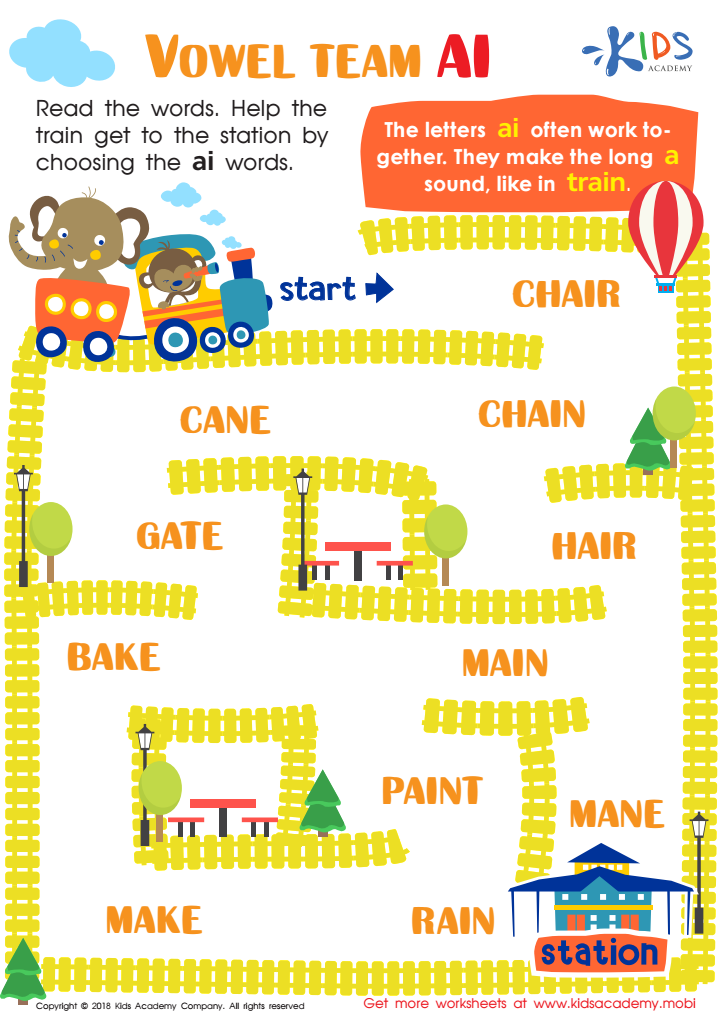
Vowel team ai Worksheet
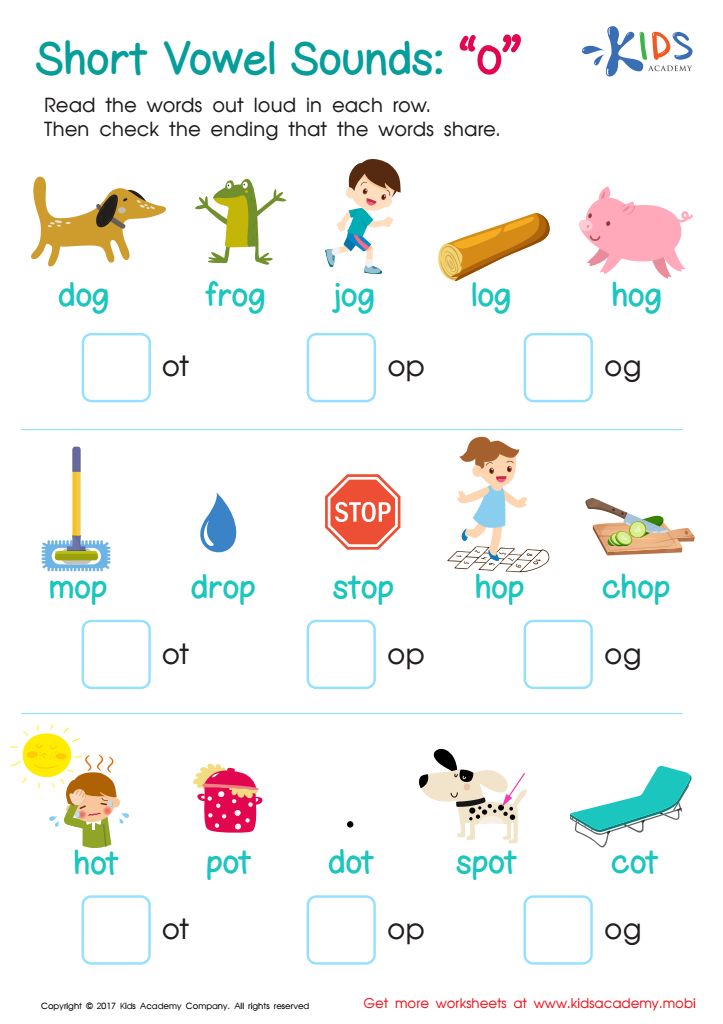
Short vowel Sounds "o" Spelling Worksheet
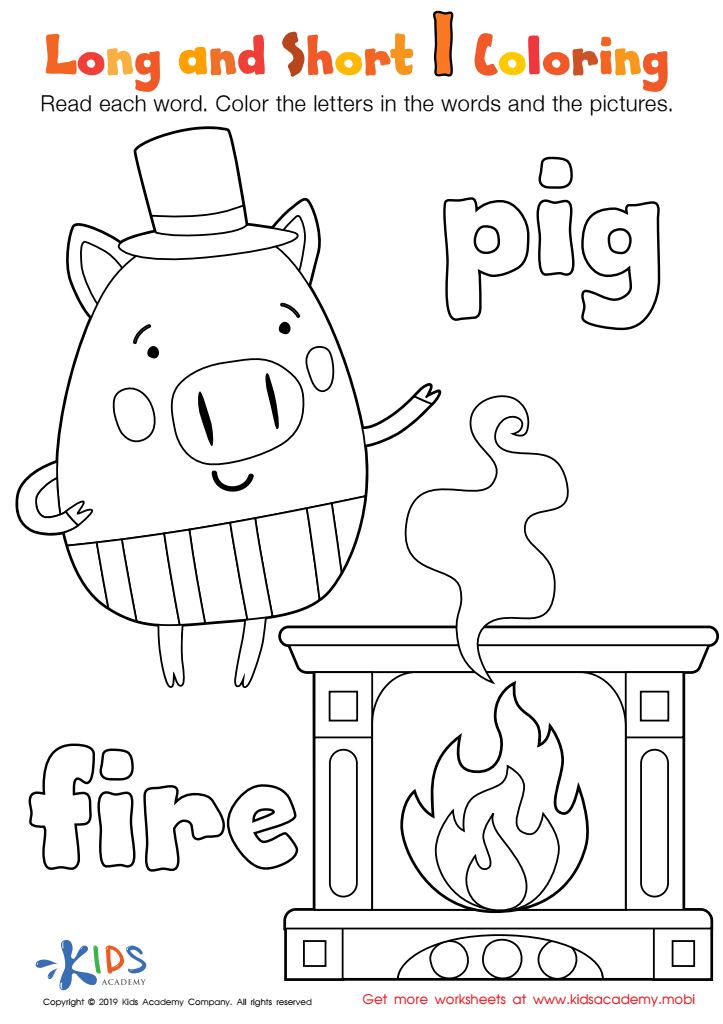
Long and Short I Worksheet
 Assign to My Students
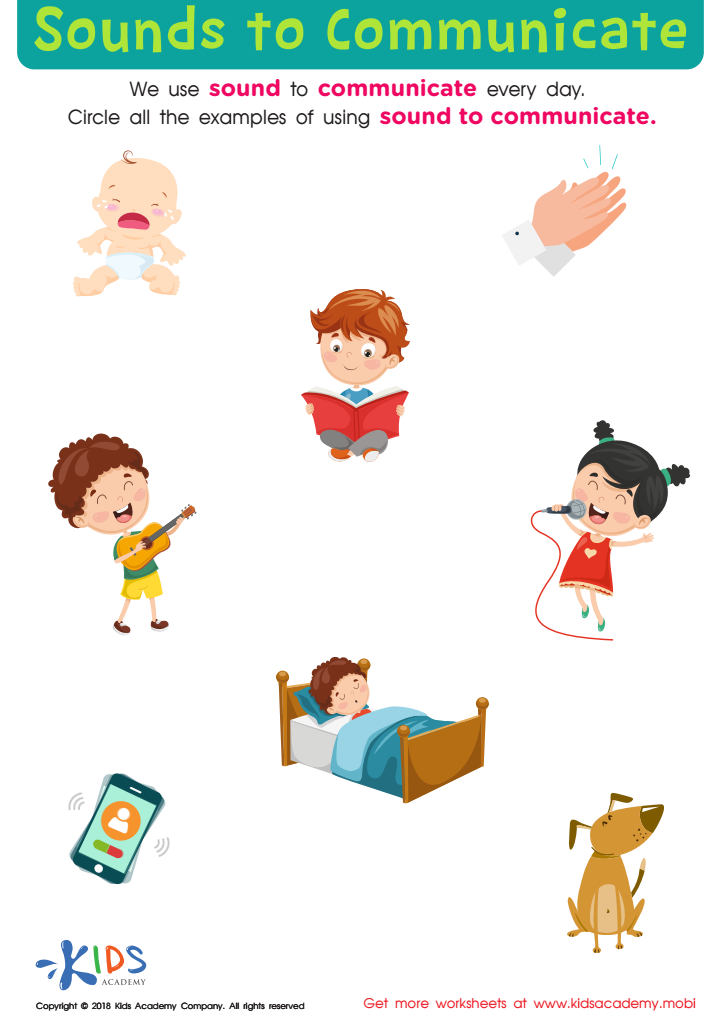
Sounds to Communicate Worksheet
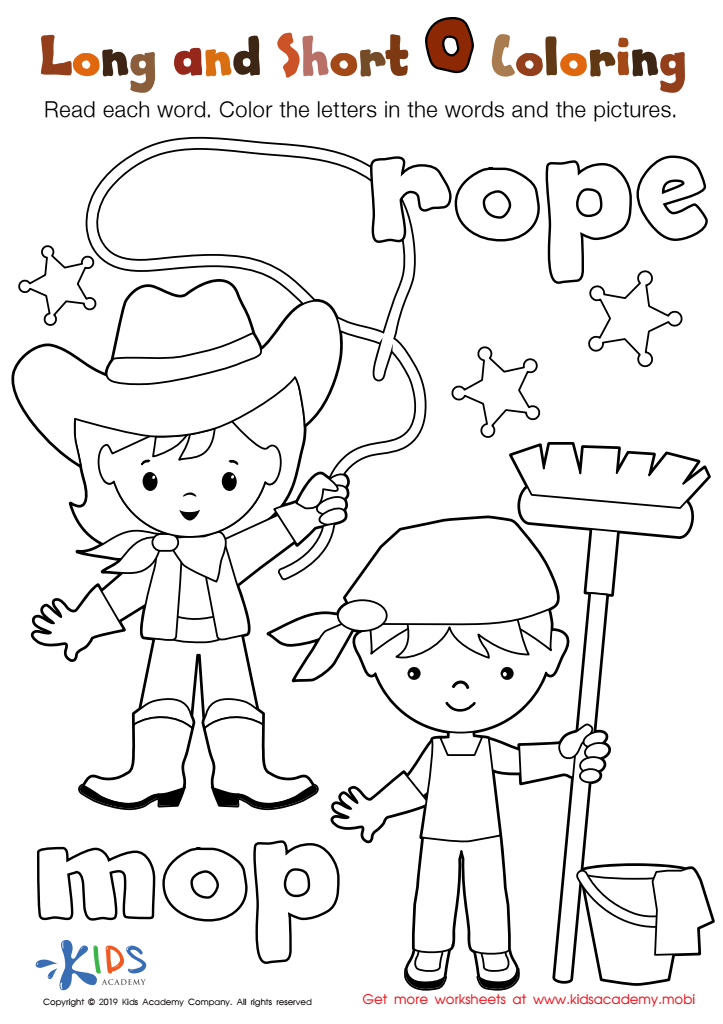
Long and Short O Worksheet
Assign to My Students







Phonics skills development is crucial for children aged 3-9 as it forms the foundation for effective reading and writing. Phonics involves the ability to hear, identify, and manipulate phonemes—the smallest units of sound—in spoken words. For young learners, understanding the relationship between sounds and their corresponding letters enhances their decoding skills, enabling them to read words accurately and fluently.
Parents and teachers should prioritize phonics because it directly influences a child's academic success. Early mastery of phonics helps children become confident readers, which is fundamental for learning across all subjects. For instance, proficient reading enables better comprehension of instructional materials in science, history, and mathematics, leading to improved overall educational outcomes.
Moreover, developing phonics skills can boost children's self-esteem and motivation to learn. Successfully reading and understanding new words gives young learners a sense of accomplishment, fostering a positive attitude towards school and learning.
Inadequate phonics skills can lead to difficulties in reading, which may result in academic struggles and frustration. Early identification and intervention in phonics, therefore, prevent future literacy issues and support every child's right to succeed academically and personally. Investing time in phonics development is an investment in each child’s educational journey and life-long learning potential.








