Reading clocks Normal Worksheets for Ages 3-9
3 filtered results
-
From - To
Discover our engaging Reading Clocks Normal Worksheets designed for children aged 3 to 9! These interactive worksheets make learning to tell time fun and easy. Filled with colorful illustrations and age-appropriate exercises, kids will gain confidence in reading analog and digital clocks. Our resources cater to various skill levels, ensuring that every child can progress at their own pace. These worksheets encourage hands-on learning through practice, helping young learners grasp essential time-telling skills while enjoying vibrant designs that capture their imagination. Perfect for both classroom settings and home use, our Reading Clocks worksheets are essential tools for developing your child's mathematics abilities!
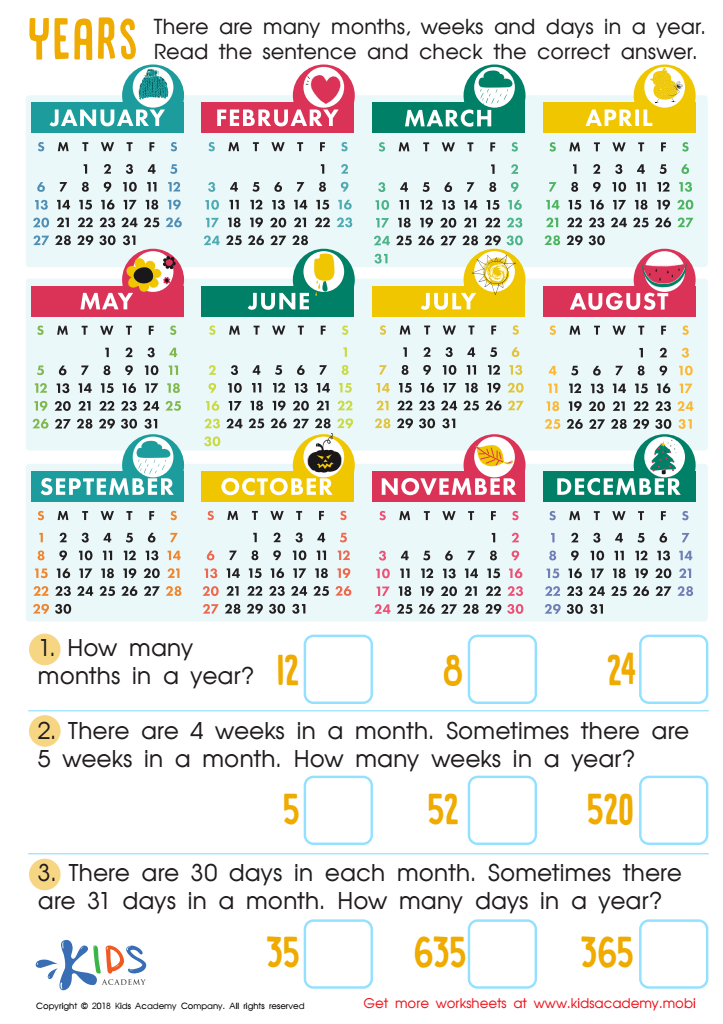
Years Worksheet
 Assign to My Students
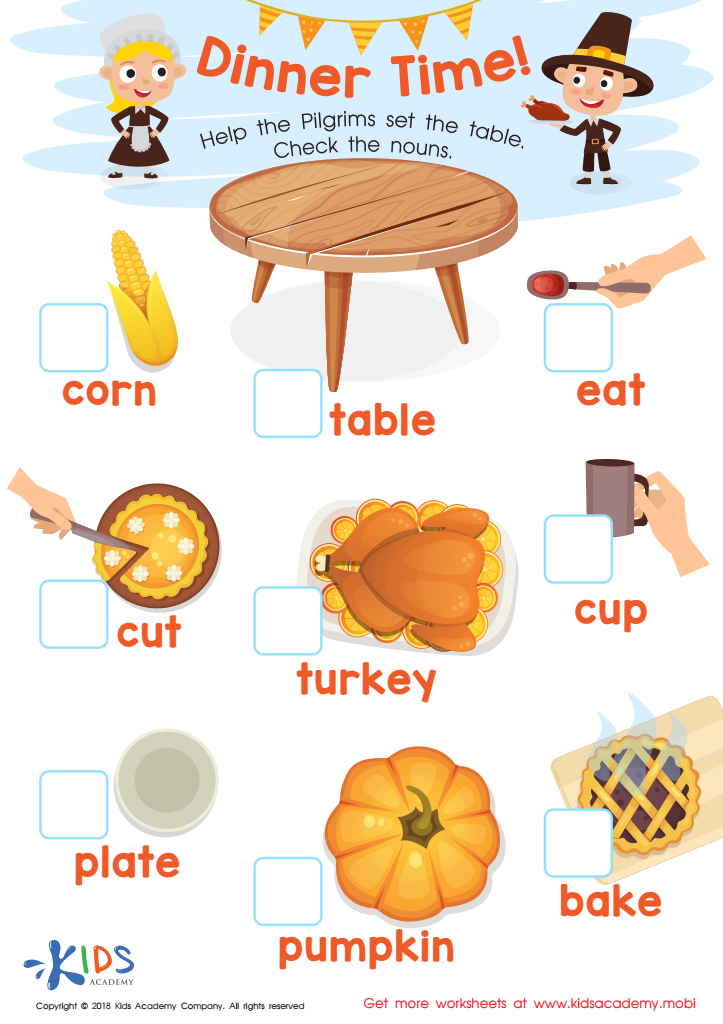
Dinner Time! Worksheet
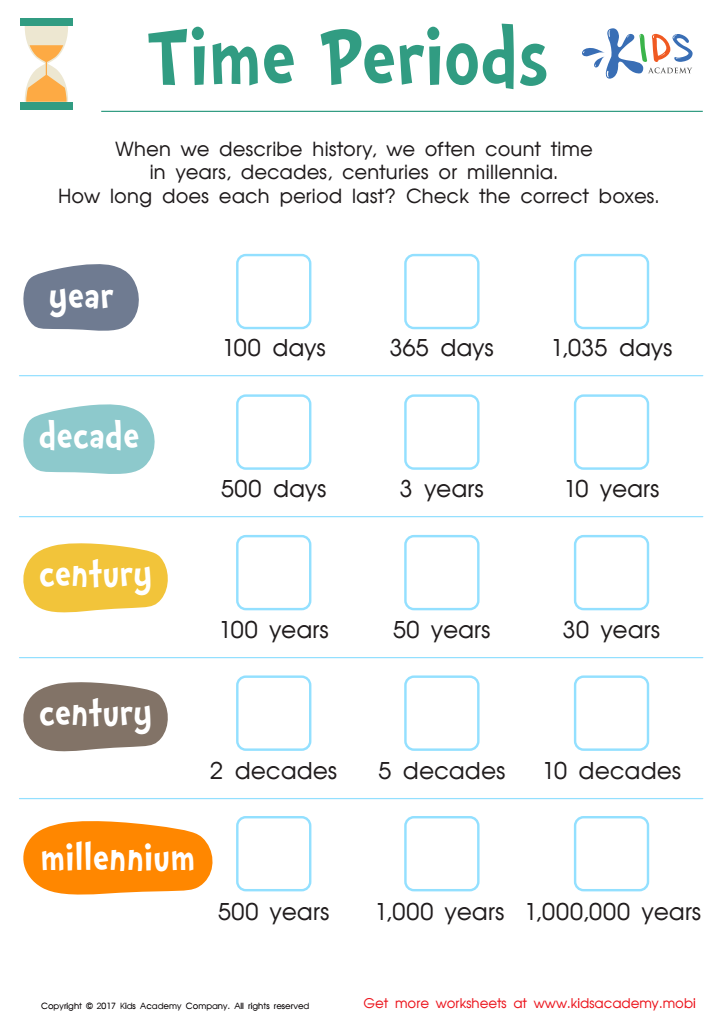
Time Periods Worksheet








Reading clocks is a crucial skill for children aged 3-9, laying the foundation for time management and critical thinking. Parents and teachers should prioritize this skill for several reasons. Firstly, understanding how to read a clock fosters independence. As children learn to tell time, they can manage daily routines more effectively, from getting ready for school to knowing when to complete homework.
Moreover, grasping the concept of time enhances mathematical skills, such as counting and recognizing patterns. Clocks introduce children to concepts like fractions—these relate significantly to learning about quarter hours, half-hours, and more, allowing for a concrete understanding of abstract math concepts.
Additionally, having the ability to read a clock helps youngsters develop patience and the ability to plan. It teaches them the value of time and its effective use in activities, leading to better self-regulation.
Finally, in a world increasingly dominated by digital screens, learning to read analog clocks cultivates mental agility and historical awareness, connecting children to past practices. Overall, fostering clock-reading skills in young children equips them with essential life skills, promoting both cognitive and practical growth.








