
Reading skills development Normal Worksheets for Ages 3-9
7 filtered results
Difficulty Level
Grade
Age
-
From - To
Subject
Activity
Standards
Boost your child's reading skills with our engaging worksheets designed for ages 3-9. Our collection features a variety of fun and educational activities that enhance phonemic awareness, vocabulary, comprehension, and fluency. Each worksheet is crafted to align with developmental milestones, ensuring age-appropriate challenges that keep young learners motivated. With colorful illustrations and interactive exercises, children will discover the joys of reading while building essential literacy skills. Perfect for teachers and parents alike, our worksheets are easily printable and great for both classroom and home learning. Start your child’s reading journey today! Explore our resources and watch their confidence soar!
Favorites
With answer key
Interactive
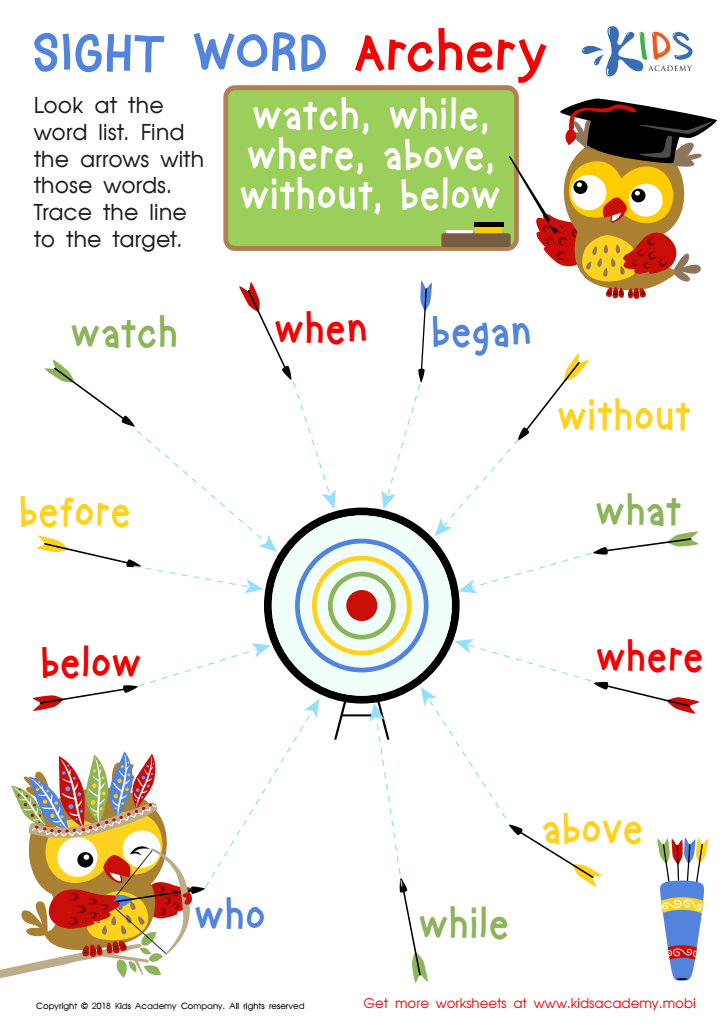
Sight Word Archery Worksheet
Read the words list with your kids, pointing at each one. Ask them to do the same. Help them find the arrows with those words and trace the line to the target in the centre.
 Assign to My Students
Sight Word Archery Worksheet
Worksheet
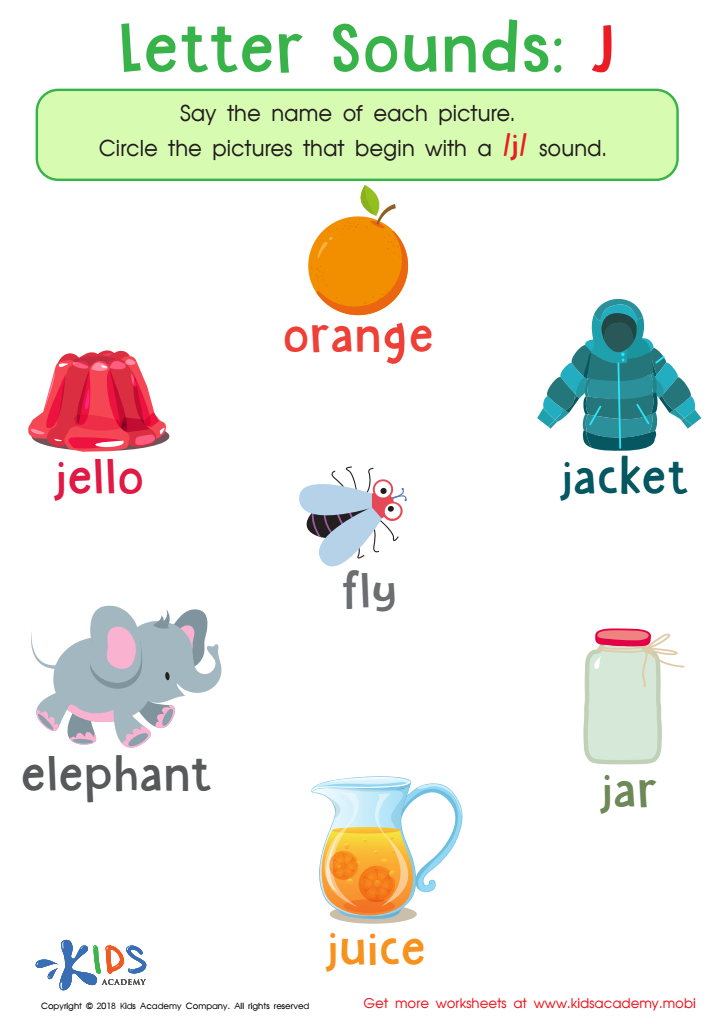
Letter Sounds: J Printable Worksheet
Preschoolers can learn to identify letter sounds by focusing on beginning sounds. This cute and colorful worksheet reviews the hard “j” sound. Kids can point it out by naming the words and circling only those starting with the “j” sound. Read the text out loud and listen closely!
Letter Sounds: J Printable Worksheet
Worksheet
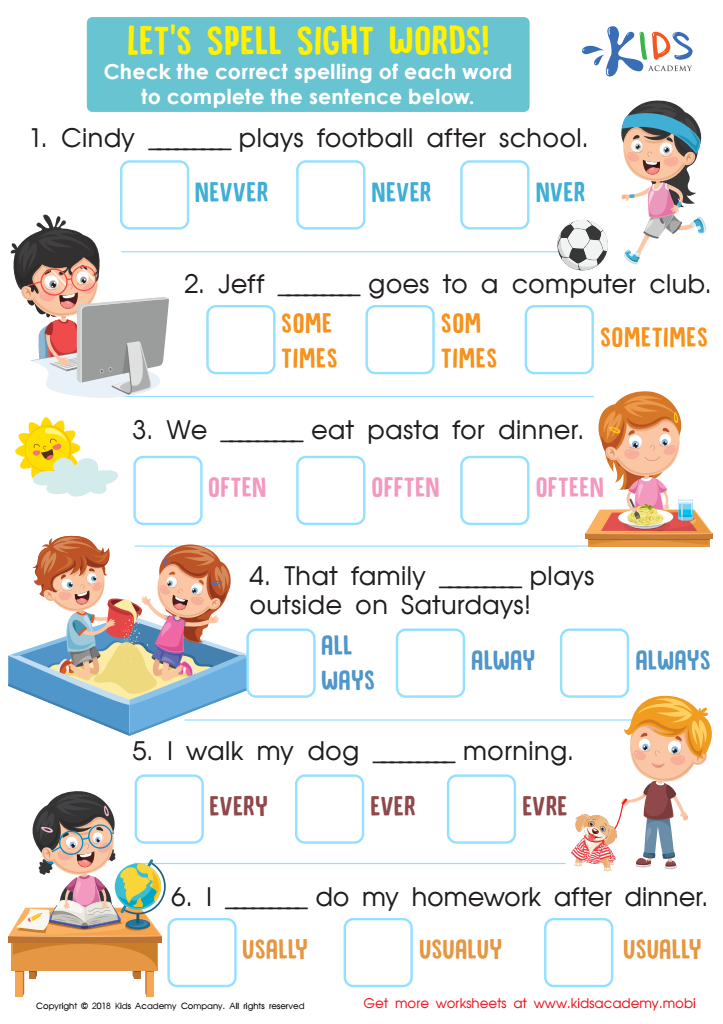
Let's Spell Sight Words Worksheet
Help your kids spell tricky sight words by asking them to spot differences in the sentences of activities they do regularly. This worksheet contains incomplete sentences, with the correct spelling of the word in the options for them to fill in. Get them to look out for words with the wrong spellings.
Let's Spell Sight Words Worksheet
Worksheet
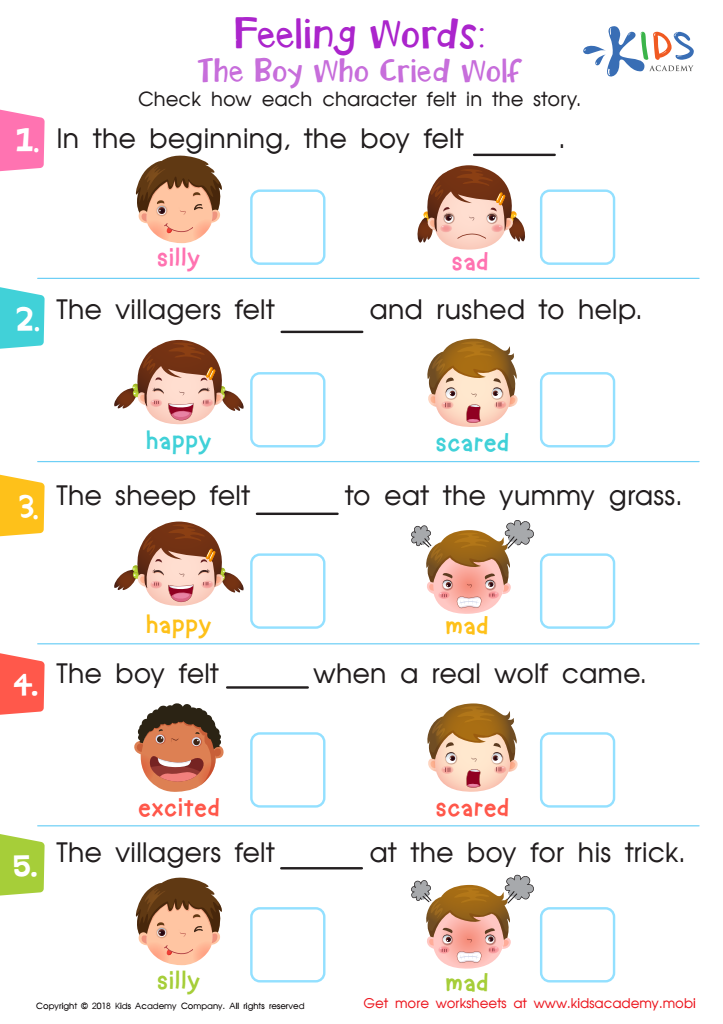
Feeling Words: The Boy Who Cried Wolf Worksheet
This worksheet helps students infer characters' traits and feelings by reading The Boy Who Cried Wolf. They choose the correct emotion for each character to improve their story comprehension. A great resource for the reading classroom, it teaches an essential comprehension skill.
Feeling Words: The Boy Who Cried Wolf Worksheet
Worksheet
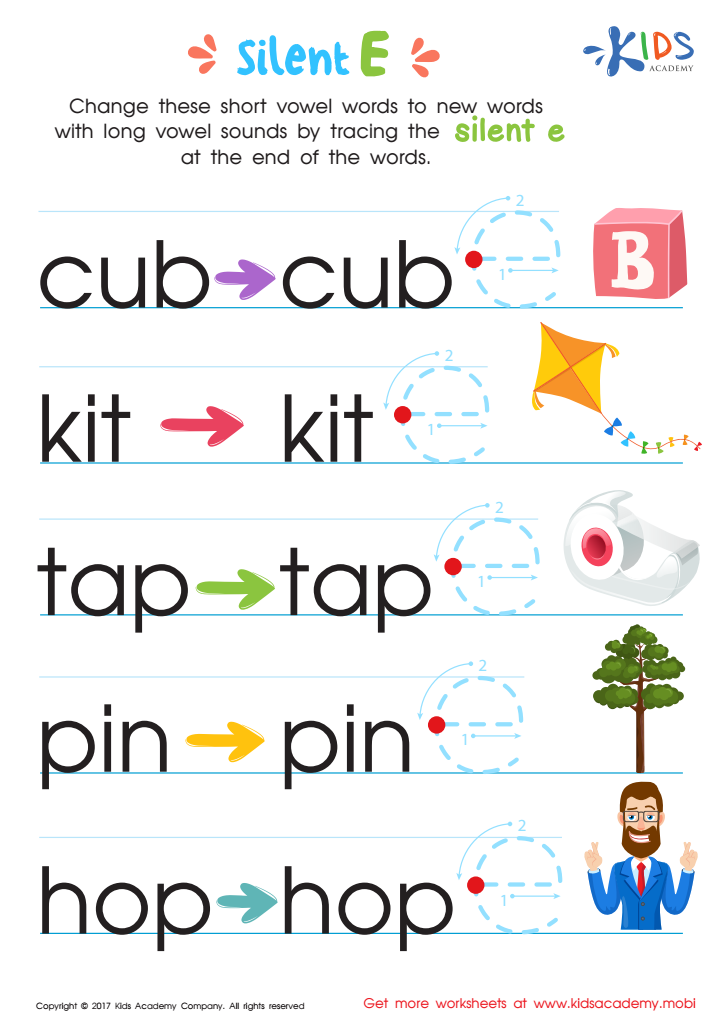
Silent E Words Worksheet
The letter e is amazing - it changes words without making a sound! Boost spelling and phonics with this Silent e worksheet from Kids Academy - fun and colorful!
Silent E Words Worksheet
Worksheet
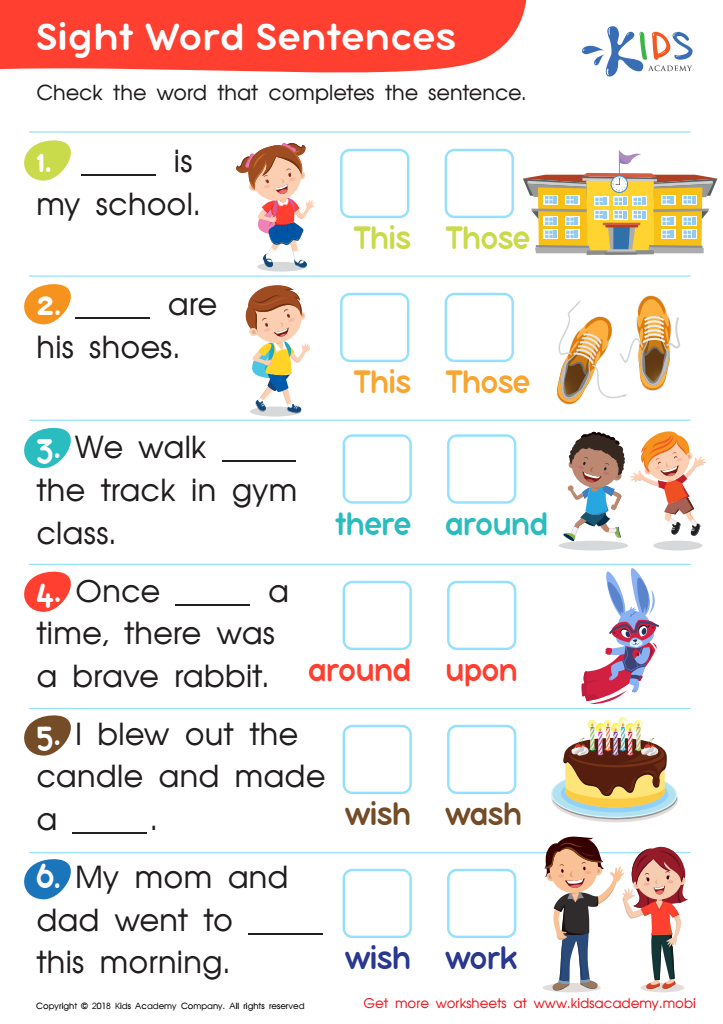
Sight Word Sentences Worksheet
Improve reading fluency! Have students fill in the blank with the correct sight word to complete sentences. Sight words are often tricky to decode - they don't follow phonics or spelling rules. To read smoothly, young learners must know them by memory. Use this printable and help kids master their sight words!
Sight Word Sentences Worksheet
Worksheet
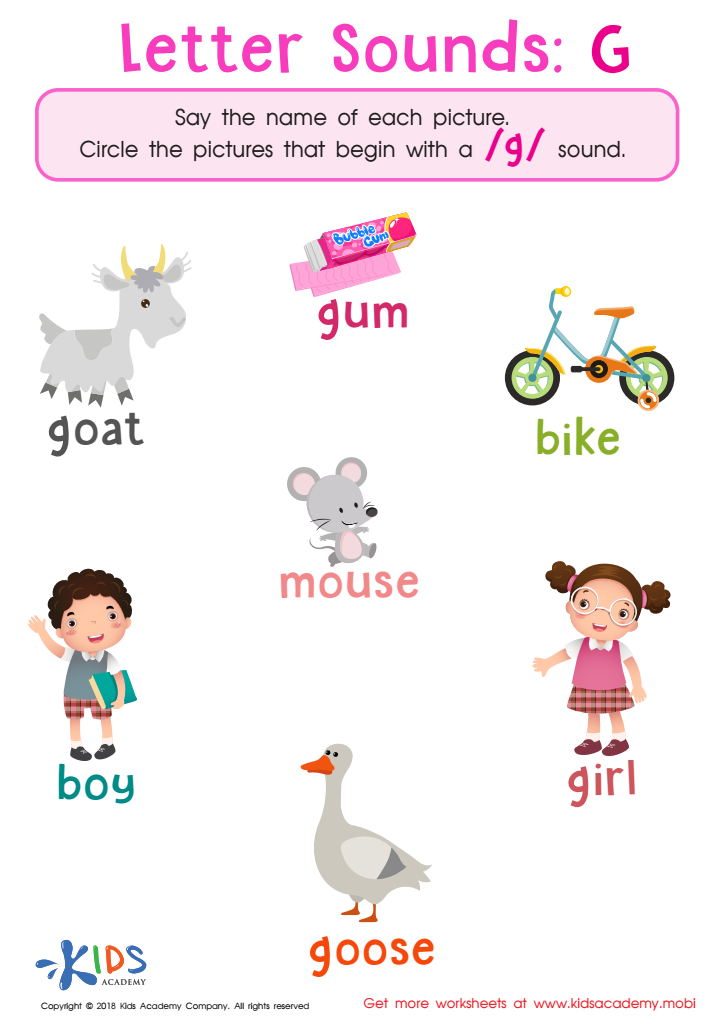
Letter G Sounds Worksheet
Help emerging readers build confidence by giving them practice identifying hard "G" with this free PDF worksheet. They'll use picture clues to name the words, and practice fine-motor skills tracing circles around the corresponding pics. It's a great way to introduce or reinforce hard "G" words.
Letter G Sounds Worksheet
Worksheet
Join Kids Academy for Free
Who is primarily going to use this learning content?








Reading skills development in children ages 3-9 is crucial for multiple reasons, making it a priority for parents and teachers alike. First, early reading skills lay the foundation for future academic success. Children who read proficiently tend to perform better in subjects like math and science, as reading comprehension is critical for understanding problems and instructions.
Second, reading fosters linguistic skills, enhancing vocabulary and grammar, which are essential for effective communication. As children engage with diverse texts, they also develop a better understanding of the world around them, spurring curiosity and critical thinking.
Socially, reading can help children develop empathy. Stories often illustrate diverse perspectives and experiences, allowing children to connect with others' feelings and thoughts. This emotional growth is foundational for building healthy relationships.
Furthermore, reading at an early age can instill a lifelong love for literature and learning, making it more likely that children will become enthusiastic and engaged learners. Parental involvement significantly boosts a child's motivation, making supportive environments essential for developing reading skills.
Investing time and resources in fostering reading abilities in early childhood rewards children's emotional, social, and intellectual development, preparing them for a successful future.








