Science vocabulary expansion Normal Worksheets for Ages 3-9
4 filtered results
-
From - To
Our Science Vocabulary Expansion Worksheets for ages 3-9 offer an engaging way to boost young learners' language skills. Featuring fun illustrations and age-appropriate content, these worksheets help children grasp essential scientific terms and concepts. Perfect for classroom use or at-home learning, each worksheet encourages curiosity and understanding of the world around them. With activities tailored to their developmental stage, kids will not only expand their vocabulary but also enhance their cognitive skills. Equip your child with the language tools they need to succeed in science with these wonderfully crafted worksheets! Explore today to boost their fascination with science.
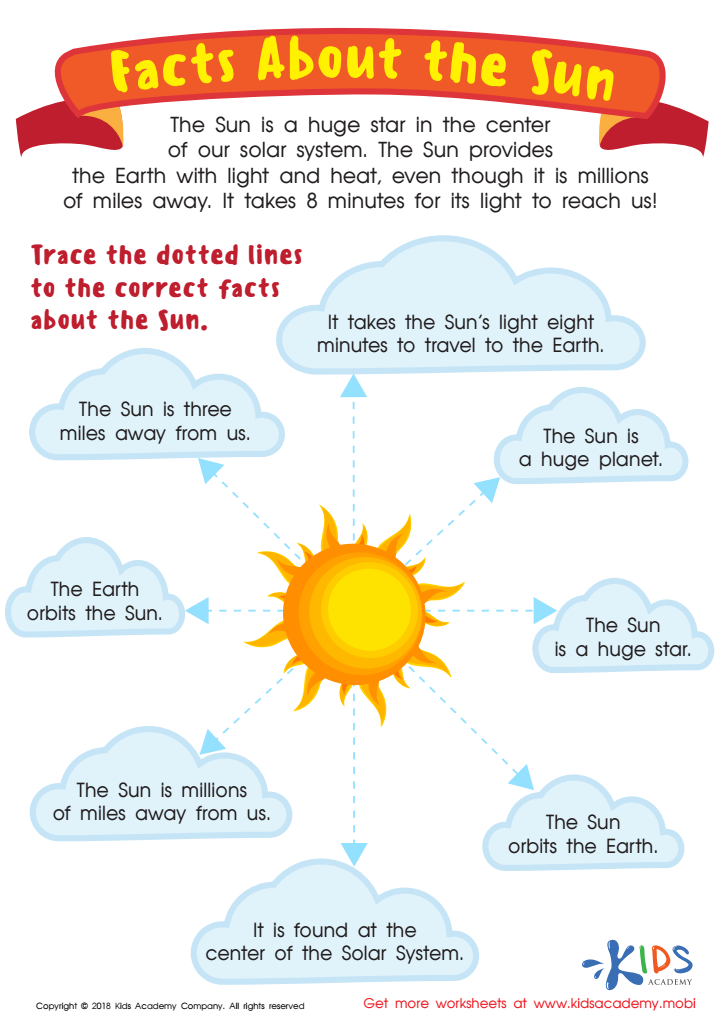
Facts About the Sun Worksheet
 Assign to My Students
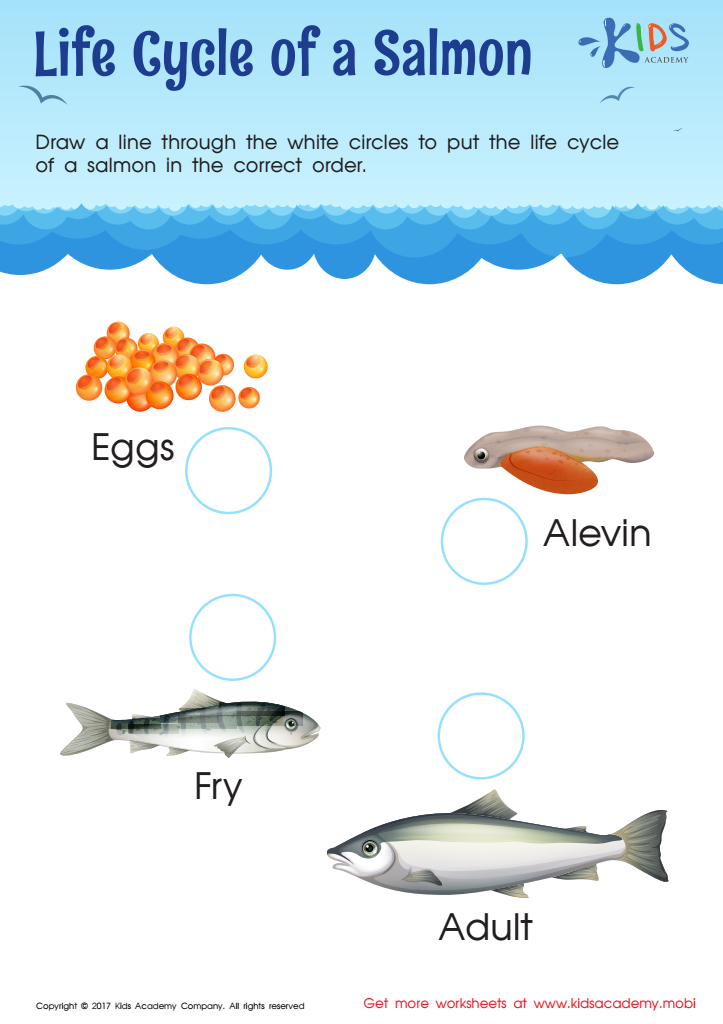
Cycle Of Salmon Worksheet
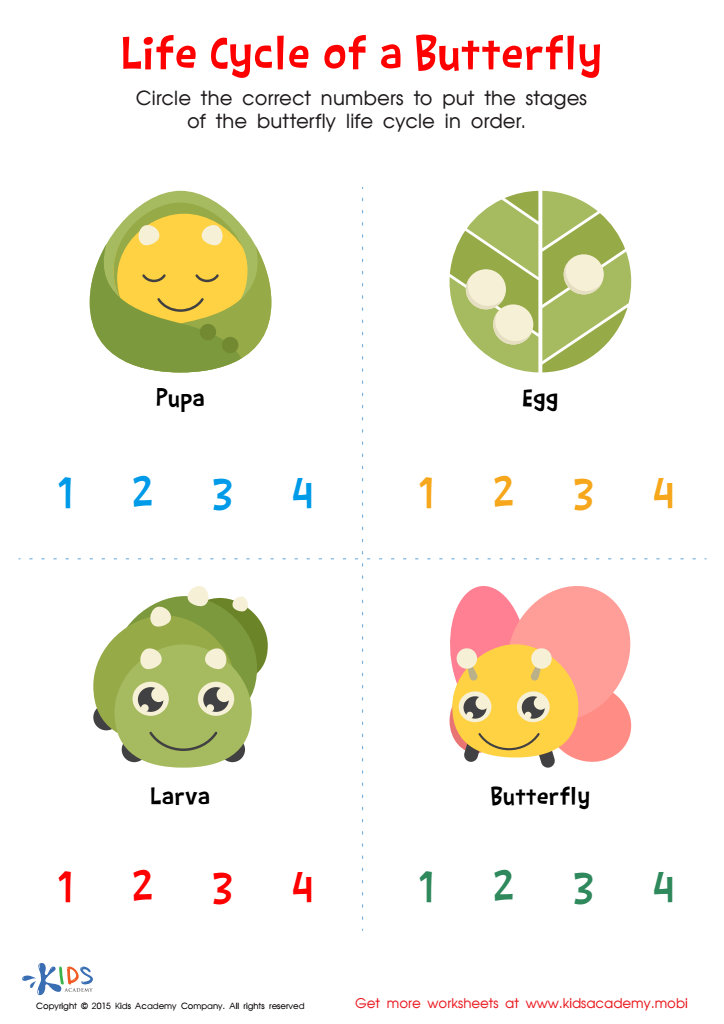
Life Cycle of Butterfly Printable
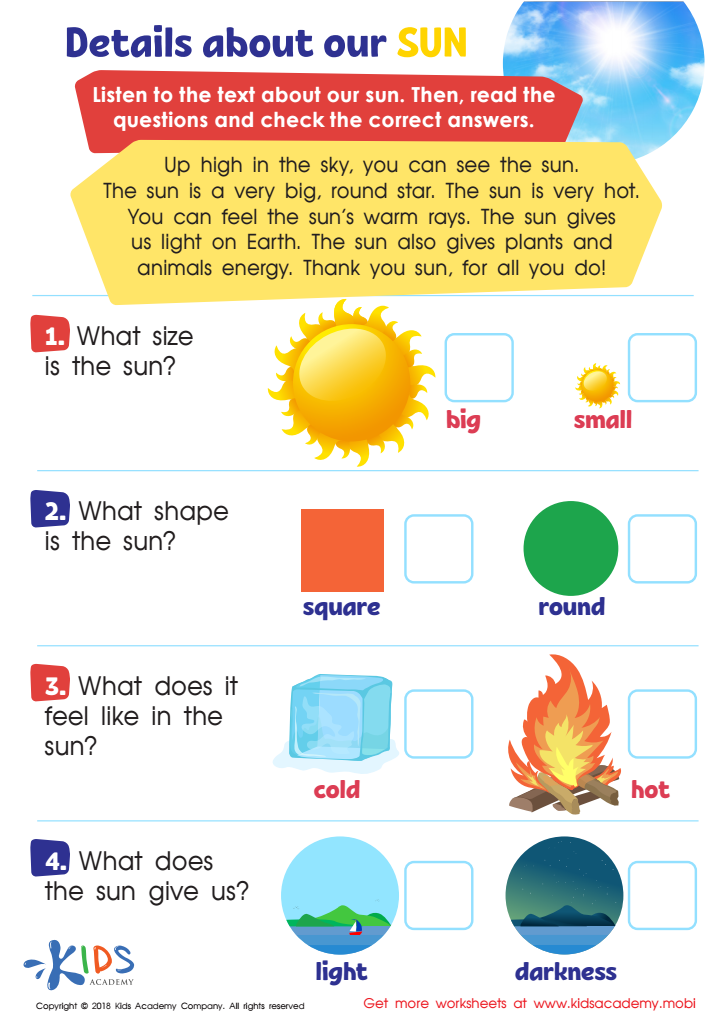
Details About Our Sun Worksheet








Expanding science vocabulary for children ages 3-9 is crucial for several reasons. Firstly, early exposure to scientific terms helps spark curiosity and fosters a sense of wonder about the natural world. Integrating science vocabulary into everyday conversations and activities can cultivate an enduring interest in science and learning. This early engagement is essential for developing critical thinking and problem-solving skills that benefit children beyond the realm of science.
Secondly, mastering science vocabulary at a young age supports overall language development and literacy. Understanding and using scientific terms enhance a child's ability to comprehend complex concepts and instructions, which contributes to academic success in various subjects. Moreover, a good grasp of specific vocabulary sets a strong foundation for future learning, making it easier for children to tackle more advanced topics later in their education.
Finally, science vocabulary can help children make sense of the world around them, encouraging them to ask questions, make observations, and seek explanations. It promotes a deeper understanding of everyday phenomena and fosters an inquisitive mindset. Engaged and informed children are more likely to become proactive, knowledgeable individuals who can contribute positively to society. Thus, for nurturing well-rounded development, teachers and parents should prioritize the expansion of science vocabulary from an early age.








