Shape Recognition Normal Worksheets for Ages 3-9 - Page 3
50 filtered results
-
From - To
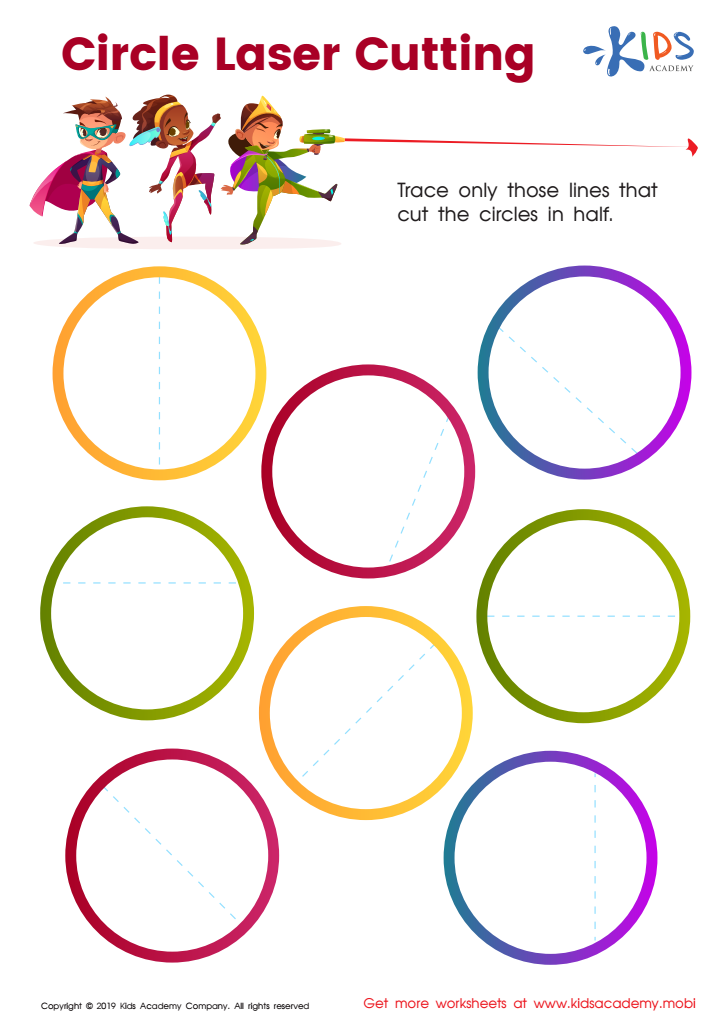
Circle Laser Cutting Worksheet
 Assign to My Students
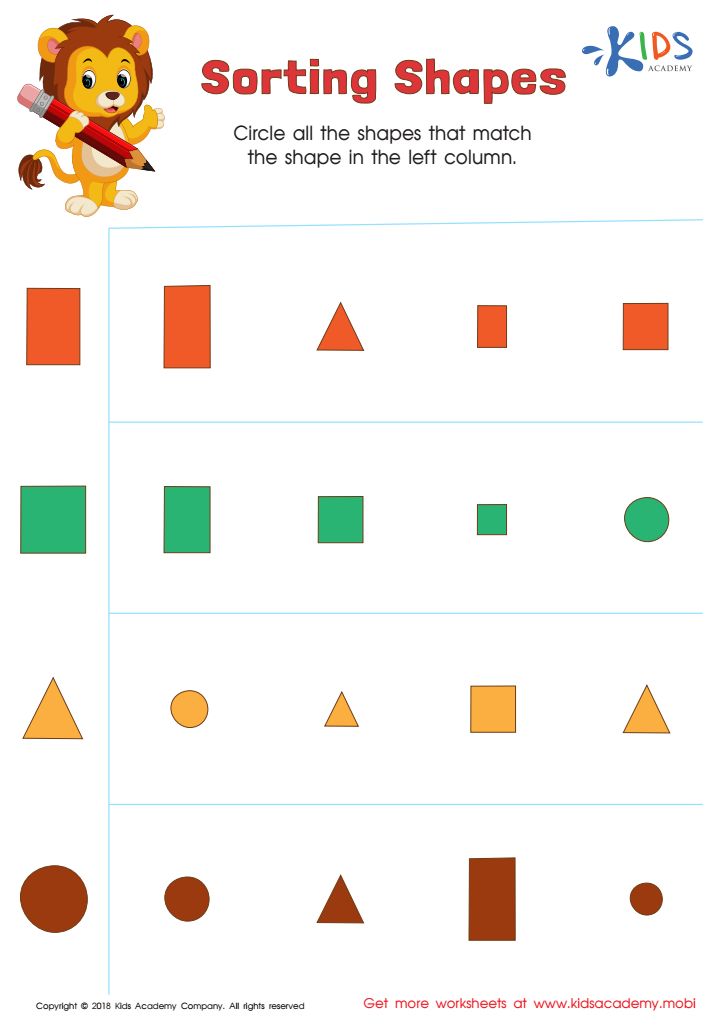
Sorting Shapes - Part 2 Worksheet








Shape recognition is a foundational cognitive skill crucial during the developmental years of ages 3-9. This multi-dimensional ability not only aids in visual perception but also in categorizing and organizing the world. Understanding basic shapes—such as circles, squares, and triangles—lays the groundwork for learning more complex concepts in mathematics, language, and reasoning.
Early shape recognition helps in identifying patterns, an essential function in mathematical problem-solving and numerical understanding later. For example, recognizing the difference between a square and a rectangle helps children grasp diverse geometry concepts and spatial awareness that are vital for success in STEM subjects.
Moreover, related linguistic skills also develop through shape recognition. Describing and differentiating shapes enhances vocabulary and language skills. Asking a child to find circular objects or pointing out different shapes communicates everyday educational opportunities, thus making learning part of their natural environment.
Teachers and parents should care about shape recognition as it promotes fine motor skills through activities like drawing or sorting shapes. Additionally, shape-awareness fosters analytical and critical thinking when children learn to group or classify objects based on their shapes.
Igniting interest early in shape recognition helps mold confident, skilled thinkers ready to grasp various academic subjects, setting a solid foundation for future learning and problem-solving capabilities.








