Sound differentiation Normal Worksheets for Ages 3-9
4 filtered results
-
From - To
Explore our expertly designed Sound Differentiation Normal Worksheets, tailored for children ages 3-9. These engaging worksheets cultivate essential early literacy skills by helping young learners distinguish between different sounds. With a variety of fun activities, children will enhance their auditory discrimination, improve phonemic awareness, and prepare for reading success. Each worksheet is crafted to align with developmental milestones, ensuring compatibility with classroom learning and home practice. Ideal for educators and parents alike, these resources provide an interactive way to reinforce sound differentiation, paving the way for confident readers. Unlock your child’s potential with our printable worksheets today!
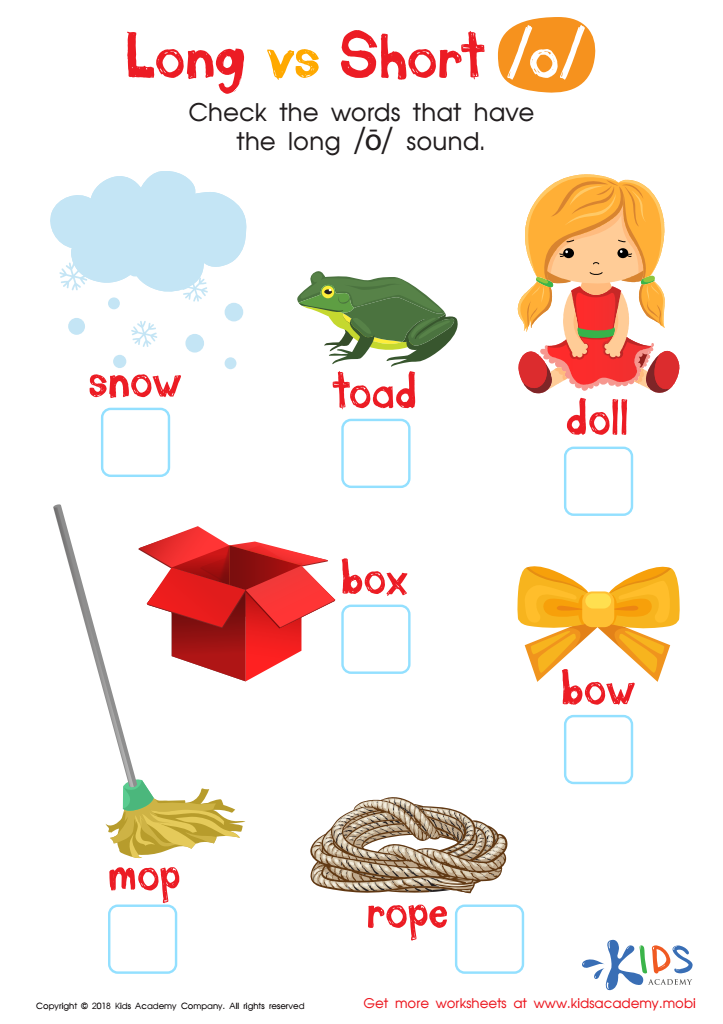
Long vs Short O Reading Worksheet
 Assign to My Students
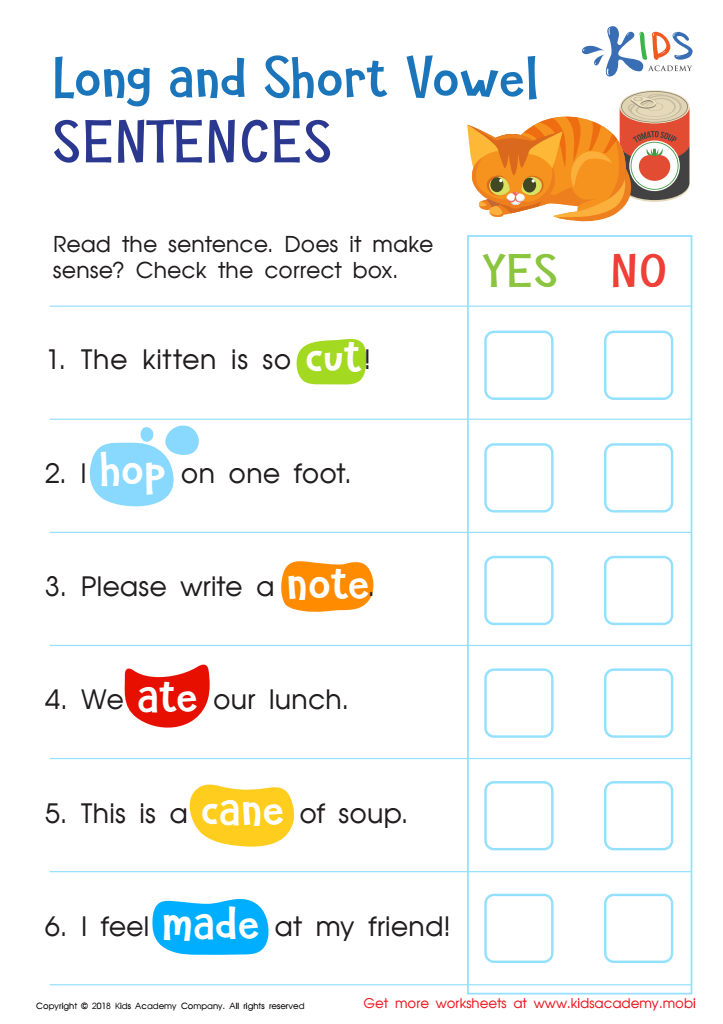
Long and Short Vowel Sentences: Assessment Worksheet
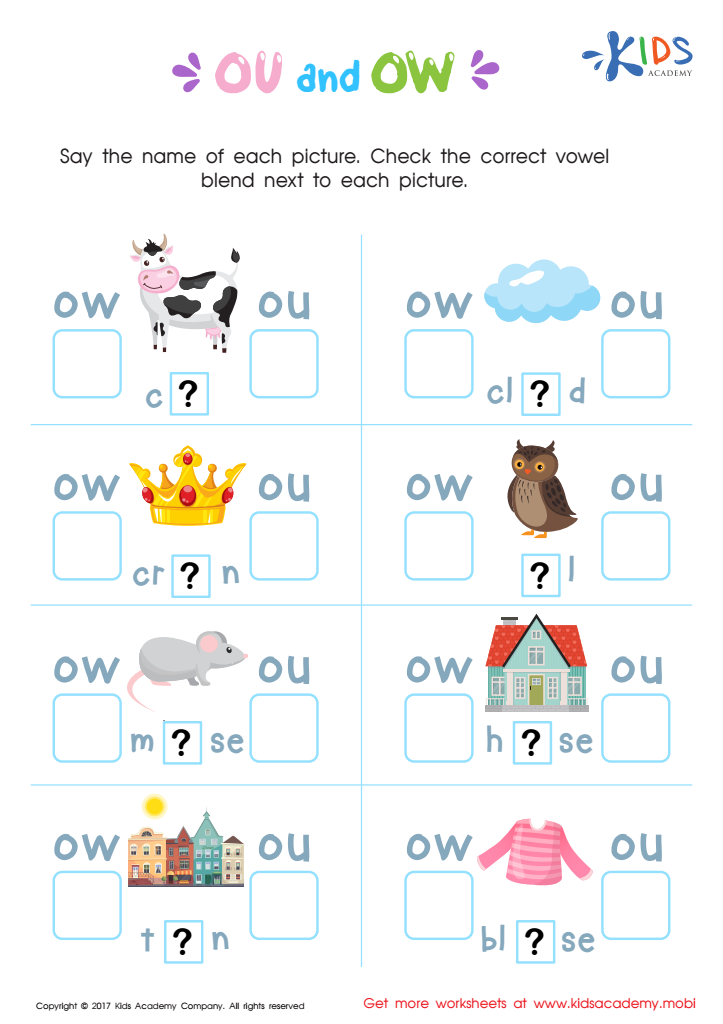
OU and OW Words Worksheet
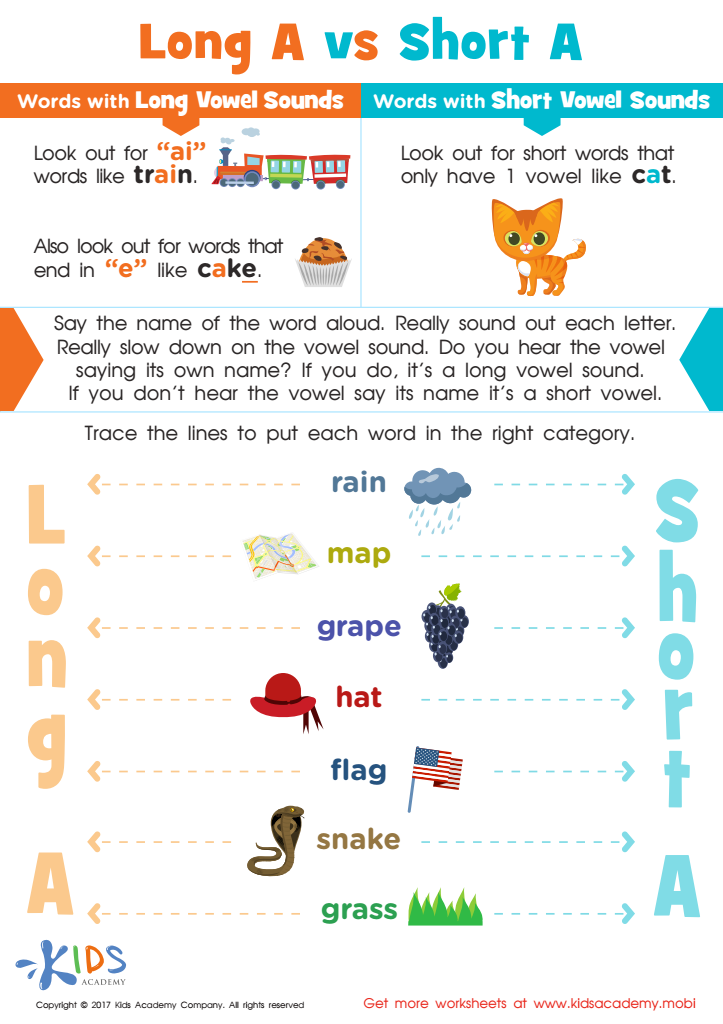
Long and Short Vowel A Spelling Worksheet





.jpg)

Sound differentiation is a critical aspect of early childhood education, especially for children aged 3-9. During these formative years, children are developing foundational literacy skills, which are essential for their academic success. Understanding sound differentiation helps them recognize, interpret, and manipulate the sounds in words, laying the groundwork for reading and writing.
Parents and teachers should care about sound differentiation because it significantly impacts a child's language development and comprehension skills. Children who can differentiate sounds are better equipped to decode words, leading to improved reading fluency and comprehension. This skill also aids in phonemic awareness, which is crucial for strong spelling abilities.
Moreover, fostering sound differentiation can enhance a child's confidence and motivation toward learning. Children who feel successful in their language skills are more likely to engage in reading activities, ultimately fostering a lifelong love of reading.
On a broader scale, supporting sound differentiation promotes inclusive education. It ensures that all children, regardless of their learning style or background, have access to vital early literacy skills, ensuring they are well-prepared for future academic challenges. In summary, prioritizing sound differentiation is essential for nurturing proficient learners and thriving individuals.








